Garber Warns A-Grade Cap Could Cause Short-Term Discomfort, Defends Long-Term Payoff
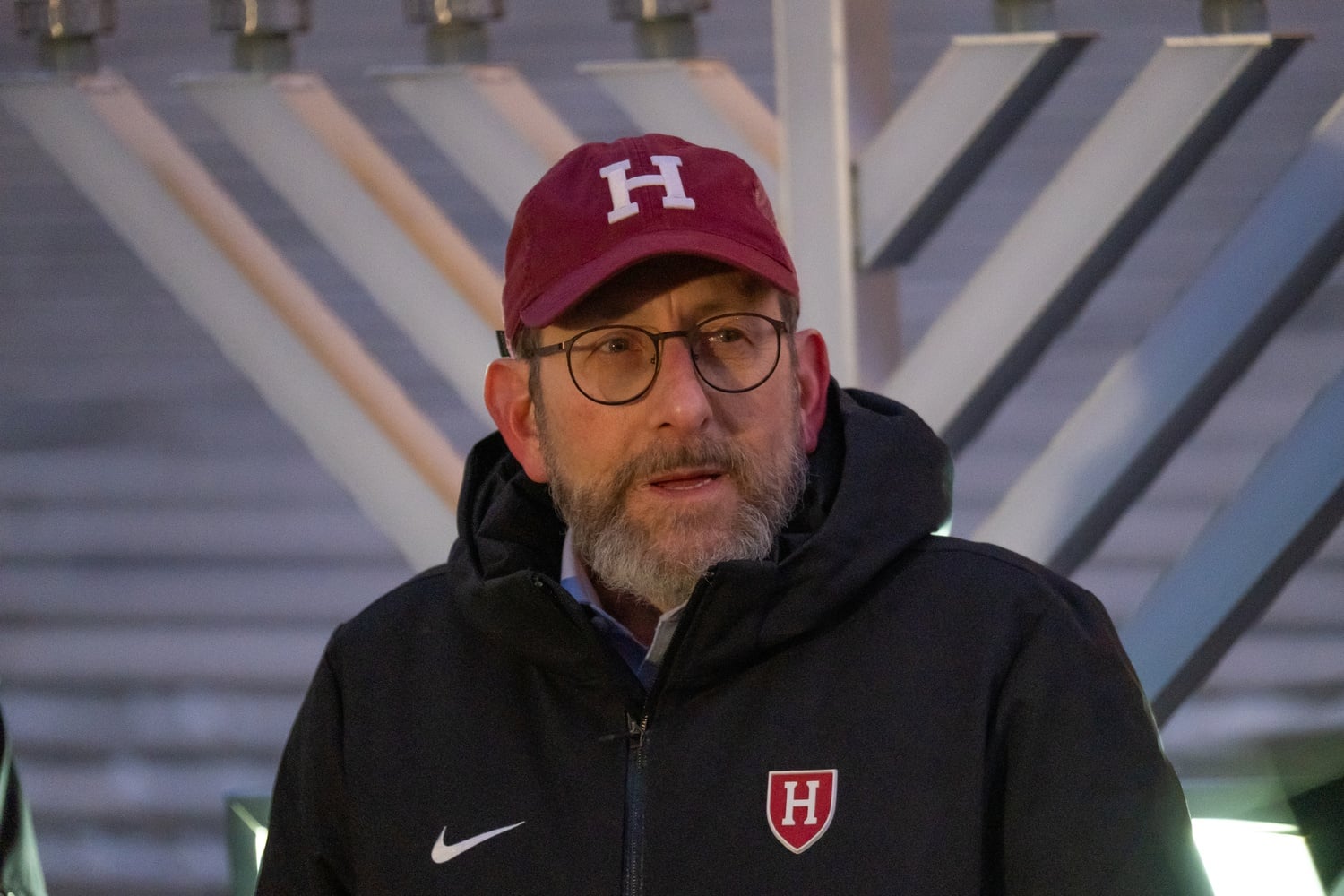
Harvard President Alan M. Garber ’76 defended the long-term merit of a controversial faculty proposal to cap A grades at a Tuesday event — while warning that it could deter students from enrolling in more demanding courses.
Speaking during a fireside chat at the Barker Center with freshmen, Garber said the proposal would likely cause short-term discomfort but argued the long-term payoff could justify the pain, according to four attendees. The remarks are Garber’s first reported comments on the February proposal to limit A grades to roughly 20 percent of a class.
Garber stopped short of endorsing the plan’s details, cautioning that strict grading could alter student behavior and steer some away from difficult courses, according to the student attendees.
He also said he could not weigh in on the specific numerical caps — including a stipulation to let instructors give out up to four more A grades per class — until they were tested in practice, the people said.
The proposal has been embraced by many faculty members as a necessary check on grade inflation — and met with fury from students. In a Harvard Undergraduate Association survey released last week, nearly 85 percent of respondents opposed the plan. Students have also written open letters, drafted a petition, and penned op-eds denouncing the proposal.
The Office for Undergraduate Education held a town hall last week to give students an opportunity to respond directly to administrators. Garber was not present at the event. Another town hall is slated for Feb. 24.
The full faculty are likely to vote on the grading proposal in an April faculty meeting.
Get The Crimson in your inbox.
A University spokesperson declined to comment on Garber’s remarks.
Faculty of Arts and Sciences administrators have long expressed dismay at soaring undergraduate grades. In October, Dean of Undergraduate Education Amanda Claybaugh reported that grade inflation undermined “academic culture” and raised the specter of reform.
On the heels of Claybaugh’s report, the number of top-marks awarded in the college for fall 2025 decreased by nearly seven percent, from 60.2 percent to 53.4 percent. Athlete GPAs declined broadly over the same period, with especially sharp drops on the women’s golf, men’s fencing, and men’s squash teams.
But February’s report raised the stakes dramatically, calling for the College's first formal cap on A grades. It also proposed shifting internal honors to a percentile-based system to better distinguish top students and allowing faculty to opt out of the cap by switching to satisfactory/unsatisfactory grading.
—Staff writer Hugo C. Chiasson can be reached at [email protected] or on Signal at hcc.35. Follow him on X @HugoChiassonn.
—Staff writer Elise A. Spenner can be reached at [email protected] or on Signal at elisespenner.82. Follow her on X @EliseSpenner.
Want to keep up with breaking news? Subscribe to our email newsletter
Have a tip for The Crimson? Share it confidentially