Gold to Grad: Olympian Angela Ruggiero ’04 and the Making of a Champion
Angela Ruggiero has won four Olympic medals, a National Championship, the Patty Kazmaier award, and is now broadcasting the 2026 Milano Cortina Women's Hockey Tournament for NBC.
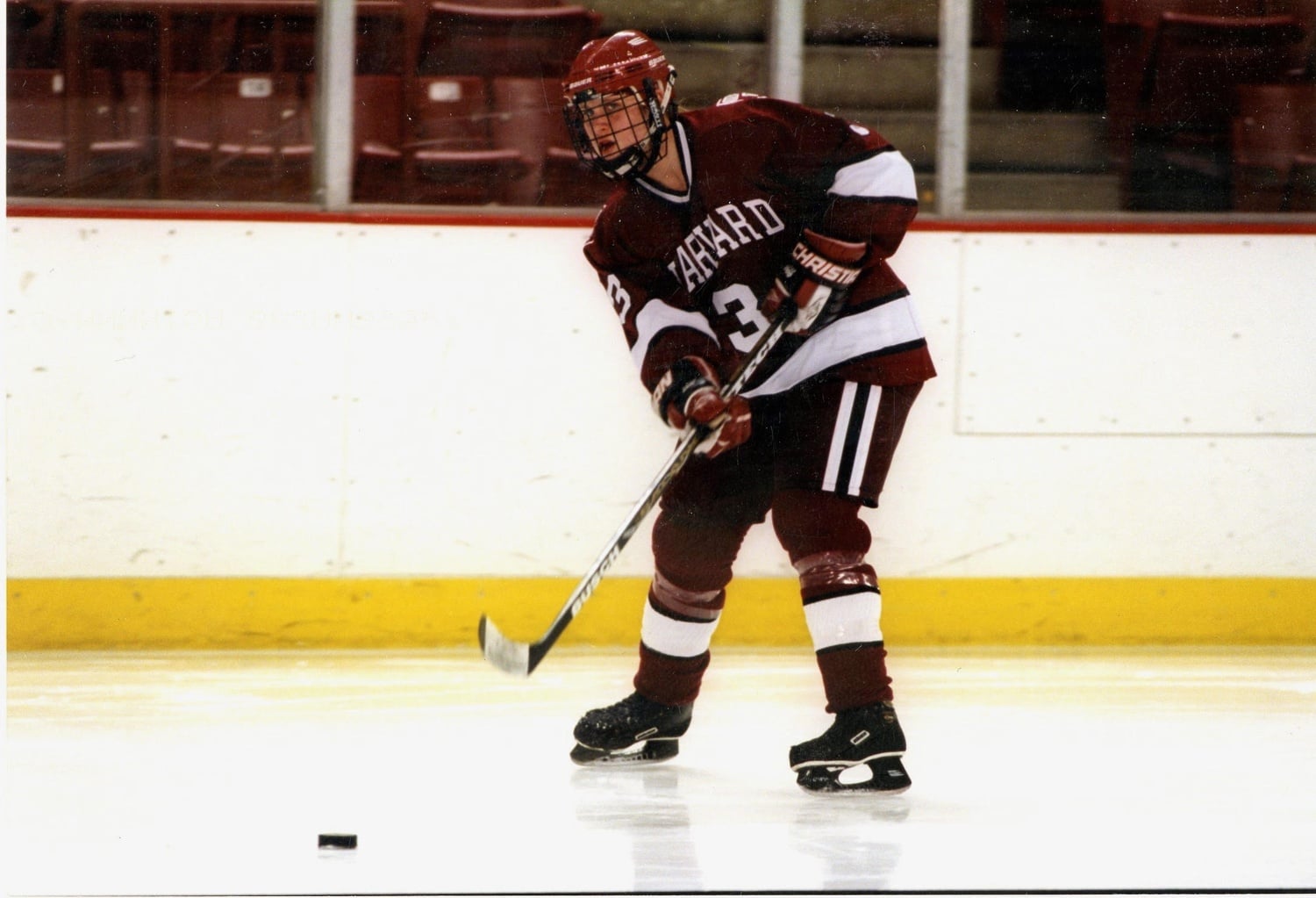
hen it comes to resumés, ice hockey legend Angela Ruggiero’s gives the same energy as an astronaut or a Navy SEAL, leaving you with no choice but to be in awe of how remarkable a person can be. A four-time Olympian and Harvard graduate cum laude, Ruggiero’s drive is truly exceptional.
“I just try to find things that I have a passion for,” Ruggiero said. “When I’m in the right space, I’m extremely driven to just continue to learn, and to put myself in those environments, like being an undergrad at Harvard, where you’re stretched, and you learn, and you realize you have more in you than you probably thought before. And you can apply that thinking to any environment.”
After retiring from her illustrious hockey career in 2011 and being inducted into the U.S. Hockey Hall of Fame in 2015, Ruggiero returned to Cambridge to receive an MBA from Harvard Business School. She also founded and served as the CEO of Sports Innovation Lab, a data analytics company focused on fan engagement in athletics.
“I learned a lot of it in sports,” Ruggiero said while describing her work ethic. “I applied it at Harvard, and then realized it’s all the same thing, whether it’s business, business school, sports, life in general.”
With 256 appearances for the National Team, Ruggiero has played more career games in a Team USA hockey jersey than any other men’s or women’s skater.
“Having that hungry mindset, it’s why I was able to play for so long on the national team,” she said. “I was super competitive, and I played with a ton of confidence, but I feel like I had to earn that confidence, because I went into every day, every practice, every game, with that underdog mentality: how do I get better today? How do I help my team? How do I find that inch in the locker room or in the gym?”
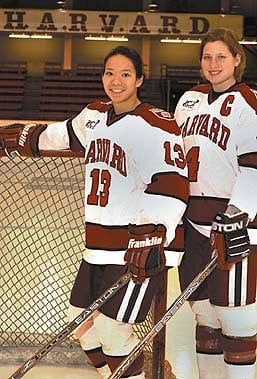
Ruggiero has since returned to the Olympic stage as an analyst for the 2026 Milano Cortina Winter Olympics, broadcasting the women’s hockey tournament for NBC, after having done so for the 2022 Winter Games in Beijing. She is certainly qualified, having competed in four Olympics and taking home a gold medal in 1998, silver medals in 2002 and 2010, and bronze in 2006.
“I just love broadcasting, because you get to use your knowledge as a hockey player, share your love of the game, and educate the fans on the current players, hype it up, kind of give back in a way. So it’s fun. It keeps me in the loop. It’s fun to see where women’s hockey has evolved, and to hype up a great tournament.”
Ruggiero started playing hockey at nine years old, and her youth hockey performances were impressive enough to draw the attention of Choate Rosemary Hall, a boarding preparatory school in Wallingford, Conn.
“I came from a very modest background,” Ruggiero said. “My parents didn’t have a lot of money growing up, hadn’t gone to college. So, when I had the opportunity to go to Choate, it was sort of a chance of a lifetime.”
During her senior season at Choate, women’s ice hockey made its Olympic debut at the 1998 Winter Games in Nagano, Japan. At just 18 years old, Ruggiero was invited to join the U.S. women’s national ice hockey team and compete on the international stage.
The shared experience of competing in their first Olympics made the moment especially meaningful for all female hockey players participating.
“That was really special, because you had that same feeling across the whole team, versus when you get two, three Olympics in, you kind of know what to expect. Yes, it’s amazing and different every time, but that first time, when you walk into the stadium, and you’re like, ‘Wow! Cool! This is amazing!’ We all got to do that together.”
Ruggiero and Team USA went on to win the gold medal in Nagano, notching a remarkable 6-0 record and a +28 goal differential.
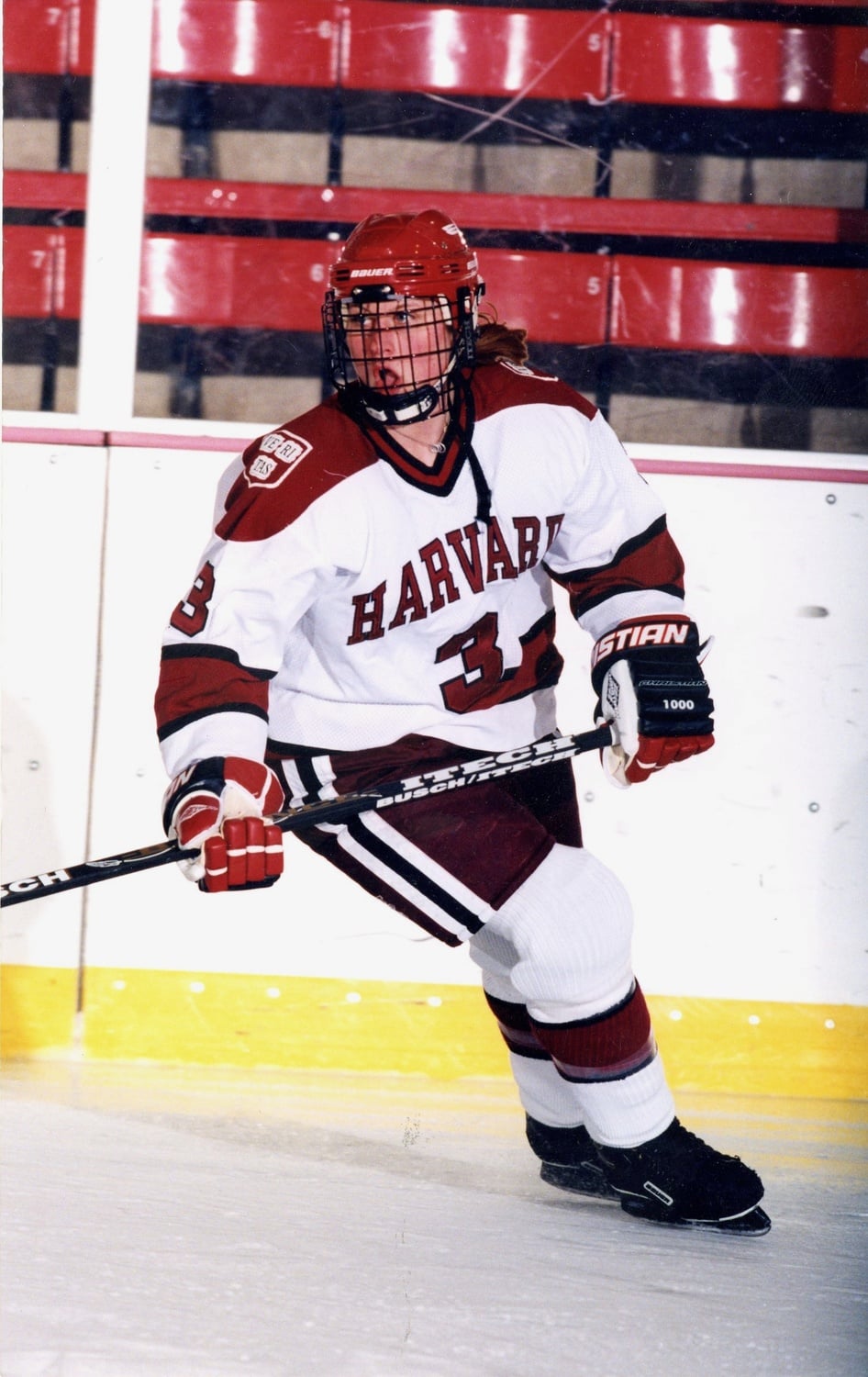
As a member of the national team at just 18, Ruggiero was faced with unique challenges. After all, she was still a senior in high school and needed to set aside time to think about college.
“I was literally applying to Harvard on the road,” Ruggiero recalled. “I took my SATs at some random high school because I was traveling with our Olympic team on a tour.”
At a large state school, Ruggiero could vie for a national title without having to equally prioritize her academics. Meanwhile, at Harvard, where academic expectations are arguably higher than those on the ice, being a student-athlete took on a whole new meaning.
“I was very intimidated about being accepted to Harvard,” said Ruggiero.
“And then I think I realized through some conversations with some of my mentors and parents, Harvard was almost like that stretch goal. I realized this is the environment that’s going to get me outside of my bubble.”
Before Ruggiero’s arrival to Cambridge in the fall of 1998, the Crimson had experienced little success at the upper echelons of women’s college hockey. Harvard had never made it further than the semifinals of the ECAC Tournament, and was in a rut of three straight losing seasons.
“I wanted to help rebuild that team,” said Ruggiero. “We were around .500 the year I applied. We weren’t a powerhouse at all. And I was like, here’s an opportunity to build something.”
“I had such an amazing recruiting trip with the team that I think really locked it in,” said Ruggiero. “When I met everyone and met the coach, Katey Stone, and just felt like I could be a part of that community.”
In Ruggiero’s freshman year, the Crimson turned a 14-16 record the previous season into a 33-1 season that concluded with a victory in overtime to secure the National Championship title.
Off the ice, however, the adjustment to Harvard’s academic schedule proved more daunting.
“I got to Harvard, and I was intimidated. I manufactured a low bar for myself. I got Bs and Cs my freshman year.”
“Then I realized, I can get As if I applied myself,” Ruggiero, who concentrated in government, said. “I was more disciplined in my studying, in the same way that I learned to be disciplined in hockey.
After her sophomore year, Ruggiero took two years off from college to train for the 2002 Winter Olympics in Salt Lake City, Utah.
When she returned to Harvard for the 2002-2003 season, Ruggiero was placed in Mather House and named one of the hockey team’s captains. That year, the Crimson lost in the National Championship Game to Minnesota Duluth in a heartbreaking double overtime.
In 2004, her senior year, Ruggiero became the first defender to receive the Patty Kazmaier Memorial Trophy as the top player in women’s collegiate hockey. She was also named a recipient of the NCAA’s Top VIII Award, given to the most outstanding student-athletes in the country.
“That whole idea of self-limitation, and why I was limiting myself academically when I could be excelling, it was all a mindset,” said Ruggiero. “So I realized it’s the same thing I did as an Olympian, it requires discipline in the same way.”
Ruggiero left Cambridge having been named a First Team All-American every season she played. To this day, the defender ranks fifth in school history in career goals scored, third in career assists, and sixth in career points.
Ruggiero went on to have an incredible professional career, including a total of four Olympic Games and four IIHF Women’s World Championship gold medals. Along the way, she became the first female skater to play in a men’s professional ice hockey game, notching an assist while she was at it.
Towards the end of her career, Ruggiero attended an information session at Harvard Business School, a place she had her eyes set on for quite some time.
“I went to an HBS info session, and I left so energized,” said Ruggiero. “I was like, ‘I love this school. I’m fired up. I want to learn.’”
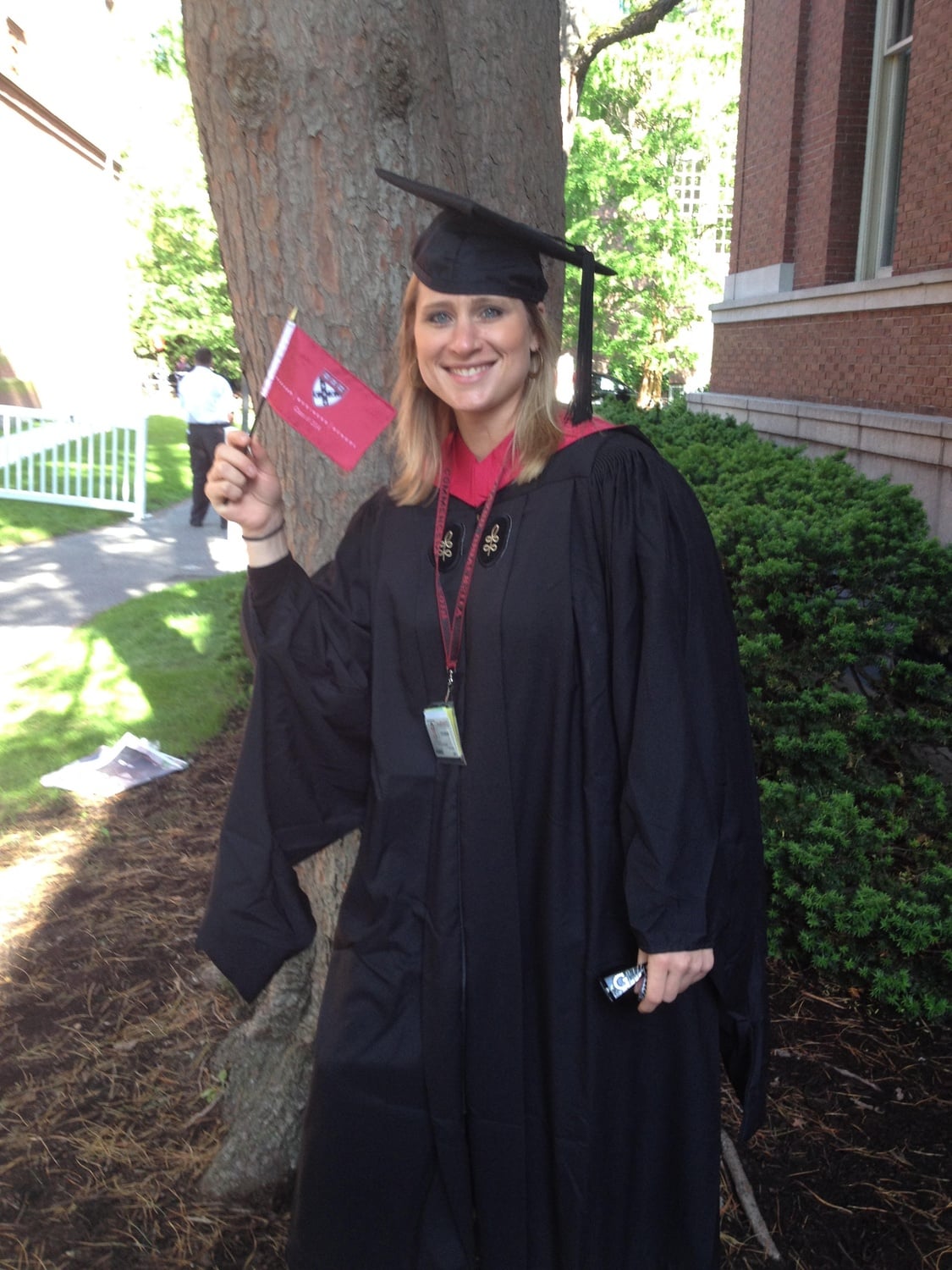
“It was the only school I applied to. And maybe if I didn’t get in, I would have considered other schools, but that wasn’t in my head.”
“I loved it. It’s one of the reasons, honestly, I retired,” she added.
Moving on from hockey wasn’t easy, but ultimately, Ruggiero was ready for a new challenge.
“I had been to four Olympics,” said Ruggiero. “I’d been on the national team for 16 years, pretty much done everything I wanted in the sport. I felt like I could definitely play in one more Olympics, physically, but it was almost like if I didn’t go to the HBS when I went, I would have been too old to go.”
“So, yeah, when I got in, I was like, all right, that’s my retirement. I’m retired.”
Ruggiero left hockey as a legend of the game. Suddenly, she was entering new territory.
“Business school was very hard for me,” recalled Ruggiero. “I sucked at Excel. No idea what I was doing. I was good in other classes, leadership, marketing, some of the things I’d been exposed to as an Olympic athlete. But I wanted to be there, so I was willing to put in the work.”
Though success has found her on the ice, in the classroom, and in the office, the glory has never deterred Ruggiero from working towards her next goal.
“The awards were amazing, I loved them,” said Ruggiero. “But for the best athletes, or business people, or whatever, that’s the byproduct. It’s not the goal. The goal is to get better. The process is the goal.”
“I see a lot of college students doing things for the wrong reasons, and you’re not going to put that effort in. You’re not going to show up early and stay late, the things that are required for greatness.”
“Do it for the right reasons. Do it because you love it. Build that confidence slowly, believe in yourself, and good things happen.”
Ruggiero will be on the broadcast for the women’s ice hockey Gold Medal Game on Thursday, Feb. 19, at 1:10 p.m. EST on NBC, as Team USA faces its rival, Canada. It will mark the seventh time the two sides have played in the final game of the Olympics.
— Staff Writer Maxwell P. Friedman can be reached at [email protected].
Want to keep up with breaking news? Subscribe to our email newsletter
Have a tip for The Crimson? Share it confidentially