Admissions Influencers Have Gone Too Far
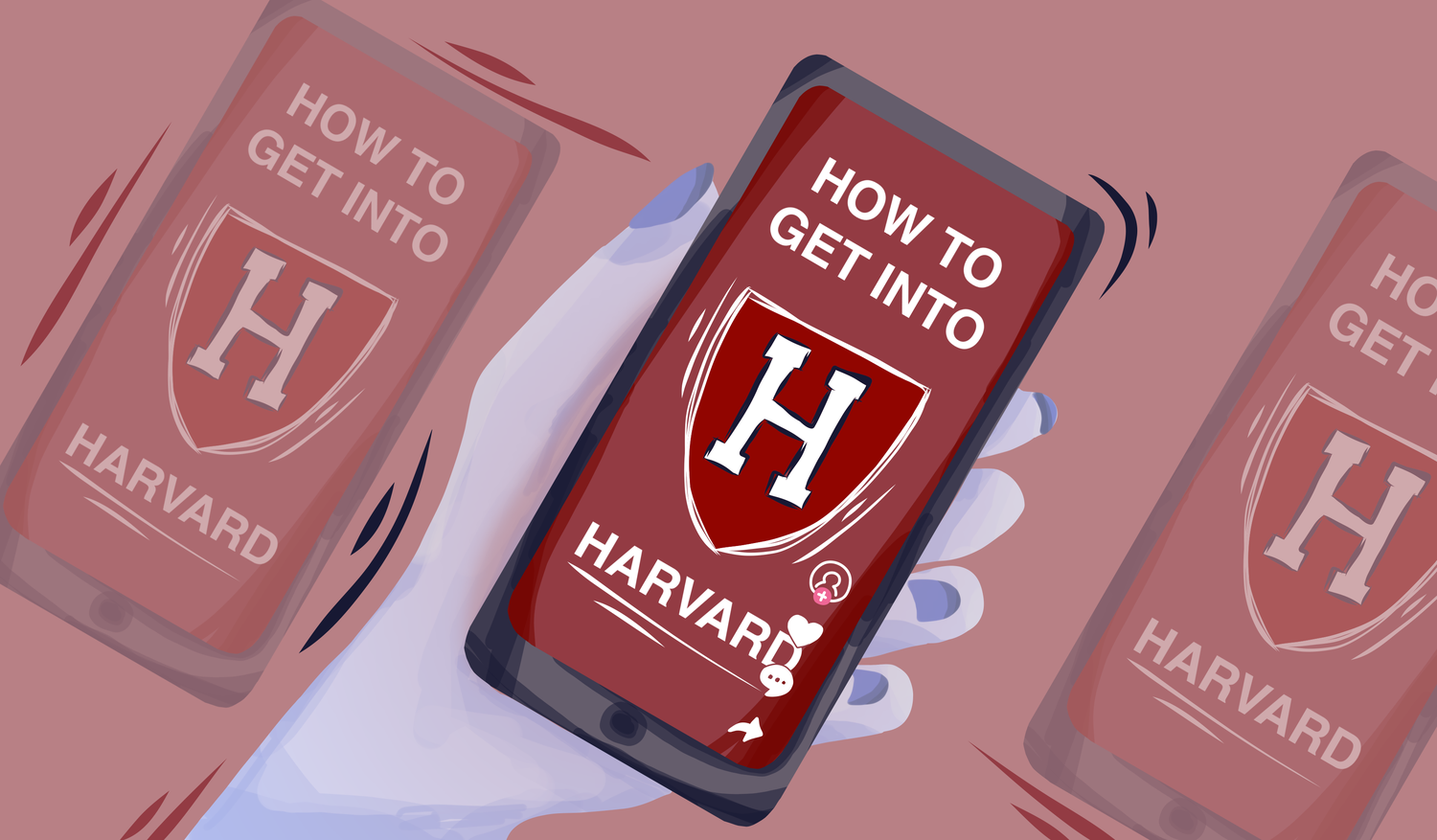
Several months ago, Elise M. Pham ’26, the founder of Ultimate Ivy League Guide, posted a grave warning about the Common Application’s artificial intelligence policy to TikTok. “If an admissions officer thinks you used AI,” she said, “Common App could terminate your account and alert every college you apply to.”
The Common App quickly corrected her in a post of its own, saying that Pham’s video was “misleading and causing unnecessary panic,” and even splicing Dakota Johnson’s “actually, no, that’s not the truth, Ellen” clip for added measure.
Pham is far from the only Harvard student who has built large followings on TikTok and Instagram dispensing college admissions advice, sometimes as a front for their consulting businesses. Yet creators like Pham can also garner sharp rebuke from the very institutions they claim to demystify.
These influencers compress the complicated dynamics of college admissions into viral-ready sound-bites, which leaves young students with a deeply warped mindset about the admissions process. Whatever their intentions, these videos rely upon student anxiety to achieve virality, which only aggravates the hypercompetitive, high-stakes culture around elite college admissions.
Videos like these span a wide spectrum, from newly admitted students sharing screenshots of “successful” essays, to an influencer suggesting to students that they “have to start preparing in 7th grade” if they "wanna get into an Ivy league school.”
This kind of content relies on an unearned notion of expertise. Gaining admission to Harvard or similar institutions provides no unique knowledge of how admissions officers weigh applications, shifting admissions priorities, or the kinds of conversations within the admissions department that make or break applications. To pretend that one’s individual experience grants key admissions insights is to exploit the implicit trust the Harvard name confers, especially in the eyes of young, ambitious high school students.
Take ubiquitous “stats” posts, in which newly admitted students list their GPAs, test scores, and activities alongside their college admissions results. Influencers tease a small snippet of their application and inevitably attract students searching for a direct, universal blueprint.
Still, many universities conduct holistic reviews of each candidate, assessing them with the context of their individual experience. Harvard itself dispels the notion of any “formula for gaining admission to Harvard.”
Yet some influencers double-down, claiming to have decoded elite admissions protocols, by drawing sharp distinctions between successful and unsuccessful applicants. One video asserts that pursuing only the opportunities within one’s own high school is a “mistake” that “will get you REJECTED.”
Some of this content is targeted at exceedingly young audiences. High school freshmen must finalize their extracurricular descriptions before exploring what they actually care about. Middle schoolers must plan calculated community service ventures called “passion projects” in order to accumulate enough awards and recognition to look legitimate on a resume.
Creators likely believe they are providing useful advice, but their content’s performance in social media requires stoking the anxiety and reactions that social media algorithms reward. The cost is a generation of students fed a steady diet of anxiety. Students get scared into chasing an unhealthy, unattainable ideal for a college application that, at the end of the day, is composed by a teenager.
The online exemplar of a successful college applicant requires highschoolers to reverse-engineer their entire adolescence around college admissions. Applicants are better off authentically exploring their passions and taking the time to grow into the person they wish to be. When influencers overtly suggest that one’s 8th grade success decides one’s college prospects, they ambush students with a false choice: follow an impossible blueprint or sacrifice your future.
These creators may claim they are “democratizing” college admissions wisdom, especially when some students attending underfunded or disadvantaged schools may not have the same access to resources and support as their private school peers. But their content is essentially fearmongering.
Like any other voice on social media, admitted students can still profess their opinions while presenting their credentials in an honest light. By placing enough healthy distance between their experience and their advice, they can avoid misleading students and even encourage them to weigh their advice appropriately.
Still, if admissions influencers are truly sincere about maximizing their impact, there exist plentiful alternatives to social media.
Many community-based organizations, like the College Advising Corps, exist to personally support and advise students across the nation throughout the college admissions process. By coordinating free and personalized college counseling to students from underrepresented communities, these organizations provide the support that actually empowers prospective applicants to succeed. If admissions influencers want to ensure every student has a fair shot, these organizations are the first places they should turn to.
True support requires acknowledging individual nuance and empowering students to put their best foot forward, both of which the short-form format of TikTok and Instagram seem to overlook. Until they can recenter constructive advice in their social media strategy, these influencers will only disadvantage the same students they claim to champion.
Sabrina H. Ottaway ’29, a Crimson Editorial editor, lives in Matthews Hall.
Want to keep up with breaking news? Subscribe to our email newsletter
Have a tip for The Crimson? Share it confidentially