The Salient Is Back and It’s Better Than Ever
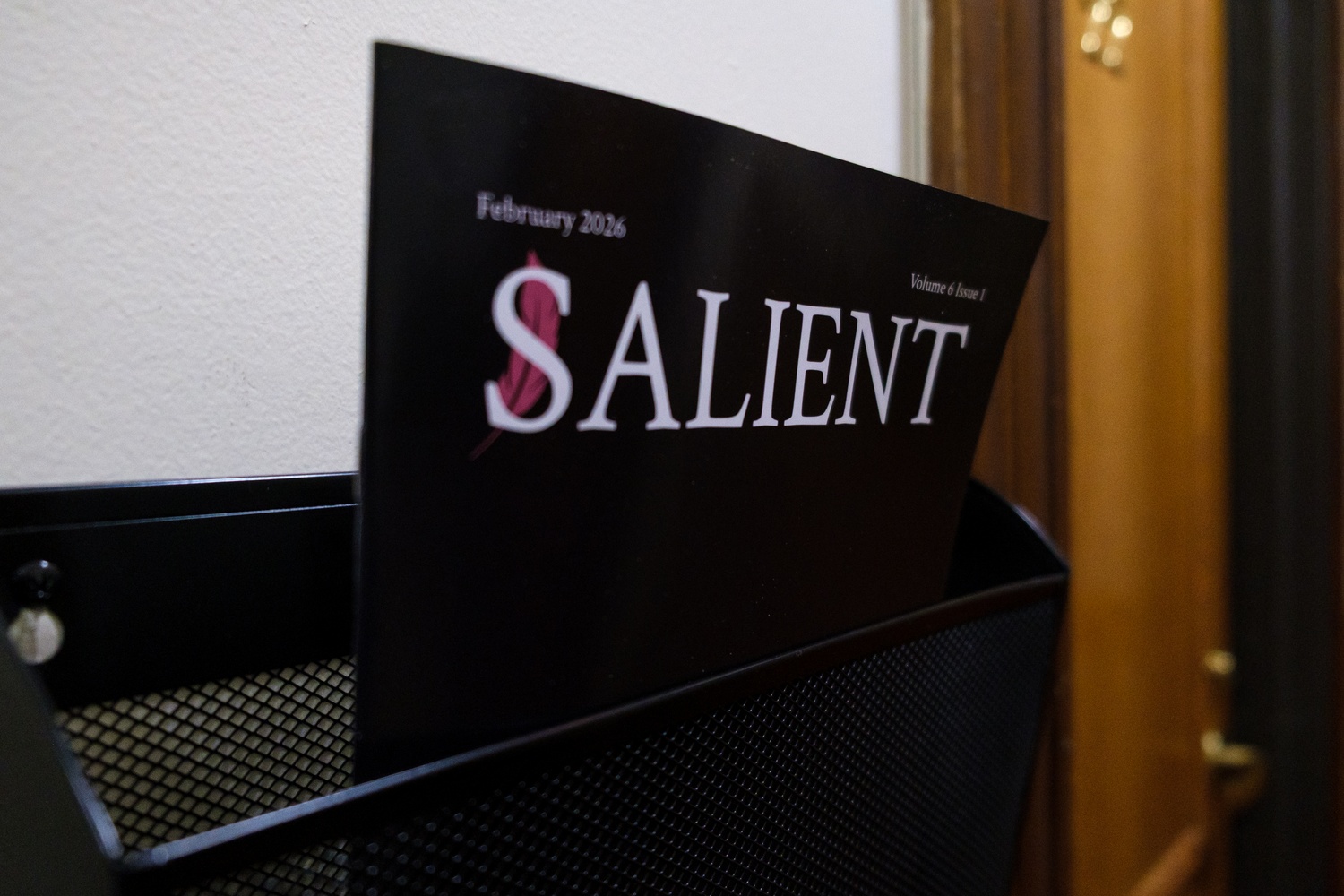
The Salient is back, and it’s better than ever.
Last September, I published an article lamenting the state of conservatism at Harvard and in public discourse. The Harvard Salient, I argued, had come to reflect a national decline in the intellectual conservatism of old; the kind that “reminds us that not everything in our past need be thrown out” and that “can serve as a vital backstop when we are tempted to throw the baby out with the bathwater.” Instead, the Salient had embraced an ethos that prioritized incendiary polemicism over sincere argument.
Nowhere was this new conservatism more proudly on display than in the magazine’s September 2025 issue. With pieces deriding the “female mode of learning” and spewing Nazi-inspired “blood” and “soil” rhetoric, it was clear that The Salient had no qualms with endorsing the worst of conservatism, a noxious, anti-intellectual political ideology that now permeates our national political culture.
With the publication of the February 2026 edition of the magazine, things have taken a turn for the better. This edition begins with a short statement that recognizes the organization’s past misgivings, describing how “Harvard conservatism has lost its compass,” and has embraced “dissent without principles.” The organization also took practical steps to ensure the new edition’s integrity, excluding contributions from those who wrote for its two fall issues.
The results of this transformation are impressive. The new Salient represents an intellectually respectable conservatism that is stronger than the old.
Articles in the February edition explored topics such as the role of ideological bubbles in contributing to extreme views on both ends of the political spectrum, how the widespread decline in religiosity might contribute to political polarization, how the left and right ought to understand their historical heritage, and the virtues of a “classical Christian education.”
Authors provided distinctly conservative perspectives in their appeals to virtue as the grounds of public life, rejections of “DEI orthodoxy,” and calls for education to be grounded in “Christian theology” through encounters with “the history of Western civilization.” The articles read not as polemical tirades or a litany of reactionary grievances, but as sincere and well-argued pleas to see where we have erred in rejecting the intellectual and cultural traditions of yore.
The conservatism of the new Salient — contrary to the fears expressed by the magazine’s then editor-in-chief, Richard Y. Rogers ’28 in a letter responding to my September article — is not "quieter" or “more crushable,” nor is it more “ignorable, deferential, and, most importantly, conquerable.” The conservatism of the new Salient, one, as the publication’s former president Sarah Steele ’18–’26 writes, “driven by principle and persuasion,” cannot be so easily dismissed.
It is easy to ignore a conservatism that forgoes argument in favor of forceful rhetoric. It is easier still to ignore a publication that peddles in hateful, Nazi-esque rhetoric. On the other hand, so long as we are dedicated to the pursuit of truth, an argument offered in good faith cannot simply be ignored. It must be read. It must be evaluated. Argument, unlike mere rhetoric, calls for engagement rather than perfunctory endorsement or rejection.
The new Salient’s more careful and thoughtful ethos is not a self-weakening concession to the left. Rather, it conveys a more potent and more impactful conservatism that merits — and requires — the consideration and engagement of its opponents. This successful turn towards a conservatism of persuasion should be celebrated by those anywhere on the political spectrum. A strong, intellectually rigorous conservatism is a honing steel for its opponents, forcing them to reconsider and reformulate their own views.
In the pursuit of veritas, a strong, sincere, and well-argued conservatism is of great value. Although the left and the right find themselves on opposite sides of politics, when it comes to the pursuit of truth, they can, should, and must be amicable rivals, not sworn enemies.
Allison P. Farrell ’26, a Crimson Editorial editor, is a Philosophy concentrator in Leverett House.
Want to keep up with breaking news? Subscribe to our email newsletter
Have a tip for The Crimson? Share it confidentially