Don’t Let Harvard Forget Epstein
The American news cycle is frantic, and even Harvard cannot escape the blistering pace of heart-sinking front pages.
On January 30th, the Department of Justice released over 3 million more pages from its investigations into Jeffrey Epstein. By the next morning, Harvard’s hidden skeletons had taken the spotlight once again. An email here, a donation there, and Epstein’s involvement with the University was dragged back into our collective consciousness just as his friend, former Harvard President Lawrence H. Summers, began to fade from the front pages.
When each day brings a new campus-shattering headline, focusing our attention becomes critical. Talk of a grading proposal may have quickly overshadowed recent updates about the enormity of Epstein’s involvement on campus, but students must remain intentional and demand accountability where it is due.
Less than a month later, it feels like we’ve already forgotten. Professor Lisa J. Randall ’84, whose years of correspondence with Jeffrey Epstein were revealed in the most recent wave of documents, has not appeared to face official consequences.
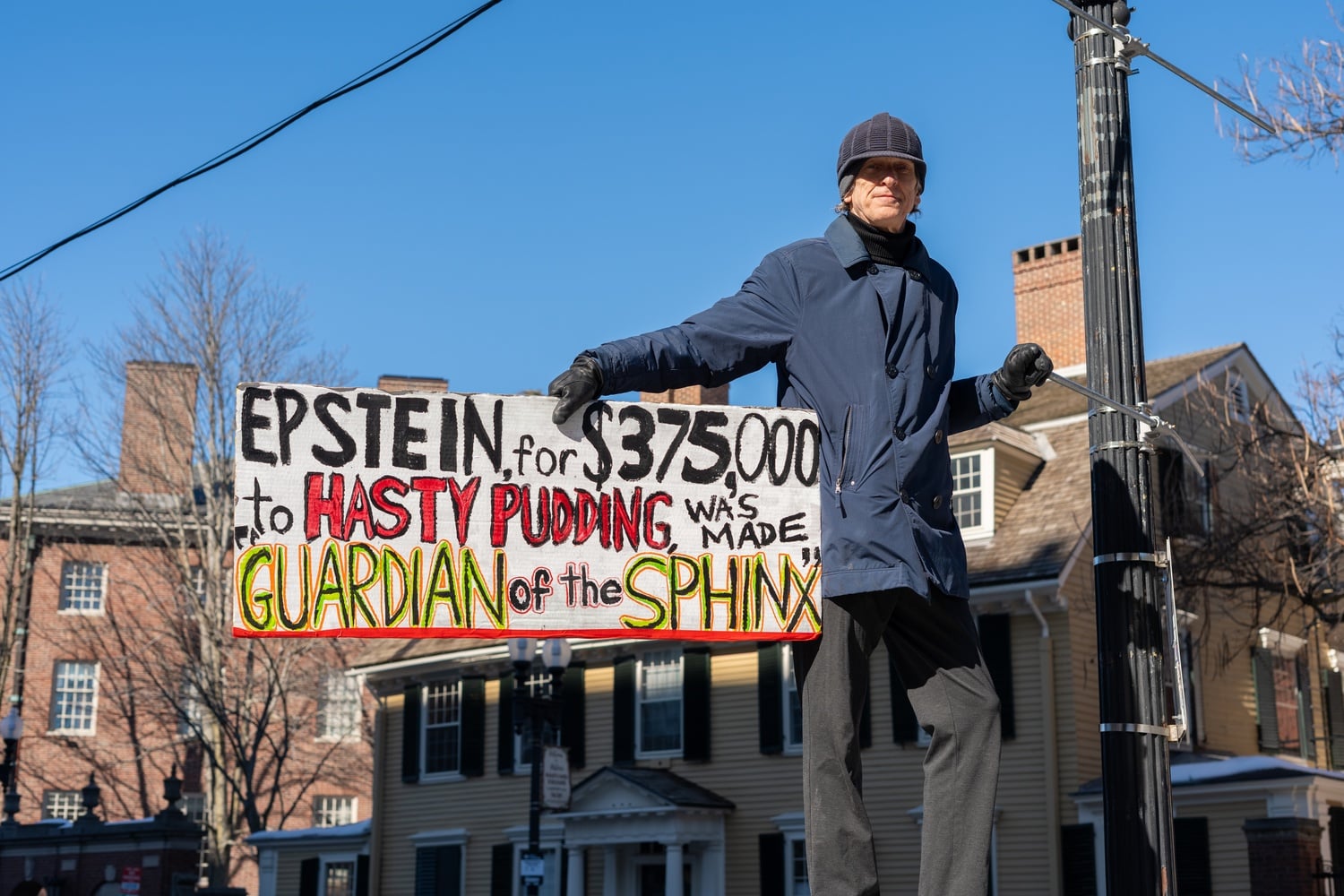
The Hasty Pudding Institute of 1770 — an independent organization with deep historical ties to Harvard — received hundreds of thousands of dollars in donations from Epstein. Andrew L. Farkas ’82, the Institute’s current chair and namesake of the Pudding’s theater, who facilitated the donations, was revealed to have been close friends with Epstein: the two spent time together on Epstein’s island and sent thousands of emails to each other. Farkas has yet to resign from his chairship.
As stories like these fade back into The Crimson’s archives, who will hold such individuals and institutions accountable? These are not easy questions, but they demand lasting attention and answers.
As new information continues to emerge, Epstein’s ties to Harvard will stay under the spotlight. But when the files dry up, when his face is no longer plastered on the front page of every paper, so too will our collective fury for his crimes and his acquaintances’ complicity.
Will a sex trafficker’s friends and money stay embedded in our school? Will their names still be boasted upon our buildings?
Thus far, Harvard has failed to deliver an adequate response to these newest revelations. While the University is still investigating its affiliates’ ties to Epstein, the lack of a meaningful statement condemning apparent associations indicates a need for commitment to accountability.
It’s true that this inaction could be due to legitimate bureaucratic restraints. Tenure largely safeguards professors’ positions against unfortunate headlines. The University may have no direct authority to punish an independent organization for accepting donations or for the actions of an unsavory graduate board member.
But the University can still be clear about its values — and when it cannot or will not act to deliver justice, the burden falls on the student body. If we don’t do it, nobody will.
We’ve seen before that student activism is effective. Students can pressure Harvard where the administration has authority, and pressure affiliates themselves where the University does not.
In November, when Larry Summers’s close friendship with Epstein was revealed, he initially stepped back from his public commitments, but not his teaching responsibilities. However, after students called for his resignation, Summers stepped down from teaching as well. The social outcry and ostracization seemed too much.
Collective outrage can be one of the most powerful catalysts within a large, elite institution. The success of student voices in holding Summers accountable is proof. But when a dizzying news cycle unfocuses our collective anger, its power is diluted.
The dilution of our horror over Epstein’s engagement with Harvard is already underway. The headlines of the past few weeks brought a wave of renewed shock across campus — not over Harvard’s dirty money, but rather the horror of a GPA under 4.0.
Harvard’s recent plan to curb grade inflation has inflamed the student body. Civil engagement has been heartily re-energized as students flock to fill out surveys and attend town halls. The fresh ink of headlines envelops the old, pushing Epstein’s presence further into our memories and lower in our priorities.
There is clearly political energy to be spent on campus. The student voice has an incredible power to create change; it would be a shame to waste that power on fighting the cursed A-minus.
Justice can be served, but only if we undertake the Sisyphean obligation of social activism. Students must continue fighting the good fight — attending protests, emailing administrators, and demanding affiliates take responsibility for their past wrongdoings. Until we fully grapple with addressing Epstein’s legacy, we must stay true to our moral priorities.
We cannot allow our inattention to leave the associates of Epstein’s influence unscathed.
Katie H. Martin ’28, a Crimson Editorial editor, is a joint concentrator in History and Romance Languages & Literatures in Currier House.
Want to keep up with breaking news? Subscribe to our email newsletter
Have a tip for The Crimson? Share it confidentially