The Cult of Institutional Worship
As children, many of us were taught to pledge allegiance to the flag. Now, killings in the streets go unpunished. State surveillance is intensifying. First Amendment rights are repeatedly infringed upon. Yet we still cling to patriotism to determine our next move.
But whether the United States or Harvard University, we must resist the urge to rely on institutional loyalty to determine our values and our actions. Radical change does not require loyalty. Too often, it’s a distraction.
Today, regardless of whether you worship or criticize an institution, a fundamental obligation seems to remain: to be forever devoted to it. Just take the Concord Institute, a new nonpartisan student organization on campus aiming to restore patriotism and celebrate America at Harvard College.
Their advisory board is composed of powerful actors: Jason Furman ’92, Harvey C. Mansfield ’53, Neil L. Rudenstine, and more. Backed by a former Obama-era economic advisor, former chairman of the Government Department, and even former Harvard President, the message is clear: patriotism is supported from the top.
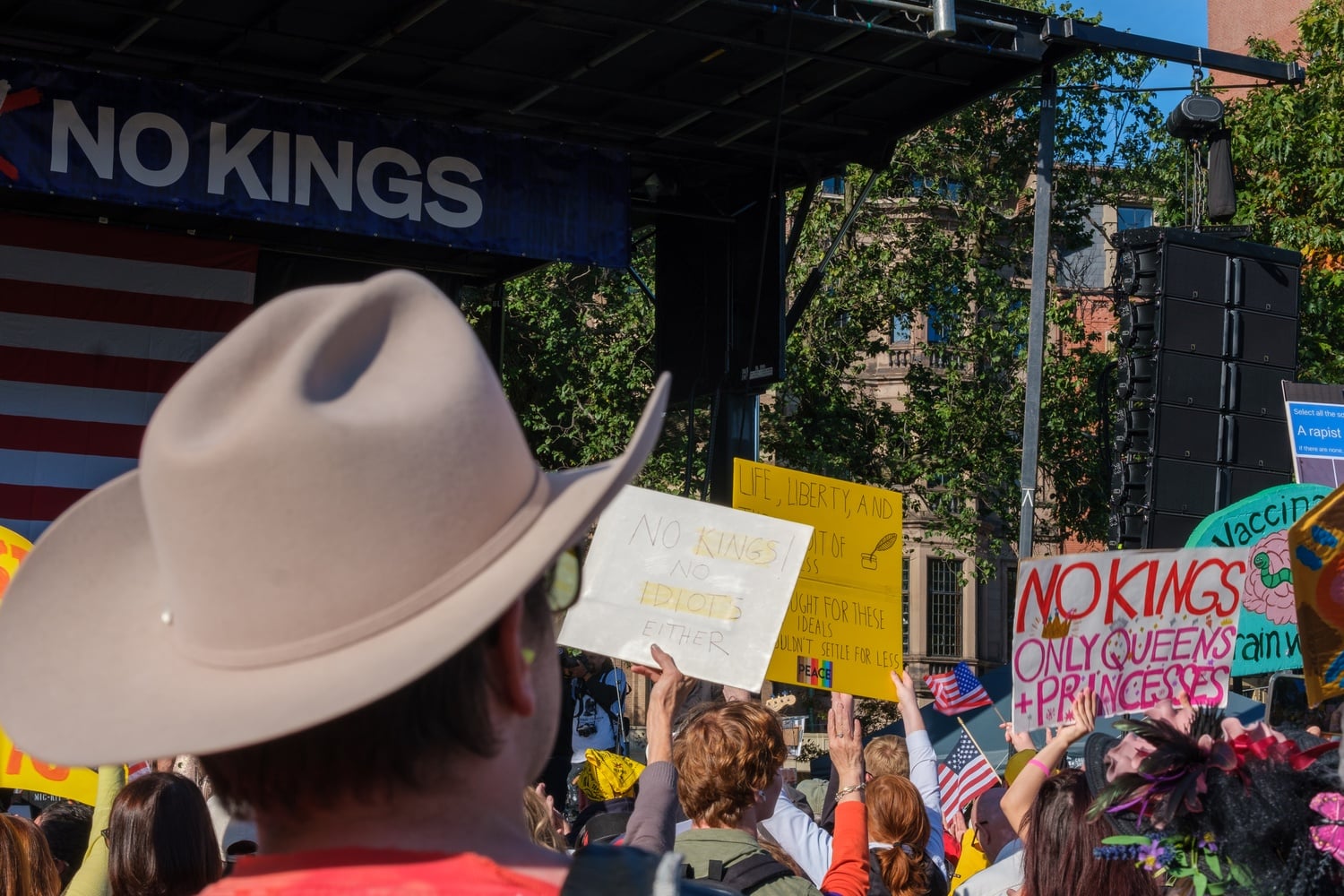
In the same vein are the October “No Kings” demonstrations that drew millions of people nationwide, including the Harvard College Democrats and Students for Freedom. “No Kings” isn’t just a slogan, their website reads, but “the foundation our nation was built upon” — a nation belonging to “We the People.”
It’s a poetic reclamation: patriotism, in the service of more just causes. Suddenly, no state transgression is too severe, no violation of rights is too egregious. Now, every headline, every death toll, every wrongful incarceration and empty consequence, is a calling to restore our country’s alignment with our founding ideals; a test of our national loyalty.
And instead of fighting fascism, we find ourselves in the weeds of what it means to “be American.”
“No Kings” refuses to back down against President Trump’s escalating power, declaring: “In America, we don’t have kings.” But what exactly does backing down look like? This rallying cry is evocative, sure, but lacks concrete goals. It falls short of acknowledging the fear and hurt that too many experience in the name of “American” ideals. And in doing so, harm done becomes ideals abandoned.
It’s the same story on campus. Walk through the Yard and count the number of “Veritas Requires Backbone” posters in windows. “Harvard is not Harvard if it is ruled over by the Trump administration,” Students for Freedom proclaimed in a letter that garnered hundreds of signatures. This summer, in the midst of the Trump administration’s attacks against Harvard, a Crimson op-ed criticized Harvard for abandoning its values by closing offices dedicated to supporting women, LGBTQ+ students, and students of color.
So if we weren’t abandoning our values, would it be acceptable? If Harvard wasn’t Harvard, would we stay silent?
Depending on an institutional persona to enact change is perilous. We shouldn’t rely on reality, put through a crimson or red-white-and-blue lens, to know what’s right and wrong. We shouldn’t rely on loyalty to a myth of a moral country or principled university to act.
Instead, we need mutual aid, community advocacy, and public enrichment programs. We need resources, compassion, and solidarity. And we need to decide for ourselves what’s important to us, not because an institution told us so.
There are already students taking action without glorifying the institution. Take the Student Labor Action Movement, which advocates for labor justice on Harvard’s campus. They organize with workers and unions, hold rallies, and help lead campaigns related to labor justice — without having to cite Harvard’s declared values.
For some, this institutional reverence is another way of revering the people. I, too, know that many of my values — dignity, altruism, fairness — exist because I am American. I know that I care about intellectual growth and excellence because I am a Harvard student. While this sort of loyalty can be a powerful motivating force for civic and social engagement, it doesn’t go much further.
When we accept the convictions handed to us, we lose our ability to form our own. When we chase idealistic awakenings, we lose our capacity to act. And as Immigration and Customs Enforcement escalates its operations and the feud between Harvard and the Trump administration persists, we simply don’t have time to take the roundabout route.
So next time you have the urge to wax poetic about the disparity between our present moment and our proclaimed institutional values — whether it’s our country or our school — ask yourself: Is this the most direct way to help those who have been wronged? Is renewed allegiance giving the relief that people need right now? And if the answer is no, channel that frustration into real avenues of support instead.
You don’t have to worship an institution to change it. Loyalty isn’t relief: Action is.
Asia M. Foland ’29, a Crimson Editorial editor, lives in Greenough Hall.
Want to keep up with breaking news? Subscribe to our email newsletter
Have a tip for The Crimson? Share it confidentially