Harvard’s Women’s Week Asks Too Little of Us
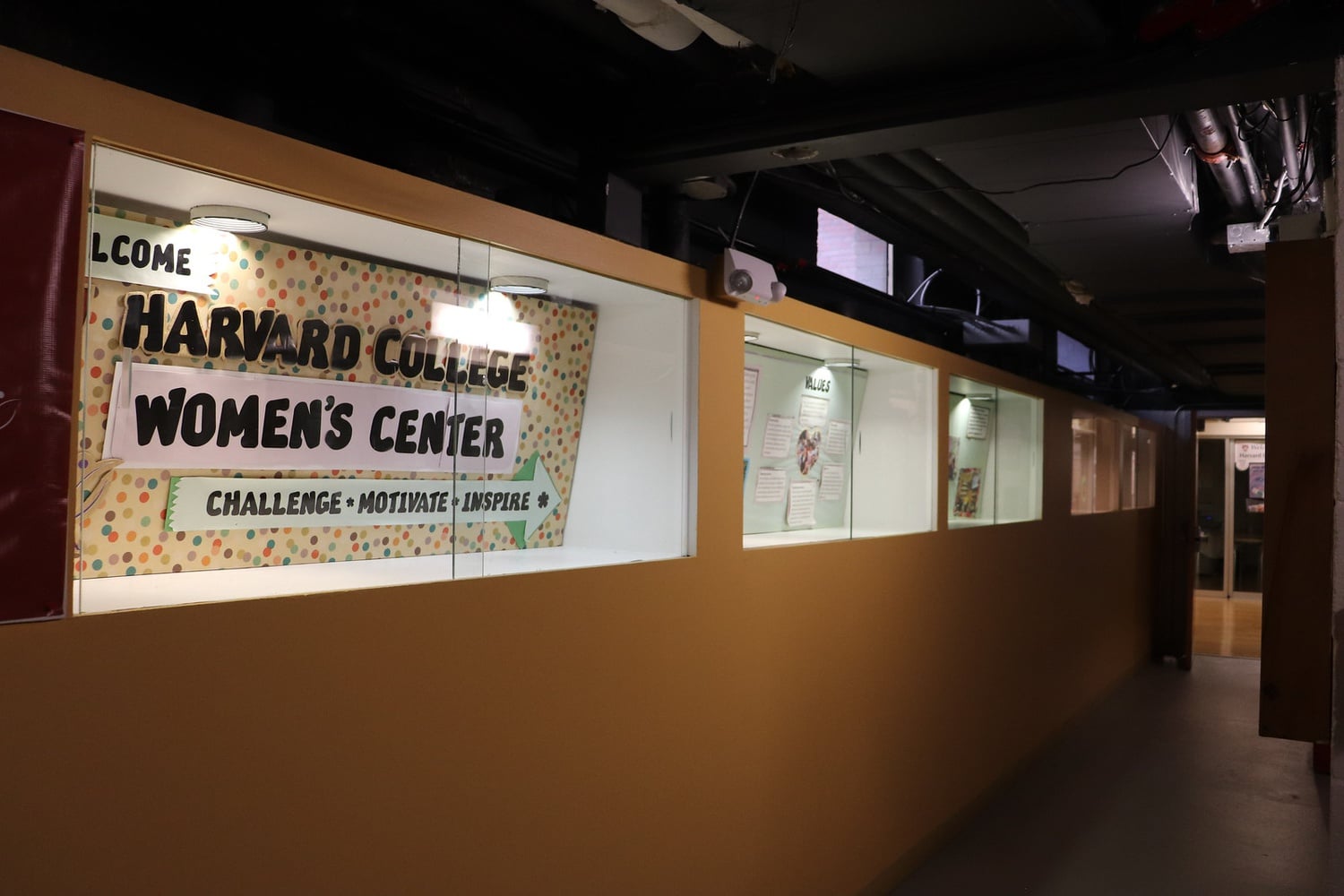
You may have seen them: full of pink florals, “power,” and diversity, equity, and inclusion panache, broadcast on campus flat screens or handed out at Annenberg — at once tearfully funny and terrifyingly tone-deaf. I’m talking about the posters for Harvard’s Women’s Week 2026, themed “Narratives of Power” — a profoundly antifeminist failure of vision.
In anticipation of International Women’s Day, the new Harvard Foundation — created in the summer of 2025 as an amalgamation of the College’s disbanded DEI offices — sponsored the week’s programming. But from this year’s Women’s Week, it’s clear the Foundation is just the same shtick under a different name: perpetuating the worst, most self-indulgent excesses of the “woke era” without fostering any meaningful change.
A sample of last week’s programming, drawn from its 11 events: The kickoff of the week was flower bouquet making. Thursday featured “Period Palooza: Celebrating Menstrual Equity Through Art.” Want to work on your scoober throw? Come to the Women’s Week “Frisbee Workshop.”
The Harvard Foundation’s less overtly ridiculous offerings for the week — such as “Gender and the Sacred: Scholarship Across Religious Traditions” or “The Intersection between U.S. Foreign Policy and American Indians” — still seem like a missed opportunity. While some offerings sound substantive, the visible ratio of nonsense to non-nonsense matters. The gestalt — do we need a blossoming carnation next to the “Schmertzler Leadership Seminar?” — is an optics of unseriousness that degrades the dignity of good programming.
But Harvard’s Women’s Week is just one instance of a larger problem at the University and in higher education: Better suited to the moment would be a “narrative of power” that asks the women of Harvard to grapple with their power. Instead of promoting anodyne “Return to Self” meditations in pink sans serif, Women’s Week should be an opportunity to initiate conversations about what we can do for the less fortunate, truly powerless women in the world beyond the Harvard bubble.
At the best university in the world, a week dedicated to the interests of women fails dramatically (out of either ignorance or insincerity) when it congregates its female students for an “Inner Power Meditation” — as if women receiving an education beyond their foremothers’ wildest dreams are powerless, and not, in fact, already empowered to serve the most vulnerable women by virtue of their enrollment.
For a week themed “Narratives of Power,” the Harvard Foundation seems to be concerned with “power” in the most juvenile sense of the word: “girl power.” But every student at the College is an adult. We don’t need care package giveaways, consciousness-raising, or “self-care.” We have grown up and out of girl power.
Women at Harvard would do well to remember that we live in a world where some Americans still argue against women’s suffrage, where Afghani women suffer under a regime where domestic violence is legal and they cannot study beyond the sixth grade, where even half a mile away on the benches of the Cambridge Common homeless women freeze and starve during Cambridge blizzards, bleeding without any semblance of “menstrual equity” while we paint-by-number at “Period Palooza.”
This year’s Women’s Week programming should embarrass the Harvard Foundation and disappoint all women at the University. It paints a pessimistic, impoverished picture of women in higher education, platforms inane navel gazing, and, above all, asks far too little of us.
Women’s Week 2026 should dismay us because we are capable of so much more, because the world and its women are asking us for serious engagement under life-and-death stakes, and because somewhere between “Flower Bouquet Making” and “Celebrating Menstrual Equity,” Harvard decided its women weren’t up to the task.
Isabel C. Hogben ’29, a Crimson Editorial editor, lives in Greenough Hall.
Want to keep up with breaking news? Subscribe to our email newsletter
Have a tip for The Crimson? Share it confidentially