Brownsberger Leans on Decades-Long Track Record in Eighth Bid for State Senate
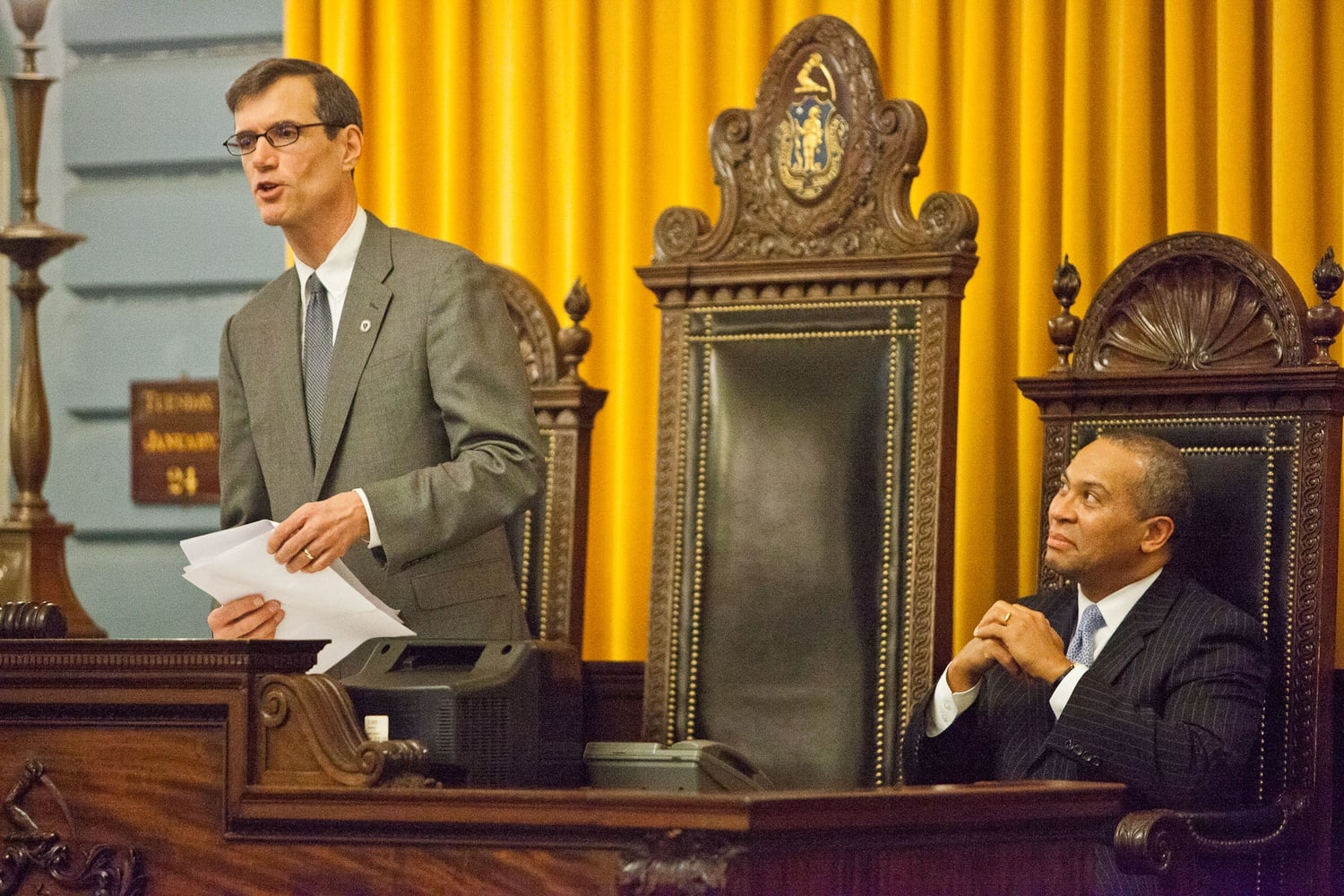
When William N. Brownsberger ’78 first ran for public office in 1997, he was not an ambitious political climber. He was a defense attorney in Belmont, encouraged by a small group of residents who believed the town’s Select Board could use a younger voice.
He won.
Brownsberger would go on to serve a decade on the board, helping establish Belmont’s first senior center, introducing cost-cutting measures at town hall, and coordinating with neighboring municipalities to control flooding.
Brownsberger made the jump to Beacon Hill in 2007, serving as a state representative for the 24th Middlesex district — which covers Belmont, Allston-Brighton, and parts of Cambridge — from 2007 to 2012. He was elected to represent the Suffolk and Middlesex district in the State Senate in 2012, and has held the office since.
Until this year, Brownsberger had not faced a challenger for his current office.
Daniel A. Lander ’14, a former senior aide to Boston Mayor Michelle Wu ’07, announced his bid for the seat in December. The decision, he said, was motivated by Brownsberger’s “long track record of killing or failing to take action” on issues ranging from housing affordability to immigration enforcement in the state.
Lander has criticized Brownsberger’s incumbency, positioning his campaign as a more progressive alternative. But for some, Brownsberger’s record has retained their support for years.
“What’s so amazing about Senator Brownsberger is that it has not changed over the years. He’s always been an outstanding legislator,” said state Rep. David M. Rogers, who holds Brownsberger’s former House seat.
Brownsberger has served as president pro tempore — the third most powerful member of the Senate — since 2019.
“He has really evolved into really being the person who controls the session from the rostrum,” Rogers said.
Get The Crimson in your inbox.
“Obviously, the senate president controls a lot of the policy and the inner workings, but when it comes to the process we’ve really relied on Will to kind of be our beacon inside of the chamber, to control debate,” said state Sen. Patrick M. O’Connor, a Republican representing parts of Plymouth and Norfolk counties.
Brownsberger’s 14-year tenure has been hallmarked by several major legislative reforms, including a bill to reform policing practices and a criminal justice bill that eliminated mandatory minimum sentences for low-level drug offenses. In 2024, he led the conference committee on the Affordable Homes Act, which introduced $5.16 billion in bond authorizations and tax credits to facilitate the development of affordable housing statewide.
Brownsberger also led the opposition to Wu’s property tax proposal, which aimed to increase commercial property taxes to shift Boston’s tax burden off of homeowners. Wu’s proposal was rejected in the State Senate by a 33-5 vote in January.
Instead, the legislature passed an alternative proposal introduced by Brownsberger and state Sen. Nick Collins that allows municipalities to offer tax credits to homeowners when property taxes increase by more than 10 percent in a given year.
The defeat was a major blow for Wu, who had initially proposed the bill the year prior as a compromise with business owners — a move the Senate similarly blocked in 2024. Wu did not respond to a request for comment.
“I do see that directly as the reason why Will has a challenger this year,” O’Connor said.
“You need to look at the big picture and how valuable Will’s been to Boston, how valuable he’s been to the Senate, and understand that that just isn’t someone that you can replace because you disagree with them on an issue,” he added.
State Sen. Cynthia S. Creem, the current majority leader, said Brownsberger had done extensive research for his counterproposal.
“We were persuaded in the Senate that his way would be more beneficial, and we are facing a time that’s really hard for businesses,” Creem said. “I feel that Will found a different way.”
Lander said the property tax dispute was only one part of a long list of issues he took with Brownsberger’s record.
“I decided to challenge Senator Brownsberger long before he opposed efforts to help families and seniors stay in their homes,” Lander wrote in a statement, pointing to a failure to “tackle our housing crisis and protect renters, expanding bus service for seniors, protecting our communities from ICE, letting public servants unionize, and much, much more.”
In a Friday interview with The Crimson, Brownsberger emphasized the scope of the legislation he has passed during his tenure.
“If you look at my track record, in every year of my service, I have done big things,” Brownsberger said. “Nobody who looks at my record could say that they have a prospect of doing bigger things and getting more done than I do.”
“You can’t count bills,” he added. “One bill can sometimes really be like 100 bills.”
Brownsberger has sponsored more than 250 bills during his time in the Senate. Since the current legislative session began in November, he has sponsored 35.
State Sen. Cindy F. Friedman, who has served in the legislature since 2017, said she has worked with Brownsberger on legislation ranging from eliminating real estate brokers’ fees to removing welfare benefit caps.
“He is not afraid to be honest about what he believes in. He doesn’t play to a crowd. He doesn’t tell you what you absolutely want to hear because he’s worried that you won’t like him,” Friedman said.
Mike Widmer, one of the residents who encouraged Brownsberger to run for Belmont’s Select Board, said Brownsberger’s most impactful work has often been done outside public view.
“A lot of what he has done his whole career is exactly that,” Widmer said. “It’s out of the limelight: achieving reforms and building more sustainable operations.”
Ricardo Callejo, a Watertown resident and longtime volunteer at the Allston Brighton Food Pantry, said Brownsberger has consistently engaged with the community. During President Donald Trump’s first term, Callejo said Brownsberger visited students at Watertown High School to address “anxiety about the whole immigration thing.”
“That, to me, speaks a lot about somebody,” Callejo said. “These kids don’t vote or anything, a lot of them were recent arrivals. That just showed me that he’s a good guy.”
When nine car wash workers were detained by federal immigration enforcement officers in Allston last November, Brownsberger visited the Allston Car Wash to show support for immigrants living in the neighborhood the next day.
Barbara Parmenter, an Allston-Brighton resident, said Brownsberger was “the most communicative and available elected official” she had experienced.
Brownsberger emphasized his office’s focus on listening to constituents when forming policy positions. His office created and circulated a software system for senators to track constituent communications.
“My engagement with politics grew out of my engagement with the community,” he said.
Nancy T. Bennett, an attorney who supervised Brownsberger when he was practicing law, said Brownsberger had a special ability to work with difficult clients.
“Will was really one of the most outstanding examples of a defense lawyer striving for justice on behalf of a client who was truly despised by every other person,” Bennett said.
“He must have had a strong devotion to justice and to fairness, because otherwise, why would he have put up with this?” she added.
As he prepares for what could be his most competitive election yet, Brownsberger said his record explains why voters and colleagues have continued to support him.
“It’s about getting big things done and people have seen that I can get big things done,” Brownsberger said. “That’s why they’ve put me to this position of leadership.”
—Staff writer Thamini Vijeyasingam can be reached at [email protected]. Follow her on X @vijeyasingam.
—Staff writer Kevin Zhong can be reached at [email protected].
Want to keep up with breaking news? Subscribe to our email newsletter
Have a tip for The Crimson? Share it confidentially