Let Students Skip Class
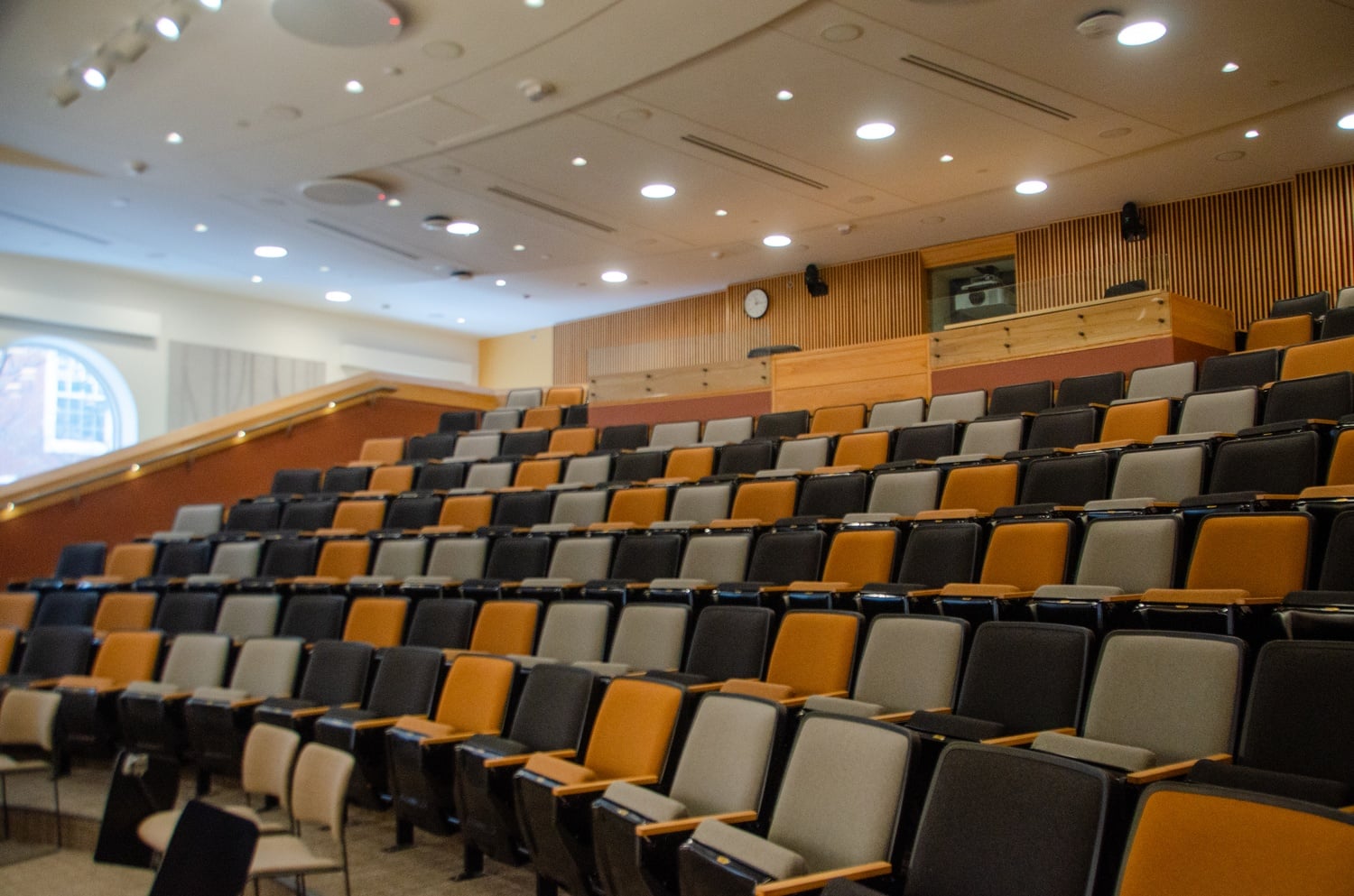
Everyone knows that feeling: you look around the table in a meeting or class and realize nobody wants to be there. Worse still: you realize you’re among the few who do.
In the past few years, the College has made attendance policies more stringent, ostensibly in response to reports that students don’t go to class or elect to watch lectures online instead of going in person. One policy places students on an involuntary leave of absence “in most cases” for missing two weeks of class.
In a now-infamous New York Times article, professor David I. Laibson ’88 noted that even when students attend class, they are frequently “pretending to have done the reading, and consequently the conversation in class is much less productive than it should be.” He continued, “It’s a poor use of everyone’s time, and often there’s one student who basically carries the day.”
An attendance policy only worsens that problem.
The self-selecting group of class-goers will be a concentrated population of engaged students. In the world of nanny-state attendance policy, would-be absentees or would-be recorded lecture watchers show up only to “echo what everyone else has said” or spend class time multitasking on their laptops.
Ideally, of course, every Harvard student cares about learning and is thus eager to go to class. But no matter how much the Editorial Board and the Intellectual Vitality initiative pretend otherwise, not everyone came to Harvard to be a super-nerd. Some people are here because they’re great at sports or music or LinkedIn. Not to say all those people aren’t good at school, it just might not be their top priority.
Attendance policies do what they’re designed to do: incentivize class attendance. They can’t be expected to reform the intellectual spirit of a disengaged student. By holding students hostage in class, the administration is either hoping for the unlikely conversion of the truants to intellectual commitment or trying to punish them for not having it in the first place. Either way, these policies only end up harming engaged students by diluting their classroom experience with peers who act as dead weight.
Yes, I’m arguing for a world in which students do not get explicitly penalized — or rewarded — for their attendance.
It may seem that students should be rewarded with higher grades for going to class. But Harvard students are “creatively lazy:” committed “to achieving the highest grades with the least amount of effort.” Thus, when the syllabus explicitly says attendance will affect grades, most students will attend. I’m asking for students who do attend class to simply accept the reward of a better classroom environment. Hopefully, the class is set up so they’ll receive better grades anyway.
Of course, attendance policies will differ by subject. In STEM courses, the goal is usually to master the material. While I think many humanities classes could benefit from incorporating this goal more into their curricula, their aim is often for students to analyze the material, rather than to learn facts and perform them in an exam.
Economics 1800: “The Economics of Cities” is an example of a class doing attendance policy right: There is none. At the same time, lecture is not recorded; neither is section. But you’ll learn more and likely do better on the exam if you attend both.
Government 1090: “Biotech Ethics,” on the other hand, makes attendance 20 percent of students’ final grades. Without an attendance policy, the students who are actually interested in this topic (I imagine — hope? — there are a few) could learn the material without having to tolerate peers’ indifference.
As for discussion sections, it should be equally bad for your grade to go to class and participate in a way that shows you haven’t done the reading than to not come at all. The student who hasn’t done the reading creates a negative externality by cheapening everyone else’s experience.
A classroom or lecture hall filled with students who want to be there can inspire others with a spirit of intellectual curiosity and a greater commitment to learning the material. One with actively disengaged students creates an environment where asking a question reads as holding up lecture and teaches others that tuning out is the norm. By enforcing stricter attendance policies, the administration is actually cultivating a dispassionate classroom environment.
So to the absentee people I say: Stay in your dorm. Sleep in! Your super-nerd classmates will thank you.
Amelia F. Barnum ’28, an Associate Editorial Editor, is a Social Studies concentrator in Winthrop House.
Want to keep up with breaking news? Subscribe to our email newsletter
Have a tip for The Crimson? Share it confidentially