Before The Fish: Norman Winslow Cabot’s Illustrious Harvard Football Career
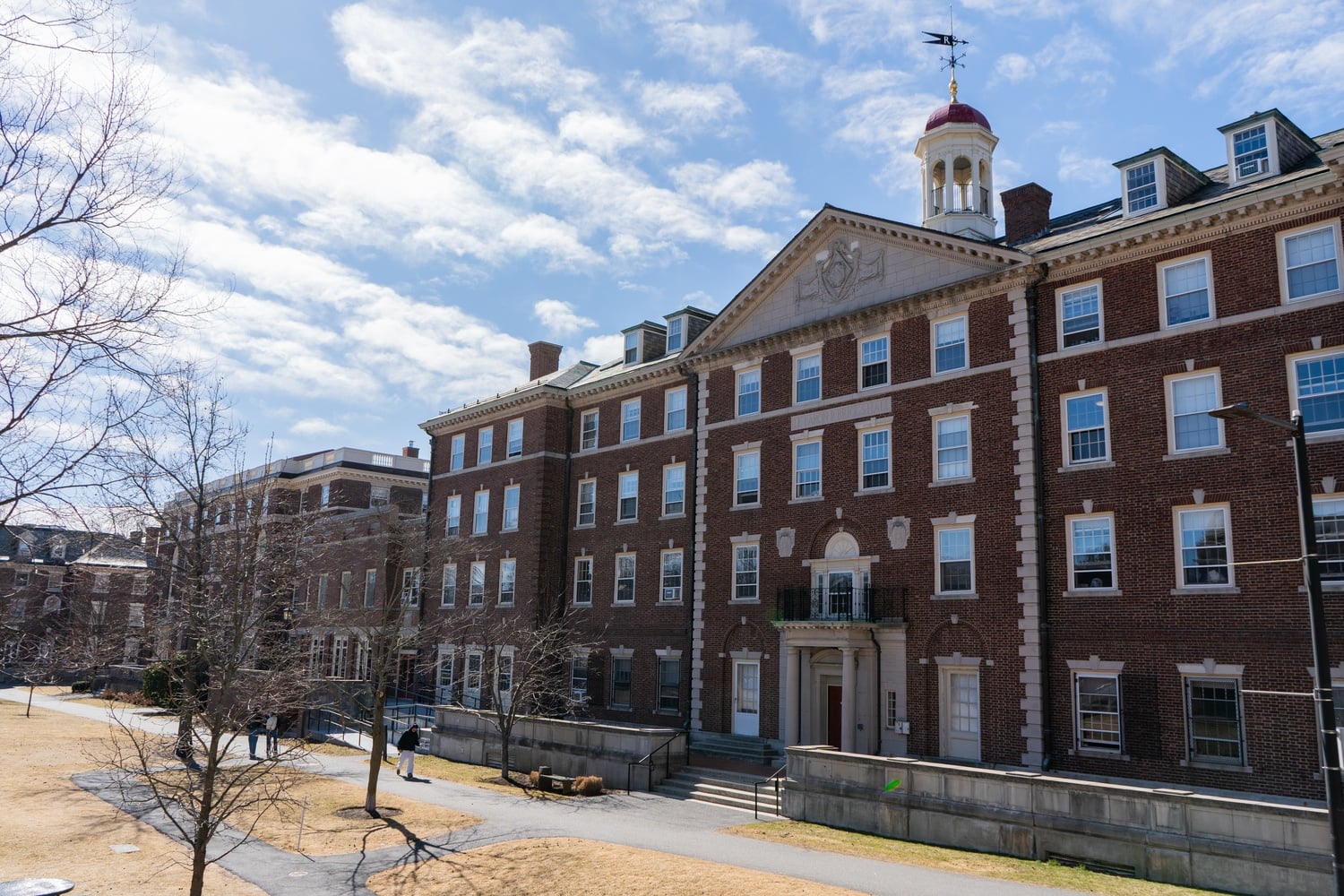
As the 2026 iteration of Housing Day approaches, many freshmen around campus are nervously anticipating the morning when they will learn of their housing fate. Through the raucous celebrations, students will soon eagerly engage in the early-morning festivities.
After freshmen are informed of the house which they will call home for the next three years, they will surely begin to investigate famous alumni and stories surrounding their new domiciles. For those interested in sports, this will lead them down an illustrious path of names celebrating Olympic success, national championships, and records in their respective sports.
With Harvard College boasting nearly two hundred years of organized collegiate sports, it’s clear that the now academically-championed university has had its fair share of athletic successes.
Since Harvard’s first-ever intercollegiate competition in crew against Yale back in 1852 — which the Crimson unsurprisingly won — each of the upperclassmen houses have connections to storied athletes. Cabot House is no exception to this historical phenomenon, with multiple Olympians and college athletes showing allegiance to “the fish.”
While Cabot has been notorious in the past for breaking the hearts of freshmen banished to the Radcliffe Quadrangle, any sadness and fear of isolation from peers can be assuaged with a quick history lesson on one of the most notable Harvard athletes with a connection to the house: Norman Cabot, a graduate from the class of 1898.
Norman Cabot was born on July 1, 1876, in Brookline, Mass. The son of architect Edward Cabot and a descendant of explorer John Cabot, Norman Cabot hailed from the same Boston Brahmin family as Thomas and Virginia Cabot, after whom Cabot House is named.
While Cabot House did not get its name until 1984 — well after Norman’s time at the College — his legacy in the world of Crimson athletics brought esteemed, lasting honor to the family name.
Cabot, who attended Harvard between 1894 and 1898, came into college as an exciting young prospect for both the football and crew teams. After a strong high school athletic career at Noble’s School that ended with him as a senior captain of the junior interscholastic champion football team in the fall of ’93, he played most of his first season on the freshman team as a starting defensive end.
A week before the Yale game, though, Cabot got the call to come up to the varsity team and fill in for an injured defensive end. This was nearly unheard of at the time, but Cabot had a strong performance in his debut and became a staple in the lineup for the next three years.
Building off the momentum from his rookie year, Cabot took large strides in his sophomore and junior seasons. For both 1895 and 1896, Cabot was selected as a consensus First-Team All-American, which he also followed with a Second-Team accolade in 1897. While Cabot didn’t necessarily fit the modern prototype of an end today at just 5' 11" and 168 pounds, he towered over the average player in the 1890s. Noted by the Philadelphia Times as an outstanding tackler with good agility, Norman Cabot quickly became an integral piece of the puzzle for a dominant 1890s Crimson football team.
As a senior, Cabot was chosen to be a captain for the football team. Although leg injuries bothered him for much of the second half of the season, he was an instrumental part of a 10-0 start that saw Harvard outscore its opponents by a combined 227-5 score. The Crimson eventually finished 10-1-1, fighting to a scoreless tie with Yale in front of 25,000 fans at Soldiers Field in its penultimate game.
Cabot also had a three-year career on his class crew team.
Upon graduation in 1898, Cabot entered the real estate industry, creating the Cabot, Cabot & Forbes firm with his brother. He served as an ensign in the United States Naval Reserve Force during World War I and later became a commanding officer.
In 1928, he died suddenly at 51 in his house in Brookline. 56 years later, in 1984, South House was renamed Cabot House to honor benefactors Thomas and Virginia Cabot, immortalizing the Cabot name in true brick-and-mortar fashion.
Although Norman Cabot did not live in his namesake house in his time at the College — it was still part of the all-women’s Radcliffe College until well after his death — his connection to it can hopefully serve as a bright spot for quadded freshmen looking for an athletic tie to their new home in the days to come.
— Staff writer Alex S. Kim can be reached at [email protected].
— Staff writer Samuel S. Rudavsky can be reached at [email protected]. Follow him on X at @samrudavsky.
Want to keep up with breaking news? Subscribe to our email newsletter
Have a tip for The Crimson? Share it confidentially