A Republican Walks Into a Harvard Bar
I am a politician and a lawyer, so you can probably assume that nothing I say is true. However, somebody slipped truth serum into my five shots of Fireball — and during a rare lucid interlude, I wrote this essay.
In the spirit of veritas, here’s the whole truth. I am 61 years old and a former U.S. congressman. I live in a dorm. I have no job and no car, and my teenage daughter jokes about “The Rise and Fall of Ric Keller.” I took a year’s leave of absence from my job as a lawyer to enroll in a one-year degree program for mid-career students at Harvard Divinity School called the Master of Religion and Public Life.
During my year at Harvard, I have quietly done my own personal “experiment” to escape my bubble. I socialize every week, face-to-face, with people from different religious, political, and ethnic backgrounds. From the beginning, I was optimistic. My experience in life is that it is hard to hate up close. My thesis was that if I frequently interacted in person with my fellow students every week — and focused on our shared interests and values — we would get along great and develop friendships.
Before the year began, some of my friends were skeptical it would go well, considering my background and Harvard’s liberal reputation. After all, I’m in my sixties, a white male, and a Republican politician — essentially a fur salesman at an animal rights convention.
I understood my friends’ concern. In a 2023 survey by The Crimson, barely three percent of Harvard faculty respondents identified as conservative or very conservative, compared to about 77 percent who identified as liberal or very liberal. I would wager I’ve had zero percent conservative or Republican professors. (Where’s this three percent I keep hearing about?)
The ideological makeup of students is similarly left-leaning. According to a Crimson survey of the Class of 2027, roughly eight percent of students surveyed identified as conservative or very conservative, compared to nearly 65 percent who identified as progressive or very progressive. In my MRPL program at HDS, I am seemingly the only Republican, the only conservative, and the only white male.
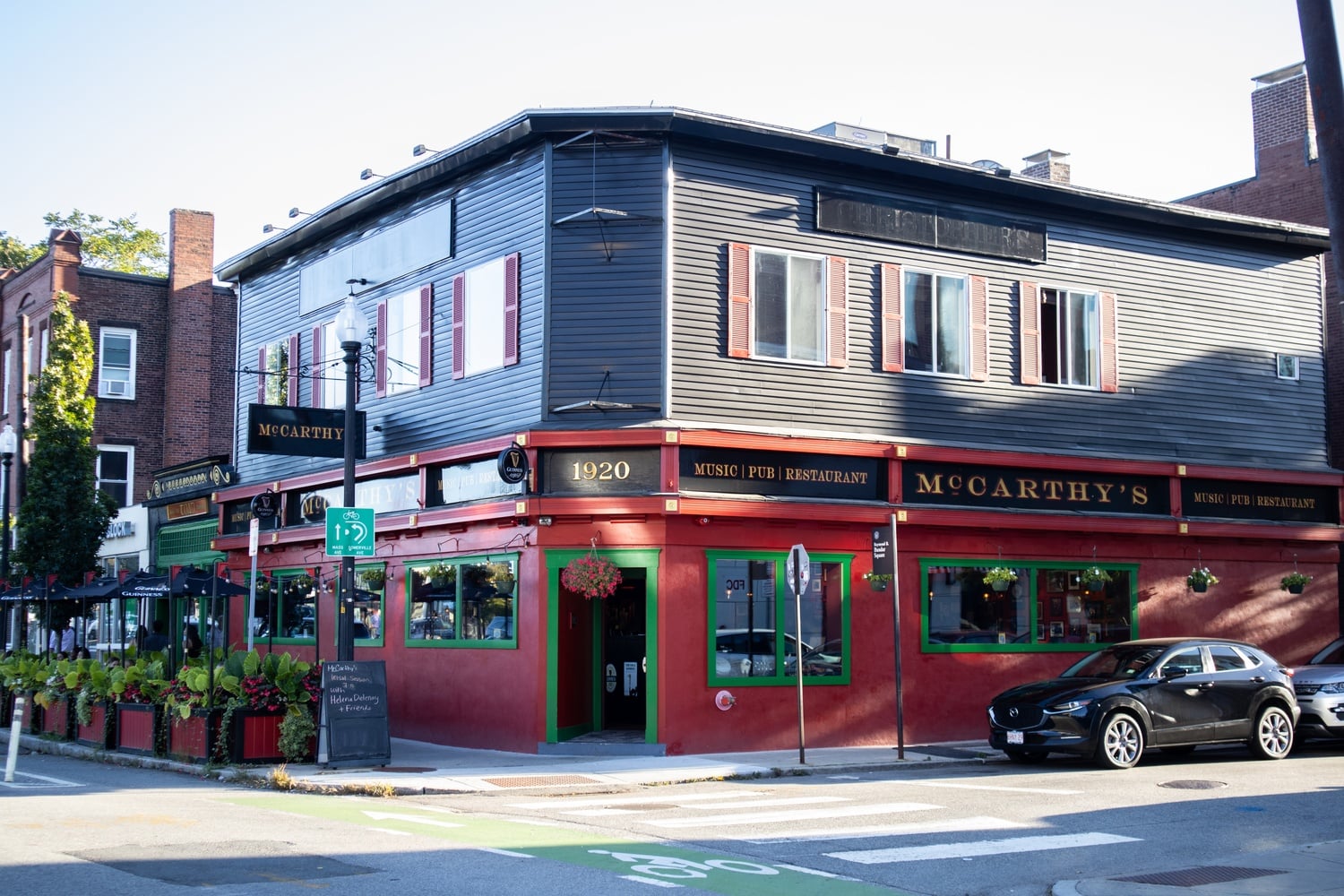
Given these odds, I didn’t leave things up to chance. Every week, I did “outside the bubble” activities with my classmates, including grabbing beers, wine, dinners, and coffees, as well as attending events — community teas, comedy clubs, concerts, football games, parties, guest lectures, club meetings of Buddhists and LGBTQ rights groups, and even a psychedelics history tour of Harvard’s campus. My “go-to” favorite spots were two bars on Massachusetts Avenue in Cambridge: McCarthy’s and Toad (great live music) and Cambridge Common (amazing cider).
I experienced zero hate. I saw only kindness and inclusion.
Here’s just one example: I love comedy. Shortly after I arrived on campus, I reached out to the Harvard Undergraduate Stand Up Comic Society. Even though I was getting a graduate degree, and the club is for undergraduates, they welcomed me with open arms. I attended their weekly Tuesday night club meetings, where we would work together on stand-up bits and give each other feedback.
HUSUCS also sponsors popular stand-up comedy shows on Harvard’s campus. To my knowledge, I was the only graduate student who performed at their comedy show in November 2025. I didn’t talk about Trump or Jesus. I joked about relationship failures, dating trainwrecks, and once getting fired from Wendy’s. The audience — mostly undergraduates, and likely left-leaning — laughed easily and often. Humor connects us. If we can laugh together, we can work together.
In short, my “thesis” was confirmed. My experiment in going “outside the bubble” renewed my faith that people of different religions, political parties, ethnic backgrounds, age brackets, and sexual orientations are perfectly capable of getting along.
So here’s the truth. Yes, Harvard is liberal. Yes, Harvard’s lack of viewpoint diversity is a genuine shortcoming. And yes, Harvard would benefit from more political and intellectual diversity. As the economist Joan Robinson put it, “Ideology is like breath: You never smell your own.”
It is also true that too many conservatives improperly conflate “liberal” with “exclusive.” Harvard is liberal, but it is not exclusionary. I found Harvard students and faculty to be very inclusive, kind, and welcoming to me. My comedy experience is just one of many examples. For the most part, the people at Harvard are high achievers, comfortable in their skin, and easy to get along with when you take the time to get to know them.
For me, Harvard affirmed that we have more in common than what divides us. If we want to bring people together, here’s a good place to start: Instead of identifying ourselves solely by our political or religious sects (which mostly emphasize our differences), we are better off focusing on the ways we are the same, such as our shared interests — music, comedy, sports, travel, motorcycles — and values, like compassion and fairness. This is true regardless of whether you are a student, a lawyer, or even a lowly politician.
Dear editor, the truth serum is wearing off. This is so embarrassing. Please do not print.
Richard “Ric” A. Keller is a student in the Master of Religion and Public Life program at Harvard Divinity School. He is a writer, lawyer, and former U.S. Congressman. He was once fired from Wendy’s.
Want to keep up with breaking news? Subscribe to our email newsletter
Have a tip for The Crimson? Share it confidentially