Harvard Extends Passio GO! Contract, Scraps Student-Led Shuttle App Proposal
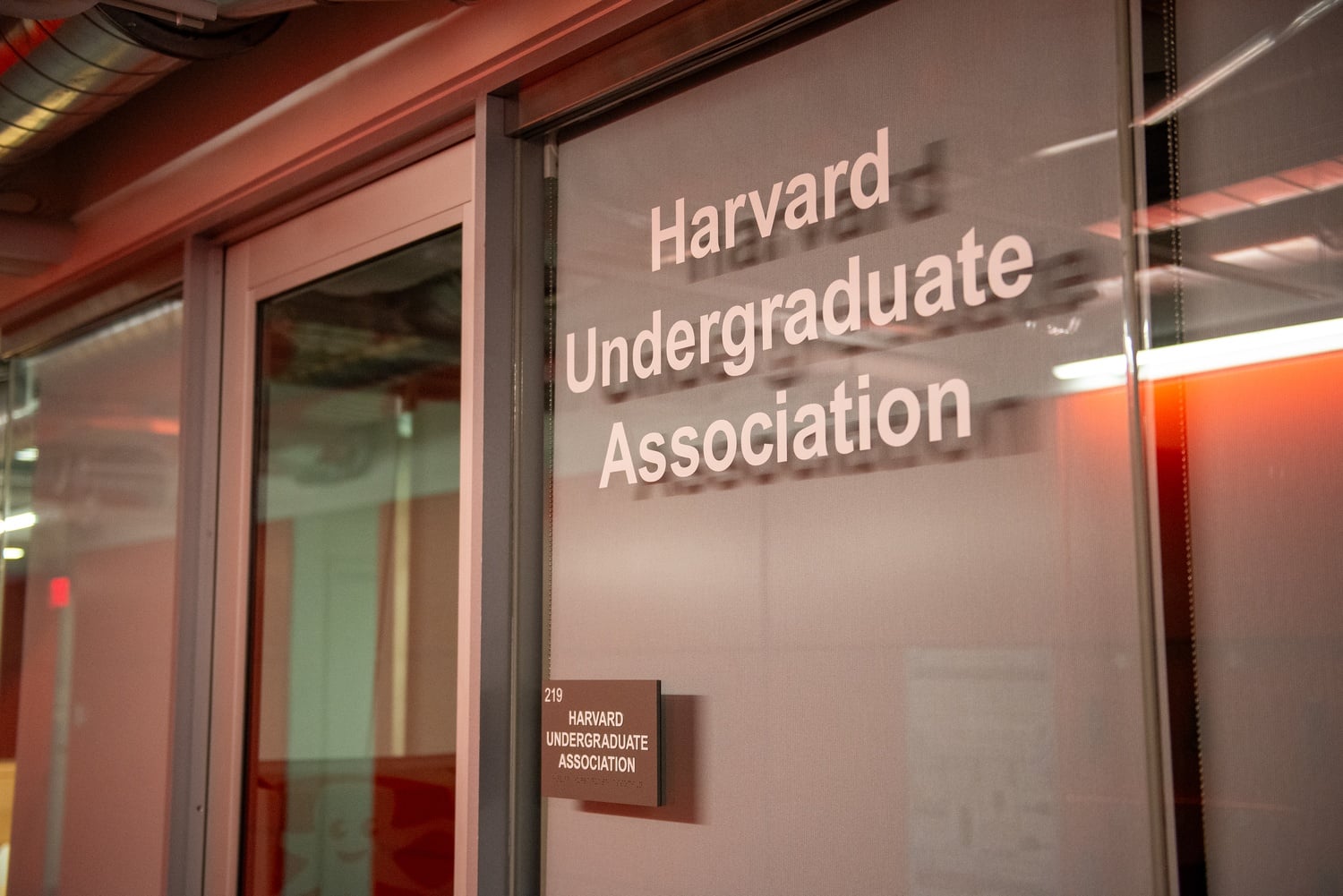
Harvard Transportation Services scrapped a Harvard Undergraduate Association-backed plan to have students design a new shuttle tracking app, instead extending its contract with Passio GO!, according to HUA Co-President Caleb N. Thompson ’27 and HUA Residential Life Officer Isabelle G. Agarwal ’28.
The contract agreement means Harvard will continue using the third-party application — which tracks bus schedules and arrival times — even as it weighs alternatives that would not be fully implemented until the next academic year, according to Thompson.
The original plan, Thompson said, called for an app competition among students to code and design a new transportation interface for their peers, similar to an ongoing HUA initiative to build a centralized extracurricular club platform.
“We just wanted to give the students a chance to make something better,” Thompson said. “We have really talented students who are capable of doing something — making something of their own that they feel good about.”
But according to Thompson, Transportation Services administrators pushed back, raising concerns about who would maintain a student-built app after its creators graduated and questioning whether a student team could sustain the time-intensive commitment required to regularly update and monitor both the software and the shuttle hardware it connects to.
“There was concerns from the transportation department about, if students made this interface, who was going to maintain it?” he said.
A University spokesperson declined to comment for this story.
Because the Passio GO! system relies on internal hardware installed in each shuttle — and not just the app’s software — any transition would require physical changes that can only take place over the summer, making a student-led effort during the academic year impractical, Thompson said.
Administrators also questioned whether a student team could meet the ongoing, time-intensive demands of maintaining and updating both the app and its supporting hardware, and what would happen to the platform once its developers graduated, Thompson said.
Thompson argued that the maintenance challenge reflects a broader pattern at Harvard of contracting out to third-party companies rather than building capacity internally.
Get The Crimson in your inbox.
“It’s really challenging, because students need the services and they need to be up to date and accurate,” he said. “If there’s a breakdown, or a crisis, the transportation administrators themselves also aren’t there around the clock to monitor that.”
The alternatives now under consideration include an application designed in-house by the Transportation Services team or a new app built on top of the existing Passio GO! framework, according to Thompson.
Thompson pointed to tensions between HUA leaders and administrators over the pace of the transition. The HUA had pushed to move forward during the academic year, but the department said that could not happen until the summer, he added.
“We tried to unilaterally from the student-based side, but transportation wanted to do something at their own pace,” Thompson said. “We wanted to do it during the year, but the department wanted to wait till the summer.”
Students have broadly complained that Passio GO! is unreliable and inaccurate, and several said the month-to-month renewal has done little to ease frustration over the pace of a replacement.
Though Maxwell W. Zen ’26 said Passio GO! is largely functional, he said the app often provides inaccurate arrival estimates and is prone to minor glitches.
“Every time that I try to open the app, the first time, it always crashes,” he said.
Giovanni S. Gomez-Orozco ’27 said that while the app’s accuracy has improved, issues with the Harvard website it connects to persist.
“Harvard’s shuttle tracker doesn’t work so it’s their fault,” he said, adding that he believes the site’s user interface should be more accessible.
Still, some students expressed satisfaction with the app in its current form.
“I would say it’s reliable,” said John S. Jun, a graduate student at Harvard Medical School. “I’m satisfied.”
Zoe Yu ’27 said the “best case scenario” would be assembling a team of students from CS50 — the College’s introductory computer science course — to develop a “better, improved version of Passio GO!”
“I think a new and improved version of the app, it’s something that all quad students have been wanting for a while,” said Yu, who resides in Pforzheimer House. “It’s sort of a joke among Quad students that Passio GO! is just really poorly designed.”
Yu said she uses the app regularly to get to class and that it is “never really accurate.”
“Students understand what it’s like to navigate the app, and so they could probably make a better version,” she said.
—Staff writer Alma T. Barak can be reached at [email protected] and on Signal at almabk.54. Follow her on X @almabk_.
—Staff writer Theresa F. Bartelme can be reached at [email protected] and on Signal at theresabartelme.15. Follow her on X @theresabartelme.
Want to keep up with breaking news? Subscribe to our email newsletter
Have a tip for The Crimson? Share it confidentially