Can ‘Abundance’ Solve Cambridge’s Housing Crisis?
The arguments of Ezra Klein and Derek Thompson’s 2025 book “Abundance” are well-trodden in Cambridge, where debates over development have defined city politics for decades. Yet local realities complicate the idea of abundance as a one-size-fits-all approach.

hen Jesse Kanson-Benanav moved to Cambridge, he encountered a contradiction: a liberal city that prides itself on inclusion, but one where the cost of living has grown increasingly out of reach for the average resident.
Fresh out of college, Kanson-Benanav took a job as a community organizer in Somerville working on local housing and affordability policy. But he quickly found residents turning to him with technical questions about zoning and development that he couldn’t answer — so he went back to school for an urban planning degree from MIT.
Like many who come to the city as students, Kanson-Benanav stayed in Cambridge years after graduating. He was drawn into the city’s ongoing debates over housing and development. By the early 2010s, he had become a regular presence at community meetings — a staunch pro-development voice in rooms often filled with skepticism about increasing housing density. He went on to found the pro-development advocacy organization A Better Cambridge, which remains a major force in city politics.
After years working to expand housing development in Cambridge, Kanson-Benanav began searching for a more permanent home in the city. But the cost of home ownership forced him and wife to look elsewhere.
They were priced out. And they’re not alone.
Ezra Klein and Derek Thompson’s 2025 book “Abundance” examines a pattern of rising costs in blue cities and states across the country. The cities they name — Los Angeles, Boston, Manhattan — are places thousands want to live, but far fewer can afford.
Cambridge is already one of the densest cities in the U.S. More than 121,000 residents live within its seven square miles, with thousands more still hoping to join.
Klein and Thompson argue that the housing crisis is not a failure of the market but a failure of governance. Complex zoning rules, lengthy permitting processes, and regulatory hurdles have bottlenecked new development — inflating the cost of housing as supply lags behind demand. They call on policymakers to enact sweeping reforms that stimulate growth. Create an “abundance” of housing, they argue, and prices will fall.
The book’s arguments are well-trodden in Cambridge, where debates over development have defined local politics for decades. The idea of matching housing supply to demand has been embraced by figures like Vice Mayor Burhan Azeem, who calls himself an “abundist.” ABC even lists “housing abundance” as one of its top priorities. Over the past five years, the median price of a home in Cambridge has more than doubled — from just under $800,000 in January 2021 to nearly $1.7 million today. The city has responded in part by loosening zoning restrictions to encourage larger, denser developments.
Not every resident supports abundance-style reform. Still, the pro-development perspective has become one of the dominant frames shaping Cambridge’s debates on housing, growth and affordability.
Assistant City Manager for Community Development Melissa A. Peters and the city’s Director of Housing Christopher Cotter defended the city’s commitment to “confronting the housing crisis through significant policy changes and the allocation of City resources” in a March memo. They added that the city has recently “prioritized increasing capacity and removing barriers for market rate housing.”
Yet local realities complicate the idea of abundance as a one-size-fits-all approach. The city’s small square mileage, its identity as a progressive stronghold, and its history as one of the country’s earliest colonial settlements create a setting for a more nuanced debate.
As residents, policymakers, and advocates look to the future, questions of affordability, inclusion, and sustainability color different visions for the city. Beneath the pressure for continued growth, longstanding questions persist: Who gets to call Cambridge home? And what should that home look like?

‘Build, Baby, Build’
erold S. Kayden ’75, a Harvard-trained lawyer and professor of urban planning at the Graduate School of Design, has spent years advising Cambridge on housing policy, as well as drafting zoning ordinances for cities across the country. When Klein and Thompson published “Abundance” last year, he recognized the argument immediately. It was, he says, a new name for an old idea.
He traces the debates back to 1926, when the Supreme Court ruled, in Euclid v. Ambler Realty, that municipalities have the constitutional right to control development through zoning ordinances — which determine a city’s height, density, and land use.
At the time, zoning was primarily a tool for cities to limit density or development by restricting building mainly to large, single-family homes. But over the past decade or so, Kayden suggests, there has been increasing attention nationwide to reform zoning to prompt urban growth.
It’s an argument Klein and Thompson make in “Abundance”, where they contend that America’s housing crisis is not simply a failure of markets, but of governance. Across liberal cities, housing and affordability dominate political debate. Homelessness has reached record highs, and residents who can’t afford to live in liberal cities are leaving in increasing numbers — statistics Klein and Thompson point at to bolster their argument.
Yet Klein, a columnist at the New York Times and founder of Vox, and Thompson, a contributing writer at The Atlantic, do not offer a detailed policy blueprint. Instead, they propose a broader shift in how policymakers think: away from managing scarcity, and toward enabling production.
Their critique is that progressive politics has focused on providing government aid to make it easier for consumers to purchase and access goods such as housing, education, and infrastructure , without ensuring that supply is meeting the demand.
Just last year in Cambridge, for example, the city made a multi-million dollar investment into its fund for repurchasing and rehabilitating affordable housing — the largest single allocation made since the city established the fund in the mid-1990s. And while Cambridge has continued to up the budget for programs that help residents buy homes, Klein and Thompson would argue such reforms do not address a scarcity of housing supply.
The argument they make in “Abundance” has drawn both praise and criticism. Supporters see it as a necessary corrective to decades of underbuilding. Critics argue it downplays the role of corporate power in the housing market, risks weakening environmental protections, and could strip local communities of the ability to shape development.
In Cambridge, the debate does not arrive as a new idea so much as a familiar one, reframed.
City leaders like Vice Mayor Azeem have been advancing similar arguments for years. In 2020 — before Klein and Thompson began publishing essays on abundance — Azeem co-founded Abundant Housing Massachusetts, a nonprofit that advocates for abundant, diverse, and low-carbon development statewide.
Azeem sees Klein and Thompson’s book and the policy approach it proposes, as following from the kinds of reform he and other young, progressive Democrats have been pushing for at the city level for years. To him, increasing supply is a prerequisite for any broader progressive agenda. “It’s hard to share,” he says. “Especially when you don’t have enough.”
Cambridge’s own policy history reflects the same tension between expanding supply and shaping its outcomes.
In the 1970s, Cambridge imposed strict rent controls on residential properties built before 1969, capping rent-price increases and making it nearly impossible to withdraw units from the market. The policy was designed to protect tenants, but critics argued it made property ownership unprofitable in Cambridge. In 1994, voters narrowly approved a statewide referendum to end rent control, and rents in Cambridge spiked.
To preserve affordability within an increasingly profitable housing market, Cambridge turned to a new tool: the Inclusionary Zoning Ordinance. Passed in 1998, it required developments with more than 10 units to set aside a percentage of available units as income-restricted.
But even as Cambridge layered affordability requirements onto new construction, a more fundamental constraint remained: there was limited land to build on.
At the time, city zoning strictly separated commercial and residential districts and limited the allowed height and density of new developments. Then in 2001, to gain more space, the City Council narrowly approved a sweeping rezoning package to expand where housing could be built — creating six new residential districts, new restrictions on density, and building design standards. The ordinance extended the boundaries where housing could be developed, encouraging mixed-use developments in previously restricted neighborhoods.
On the night the Council voted to pass the ordinance, it was described by then-Vice Mayor David P. Maher, who has also served two terms as mayor, as “the most significant piece of rezoning for many, many decades.” It was sweeping in ambition.
It was also, from the moment it was proposed, a fight no one fully won.
More than sixty residents spoke before the Council that night. Business leaders from Cambridge’s growing biotechnology sector argued the rules were too restrictive. Neighborhood activists, particularly from East Cambridge — where much of the available land was concentrated — argued they weren’t restrictive enough.
Jon Baring-Gould, an East Cambridge resident, warned that commercial development was overtaking his neighbourhood, according to a report in The Crimson at the time. “Any place that you exclude,” he said of zoning, to substantial applause, “business will take over.”
The move was not popular with major property owners in Cambridge. A group of landholders — including Harvard and MIT — that collectively own roughly 15 percent of the city’s land submitted a formal dissent. The proposal ultimately passed in a 7-2 vote, clearing the required supermajority.
Mayor Anthony Galluccio, closing the session, urged the room to remember what they had. “We have to be mindful,” he said, “that these good times should not be taken for granted.”
Councilor Timothy J. Toomey Jr., surveying the discontented crowd, offered his own verdict on the night. “If everyone is not happy,” he said, “we will have accomplished something.” His theme song for the evening: the Rolling Stones’ “You Can’t Always Get What You Want.”
The compromise reflected a pattern that has persisted in Cambridge ever since: efforts to increase housing supply collide with competing concerns about affordability, neighborhood change, and control.
For a time, it appeared the city might follow something like the abundance playbook. Housing production climbed steadily through the 2000s and into the next decade, with more than 2,000 homes added between 2014 and 15.
Yet prices continued to climb.
The realities of the past decade — where development has increased yet costs have not gone down — complicate the premise that supply alone can resolve the crisis.
Few neighborhoods have experienced this more directly than East Cambridge. The district lies just across the river from Boston, and is historically one of Cambridge’s industrial and working-class neighborhoods. It was built around factories and a tight grid of worker housing. Today it sits on the edge of Kendall Square’s biotechnology boom, where research labs and towering apartments are squeezed between nineteenth-century rowhouses.
Heather M. Hoffman has spent years watching those changes unfold — and speaking about them at City Council meetings so often she has lost count.
The Harvard-trained lawyer has lived in East Cambridge for decades. After working as a title examiner and member of the East Cambridge Planning Team, she knows the city’s zoning well. When Hoffman speaks, she leans forward in her chair, long dark braids draped over her shoulders, her voice gathering momentum as she moves from parcel histories to tax laws to zoning codes.
From her perspective, the city’s pro-development rhetoric obscures a deeper pattern. For decades, she says, residents in neighborhoods like East Cambridge have asked for more housing — and less commercial expansion.
“All of the ‘build, baby, build’ people have never, ever supported us,” she says.
In recent years, much of Cambridge’s zoning has been designed to encourage housing development in particular. But what actually gets built, she says, rarely matches the goal. “They tear down existing housing to build either two or three units,” she says. “Not necessarily more housing — just bigger, more expensive stuff for richer people.”
To Hoffman, the idea that deregulation alone will bring prices down is misguided. “What we are talking about is this libertarian fantasy,” she says. “That if we get rid of all the rules, rents will be too cheap to meter and we’ll have a paradise on earth. And it’s not true.”
At Bom Dough Cafe in Inman Square, Lee Farris and Kavish Gandhi, both directors of the Cambridge Community Land Trust, talk through the question over coffee.
Farris, a retired community organizer and housing advocate, has watched nearly every major housing fight play out in the city for decades. Before rent control ended in the 1990s, she had qualified for its protections herself. After it was overturned, she searched through seventy-seven houses before finding one she could afford to buy. Run down enough to keep the price low, Farris describes her home as, “the last affordable house in Cambridge.”
Gandhi, an MIT master’s student in city planning, landed in housing policy through years of eviction-prevention work in Chelsea, where he saw how investor buy-up could reshape neighborhoods of small multifamily buildings.
Farris keeps a folded sheet of lined paper in her hands as she talks. Gandhi doodles occasionally in the back cover of a thick economics textbook, waving his pen in the air as he organizes his thoughts.
For Farris, the explanation for why more development has not always led to lower costs lies in the logic of the market itself. Developers build what is most profitable, she argues — not what a city needs most. “It is to me intuitively clear,” she says, “the for-profit developers are not going to suddenly build so much housing in Cambridge that prices are going to drop substantially.”
Gandhi is less willing to place the blame entirely on private development. But he agrees that the market alone will not produce the housing Cambridge needs. In his view, the city must play a much larger role — through social housing, land trusts, and other public investments — to ensure that new supplies actually reach middle- and low-income residents.
City Councilor Ayah A. Al-Zubi ’23 — a first-term councilor and the youngest to hold the office — frames the issue in broader terms. Housing policy, she argues, operates within what she calls a “housing order under capitalism,” where land and shelter are organized around private property and profit.
Within that system, she argues, the expectation that market construction will eventually produce affordability rests on what economists call “filtering” — the idea that new housing for wealthier residents gradually frees older homes for others. The evidence that this process alone can resolve the affordability crises, she argues, is still lacking.
“It’s important to discuss what kind of housing we build and for whom, centering housing as a public good and human right, not as a commodity,” Al-Zubi shares over email.
From her perspective, zoning reform may still play a role — but only as one tool in the toolkit. Public and social housing, tenant protections, and policies directly geared towards supporting working class residents, she argues, must become a much larger part of the city’s strategy.
The debate over abundance, in other words, is not only about how much housing Cambridge builds, it is also about what kind of housing it builds — and who ultimately benefits.
‘The Future of Our City’
n March 24, 2014, about 150 Cambridge residents crowded around long cafeteria tables at the Tobin Montessori School in West Cambridge for the inaugural meeting of the Fresh Pond Residents Alliance. The group, made up of residents from the Fresh Pond and Alewife neighborhoods, formed in response to rising rates of development in Cambridge in the early 2010s. Its founders worried about the unintended consequences of growth — for both the environment and housing prices — if it was not carefully managed.
At the meeting, then-City Councilor Dennis J. Carlone circulated a letter calling for a new citywide master plan. The petition reflected a broader concern, still echoed in planning conversations today, that development in Cambridge lacked coordination.
Over the following years, the plan evolved from petition to a real possibility — involving multiple consultants and advocacy groups, and input from over 5,000 city residents. In 2019, the city at last released the Envision Cambridge report — described by then-City Manager Louis A. Pasquale as “a blueprint for the future of our city.”
The report exposed a central contradiction. Even as Cambridge expanded development, housing had not become more affordable. It had become less so.
By the federal standard, households are considered cost-burdened when they dedicate more than 30 percent of their income to housing. The Envision Cambridge report found that roughly 40 percent of Cambridge households were paying more than they could afford in order to stay. In response, the report called on the city to increase not only its total amount of available housing, but the amount of affordable housing, specifically.
Included in the recommendations that came out of the Envision Cambridge planning process was an ambitious, and controversial, new proposal for zoning reform: the Affordable Housing Overlay. The AHO — which was passed in 2020 and amended three years later— aims to make developing affordable properties cheaper and easier by allowing developers who commit to offering 100 percent income-restricted units to build taller and denser properties than zoning laws would otherwise allow.
Its passage signaled a shift: affordable housing had become central to Cambridge’s housing strategy, driven in part by the advocacy work of local groups such as A Better Cambridge.
ABC has steadily gained political weight in the city since Kanson-Benanav first gathered that small resident group more than a decade ago. It is now one of Cambridge’s three Independent Expenditure Political Action Committees, or super PACS, wielding influence in local elections by endorsing — and spending thousands of dollars on — a slate of pro-housing candidates.
But not all residents have embraced the direction of recent reforms. When the AHO was first passed, it drew fierce criticisms from residents who argued that in the push to expand development, the city had failed to fully consider its trade-offs.
James G. “Jim” Stockard Jr. has spent decades navigating that resistance. He served on the Cambridge Housing Authority for four decades, a job he says often included standing at the front of the room in community meetings trying to convince development-skeptical residents that “it was going to be okay.”
Stockard has watched Cambridge’s efforts to increase affordability from all sides, including as a founding member of the Affordable Housing Trust, which funds the construction and preservation of affordable homes. He describes the Trust, and other longstanding policies aimed at making Cambridge more affordable, as an “abundance” the city already has.

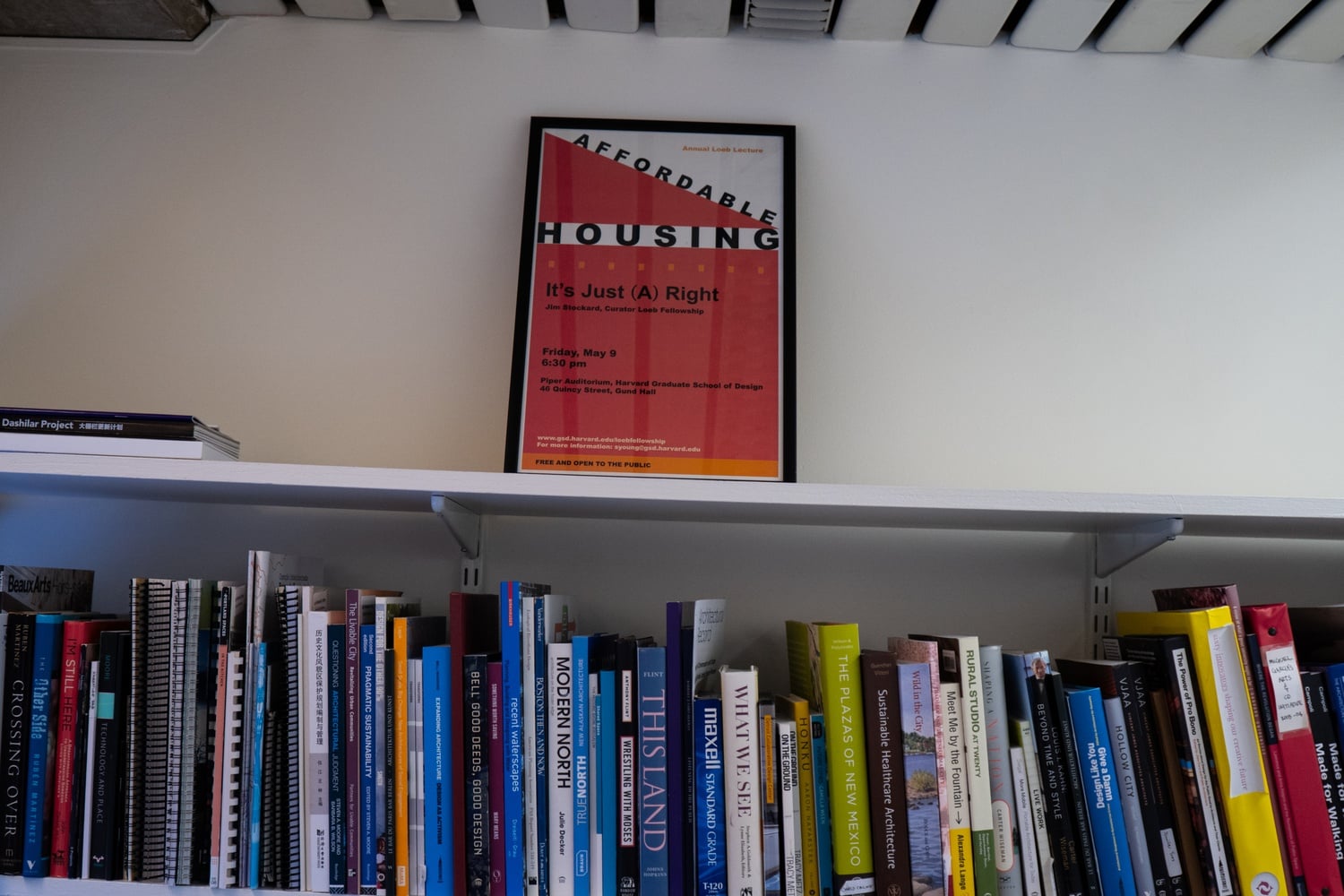
But in its approach to reform, the AHO is fundamentally distinct from many of the city’s existing policies, some of which are now decades old. The AHO was designed to streamline the approval process, allowing larger affordable developments to be constructed without the need to go through a yearslong permitting process. On the other hand, inclusionary zoning and incentive zoning — which requires large non-residential developers pay a fee to the Trust — impose additional requirements on developments.
It’s a distinction residents and developers alike have picked up on, prompting mixed feedback from even those who support Cambridge’s push to drive down prices through zoning reform.
Cambridge developer and attorney Patrick W. Barrett III calls the AHO “the best thing the City Council did for affordable housing.” But not all city policies aimed at increasing the stock of affordable units are equally as effective, he says.
Barrett sued Cambridge over its inclusionary zoning policy, arguing that it is a burden on developers and is preventing further growth.
“Inclusionary — while I can see the social good of it, of integrating different economic strata in the building — is a massive tax on housing development.” Barrett explains. “It’s a much larger cost to a developer to build an inclusionary unit than it is to build the labs that their own studies say are bringing people that require us to build housing.”
But the argument of Klein and Thompson’s “Abundance” — that increasing supply will lower costs — remains deeply contested in Cambridge.
Harvard professor Suzanne P. Blier was among those who voiced concerns with the AHO when it was first passed, due to what she sees as its failure to properly consider the environmental impacts of growth. In 2019, she helped found the Cambridge Citizens Coalition — now one of the city’s other super PACs — to organize residents concerned about the pace and consequences of development.
“Housing growth must be tied to enforceable affordability requirements, preservation of existing units, and strong anti-displacement protections. More units alone is not the same as more affordability,” Blier writes in an email. She also points to the importance of preserving trees and green space — elements she sees as vulnerable in the push toward denser development.
Similar concerns resurfaced in 2023 when the City Council amended the AHO to allow even taller and denser buildings along major corridors — and other reforms have drawn comparable scrutiny.
Last year, the City Council voted to end single-family zoning. Where multifamily housing had been previously prohibited on nearly one-third of Cambridge’s land, developers can now build up to four stories by right — or up to six if they include affordable units. The proposal was backed by ABC, among others, who framed it as a reform to enable scalable affordable development that was previously limited by zoning codes.
But the policy also carries the potential to reshape the city’s physical character — something even its supporters acknowledge.
Kayden, who supports expanded housing, lives on a quiet, tree-lined cul-de-sac once zoned for single-family homes. It is a short walk from a bakery, a cafe, and a convenience store. Under the new multifamily zoning ordinance, he could sell his single family property to a developer who might replace it with a four- to or six-story apartment building.
“Were I to do that, I certainly would never return and talk to my neighbors, because they would never talk to me ever again,” he says.
Even so, he supports the policy. “For me, even though I actually would not want a six story building next to my lot, casting shadows, et cetera, I would support the zoning that would allow for the six story building because I believe in it,” he says.
‘This Isn’t SimCity’
he opening pages of “Abundance” imagine a morning in the year 2050. You wake beneath a roof lined with solar panels. Clean electricity flows from wind turbines and geothermal wells. Water pours from a desalination plant. Food grows vertically in luminous towers. Meat is cultivated in labs. Drones drop off packages. Artificial intelligence shortened the workweek and productivity makes prosperity widely shared.
As the book’s title suggests, it is a world that has moved beyond scarcity.
It is an appealing vision: frictionless, technologically confident, and serene. The constraints that once denied urban life seem to dissolve. Energy is cheap, and land is plentiful again because we use less of it. Cities become engines of growth rather than sites of trade offs.
But Cambridge, where housing debates regularly invoke abundance rhetoric, is not a city being built in 2050. It is a city already built, and rebuilt, layer upon layer, for nearly four centuries.
“This isn’t SimCity,” City Councilor Marc C. McGovern says. “We’re not starting Cambridge from scratch.”
Cambridge is already one of the densest cities in the U.S., and much of the land itself is artificial. Large portions of Cambridge, particularly around Kendall Square and East Cambridge, were once wetlands or marshes filled in to accommodate growth. “Cambridge is a 400 year old city,” says McGovern, a lifelong Cambridge resident. “Half the people are living in neighborhoods that didn’t exist 150 years ago.”
What comes next depends partly on how residents imagine the future of the city. Yet in a city that brings together families who have called it home for generations with young professionals following their next job, those visions don’t always align.
Harvard economist Edward L. Glaeser, whose work has shaped much of the modern debate about cities and is cited in “Abundance,” supports building more housing and allowing the market to respond to demand.
“The overall track record of building sensibly, affordably, and abundantly comes from private sector construction, not from public sector construction,” he says.
But even as he emphasizes growth, Glaeser frames the question in human terms.
“The true city is made of flesh and blood, not glass and concrete,” he says. “Consequently, you need to think about where your glass and concrete will actually do the most good.”
Asked where “glass and concrete” would do the most good in Cambridge, he doesn’t hesitate with his answer: large structures along Massachusetts Avenue. Buildings with a hundred apartments. Not “drips and drabs of single family units in inner areas, which will cause a great deal of consternation, and not add a huge amount to the overall supply,” he says.
Would it “kill us” to have more tall buildings in parts of the city? Gazing out his window towards Harvard Square, Glaeser argues that it wouldn’t.
At Harvard Kennedy School, economist Jason L. Furman offers a similarly straightforward view. He has taught supply curves to undergraduate students for nearly a decade . From his perspective, the solution to high housing demand is simple: build more housing.
Furman believes Cambridge could grow significantly. “Cambridge could do a lot more,” he says. “It could have skyscrapers if it wanted to.”
But Cambridge City Councilor Patricia M. “Patty” Nolan ’80 argues that a purely pro-development misses something essential.
The political mandate to build more housing is real, she says, but so is the responsibility to ensure that growth produces places where people can actually thrive, not just reside.
Nolan sees the approach to city design as driven by the social experience. Sidewalk width, skyline imposition, whether new construction preserves or erases natural light — all are important considerations. “It’s a sense of place,” Nolan says. She believes that intentional architecture makes “people feel differently about it, both from the outside and the inside.”
Nolan acknowledges that lowering the requirements for development produces more housing, but she questions what it leaves out. She points to design standards and review processes, which have been pared back under recent zoning ordinances in efforts to hasten development.
Though residents cite design standards in their opposition to large proposals, sometimes delaying approval timelines, Nolan sees the review process as a necessary mechanism.
“I don’t think you have to sacrifice design review to get building done. Sometimes that can just be a way to prevent building, but I think other times it can just be a way to improve it,” Nolan says.

Charles M. Sullivan, the executive director of the Cambridge Historical Commission, sees his role in similar terms. Established more than 60 years ago, the CHC exists to preserve Cambridge’s historical record. It maintains records on over 13,000 buildings across the city. When development threatens any structures that have been standing for more than 50 years, the CHC is the last regulatory body that has the authority to stop demolition.
But Sullivan doesn’t see the CHC’s role as preventing development of historical properties. He argues that the agency is more a “filter” than an obstacle for change. “We think we’re part of the solution and not part of the problem,” he says.
Often, Sullivan explains, design review leads to compromise rather than cancellation: historic facades preserved, rear additions raised, and new housing folded into existing streetscapes. In one recent case, a redesign prompted by aesthetic concerns from the CHC even resulted in an extra unit. “Which doesn’t sound like much,” he admits, “but it’s certainly a step in the right direction.”
McGovern has watched the consequences of growth firsthand on the street where he lives, where his family has owned a home since 1918. When he was a child, the block consisted mostly of two- and three-family houses. Over the decades, several properties were redeveloped. Today, six- and seven-story buildings stand among the older homes.
“The heights of those buildings haven’t impacted my life at all,” he says. The street still feels like a neighborhood, he argues, it simply houses more people.
“If we’re going to address the housing crisis, we’re not going to do it by building two- and three-family homes. There’s just not enough space to do it,” he adds. “We have to build taller buildings.”
To many in Cambridge, however, abundance may depend on more than simply building homes. It also depends on the infrastructure that allows a dense city to function.
Beneath its streets lies a network of aging pipes and drainage systems that must absorb the cumulative impact of densification. Francesca Gordini, an architect and a renter in Cambridge, worries that zoning reforms sometimes precede deeper studies of the areas’ existing utilities, hydrology, and long-term ecological capacity.
“Nobody has done a study regarding the utilities,” she says. “How much can our utilities really support a major growth of that kind? Sewage being first.”
Transportation raises similar questions. Klein and Thompson’s imagined 2050 city runs on seamless mobility systems. In present-day Cambridge, Gordini’s commute — just over two miles — is often faster on foot than by train.
If regional transit were more efficient, she argues, residents could live farther from the urban core without sacrificing access to jobs. Housing demand might then distribute more evenly across the metropolitan area rather than concentrating in dense neighborhoods like Cambridge.
Although Cambridge has taken steps to increase housing production within its own border, its ability to coordinate growth with neighboring municipalities remains limited. Cambridge and Boston together account for much of the state’s housing construction, and local policymakers often question whether the housing shortage is a problem any single city can solve.
Yet the difficulty of coordinating housing, transit, and infrastructure across municipal boundaries raises a deeper question about scale. If the housing shortage is regional— or even national — what level of government is actually responsible for fixing it?
In “Abundance,” Klein and Thompson reach a version of that question. “What level of government — and of society — is appropriate for housing policy?” they ask.
Cities control zoning. States shape public transportation. The federal government provides much of the funding that makes large infrastructure projects possible. Creating abundance, in other words, may require coordination across all three.
The city’s Community Development Department wrote in a March memo that “the progressive actions taken by both the City Council and the City administration have allowed for increased production of affordable housing.” Looking to the near future, the CDD and Housing Department staff recommend completing pending zoning reforms and “allowing the market to reset following the series of significant zoning changes of the past few years.”
The departments further commit to exploring social housing options and reviewing inclusionary housing requirements —looking for “more nuanced policies to support housing of all kinds.”
Since its founding, Cambridge has been evolving. So the question is not whether the city will change, it’s how.
‘Only Just Beginning’
hen Kanson-Benanav and his wife met with a realtor to find a home in Cambridge, they happened to mention that they were both originally from the Midwest. She told them they would have better luck finding a home there.
“She said, ‘Based on your income and your goal to live in Cambridge, I don’t know if you can do that. Have you ever thought about just moving back to the Midwest?’” he recalls.
He pauses.
“I think she was kidding,” he adds.
The city Kanson-Benanav has spent a decade trying to change is the same city that may not have room for him. The debates over floor-area ratios, inclusionary percentages, and building heights are, at their core, debates about whether Cambridge will remain a place where people can build a life.
For many, the answer is already no.
Stockard has spent forty years watching people leave the city. He carries in his mind a composite portrait: the family whose housing is unstable, moving three times a year, pulling their children from school after school. “The chances that that kid is going to grow up to be a contributing member of society are small,” he says. “Some will do it. Some will overcome all those strikes against them, but we’ve done them a great disservice by not allowing them to settle and build their life in a place where it’s affordable.”
According to a 2025 resident opinion survey, Cambridge residents consider affordable housing simultaneously the city’s most important issue, and the area in which Cambridge is performing the worst.
None of the people involved in the issue — the advocates, the skeptics, the developers, the councilors — think the solution is simple. Al-Zubi argues that the market cannot solve what the market helped create. Barrett, who is suing the city over its inclusionary zoning requirements, argues that the regulations meant to guarantee affordability have made it too difficult to build. Hoffman worries that commercial interests may overtake the neighborhood she loves.
And while the same debates replay themselves, they are all watching the same city get more expensive, year by year.
Vice Mayor Azeem has thought a great deal about what abundance requires, and about what it makes possible. “It creates the conditions for generosity,” Azeem says, “when you have enough, it’s a lot easier to share than when you just don’t.”
But even he is uncertain what comes next.
Cambridge has already implemented abundance-style reforms: the zoning has changed, the overlay is producing units, and the multifamily reforms are law. But the harder work remains: ensuring that new housing reaches those who need it, preserving the character of the city, and redefining what it means to build a place to live in the 21st century.
That work, he says, is only just beginning.
—Magazine writer Sebastian B. Connolly can be reached at [email protected] or on Signal at sbc.23. Follow him on X @SebastianC4784.
—Staff writer Adelaide L. D. Roger can be reached at [email protected]. Follow her on X @adelaidelrg
Want to keep up with breaking news? Subscribe to our email newsletter
Have a tip for The Crimson? Share it confidentially