Five Harvard Affiliates Awarded 2026 Breakthrough Prizes in Life Sciences
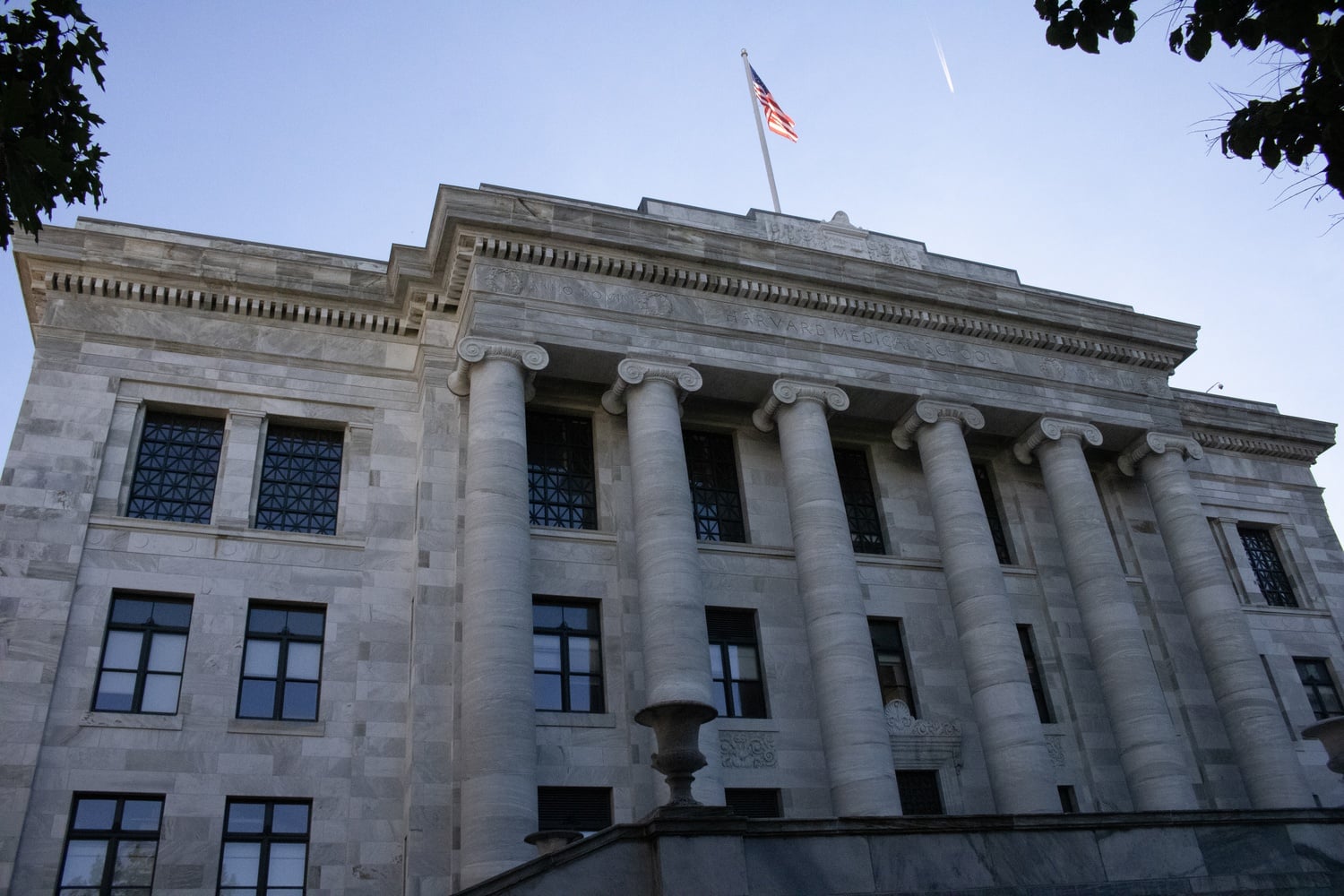
Five Harvard affiliates were named 2026 Laureates of the Breakthrough Prize in Life Sciences — commonly known as the “Oscars of Science” — earlier this month for their contributions to groundbreaking gene therapies and genetic disease identification.
Awarded annually, the $3 million prize is given out to six research teams exploring cutting edge technologies in life sciences, physics, and mathematics. The award’s founders are Google co-founder Sergey Brin, Meta CEO Mark E. Zuckerberg, Priscilla Chan ’07, Yuri and Julia Milner, and 23andme CEO Anne Wojcicki.
Harvard Medical School Professor Stuart H. Orkin, working with NIH Senior Investigator Swee Lay Thein, received his prize for discovering a mechanism that has led to treatments for sickle cell disease.
Orkin’s newfound mechanism re-activates prenatal hemoglobin — which typically gets shut off after birth — to compensate for mutations in normal adult hemoglobin.
Orkin stated that the prize is a testament to how modern research can shape real solutions.
“It’s so important to show how investment in basic science can lead to innovative therapies, especially at a time when there’s some uncertainty or distrust of science and medicine.” Orkin said.
Bryan J. Traynor, who received a Master’s in Medical Science from Harvard-Massachusetts Institute of Technology, was awarded the prize for discovering the most common genetic cause behind the neurodegenerative diseases ALS and frontotemporal dementia alongside Mayo Clinic researcher Rosa Rademakers.
The third team, composed entirely of Harvard affiliates — HMS alumni Jean Bennett and Albert M. Maguire and College alum Katherine A. High ’72 — shared a Breakthrough Prize for developing the first FDA-approved drug for a genetic disease. Approved in 2017, Luxturna treats blindness in patients with Leber Congenital Amaurosis, a rare inherited retinal disease.
Several scientists described significant challenges due to the novel nature of their research.
Get The Crimson in your inbox.
“There were no systems in place to do gene transfer into living cells,” Maguire said. “There was no animal models. There was nothing. We just assumed that science fact would catch up with science fiction.”
Even after Maguire and Bennett discovered that dogs could serve as a model for gene therapy trials, they continued to struggle with frustrating trial logistics and NIH funding issues.
“We were dead in the water,” Maguire said, “we were done.”
Shortly before the trial would be shut down, however, High offered her clinical center and funding to continue the project at the Children’s Hospital of Philadelphia.
“She just swooped in and it started there, and it just worked perfectly,” Maguire said.
Bennett emphasized that throughout those roadblocks, shared purpose and collaboration — like High’s partnership — were key in driving her research.
“We had a shared mission, and it was really fun, and we were working with wonderful people and we loved what we’re doing,” Bennett said.
The star-studded Santa Monica award ceremony was hosted by James Corden, featuring celebrity presenters and attendees including Gigi Hadid, Anne Hathaway, Robert Downey Jr., and Ben Affleck.
While the prize offers significant recognition to the researchers, for Bennett, seeing the transformative applications of her work was especially rewarding.
“They have all developed their own careers,” Bennett said, of the patients her drug has successfully treated. “Starting blind, and then seeing their children’s faces, and being able to go to school and read the whiteboards and read books and stuff like that. It’s been remarkable.”
Want to keep up with breaking news? Subscribe to our email newsletter
Have a tip for The Crimson? Share it confidentially