Harvard Center for Latin American Studies Cuts Revista Magazine Due to Budget Constraints
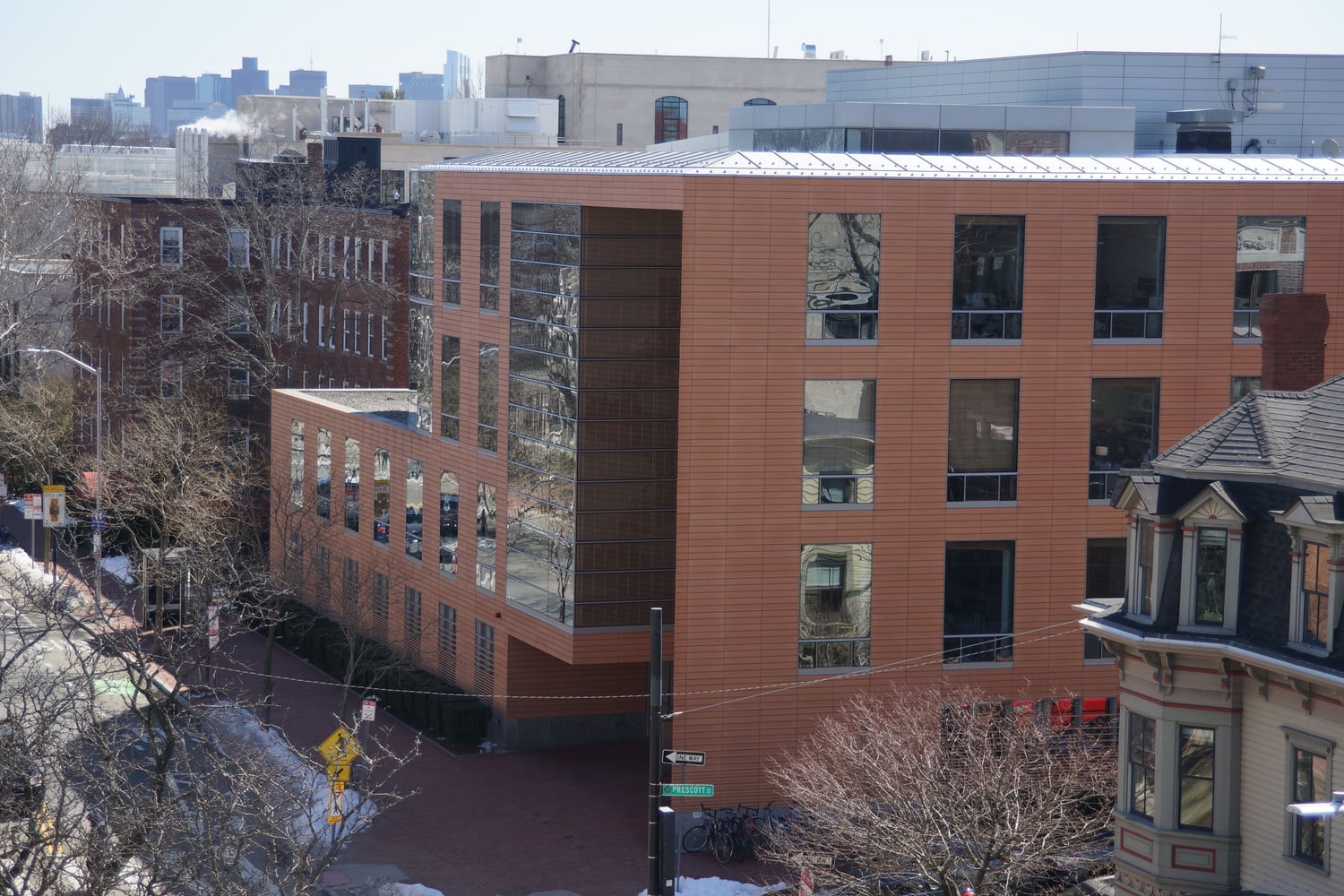
Harvard’s David Rockefeller Center for Latin American Studies has discontinued ReVista, the center’s magazine on Latin America, ending a nearly 28-year run as the center grapples with a looming budget deficit.
June C. Erlick, ReVista’s editor-in-chief, announced the magazine would cease publication in a March 24 email to subscribers. The magazine’s final issue, themed “Views from the South,” was published Wednesday. A planned spring issue on drugs and alcohol will not be published.
“ReVista, the Harvard Review of Latin America is being eliminated because of financial constraints,” she wrote. Erlick wrote in the same email that her own position at the center had also been terminated.
Government professor Steven Levitsky, the faculty director of DRCLAS, confirmed in a Thursday interview that Erlick had been laid off. He wrote in a later text message that the decision to phase out the magazine was made in December 2024 and announced to staff in summer 2025.
Levitsky said the cuts were made with the center’s future priorities in mind — which he identified as research funding, undergraduate experiences in Latin America, the visiting scholars program, and public debates on current issues.
“It’s not that we didn’t want to keep ReVista,” Levitsky said. “We couldn’t afford to keep everything and it was more important to us — and there was unanimity among faculty — it was more important to us that we preserve our student programs than that we preserve a magazine.”
He said the decision was also motivated by an interest in expanding the center’s offerings in Mexican and Latino studies, an area he said has seen significant student demand.
“We can’t do any of those things — we can’t serve our students, we can’t grow in Latino studies, we can’t grow in Mexico studies — if we are not fiscally sound, fiscally healthy,” he added. “In order to move towards the future, we had to make tough decisions.”
When Erlick first joined Rockefeller Center in 1997, the ReVista magazine did not exist. But over the course of her nearly three decades at the center, she expanded what was then an events-focused newsletter into a print publication with issues themed around broad topics such as social justice, the environment, and women in Latin America.
ReVista shifted to an online-only format after 17 years in print in response to earlier budget constraints in 2019. Now, as the center faces ongoing financial instability, the magazine will stop publishing entirely and Erlick and two office interns will formally be dismissed at the end of next week.
Get The Crimson in your inbox.
“It really has been an important part of my Harvard experience, and I’m really sad to see it go,” said Melanie García ’27, who served as a program intern for two years.
Phasing out ReVista is the latest in a series of cuts aimed at helping the center regain financial stability in the face of an anticipated nearly million-dollar budget deficit. In September, DRCLAS announced it was closing regional offices in Chile and Mexico. An additional six positions have been cut among the center’s staff, according to Levitsky.
Levitsky said the budgetary strain resulted in part due to the lingering financial impact of the Covid-19 pandemic.
“Like many centers at Harvard, like FAS, like Harvard itself, DRCLAS found itself in pretty difficult financial straits coming out of the pandemic. We had suffered a loss of a couple of funding sources,” he said.
Levitsky also said the amount of money DRCLAS pays to Harvard in taxes and rent has increased since the pandemic, prompting a downsizing of the center’s office space in addition to staff and programming cuts.
“We looked ahead a few years ago and realized that if we didn’t act, we were headed towards a pretty serious financial cliff, that we were going to run shortfalls of close to a million dollars, which is not sustainable,” Levitsky said.
He added that University-wide austerity measures — implemented amid Harvard’s ongoing confrontation with the federal government — have compounded the pressure on the center. The FAS faces a $365 million structural deficit, and last May professors across departments and centers were told to prepare for budget shortfalls as the Trump administration moved to cut billions in federal funding from the University.
A Harvard spokesperson pointed to an October 2025 interview with Vice President for Finance and Chief Financial Officer Ritu Kalra in the Harvard Gazette in response to a request for comment.
“The financial landscape remains extraordinarily challenging,” Kalra said in the interview.
Levitsky also attributed the financial pressures to long-term planning choices, saying Harvard administrators “did not do a very good job of looking into the future” when helping to plan the center’s budget.
“I didn’t imagine that my directorship would be about large scale budget cuts, but we cannot move forward, we can’t pursue our ambitions if we don’t have our budget balanced in a sustainable way,” he added.
—Staff writer Sebastian B. Connolly can be reached at [email protected] or on Signal @sbc.23. Follow him on X @SebastianC4784.
—Staff writer Amann S. Mahajan can be reached at [email protected] and on Signal at amannsm.38. Follow her on X @amannmahajan.
—Staff writer Summer E. Rose can be reached at [email protected] or on Signal @ser.85. Follow her on X @summerellenrose.
Want to keep up with breaking news? Subscribe to our email newsletter
Have a tip for The Crimson? Share it confidentially