HAW Files Unfair Labor Practice Charge Against Harvard, Cites Improper Change to Expos Class Sizes
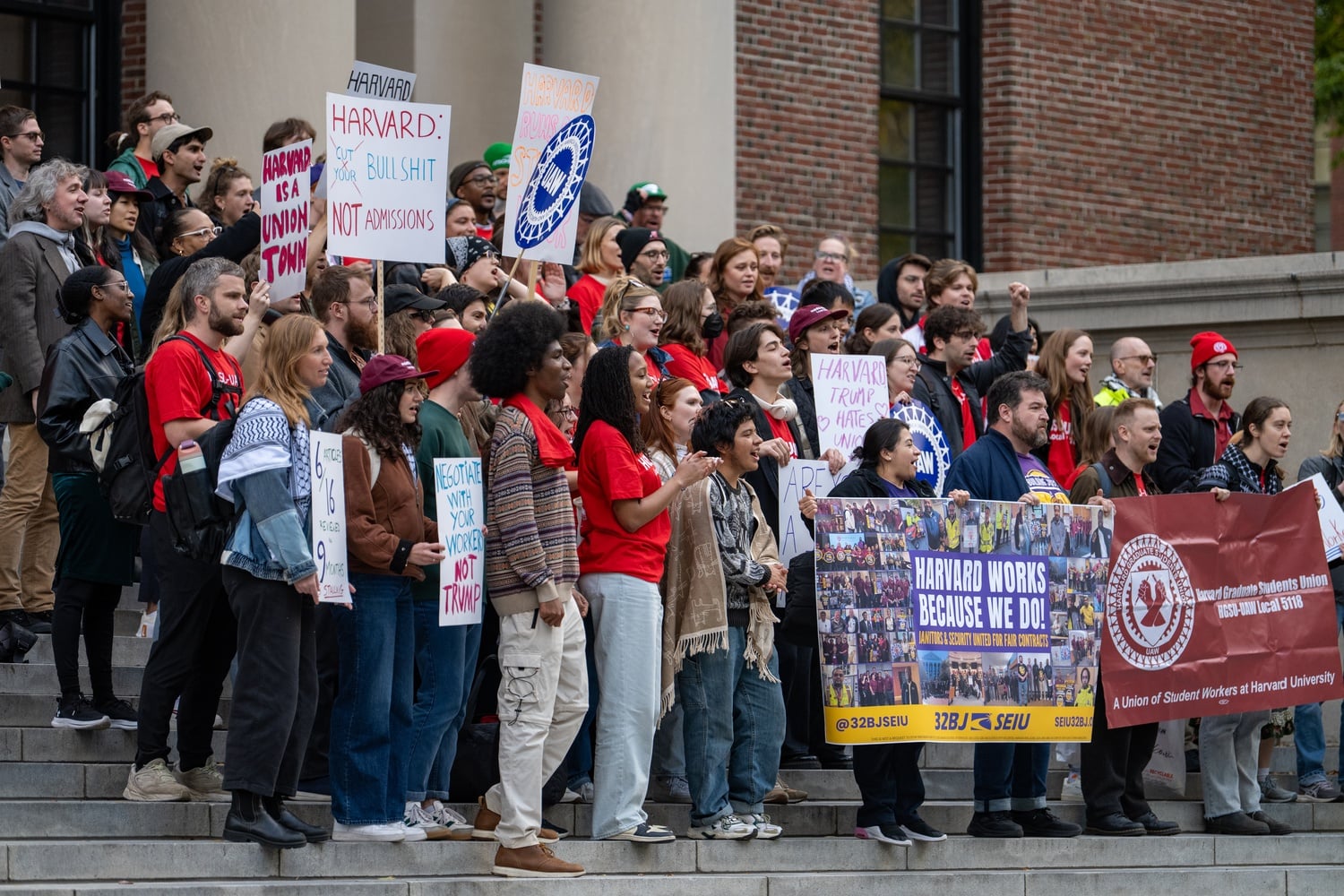
The Harvard Academic Workers Union-United Auto Workers filed an unfair labor practice charge Wednesday, accusing the University of illegally increasing teaching workloads by expanding class sizes in its Expository Writing program without bargaining.
The charge follows Harvard’s recent decision to raise enrollment caps in “Expos Studio 10” — a course designed for first-year students seeking intensive writing support — from 10 to 15 students beginning next academic year. Union leaders said the change, which they characterized as a 50 percent increase in workload for instructors, was implemented unilaterally during ongoing contract negotiations.
Under the National Labor Relations Act, employers must maintain existing working conditions while negotiating a first contract. HAW-UAW, which represents more than 2,600 non-tenure-track faculty and postdoctoral researchers, has been bargaining with the University since September 2024 but has yet to reach an agreement.
HAW-UAW leaders said they had repeatedly warned administrators that staffing reductions in the Expository Writing program would force changes to course structure. Because nearly all first-year students enroll in Expos each year, they said, demand for instruction remains steady even as the number of instructors declines.
“For over a year we have been telling the administration that current policies would lead to a severe labor shortage in Expository Writing,” said J. Gregory Given, a preceptor in the program and member of the union’s bargaining committee.
If the National Labor Relations Board finds merit in the filing, it could issue a complaint against Harvard and require the University to negotiate over the change. Such a ruling would likely return the issue to the bargaining table.
A Harvard spokesperson did not respond to a request for comment.
Given said the bargaining committee had been “persistent” in trying to raise the issue during negotiations — and that compelled bargaining would be a step in the right direction.
“That will still be an improvement on where we are — where they’re just simply not bargaining with us over it,” he said.
He also said Harvard had not initially disclosed its plans to increase class sizes. According to Given, the University only confirmed the change after the union submitted formal information requests.
Get The Crimson in your inbox.
“They only announced that to us because we forced them to, through requests for information, after banging the drums about this for almost a year,” he said.
Once announced, however, the union said the policy was implemented without an opportunity to negotiate. Harvard’s course catalog reflects the shift: 24 Studio 10 sections were offered in fall 2025, compared to 15 currently listed for fall 2026.
Instructors said the increase will affect both teaching conditions and student experience, particularly for those enrolled in Studio courses for individualized support.
Amy Hanes, a preceptor in Expository Writing, said the course often serves students from a range of backgrounds, including veterans and first-generation college students. Smaller class sizes, she said, allow students to build confidence alongside writing skills.
“While they’re building writing and analytical skills, they’re also building relationships,” she said.
Margaret Deli, a head preceptor in the program, said larger sections will make it more difficult to sustain the course’s model, which relies on detailed feedback and frequent one-on-one meetings.
“From an instructor perspective,” she said, “I think there’s going to be a lot of uncertainty and anxiety about how we can best serve our students, knowing that we have a much less manageable workload.”
“And that’s bearing in mind that our workload already — and the challenge of teaching students within the course — is quite high and quite labor intensive,” she added.
The filing comes as tensions between HAW-UAW and the University mount during contract negotiations. The union is currently conducting a strike authorization vote, which opened March 27.
“We have given them every opportunity to actually engage with us on this stuff substantively,” Given said. “They steadfastly refuse to do that.”
—Staff writer Noah A. Ferris can be reached at [email protected]. Follow him on X @noahaferris.
Want to keep up with breaking news? Subscribe to our email newsletter
Have a tip for The Crimson? Share it confidentially