Cultural Rhythms Marks 40th Anniversary With Student Showcase, Food Fair
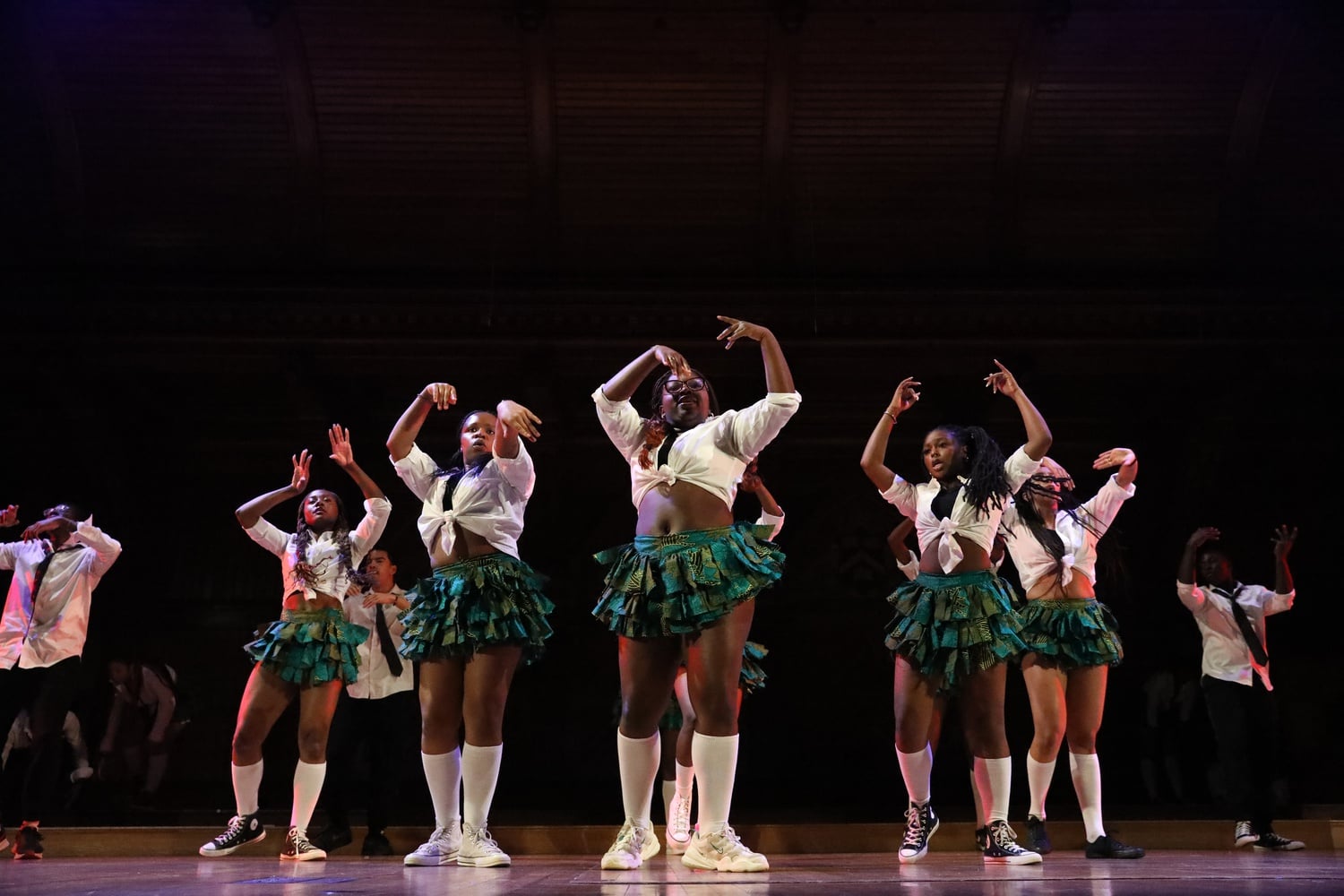
Harvard’s Cultural Rhythms festival marked its 40th anniversary this weekend, drawing hundreds of students to a campus-wide celebration of cultural performance, cuisine, and live showcases.
On Saturday evening, Sanders Theatre filled with attendees for the festival’s annual showcase, which featured performances from 11 student groups, including Harvard Undergraduate Bhangra and Mariachi Veritas de Harvard. The showcase served as the centerpiece of a broader slate of events organized by the Harvard Foundation aimed at highlighting cultural diversity and fostering intercultural engagement on campus.
Co-organizer Jason J. Coreas ’27 said planning for this year’s event proceeded smoothly in collaboration with the Foundation, a sentiment echoed by several participating groups.
“The Harvard Foundation continues to evolve, sure, but I think we’re continually committed to the mission of Cultural Rhythms, which is building community across culture,” Coreas said.
At the showcase, Associate Dean of Culture and Community Alta Mauro reflected on the origins of Cultural Rhythms, noting that the event was founded four decades ago through student advocacy in partnership with S. Allen Counter, the late founder of Harvard’s Center for Intercultural and Race Relations.
The center was shuttered last summer amid a broader rehaul of Harvard’s diversity programming — but administrators said in November that Cultural Rhythms would continue without major changes to its programming.
Mauro said the anniversary represents “four decades of students insisting that Harvard must not only make room for them and their cultures, identities and stories, but celebrate them center stage tonight.”
The event also honored actor and activist Sheryl Lee Ralph as the 2026 Cultural Impact Award recipient, recognizing her work in the arts and AIDS advocacy. In remarks to the audience, Ralph emphasized empathy and mutual respect.
“Be good, be kind, share that with other people,” Ralph said. “Because we are living in times when people need better from each other.”
Student performers emphasized the importance of Cultural Rhythms as both a showcase and a space for community-building. Dexter S. Griffin ’27, director of publicity for the Kuumba Singers, said the event provides an opportunity for cultural expression and connection.
Get The Crimson in your inbox.
“I think it’s important for people to see their culture represented and just see that there is a place to make the noise that we want to make and to celebrate,” Griffin said.
He added that events like Cultural Rhythms create opportunities for in-person connection that are increasingly rare.
“It's important to have moments of genuine community and hanging out for the sake of hanging out and being uncomfortable by doing things outside of your norm,” he said.
Adam M. Bartholomew ’26, co-founder of the Harvard Steelpan Ensemble, said the showcase fosters a sense of unity across campus. The group recently returned from a January trip to Trinidad and Tobago, where the steelpan instrument originated.
“The trip to Trinidad in January has really given us a sense of the energy that we should carry in our performances,” Bartholomew said.
He added that preparing for the performance involved significant logistical challenges, as transporting the ensemble’s instruments — made from oil barrels — can take up to two hours each way.
Guadalupe Vazquez ’27, president of Mariachi Veritas, said her group aimed to highlight the regional diversity of Mexican music in their performance. She noted that this year’s showcase included a collaboration with the campus folklórico dance troupe.
“It’s a beautiful thing that the directors have allowed us to do a collaboration with folklórico,” Vazquez said, adding that she hopes to see more cross-cultural collaborations in future festivals.
Arya S. Prasad ’27, a Harvard Bhangra captain, said the live showcase creates a unique sense of connection between performers and audience members.
“I don’t think anything other than human creativity can produce that level of vulnerability and enable that level of connection,” Prasad said.
Earlier in the day, approximately 400 students gathered in Harvard Yard for the festival’s food fair, which featured dishes from 26 student cultural organizations. Co-organizer Amber Nolazco-Torres ’26 said the Harvard Foundation doubled funding for participating groups to $400 each, allowing the event to expand to two hours — twice as long as was typical in previous years.
The funding also enabled participation from additional groups, including the Russian-Speaking Students Association and the Harvard College Afghan Student Association.
Torres said the food fair aims to expose students to the range of cultures represented on campus.
“The value of Cultural Rhythms, in and of itself, is just exposing students to cultures that they don’t know are all around them,” Torres said.
—Staff writer Kaylee Razo can be reached at [email protected].
—Staff writer Mark C.Z. Snekvik can be reached at [email protected] and on Signal at marksnek.62. Follow him on X at @markcsnekvik.
Want to keep up with breaking news? Subscribe to our email newsletter
Have a tip for The Crimson? Share it confidentially