Harvard College To Eliminate Pre-Concentration Advisors, Shift to Group-Based First-Year Advising Model
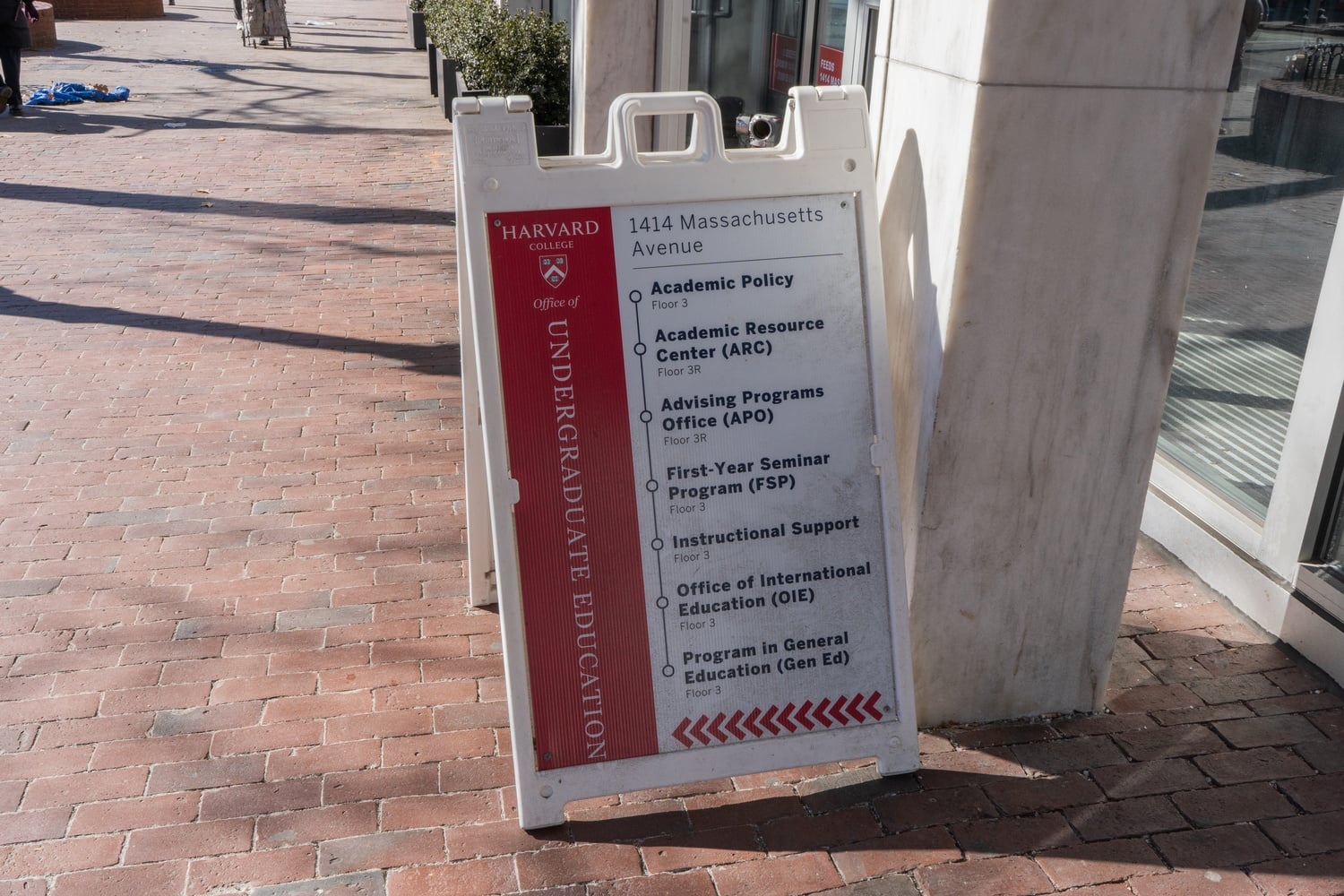
Harvard College will phase out pre-concentration advisers in May, eliminating a one-on-one advising role that has guided freshmen through their first three semesters since fall 2024 and replacing it with a model built around group sessions and departmental support.
Dean of Undergraduate Education Amanda Claybaugh and Dean of Students Thomas G. Dunne announced the change in emails sent Tuesday to pre-concentration advisers and proctors. Claybaugh and Dunne pointed to growing difficulty recruiting volunteer advisers and a mismatch between the timing of advising and course registration — which now takes place over the summer, before freshmen arrive on campus.
“The past few years have been difficult. It’s harder and harder to recruit volunteer advisors,” Claybaugh and Dunne wrote. “It’s also harder and harder to align the timing of advising with the timing of registration.”
“Taken together, these two trends have persuaded us that it’s time to retire the PCA position and replace it with a new approach to first-year advising,” they added.
As of 2025, more than two-thirds of pre-concentration advisers were volunteers, with the remainder drawn from current proctors.
Under the new model, the Office of Undergraduate Education will guide incoming freshmen through course selection before they arrive on campus via online modules and small-group advising sessions. Once on campus, proctors will lead required entryway advising meetings ahead of course registration each semester, with PAFs helping to facilitate those conversations.
Students will no longer be assigned an individual academic adviser during their first year. Instead, the College plans to connect them with faculty, departments, and central offices as they approach concentration declaration.
Claybaugh and Dunne framed the shift as helping students build a broader network of mentors rather than relying on a single assigned volunteer.
“We believe that this change will be better for our students; we believe it will empower them to start building relationships with academic mentors sooner, while also ensuring that they get the information they need, from the right sources, at the right time,” they wrote.
The transition also affects current freshmen. Under the outgoing model, PCAs would have continued advising the Class of 2029 into their sophomore year, through concentration declaration in October. Instead, current freshmen will move directly into concentration-level advising as sophomores, receiving support through the Crimson Connection sophomore newsletter, departmental advising, and House-based resources.
Get The Crimson in your inbox.
Under the new system, PAFs will co-facilitate entryway advising meetings with proctors, help students navigate how to approach faculty and TFs, and encourage them to build long-term advising relationships. A new document distributed to PAFs on Tuesday described their role as helping students learn “the ‘how’ and ‘who’ of advising,” including seeking help and building a support network over time.
In an email to current PAFs, the Advising Programs Office acknowledged the change was “substantive” but said PAFs’ core responsibilities would remain the same.
“Your role with them remains what it has always been: to be thoughtful, accessible peers who help them navigate their experience and connect with resources,” the office wrote.
Frederick L. Klein ’28, a PAF, said he did not think the overhaul would fundamentally alter his work.
“I don’t think that there’s anything that could drastically change the way that PAFs approach their job, in that you’re always going to provide that emotional support and that academic support and be at the entryway meetings, and none of that’s really going to change with this,” Klein said.
Kaden Y. Zheng ’27, also a PAF, said he hoped the new model would create more uniformity across the first-year advising experience. He added that he did not think eliminating PCAs would leave a gap in student support.
“It’s not like they provide exclusive information, right? All the information already exists,” Zheng said. “As long as we’re doing our jobs as PAFs and proctors then that same information should be able to be delegated.”
The phase-out is the latest in a series of changes to freshman advising that have accelerated since the College shifted to prior-term course registration. The PCA role was first introduced in fall 2024, consolidating previously separate freshman and sophomore advising positions into a single adviser assigned from matriculation through concentration declaration.
A year later, the College ended a pilot program that had placed six faculty members in pre-concentration advising roles, saying that Harvard was “considering new ways to enhance advising,” including “the use of technology, enhanced student preparation pre-enrollment, and group advising.”
Several of those elements now form central components of the new model. The Advising Programs Office confirmed earlier this month that it plans to roll out an AI chatbot for the incoming Class of 2030 to help students navigate academic requirements and course selection, though it is not intended to replace human advising.
In the email to outgoing PCAs, Claybaugh and Dunne encouraged departing advisers to stay connected with students through the Host Family Program, which matches hosts with students arriving from far away, and through advising roles with student clubs and organizations.
“We want to honor the many tireless volunteers who have contributed to the advising system over the decades,” they wrote. “Your efforts have helped provide a strong foundation for student success.”
—Staff writer Sebastian B. Connolly can be reached at [email protected] or on Signal at sbc.23. Follow him on X @SebastianC4784.
—Staff writer Summer E. Rose can be reached at [email protected] or on Signal at ser.85. Follow her on X @summerellenrose.
Want to keep up with breaking news? Subscribe to our email newsletter
Have a tip for The Crimson? Share it confidentially