Sportswriting From the Varsity Athlete’s Perspective
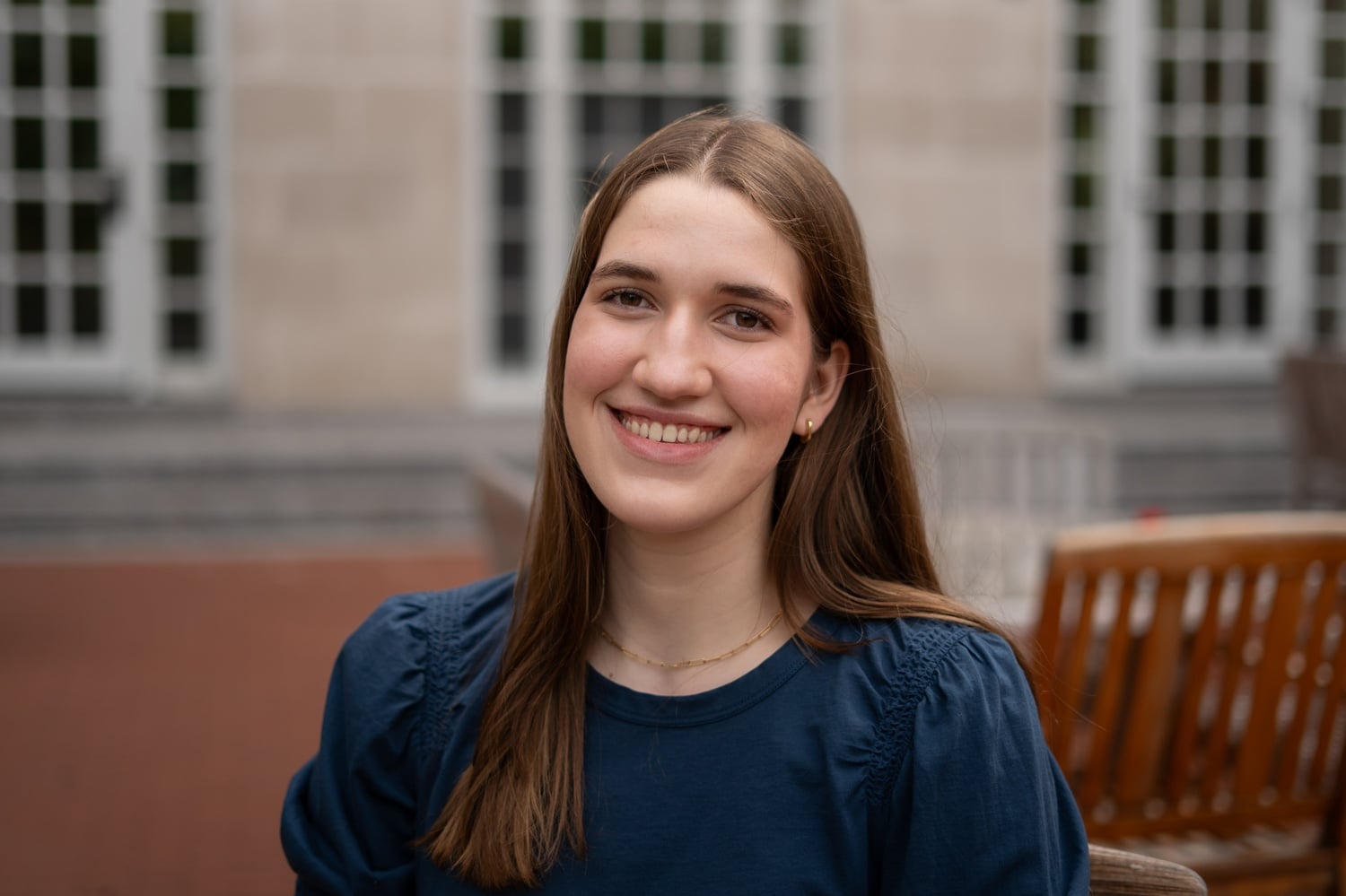
While sportswriting does not require firsthand experience in the field, the experience can often add a deeper knowledge and emotional dimension to reporting.
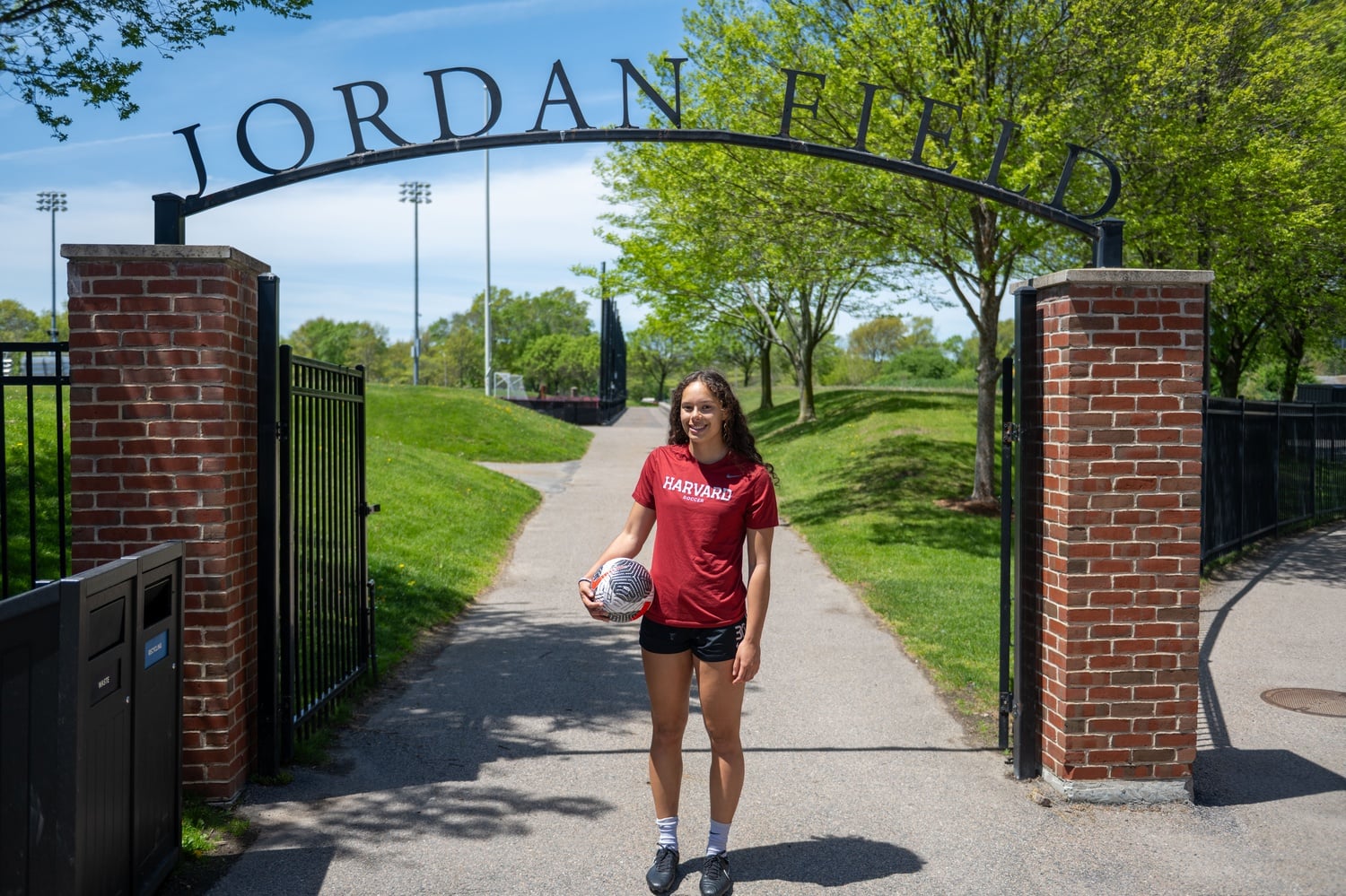
Three current writers for The Crimson Sports Board balance their roles as sports journalists and varsity athletes at Harvard: sophomore Bennett Trubey, a walk-on middle blocker on the women’s volleyball team who appeared in 56 sets across 21 matches this season; senior Rhiannon Stewart, a goalkeeper for the women’s soccer team and former goalkeeper of the Reading F.C. Women; and senior Chandler Piggé, captain of the men’s basketball team, two-time All-Ivy athlete, and a member of the United States’ 3x3 team at the 2025 World University Games. Each student-athlete brings a unique perspective that shapes their dual roles.
Trubey entered Harvard with extensive journalism experience, having written across several boards of her high school newspaper and having served as editor-in-chief.
The summer before her senior year, Trubey attended The School of the New York Times, which she recommends to anyone interested in media journalism.
“One of the assignments is literally to go out to Times Square and interview people. I was not the most socially outgoing person, so it really pushed me out of my comfort zone,” Trubey said.
In contrast, Stewart and Piggé had no prior experience in sportswriting or journalism before joining The Crimson.
“I grew up in England, and there, we don’t really have as many extracurriculars and clubs within school, so there was nothing like student newspapers,” Stewart said. “This was really my first opportunity.”
Both were encouraged to try something new by friends already involved in The Crimson’s Sports Board.
According to Piggé, his friend and former Sports Chair, Katharine Forst ’25, was always trying to recruit people.
Similarly, several of Stewart’s teammates and other athlete friends had written for the board.
“They had spoken really highly of it, and enjoyed their time there,” Steward said, which inspired her to get involved.
Trubey, meanwhile, was drawn by reading current Sports Chair Reed M. Trimble’s coverage of her own sport.
“I came into the open house, and I knew Reed’s name from the gamers that he would write about volleyball,” Trubey said. “It was a little degree of familiarity that I needed at the time.”
While all three ultimately chose to join the Sports Board, both Trubey and Stewart initially considered the News and Editorial Boards.
“I definitely had considered other boards, like news and general editorial,” Stewart said. “I study government, so I’m really interested in politics.”
Still, she chose to remain within her field of expertise.
“It felt like the easiest bridge into, especially because I really felt like I was doing something new with journalism in general,” Stewart said.
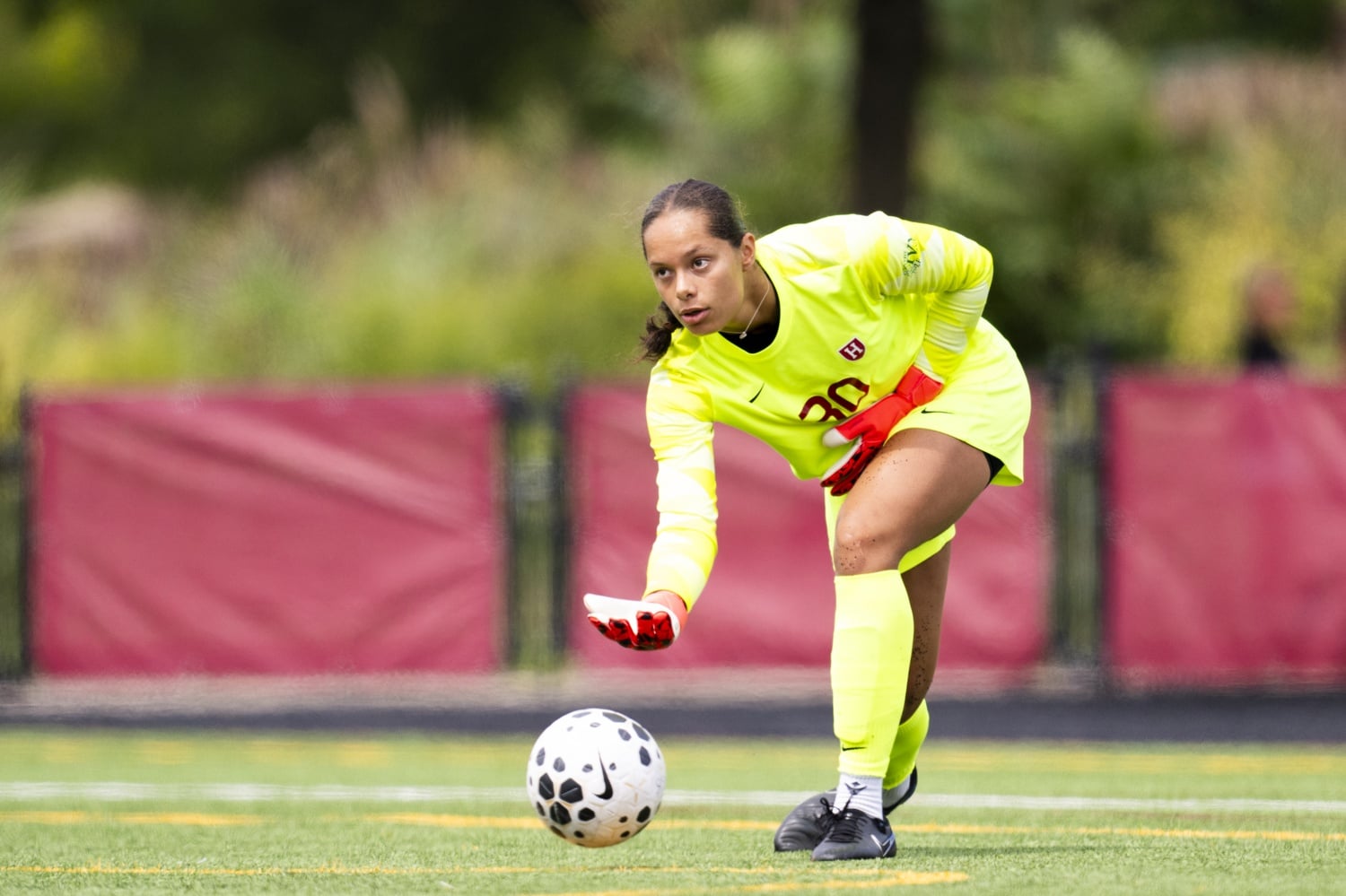
While Stewart was unable to report on her own sport, she began covering rugby, drawing on her familiarity with the sport from watching her brother play.
Trubey decided against news due to the intense demands of her athletic and academic schedules.
“Obviously, I can’t be a 24/7 news journalist right now. News Board would be awesome — maybe I’ll comp that in the future — but realistically, I’m balancing classes, I’m balancing already, Crimson reporting, comp director.”
She is especially “drawn to the character” of sportswriters at The Crimson, and believes her perspective as an athlete gives her an advantage.
“I would hope that it allows me to capture a lot of emotion and play-by-play,” Trubey, who covers the women’s water polo team, said. “As an athlete, I have that competitive edge. So, I want to scream, I want to cheer them on, but I have to, obviously, honor the ethics side of that, of like, ‘don’t be too into it,’ unfortunately.”
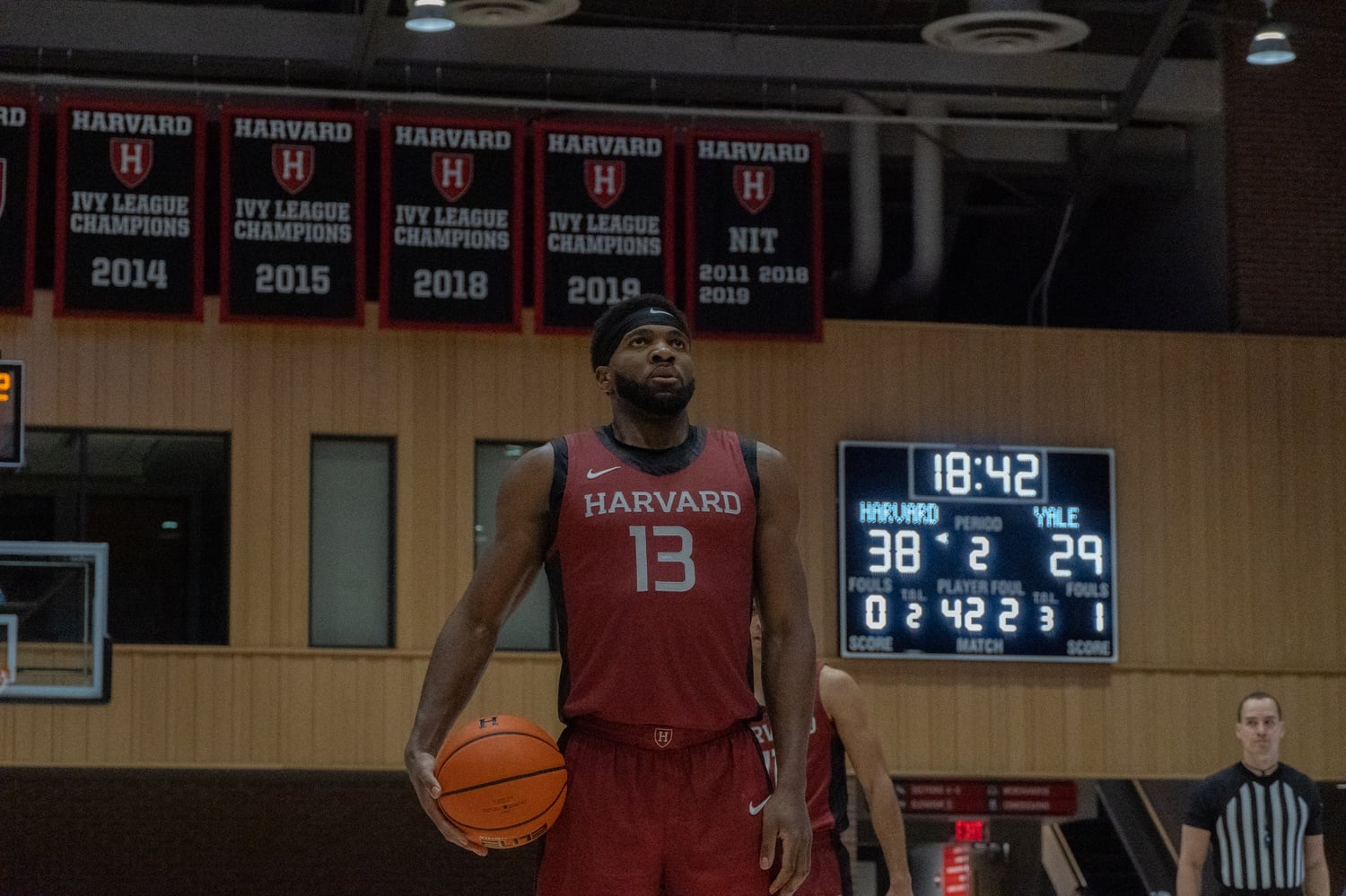
For Stewart and Piggé, the biggest advantage comes from understanding unseen parts of varsity athletics.
“Understanding how those different team dynamics play out in a game, and then also off the field, I think, has been super beneficial,” Stewart said. “It’s more the off-the-field things, in terms of even just the interpersonal relationships and the emotions of the game, and really capturing what it means to be an athlete here — the time and energy people dedicate to it.”
“It’s like wanting to appeal to people to really understand not just what’s in-game that they’re going through, but also off the field, off the court, as well,” Piggé said. “There’s a lot that goes into it. I try to bring that out as much as I can in my writing.”
This relationship also works in reverse: writing has influenced how they approach their respective sports.
“I mean, I model my play after my favorite athletes,” Trubey said. “I think modeling it after the people that I watch — and especially now that I have a little bit more of an analytical approach to how I watch sports, like looking for the patterns and really learning the stories behind the athletes — I think that has helped me, in some ways, to shape who I am as an athlete.”
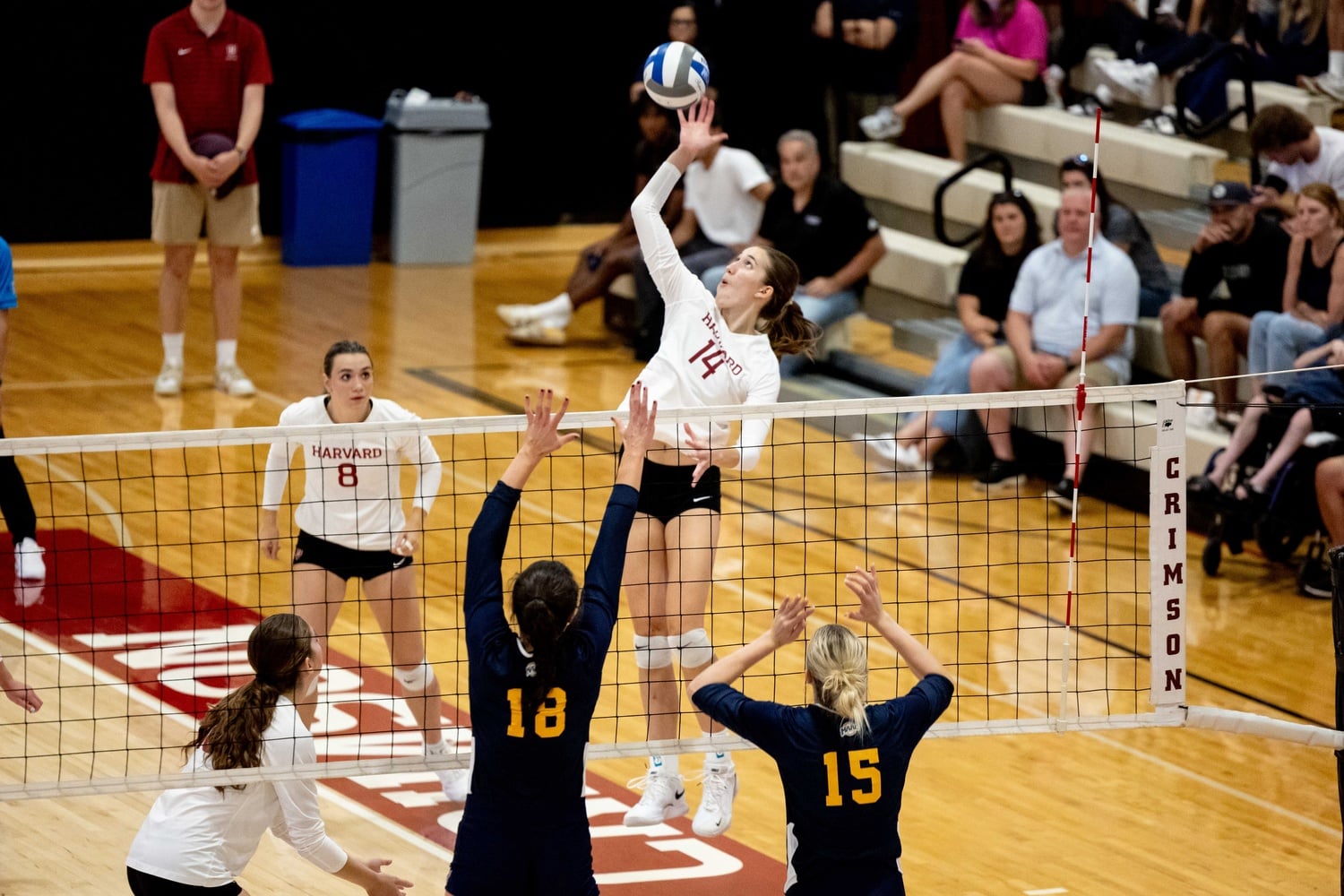
Both Trubey and Stewart have begun to view their own performances through a narrative lens.
Stewart said, “I’m like, what was the narrative of the piece and the game, and think about how, in my position, especially in my role as a goalkeeper, how can I influence that narrative and help us have it go the way we want it to?”
Trubey applies a similar mindset during challenging stretches, such as a losing streak.
“I love an underdog story. When and where I can or within reason, I’m rooting for the underdog every time,” Trubey said.
Looking ahead, Stewart and Piggé, both of whom are graduating this spring, hope to play their sports professionally.
Piggé also plans to continue his academics, potentially pursuing a master’s degree in psychology. While he is unsure about continuing sports journalism after graduating from Harvard, he remains interested in staying in the sports world.
“I don’t know about necessarily sports journalism, but I do like just media in general,” Piggé said.
Stewart is similarly interested in staying connected to sports.
“I’m really interested in the idea of doing sports policy,” Stewart said. However, if she does choose to pursue journalism, it would be on women’s soccer.
“I think most sports commentators on the women’s side are coming from it purely from an experiential point. So I think it would be cool to have a balance of that experiential as well as some prior [journalism] experience,” Stewart explained.
Conversely, Trubey hopes to pursue journalism beyond college, particularly more news-focused reporting.
“If I can do journalism outside of college, that is my dream,” Trubey said. “While I think the sports community is absolutely amazing, there are a lot of things going on in the world right now that I think are really important and really need to be talked about, even outside the world of sports.”
Regardless of their paths, all three share a commitment to carrying forward the values they have developed as athletes, from their competitive edge to their role as teammates.
“I would hope that I’m somewhere where there is a strong community,” Trubey said. “To be surrounded by people that are competitive in a really positive way and building on each other, very much replicating a team, probably a sports team, of just wanting the best for each other and pushing each other to try new things.”
—Staff writer Anat Goldstein can be reached at [email protected].
Want to keep up with breaking news? Subscribe to our email newsletter
Have a tip for The Crimson? Share it confidentially