Parting Shot: Your Non-American Sports Editor
Former Crimson Sport's Associate Editor Nghia Nguyen reflects on acclimating to American sports and the memories he made as part of The Crimson.
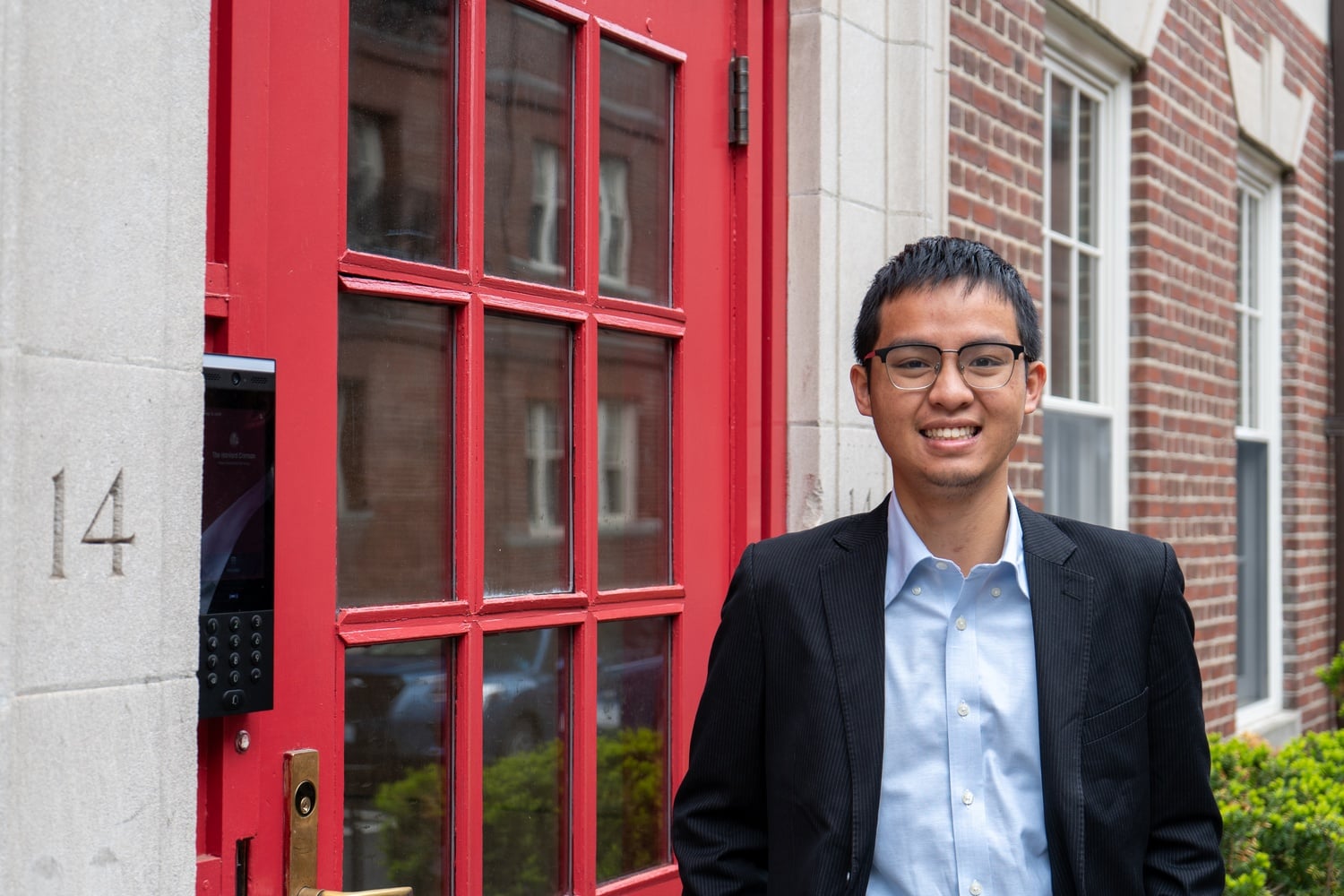
hen I entered 14 Plympton Street some three and a half years ago as a comper, I was a stranger to sports journalism. Granted, I did avidly consume the columns of the “real” football newspapers, such as L’Équipe or FourFourTwo. However, I barely knew the rules of the myriad college sports played on this campus, especially the inexplicable gridiron game that is played only in this country.
Thus, my first ask of the comp directors was whether I could write about “simple, non-American” sports that are easy to talk about. Instead, they tasked me with an article about Nordic skiing. For a kid from Vietnam, who had barely seen any snow before moving to New England, writing about the slopes was a daunting task, to say the least. But it was also the beginning of a beautiful journey in the Sports Cube.
Being the Associate Sports Editor for two years gave me the chance to connect with sports and people in a newfound way. The seemingly repetitive, behind-the-scenes work of proofing and laying out for print the incredible articles that writers churn out week after week had its highs and lows. I have to admit that staying up past my bedtime every Thursday to do page wasn’t always an enjoyable experience, but being by myself in the old Sports Cube gave me some of the best small memories of my time at 14P. I witnessed how each incoming generation of writers tried to document Harvard’s sporting history. It gave an amazing view into the power of sports and our Board’s ability to narrate the stories that come from them. The triumphs, the heartbreaks, the chaos, the perseverance, and everything in between.
There is another role I’ve played on this campus for four years, one that taught me something the Sports Board confirmed. Across Harvard’s intramural fields, many people know me not as a writer or an editor but simply as “Ref.” I became a soccer referee freshman year, partly out of spite for a childhood spent fumbling the easiest passes within the six-yard box, and partly because the idea of screaming at a senior for a living seemed like a reasonable use of my time. But I stayed for a different reason.
A referee occupies a strange space on the pitch. You know every player. You talk to all of them. But you aren’t part of any team. The job is inherently a little lonely and a little separate, connected to everyone, close to no one. For a long time, I thought that was a flaw I had to fix. I would walk into a dining hall the same way I walked onto a field: knowing a lot of faces, unable to stay at any table long enough to make it mine. The free-floater problem. The quiet strangeness of being recognized by everyone but known by no one.
The Sports Board fixed that, not by making me part of a team, exactly, but by making the floating the point. As an editor, you are supposed to hold a little distance from every story. You care, but you don’t get consumed. You serve the piece, not yourself. I had been practicing that stance for four years without knowing it. The yellow jersey and the Google Docs turned out to require the same skill.
Beyond the work, the Sports Board has given me a community of avid sports fans, with whom I can share friendly banter, debate who’s gonna win March Madness, and make my case for why my kind of football is superior. While refereeing can feel overwhelming and one-sided, the Sports Board gave me a sense of belonging and camaraderie.
To the previous Sports Chairs, Jack, Katherine, Praveen, and Jo, thank you for tolerating my rambling thoughts about college soccer and my valiant efforts to improve our coverage of the sport. You gave me room to care loudly about the things I cared about, and that mattered more than you probably knew. To my fellow editors, including Emma, the other Associate Sports Editor who bore the brunt of editing and page, thank you for the jokes and late-night snacks that made Thursday nights bearable. To the athletes that I interviewed, especially the “real” football team, thank you for trusting me with your stories. To all the writers on the Board: the best part of this job was your work. Every piece that I paged reminded me that the stories are already out there, in the locker rooms, on the sidelines, in the quiet moments after a loss, and all we have to do is go find them. Thank you for going and finding them, week after week.
So yes, I am your non-American Associate Sports Editor. I still think the offside trap is more elegant than anything the gridiron has ever produced. However, covering Harvard’s athletes taught me something no professional column ever could: the story underneath the sport is always the same. Athletes strive, sacrifice, fall short, and get up. The jersey changes. The story doesn’t. And somewhere in the telling of those stories, a kid from twelve time zones away found his team. I came to cover Harvard sports, not knowing the rules. I’m leaving knowing the stories. And those, I’ve learned, are the only rules that matter.
—Staff writer Nghia L. Nguyen can be reached at [email protected].
Want to keep up with breaking news? Subscribe to our email newsletter
Have a tip for The Crimson? Share it confidentially