Garber Urges Seniors to Preserve Human Effort in AI Age in Baccalaureate Address
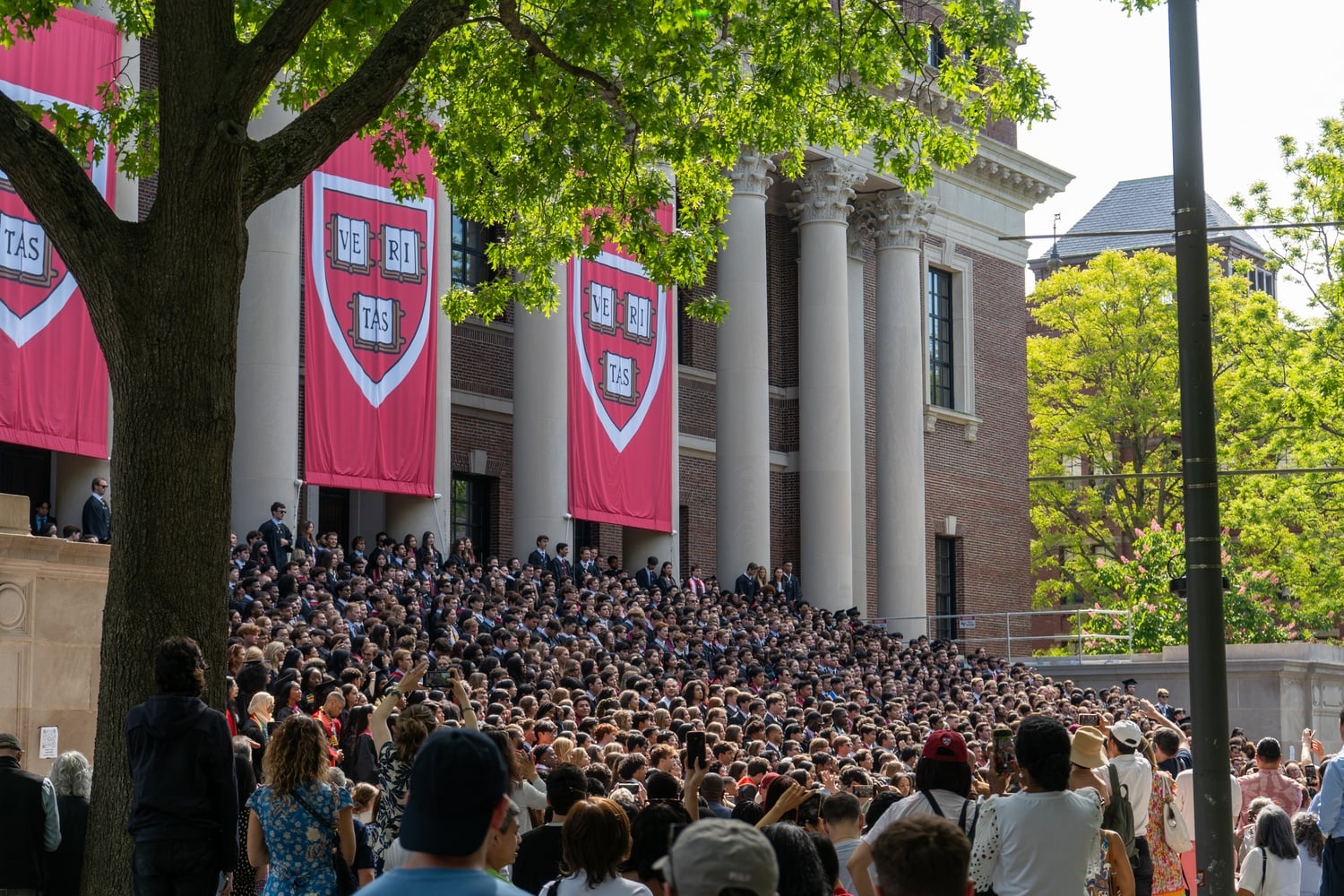
Harvard President Alan M. Garber ’76 urged seniors to think critically about artificial intelligence at Tuesday’s Baccalaureate address, framing the technology as “the backdrop” of the Class of 2026’s college years — and a test of what kinds of knowledge still require human effort.
Garber opened with a joke about using AI to draft his speech.
“Claude and I have been working on my remarks for many days,” Garber said, before quickly walking it back. “Given how commencement season has been unfolding, we decided it would be better for me to go it alone.”
The quip nodded to a wave of backlash against AI-themed commencement speeches this spring, as students at several universities booed speakers who urged graduates to embrace the technology. At University of Arizona, former Google CEO Eric Schmidt was booed during remarks on AI, while speakers at the University of Central Florida and Middle Tennessee State University also drew negative reactions after invoking the technology in graduation addresses.
Garber’s own remarks took a more measured tone. Though he praised students’ achievements and contributions to Harvard, the bulk of his speech focused on how graduates should navigate a world increasingly shaped by AI.
Garber cast anxieties about AI as part of a longer history of fears about new technologies. He pointed to a 1903 opinion piece warning that elevators, railways, telegraphs, and push-button conveniences had ushered in a “an age of little effort.”
Drawing on the article’s image of tourists taking a hot air balloon to the height of a mountain summit rather than climbing it themselves, Garber urged students to consider which forms of effort remain worth preserving.
Get The Crimson in your inbox.
“If there is a question that each of us will have to answer in the years to come, it is this: Which mountains are still worth climbing?” Garber said.
He acknowledged that AI could “accelerate the pace of innovation” — but wanted against surrendering too much to technological convenience.
“There will always be value in toiling laboriously to reach new levels of understanding,” he said.
Garber also warned that an overreliance on automated systems could diminish serendipity, the idea that chance encounters help shape intellectual life.
“If you, like me, ever visited the Widener stacks to avoid procrastination, but then ended up marveling at the shelves and their contents, then you know what I mean.” Garber said.
“You will not chance upon something that truly delights and surprises you if comfortable curation becomes your way of being,” he added.
—Staff writer Sebastian B. Connolly can be reached at [email protected] or on Signal at sbc.23. Follow him on X @SebastianC4784.
—Staff writer Summer E. Rose can be reached at [email protected] or on Signal at ser.85. Follow her on X @summerellenrose.
Want to keep up with breaking news? Subscribe to our email newsletter
Have a tip for The Crimson? Share it confidentially