Silence Only Makes the Echo Chamber Louder
Coming from the South, I was repeatedly warned that Harvard would be a left wing bubble and to be careful sharing opposing views. Luckily, I didn’t listen.
When I first arrived at the College, I found a campus — as many people back home correctly predicted — dominated by a culture of illiberalism. Any dissent from Harvard’s liberal orthodoxy, while allowed, was certainly not welcome.
I could have accepted this as a fait accompli, but I chose not to. During my sophomore year, I decided to try tackling the issue head-on — by joining what I viewed as a particularly egregious purveyor of woke, leftist thought: The Crimson Editorial Board. My four semesters writing for The Crimson taught me that it is far more important — and enjoyable — to voice your heterodox viewpoints than it is to remain silent.
Initially, I was not sure exactly how effective my campaign would be. After all, in September 2023 — when I began comping the Board — the biggest news I had witnessed at Harvard was the retirement of University President Lawrence S. Bacow and the appointment of Harvard’s second female and first president of color, Claudine Gay. It seemed there would be little campus news that offered the opportunity to highlight the predominantly leftist culture of this Board, and campus at large.
Pretty quickly, this turned out not to be the case. From the controversial statement co-signed by a number of student groups in the aftermath of the October 7 attacks, to the University’s abysmal response, the doxxing of students, the disastrous Congressional testimony of our president, and her plagiarism scandal and downfall — our campus was thrust into the spotlight seemingly overnight, with student perspectives essential to the national news cycle. My timing, then, turned out to be propitious.
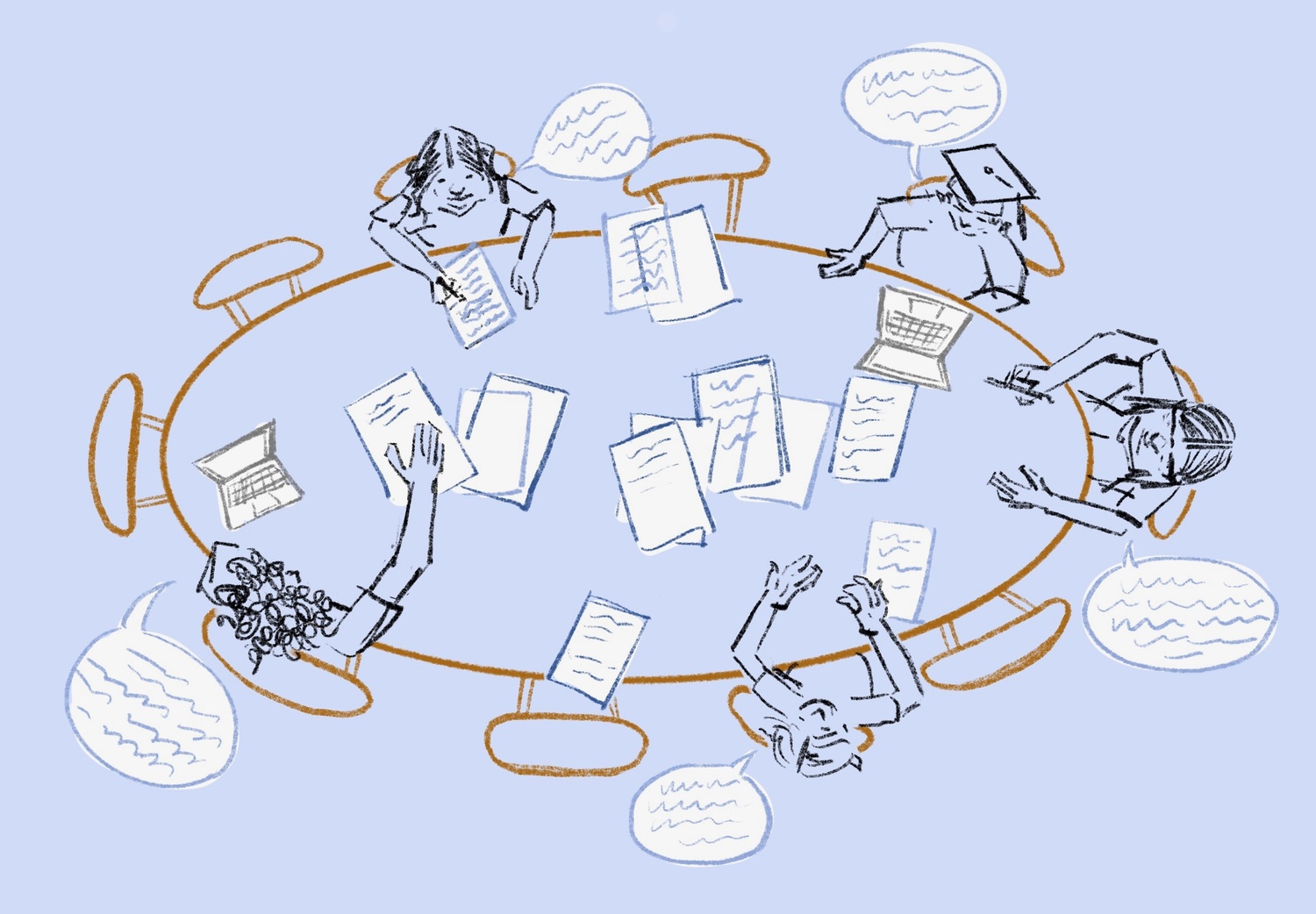
Thrice weekly during staff editorial meetings, I was able to present my heterodox — read, moderately conservative — views to a room full of people that typically disagreed with me. And, despite all of my griping to friends about it, I actually enjoyed it. As it turns out, these people weren’t as close-minded or unreachable as I anticipated, and many were even receptive to my arguments, incorporating them into their own.
Over time, I noticed an increasing willingness among my peers to consider opposing viewpoints, including those against affirmative action, cautious of transgender women competing in women’s sports, or willing to question the University’s virtue signalling. And although it is far from perfect in that regard — as evidenced by my not-infrequent dissents — the Editorial Board I left at the end of last semester is a far cry from the one I read freshman year, both in what it says and what it allows to be said.
Obviously, I alone am not responsible for the shift; others with far more power than I played a much more significant role in advancing this cause. But I would like to think that I helped, and that you can too.
Moreover, just because I espoused views from my perch at 14 Plympton Street that ran counter to the prevailing sentiments one often reads in these pages does not mean that I cannot get along with my peers. In fact, quite the opposite is the case: Some of my most cherished friends on the Board — and on campus — hold political views starkly contrasting from my own.
I hope that other students continue speaking their mind, regardless of whether or not their opinion is popular, as it not only leads to strong friendships, but is also incredibly fulfilling and important work. Only by modeling respectful discourse can we show others — whether peers or outsiders peering at us through a magnifying glass — that reasoned debate and dissent are not only welcome on this campus, but encouraged.
It doesn’t look like Harvard is going to be out of the political maelstrom any time soon, making this role all the more valuable. As this University continues to be at the center of debates regarding scholarship free from political litmus tests, the revocation of research funding, enrollment of international students in American universities, or whatever makes headlines tomorrow, who better to hear from than the students directly affected? And precisely because these issues are of such profound importance, it is essential to hear all perspectives, not just those that might be most favorable on campus.
Feeling as if you are screaming into the wind can certainly be frustrating at times. But in my experience, it was totally worth it.
Henry P. Moss IV ’26, a former Associate Editorial editor, is a History concentrator in Eliot House.
Want to keep up with breaking news? Subscribe to our email newsletter
Have a tip for The Crimson? Share it confidentially