Cambridge Council Advances Housing Amendments, Extending Fight Over Multifamily Zoning
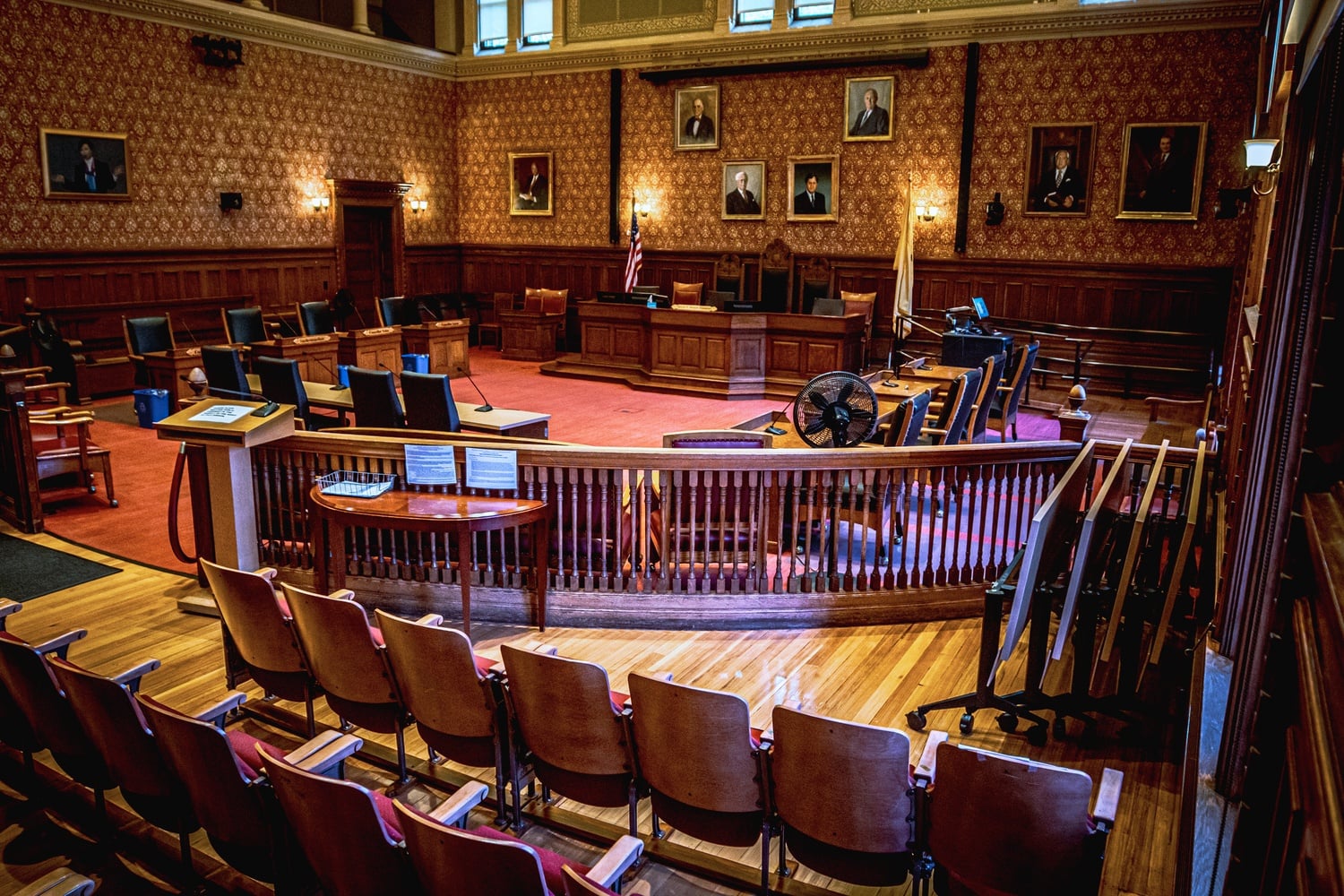
The Cambridge City Council referred two proposals to amend the city’s housing rules to committee on Monday, extending a years-long fight over how Cambridge should address its affordability crisis.
Nearly 60 Cambridge residents testified on the proposals, which could reshape the multifamily housing ordinance and affect projects built under the Affordable Housing Overlay — two landmark policies that have divided residents over whether Cambridge’s approach to housing production has delivered its intended benefits.
The discussion centered on the AHO and the multifamily housing ordinance, which Councilor Marc C. McGovern classified as distinct instruments in Cambridge’s fight for affordable housing.
“The affordable housing overlay and multifamily housing are two different things with two different purposes,” he said. “Two different sets of tools to address our housing crisis.”
The AHO allows developers of 100 percent income-restricted housing to build larger projects than zoning laws would otherwise permit. On Monday, City Manager Yi-An Huang ’05 reported an eightfold increase in projects since 2015, with roughly 1,000 affordable units in development, and the first AHO-approved project, a 106-unit development, opening this spring.
The multifamily housing ordinance, passed in February 2025, legalized the development of larger multi-unit developments across the city and was intended to increase Cambridge’s overall housing supply citywide.
Much of the council’s housing debate centered around the multifamily housing ordinance. Councilors Catherine “Cathie” Zusy and Tim R. Flaherty proposed a set of amendments that would revisit the ordinance’s open space, setback, and parking requirements less than two years after its passage.
Flaherty said the current ordinance risks turning Cambridge into a “stopover” city by encouraging the construction of smaller units better suited to younger residents than families.
“We’ll be a city that’s inhabited by young people who are deciding whether or not to spend their lives here,” he said. “That’s the housing that’s being produced.”
Zusy said the proposal was not intended to undo the ordinance, but to address what she described as unintended consequences.
Get The Crimson in your inbox.
“Councilor Flaherty and I are not asking to rescind the zoning,” Zusy said. “We’re proposing to make it better.”
A citizen petition submitted by resident Doug Brown and signed by 13 residents further complicated the debate, seeking to amend several provisions of the multifamily ordinance, including height and design standards. Under state law, the proposal must be referred to the Ordinance Committee and Planning Board for review.
Vice Mayor Burhan Azeem said that the petition could affect housing development across the city, arguing that affordable housing projects currently in the pipeline appeared unlikely to comply with the proposed requirements.
“I don’t think it’s fair to hold hostage every project in the city because 10 people have an idea of what they want to do,” he said.
Residents remained sharply divided over the proposals, with some supporting the build-out of guardrails while others argued that the amendments would hamper existing progress toward affordable housing.
Resident Robert Binstock supported tightening the ordinance, citing a home near his that a developer plans to demolish and replace with a larger three-unit building. He argued that the decision to demolish rather than renovate is recurring among developers, and that it pushes the average house price skyward.
“There’s an epidemic of this across the city,” he said. “Why are we prioritizing demos of usable multifamily houses and huge developer process profits over affordability?”
Resident David Halperin opposed the amendments, arguing that the proposals were internally contradictory and would weaken inclusionary housing initiatives and the AHO.
“We need more housing,” he said. “We can’t move backwards on our affordable housing goals.”
—Staff writer Theresa F. Bartelme can be reached at [email protected] and on Signal at theresabartelme.15. Follow her on X @theresabartelme.
—Staff writer Risha Sinha can be reached at [email protected].
Want to keep up with breaking news? Subscribe to our email newsletter
Have a tip for The Crimson? Share it confidentially