How Harvard Gave Los Angeles Mayoral Candidate Nithya Raman a “Foot in the Door”
Raman’s classmates and professors recalled an undergraduate already focused on the questions of housing, governance, and public trust that now define her campaign for Los Angeles mayor.
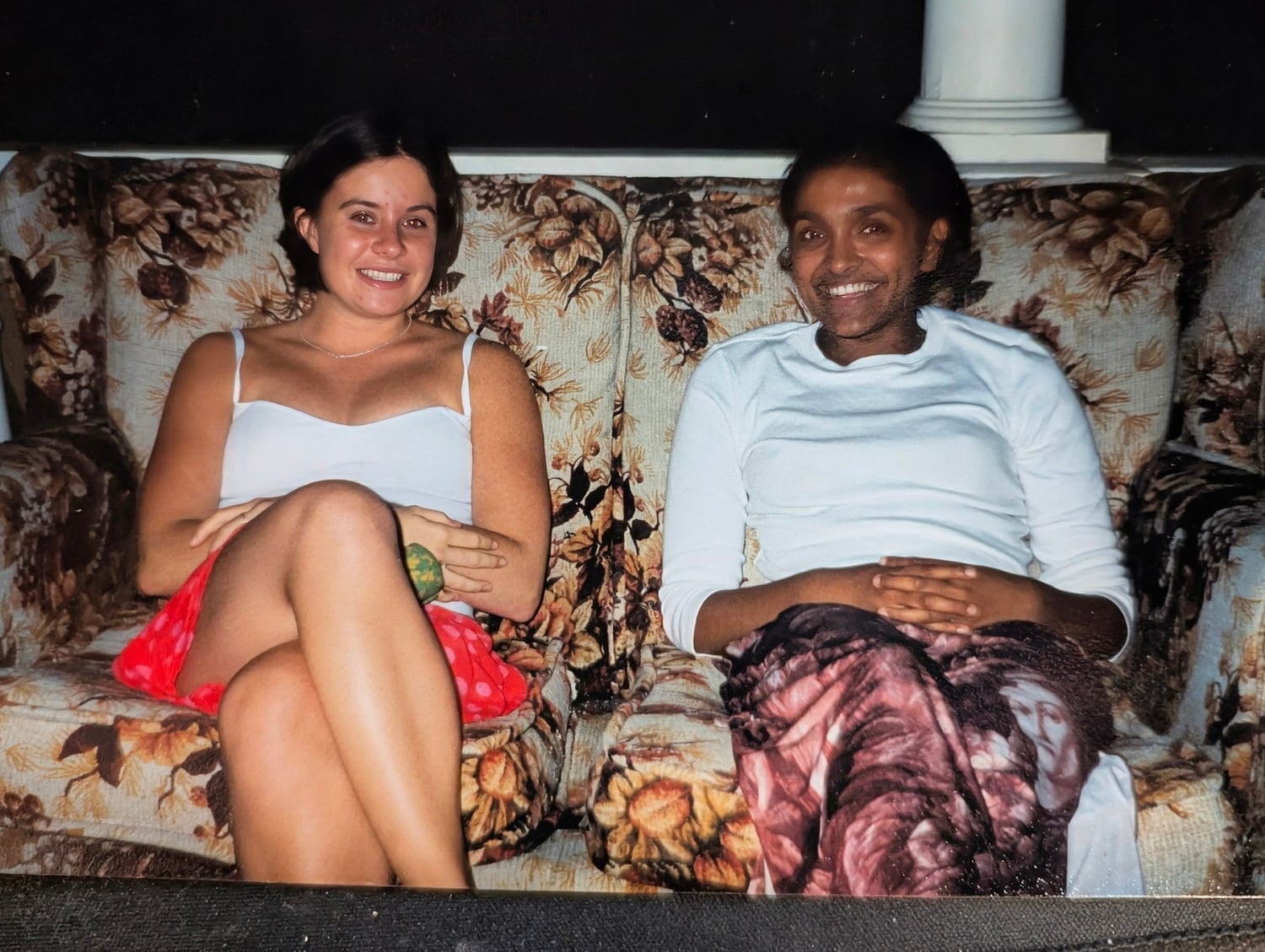
When Nithya V. Raman ’02-03 pushed past a queue of men waiting outside a rural government office in Tamil Nadu, an official blocked her path.
“This is a government office,” the official told her. “You must leave your shoes and your politics at the door.”
Raman kept her shoes on and walked out.
Less than an hour later, the village administrative officer found the then-Harvard undergraduate outside and offered to open his office so she could ask about the inner workings of state bureaucracy.
The encounter made its way into Raman’s senior thesis, which examined how trust breaks down when political institutions only work for some people. Villagers, she found, already knew the answer — they leave.
Nearly 25 years later, Raman is asking a version of the same question in Los Angeles.
A democratic socialist and Los Angeles City Council member, Raman stunned the city in 2020 when she became the first challenger in 17 years to unseat an incumbent L.A. City Council member. In February, she shook up Los Angeles politics again, revoking her endorsement of incumbent Mayor Karen Bass and launching her own mayoral campaign hours before the filing deadline.
Earlier this month, Raman advanced to a November runoff against Bass, narrowly defeating reality television personality Spencer Pratt for the second spot.
As she pursues a major political upset in Los Angeles, Raman has not foregrounded her Harvard ties on the trail. But they remain just below the surface — in her donor base and in the classmates now rallying behind her bid.
“As a woman of color who came from outside of the political establishment, sharing my degree in urban planning and sharing my educational credentials was a useful tool to help ensure that people with whom I was talking were taking me seriously,” Raman said in a Thursday interview with The Crimson.
The Crimson spoke with more than two dozen of Raman’s roommates, classmates, and professors — some of whom are now donating to and rallying for her campaign — who traced her political rise to an early focus on housing as a foundation for economic stability, from India to Greater Boston to Los Angeles.
Get The Crimson in your inbox.
‘A Kind of Counterculture’
At Harvard, classmates said, Raman was drawn less to the College’s networking culture than to a looser, more offbeat intellectual circle.
“She shared with me and my blockmates a kind of counterculture, a bit of a rebellious sense that we didn’t fit into the Harvard culture, and we bonded over that,” said Lionel Levine ’02, whose blocking group was friends with Raman. “We’re just kind of normies that found ourselves at Harvard.”
Born in Kerala, India, Raman moved with her family to Louisiana at six, before settling in Burlington, Massachusetts. At Harvard, she concentrated in Social Studies and lived in Lowell House before moving off campus. She graduated cum laude in field in the winter of 2002.
She arrived in Cambridge as the city was grappling with the recent repeal of rent control and joined the Phillips Brooks House Association’s Housing Opportunities Program, which provides interest-free loans to tenants at risk of eviction.
Stephanie C. Stallings ’02, Raman’s freshman-year roommate in Thayer Hall and later co-director of the program, recalled Raman joining a “sleep out” to raise awareness of homelessness, sleeping outside in freezing temperatures.
“She’s still doing the same thing that she committed herself to 25 years ago, and that’s a beautiful thing,” Stallings said.
Raman said she went on to co-direct the program. Looking back, she said the program shaped her thinking about housing insecurity and the limits of private charity.
“The Housing Opportunities Program was a big influence for me in thinking about insecurity for people, and what can we do to help stabilize people during difficult moments in their lives,” Raman said. “What’s the role of the philanthropic sector? What is the role of the government?”
“I would say my time at Harvard opened my eyes to a world that felt much bigger than the one I had been exposed to when I was growing up,” she added.
Raman entered Harvard amid the Living Wage Campaign and a surging student labor movement. But Matthew E. “Matt” Kutcher ’02, who met Raman freshman year, said she was supportive but not closely involved in direct action.
“Her kind of political evolution, it seems like, has been shaped a lot not by her college experience, but by her experience after college working in urban planning,” he said.
Gernot Wagner ’02, then-president of Bhumi, a student organization that placed Harvard undergraduates with non-governmental organizations in developing countries, said Raman honed an early interest in international development, joining Bhumi and the Woodbridge International Society.
Still, classmates said Raman did not seem destined for electoral politics.
“Nithya I don’t think was someone that most people who knew her in college would have pegged as someone who would run for office in the future,” said Everett C. “Clarke” Tucker IV ’03, an Economics 10 classmate of Raman’s who later became a blockmate of her husband’s. “I don’t believe that Nithya had then or has now a grand ambition for a particular title or office.”
Meredith B. Osborn ’02, who took Social Studies 10 with Raman, said Raman’s career path reflected a consistent commitment to social issues, including housing.
“She is not somebody who has changed superficially for whatever purposes. Nithya has always been authentically herself,” she said.
‘A Straight Line’
For Raman’s former classmates, her path from Harvard to MIT to Los Angeles politics is not a pivot so much as a continuation.
Fascinated by how city design could shape people’s lives, Raman considered law school and moved between fields like political theory, Russian literature, and German, before settling more firmly into urban planning.
At the start of her master’s program in city planning, Raman wrote to MIT urban design professor Lawrence J. Vale asking for book recommendations on U.S. highway development and suburbanization.
“As her email put it — ‘I am on a reading kick these days, and I wanted your advice,’” Vale wrote in a statement. “When I followed up with suggestions, she wrote: ‘my reading frenzy was derailed by Anna Karenina, which is a whopping 800 pages (of pleasure) long.’”
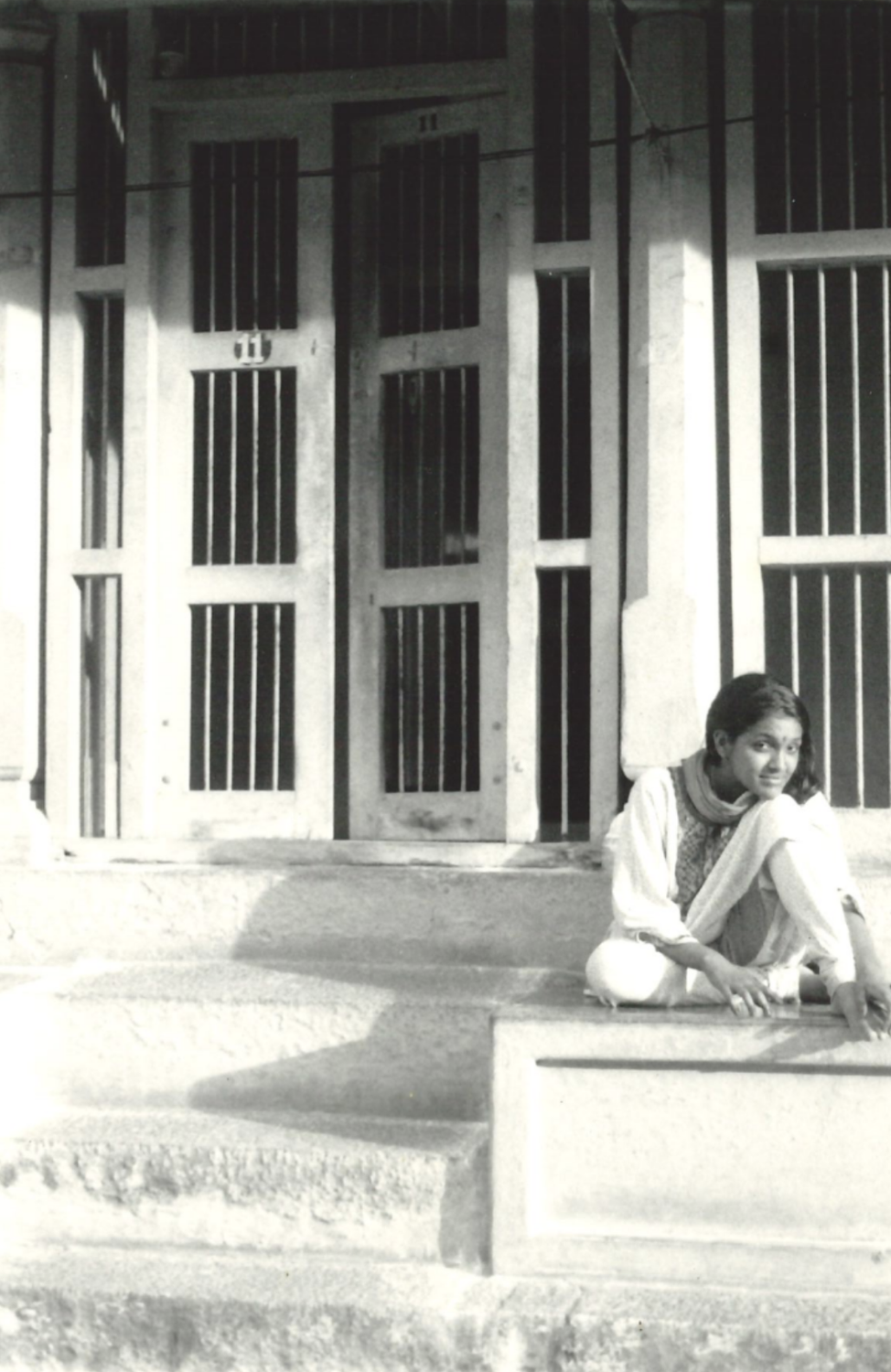
After earning her master’s degree, Raman moved back to India to launch Transparent Chennai, a civic-data organization focused on sanitation and basic services in the city.
MIT urban studies professor Balakrishnan Rajagopal, her master’s thesis advisor, said Raman’s path from international housing development to politics is a “straight line.”
“I see where she’s now and her policy focus and her agenda, not just now as a mayoral candidate, but also when she was on the city council,” he said. “It was all about housing, and particularly the focus on impact on the most marginalized in the context of a city like Los Angeles.”
“If Nithya Raman’s agenda is resonating, I would say that’s because of where America is right now,” he added. “But she’s had a long interest in this. She’s not a newcomer to these issues.”
Harvard Graduate School of Design professor Diane E. Davis, who taught Raman at MIT, said Raman’s planning background is central to her appeal.
“I teach that to my students in planning at Harvard that you can’t be a good planner unless you know politics,” Davis said. “What I’ll also say is you can’t be a good politician, can’t be a good mayor unless you know seriously the planning profession, in particular how complicated housing is.”
Raman, a former Crimson Multimedia editor, moved to Los Angeles to join her now-husband, Vali D. Chandrasekaran ’03, then a writer for the Harvard Lampoon. There, she worked in city government before vying for city council.
Raman also remained connected to India after leaving Harvard. She studied classical dance with Leela Samson in Chennai and toured with her dance company. Several friends recalled traveling with Raman to India during and after college.
Stallings said she saved money by working Dorm Crew to afford a plane ticket to India with Raman.
“Her aunts and grandmothers would dress us in the morning in the saris, and we went to temples, and we went to this waterfall, stayed in an ashram for the last week that we were there,” she said.
Raman was also involved in Harvard’s arts scene, designing and choreographing for student productions. Avik Chatterjee ’02 recalled dancing in Raman’s modern routine for Ghungroo during his senior year.
“She’s always had a very unique and clear vision and was able to bring us together to sort of execute on that vision,” Chatterjee said.
Raman said she still follows dance when her campaign schedule allows.
“I don’t just watch Indian classical dance, I watch all kinds of dance,” Raman said. “I’m a dance aficionado, and when I’m not busy on the campaign trail, I try and attend dance programs and performances.”
‘An Incredible Amount of Support’
Though Raman’s Harvard background is not central to her public pitch, it has become an important part of the network around her campaign.
Classmates said Raman could move through Harvard’s more exclusive circles with ease, often marked by what several remembered as her signature “mischievous” smile.
Benjamin A. Cowan ’02, who met Raman through mutual friends, said it remained difficult at the time to break through some of Harvard’s barriers as a woman of color, but Raman seemed able to do so without shutting others out.
“She could move in these circles, which were super institutionally exclusive and historically exclusive, but could also welcome other people,” Cowan said. “Her personal strength, charm, and creativity gained her entrance to these spaces that would have been closed to her.”
Kathleen A. Eagan Murray ’03, Raman’s campaign finance chair, said she first met Raman at a Lampoon dinner for Elijah Wood, where Raman was Chandrasekaran’s date. The two later reconnected in Los Angeles, where Murray now leads fundraising for her campaign.
“We have an incredible amount of support from folks who knew her from Harvard,” she said.
A Crimson analysis of public campaign finance filings found that Harvard-affiliated donors made up more than 8 percent of Raman’s donors — roughly double Bass’s share and nearly nine times Pratt’s. Harvard-affiliated donors, including alumni, professors, and staff, accounted for almost 12 percent of Raman’s total campaign contributions.
Raman wrote in a statement that the donations reflected her “people-powered campaign.”
“My time at Harvard was formative. The friendships Vali and I made there have lasted decades, and I’m deeply grateful for our community and for their support of this campaign,” she wrote.
When asked whether her Harvard education had bolstered her campaign, Raman said the institution helped her establish a foothold — but that her work would have to carry her further.
“It helps you get your foot in the door,” she said. “Everything else I do is on me.”
“Obviously it gave me training, it gave me the skills and analytical skills, and the capacity to be able to engage with the issues of the day,” Raman added.
Jason S. Tajima ’02, who lives in Los Angeles but not in Raman’s district, said he was unfamiliar with Raman’s campaign, but that her educational credentials gave her credibility.
“She is very accomplished, so it doesn’t surprise me she’s an alum,” Tajima said. “I think it gives me a more positive view of her, because she does have that experience on the East Coast as well, between Harvard and MIT.”
For Raman, the question of trust that first appeared in her undergraduate thesis has followed her into the mayoral race — saying she has tried not to take voters’ trust for granted during her time in office.
“I think I’ve really tried throughout my political career to move honestly, so when I’ve supported policies and they haven’t worked out as I intended, as I thought they would, or when they had unintended consequences, I’ve gone out to the public,” Raman said.
Still, Raman said the work of politics has to extend beyond the credentials that introduce her to voters.
“Politics was a means to an end, and the end has always been about service,” she added. “I think you’ve seen that commitment to service in my time as an undergrad, and throughout a lot of my work.”
—Staff writer Theresa F. Bartelme can be reached at [email protected] and on Signal at theresabartelme.15. Follow her on X @theresabartelme.
—Staff writer Uy B. Pham can be reached at [email protected] or on Signal at ubp.88. Follow him on X @uybpham.
Want to keep up with breaking news? Subscribe to our email newsletter
Have a tip for The Crimson? Share it confidentially