For Ethel Branch ’01, Harvard Was a Path Back Home
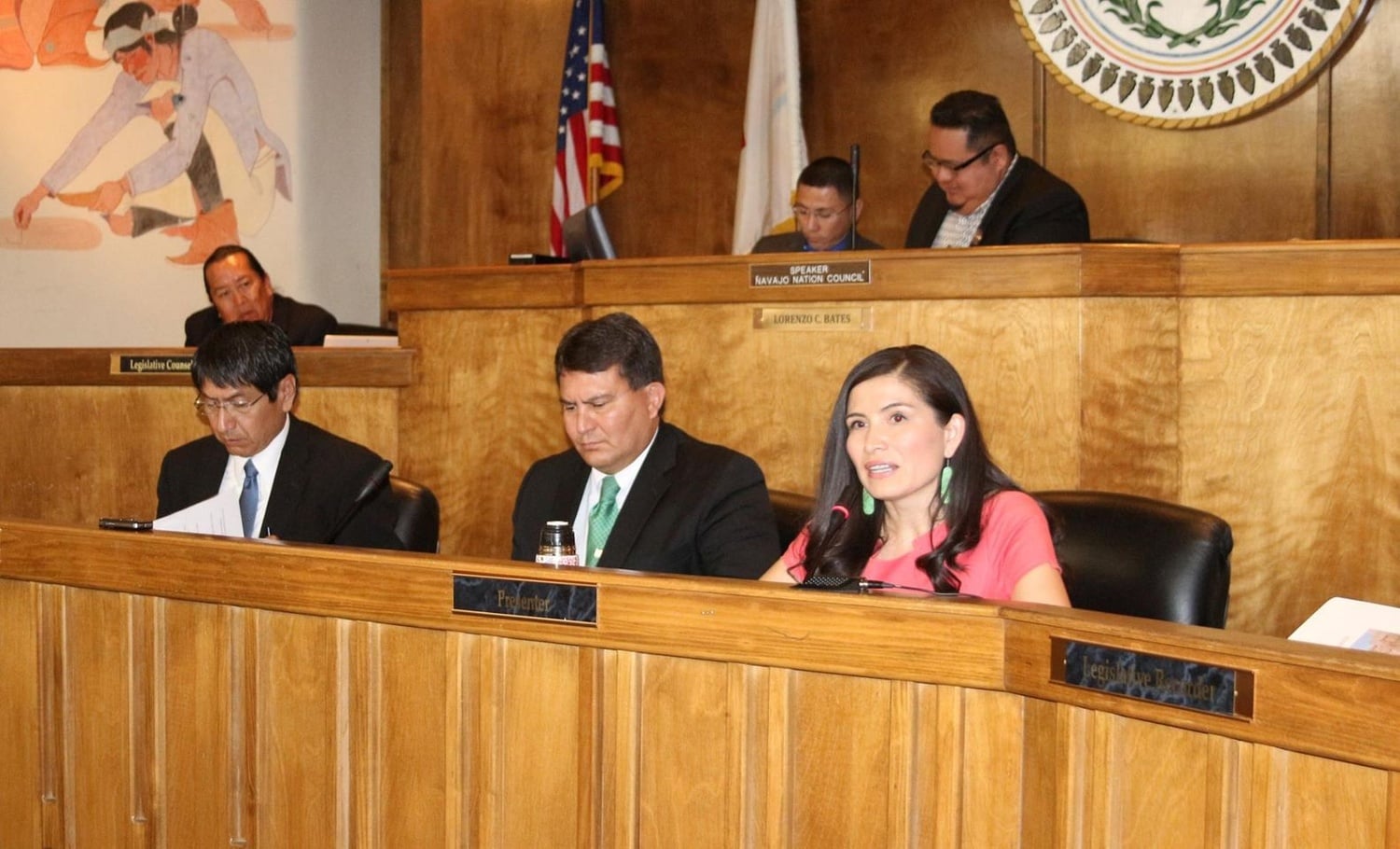
Ethel B. Branch ’01 arrived at Harvard from the Navajo Nation, where she had grown up without electricity or running water.
Years later, she would return home to confront the same infrastructure gaps she had known as a child — first as the Navajo Nation’s attorney general, and later as the founder of a nonprofit that delivered food, water, and protective equipment during the Covid-19 pandemic.
But when Branch first came to Cambridge, Harvard felt almost foreign.
She said arriving on campus was like “coming to a different world.” She remembered feeling more like an international student than a student from Arizona, navigating the culture shock of an elite institution while unable to call home because her parents did not have a phone.
Branch arrived at Harvard thinking she would study ancient Roman or Greek history. But a course on the history of the American West redirected her attention toward the conditions that had shaped her own home.
“Now I understand why my people don’t have electricity or running water, even though, like, the electricity that has built the American Southwest is generated on my reservation,” Branch said in an interview.
At first, Branch said, she struggled to relate even to other Native students at Harvard who had grown up in more urban environments. Over time, she came to appreciate the differences among their experiences — and became a “big component” of building community for Native students on campus, according to Randell K. Akee, a Harvard Kennedy School professor who studies Native governance and met Branch while pursuing his Ph.D.
The course led Branch to concentrate in history with a focus on the American West — and sharpened her resolve to confront the poverty and infrastructure failures affecting reservations.
After graduating in 2001, Branch returned to the Navajo Nation to teach at a high school. But she soon decided that addressing the reservation’s deeper challenges would require more training.
She enrolled in a joint degree program at Harvard Law School and Harvard Kennedy School, where two courses on Native sovereignty and governance helped shape the work she would later pursue.
Get The Crimson in your inbox.
“When I attended that nation building course, it was like, holy cow, I’m like the only person in this room who actually knows what we’re talking about and has live firsthand experience and can critique our readings from that perspective,” Branch said.
Joseph T. Kalt, a former Harvard Kennedy School professor, taught Nation Building I for many years. After taking the course, Branch returned as a teaching assistant and later as a guest lecturer.
“She has this ability to convey to the students that they, like her, can make a difference,” he said, “ but it takes this combination of great education so you know what you’re doing, and then the dedication and energy to do what needs to be done.”
Branch had worked in law for six years when she was first asked to serve as the Navajo Nation’s attorney general in 2015.
The Navajo Nation’s government is split into legislative, judicial, and executive branches. As attorney general, Branch served as the Nation’s chief legal officer, overseeing the Department of Justice and defending the Nation in litigation.
During her first four-year term, Branch led efforts to protect tribal land and water rights amid ongoing legal disputes and environmental challenges affecting Navajo communities. She also created a task force to combat white-collar crime and corruption.
A year after leaving office, Branch responded to the disproportionate toll of the Covid-19 pandemic on the Nation, where roughly 30 percent of people lack access to running water, making basic preventive measures difficult. She founded a nonprofit that raised $18 million to provide food, water, and personal protective equipment to nearly half a million people across the Navajo Nation and Hopi reservations.
In 2023, Branch was asked to return for a second term as attorney general, continuing her work on water rights, corruption, and fraud. But less than two years into that term, she was removed from office by a vote of the Navajo Nation Council. The council provided no official reason for her removal.
After leaving the position, Branch moved to Coconino County, Ariz., where she served as a deputy county attorney for more than a year. She said she remains committed to tribal economic and governmental development.
“The economic development is what is going to keep families together and make sure that children are healthy, and people are healthy, and communities are healthy,” she said.“I’m excited to get back to that.”
—Staff writer Claire A. Michal can be reached at [email protected] and on Signal at ClaireMichal.154.
Want to keep up with breaking news? Subscribe to our email newsletter
Have a tip for The Crimson? Share it confidentially