Before He Became a National Firebrand, RFK Jr. ’76 Was Harvard’s Most Famous Classmate
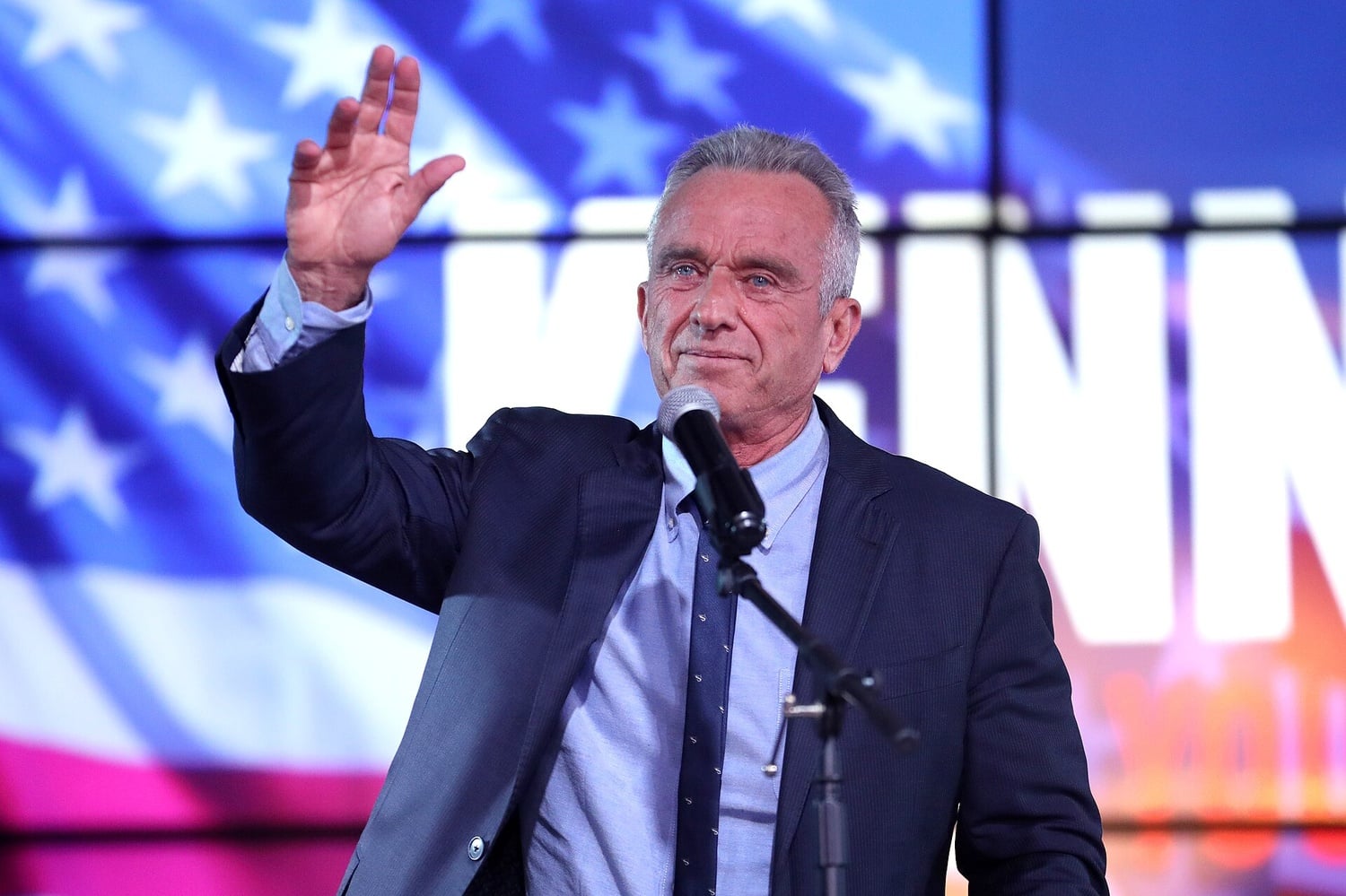
When Robert F. Kennedy Jr. ’76 arrived at Harvard in the fall of 1972, his name arrived before he did.
Kennedy — now the secretary of Health and Human Services, known for public opposition to vaccines, a later heroin possession conviction, and a string of bizarre stories involving animals — was then a first-year in Hurlbut Hall. To classmates, he was Bobby Kennedy: handsome, famous, wounded by family tragedy, and nearly impossible to separate from the mythology around him.
“He was clearly, if not the biggest celebrity in our class, definitely one of the top two or three,” Jim Adler Jr. ’76, a fellow Winthrop House resident, said.
Four years before Kennedy started at Harvard, his father, Robert F. Kennedy ’48, had been shot and killed while campaigning for the Democratic presidential nomination. Kennedy was 14. He was 9 when his uncle, U.S. President John F. Kennedy ’40, was assassinated.
At Harvard, that history followed him. Adler said classmates understood Kennedy not just as another undergraduate, but as the heir to a political family that still occupied a singular place in American life.
“His father was as important a politician in America as any,” Adler said. “Here is Bobby Kennedy Jr. the heir to all of that.”
Kennedy was not the only member of his family at Harvard in the 1970s. His late brother David A. Kennedy ’78 and cousin Stephen Kennedy Smith ’79 also overlapped with him as undergraduates.
But even among famous and well-connected students, Kennedy stood apart. Classmates remembered him as glamorous and elusive, surrounded by stories that grew with each retelling. Some of the stories were harder to dismiss.
Get The Crimson in your inbox.
Kurt B. Andersen ’76 has a long-told account of buying cocaine from Kennedy during their freshman year.
“I don’t know how we discovered, oh, Bobby Kennedy is a cocaine dealer,” he said.
Andersen said he and his roommate went to Kennedy’s Hurlbut dorm with $40. Kennedy’s older brother, Joseph P. Kennedy II, was there when they arrived.
Before leaving to get the cocaine, Andersen said, Kennedy offered him a different drug.
“He opened up his backgammon board, and it was just filled with marijuana,” Andersen said.
Kennedy later returned with the cocaine, Andersen said, and Andersen paid him $40. After Andersen went back to Weld Hall, his freshman dorm, Kennedy called him on his landline and told him to return the straw they had used.
“He said, ‘Man, you took my straw,’ and I didn’t even know what he meant,” Andersen said. “Then he said, ‘You know, the straw that you know we sampled the Coke on.’”
Andersen walked back to Hurlbut alone.
Kennedy opened the door, took the straw, and slammed the door without a word.
Kennedy has previously discussed his history of addiction. In 1983, after graduating from Harvard and the University of Virginia School of Law, he was arrested for heroin possession. He later entered treatment and was sentenced to probation and community service, an experience he has said led him into environmental legal work.
His drug use at Harvard returned to public attention during his confirmation process, when Caroline B. Kennedy ’80 urged senators not to confirm him as health secretary. In a letter to senators, she wrote that Kennedy’s “basement, his garage, and his dorm room were the centers where drugs were available” and accused him of disturbing behavior involving animals.
Other classmates remembered Kennedy less for the drug stories than for the strange spectacle that seemed to trail him.
Adler recalled that Kennedy kept a live rattlesnake under his bed in Winthrop House, along with a box of mice. At one point, Adler said, the mice escaped and had to be rounded up.
Kennedy would pull out the snake with a makeshift hook and bring it close to classmates, according to Adler.
“He would take this snake out, and he would like to show it right under a foot away from my nose,” he said. “His snake was rattling away.”
A spokesperson for Kennedy did not respond to a request for comment.
Kennedy was not remembered only for his antics. Fritz Engebretsen ’76, who lived in Winthrop at the same time, recalled competing against him in intramural sculling during the 1975-76 Straus Cup season.
The race came down to just Engebretsen and Kennedy.
When Kennedy’s boat came too close and committed a foul, Engebretsen objected.
“He was very gracious and conceded the race,” Engebretsen said. “He was a sportsman-like sculler.”
Engebretsen said Kennedy was “somewhat reserved and quiet” around Winthrop.
Kennedy also left behind a more conventional academic record. His senior thesis examined the political career of U.S. District Judge Frank M. Johnson Jr., whose rulings helped dismantle segregation in Alabama. Two years later, Kennedy published a biography of Johnson.
Adler said Kennedy seemed to move through Harvard with the force of his family name behind him.
“He was uber connected,”Adler said. “Everybody, and I’m sure this includes all the faculty, everybody at Harvard wanted to have him in their orbit.”
—Staff writer Abigail S. Gerstein can be reached at [email protected] and on Signal at abbysg.97. Follow her on X @abbysgerstein.
Want to keep up with breaking news? Subscribe to our email newsletter
Have a tip for The Crimson? Share it confidentially