Jack Reardon ’60, ‘Mr. Harvard’ Who Guided Presidents and Generations of Alumni, Dies at 88
Across six decades at Harvard, Reardon shaped admissions, transformed athletics, and led alumni affairs while serving as a trusted adviser to presidents and a steady hand through the University’s moments of crisis.
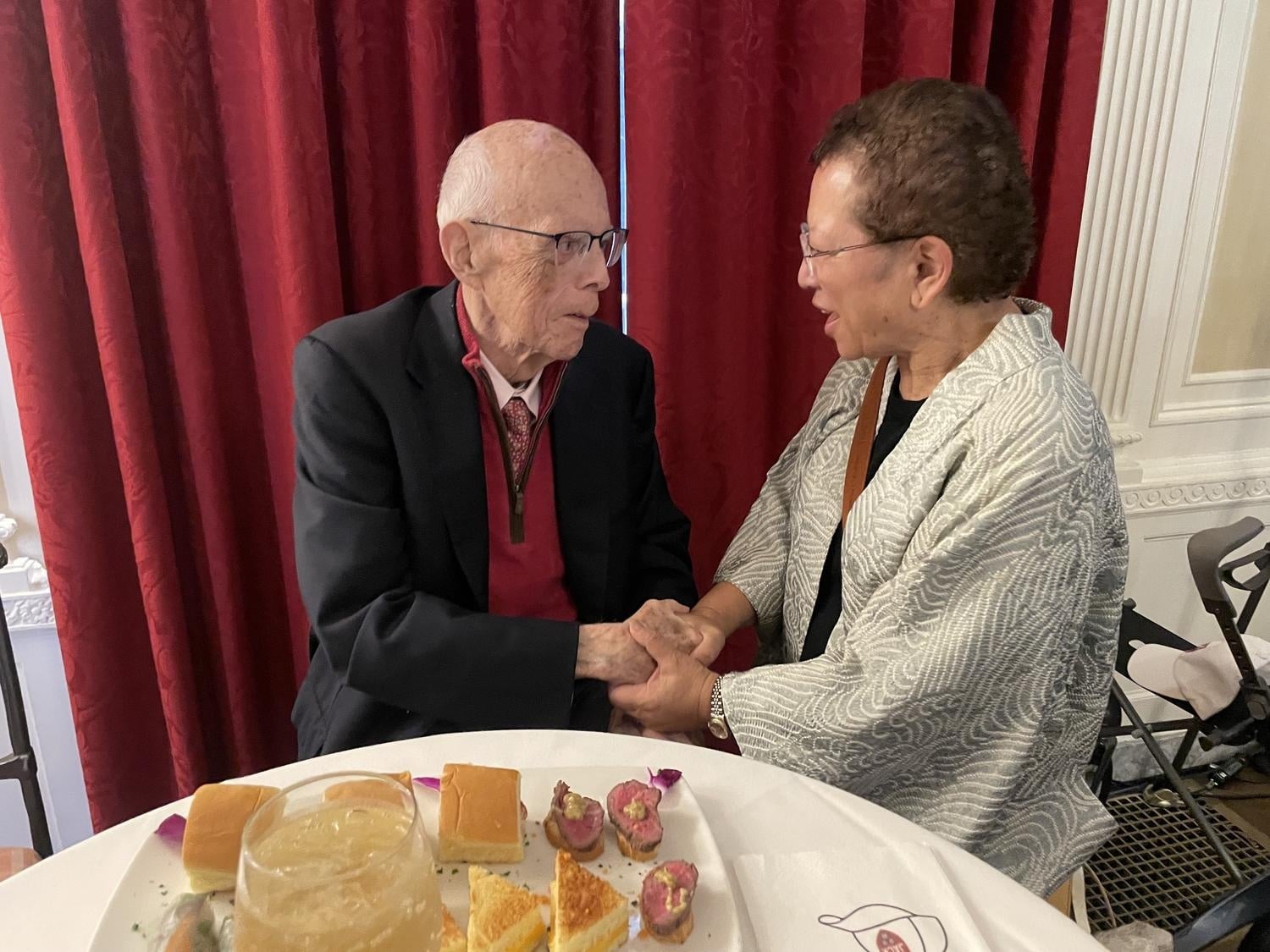
On a warm Friday afternoon last October, four Harvard presidents assembled in Loeb House with 400 of the University’s most prominent administrators, faculty, and donors.
It was standing room only. But for once, it was not crisis that brought them together. Instead, they were gathered to celebrate the man tucked away in the corner of the room, embarrassed by the fanfare: John P. “Jack” Reardon Jr. ’60.
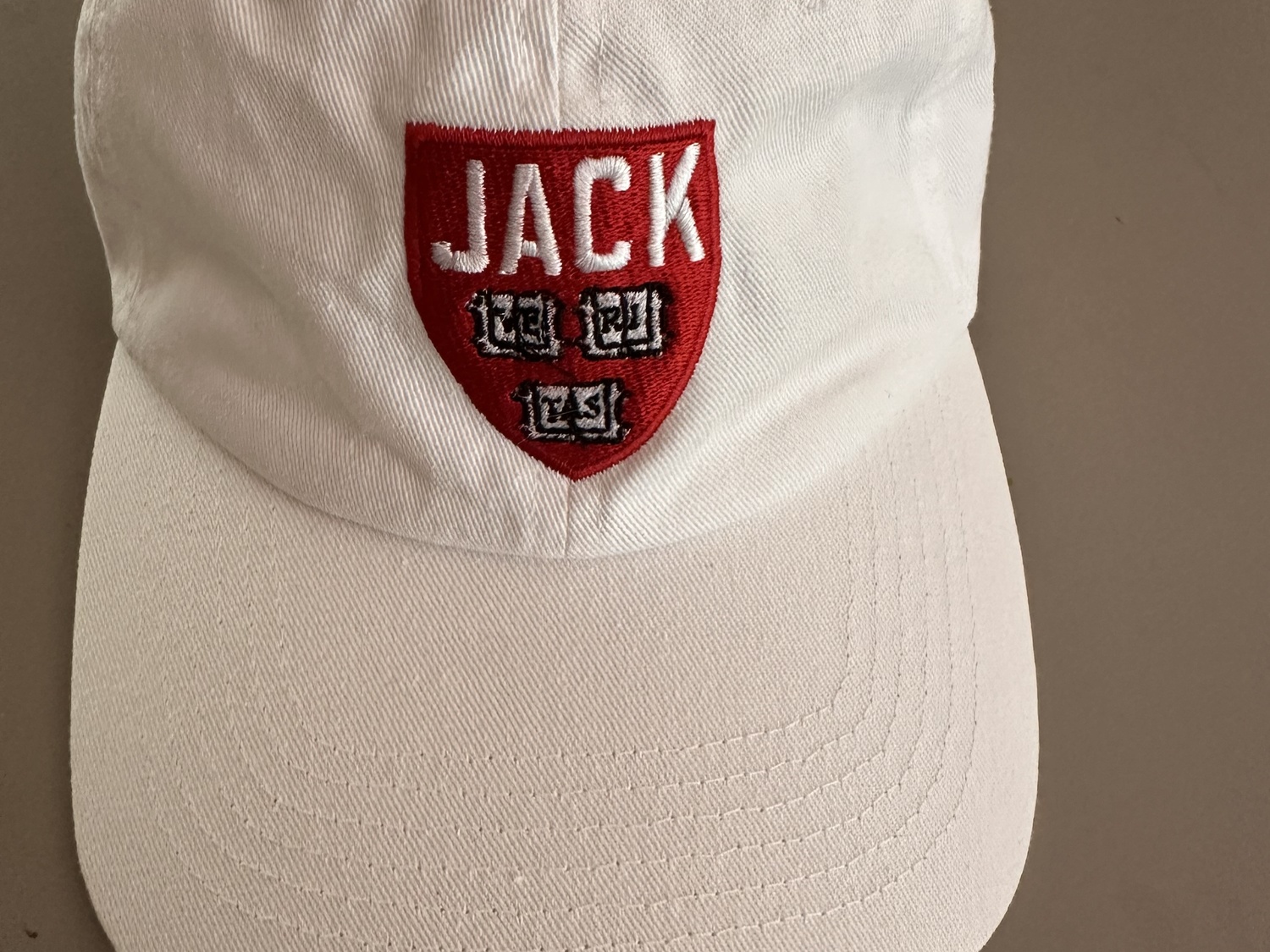
There were speeches, tears, custom Harvard hats embroidered with “Jack,” and a crowd to shake his hand so enormous that it startled former Faculty of Arts and Sciences Dean William C. Kirby.
Nicole P. Haughey ’93, a former Overseer and one of Reardon’s closest friends, called it the “greatest gift” for Reardon.
“In a million years, he would never imagine that all these people would come together in a room for him,” Haughey said.
Reardon, who held a string of senior posts at Harvard over a 60-year career at the University, died on June 23 at his home in North Weymouth. He was 88. He died of natural causes after fighting cancer in recent years, according to Haughey. He is survived by his wife, Jane Reardon, and his brother, Thomas M. Reardon.
Reardon returned to Harvard in 1965 in the admissions office and later served as director of admissions, senior tutor in Kirkland House, athletic director, associate vice president for University relations, and executive director of the Harvard Alumni Association.
But his influence far exceeded formal titles. An advisor to the last five Harvard presidents, counselor to the University’s governing boards, and the confidante of its most important alumni, Reardon was remembered in the days after his death as one of Harvard’s essential institutions — a quiet but firm hand who helped steer the University for more than half a century.
Harvard President Alan M. Garber ’76 described Reardon as “the best of the University personified” and wrote in a statement that he in turn “drew out the best in all of us.”
“He is one of a few people who devoted much of his adult life to Harvard while truly living the values and highest character of our University,” Garber said.
Get The Crimson in your inbox.
‘The Soul of the Place’
Reardon was raised in Cohasset, Massachusetts, the child of a schoolteacher and a surgeon. He attended Milton Academy and Harvard College, where he studied government and lived in Kirkland.
By his senior year, Reardon was the head football manager, a coveted position at the time. He oversaw a team of junior managers, planned hotels, and traveled with the team.
“For whatever reason, Jack came to Harvard and fell in love with the place,” said Robert A. “Bob” Glatz ’88, the executive director of the Harvard Varsity Club.
Though Reardon left Cambridge for five years to attend the University of Pennsylvania’s Wharton School and work for the Boston Redevelopment Authority, he did not stay away for long.
He returned to the University in 1965, climbing the ranks of the admissions office while serving as a proctor in Mower Hall and then senior tutor in Kirkland. One of his students in Kirkland was Paul J. Finnegan ’75, who would go on to chair the Harvard Management Company.
“Particularly at that stage in my life, and to my roommates too, he provided practical advice,” Finnegan recalled. “He was genuinely and keenly interested in whatever we were doing.”
Together with now-Dean of Admissions and Financial Aid William R. “Bill” Fitzsimmons ’67, Reardon helped shape generations of Harvard classes, with a particular emphasis on expanding access to low-income students.
"An institution like Harvard simply cannot function well without people like Jack," Rudenstine said.
Richard M. “Dick” Cashin Jr. ’75 called Reardon and Fitzsimmons the “cultural carriers” of Harvard for the last half century.
“He was the soul of the place,” Cashin said. “Everybody who got into Harvard got in through these guys, and everybody who was there, they knew who they were.”
To those who knew him, Reardon’s work in admissions was the beginning of relationships that often lasted for decades.
“When Jack was recruiting somebody in admissions — whether it was generally, or it was for a particular sport or something — people didn’t realize that he was recruiting them for their lives,” said Brad Bloom, who worked alongside Reardon at Harvard and Milton Academy.
Former Harvard President Neil L. Rudenstine said that “an institution like Harvard simply cannot function well without people like Jack.”
“Institutions are only good insofar as they’re human. And they’re human because of certain individuals — many individuals — but some rare ones like Jack give life and continuity to the institution,” Rudenstine said.
‘Take the Women With You’
It was Reardon’s 12 years in the athletic department that put him on the map. He transformed Harvard’s sports programs, revamping facilities, expanding the budget tenfold, and bringing in a dozen new women’s sports.
Even before he was officially tapped to head the department, Reardon coordinated the Athletic Fund Drive from his perch in admissions, raising more than $30 million for an ambitious renovation of the University’s then-mediocre facilities.
But affiliates said he will be remembered most as an unwavering advocate for female athletes at the University. Though Reardon took over the athletics program in 1978, six years after Title IX barred sex discrimination in federally funded education programs, Harvard was slow to get on board, some female athletes recalled.
In 1980, Reardon penned a scolding letter to every men’s head coach, saying he would not approve special travel or equipment purchases if their women’s counterparts did not get the same. No longer, Reardon wrote, would he accept the excuse that women’s teams “aren’t very organized” and “don’t really want to take the trip.”
“You better be prepared to take the women with you,” Reardon wrote at the time. “If you are unwilling to pitch in and take some responsibility to help the women help themselves, then plan your schedule in the Northeast corridor which is perfectly satisfactory to me.”
Former Harvard Law School Dean Martha L. Minow said Reardon’s efforts to bring Harvard athletics into compliance with Title IX were “legendary.”
For Yuki M. Laurenti ’79, the first woman to manage the men’s ice hockey team, Reardon’s support was especially important in what she called a “testosterone-filled crowd.”
“I was so thrilled that this person would remember — again — this mere manager,” Laurenti said.
And when former Secretary of Education Arne S. Duncan ’87 showed up to Harvard as what he described as a “scared kid from the South Side of Chicago,” it was Reardon who took him in.
“I just so distinctly remember this warm, encouraging presence, and it just made me feel — I did belong. I could fit in here and could do all right,” Duncan recalled.
Reardon’s ability to “make a big place feel small” became essential as the University grew and expanded over his tenure, Harvard Corporation fellow Diana L. Nelson ’84 said.
“So much work at the College and at the University are about people wanting to be seen and belong and feel they have a place there,” Nelson said. “So if there’s a legacy for Jack, I think hopefully other people will take that on.”
Decades later, when Erin McDermott accepted Harvard’s top athletics job, it was Reardon who onboarded her, too. She already knew the name — there was “Reardon lore” across the Ivy League at that point, McDermott recalled.
Reardon instructed her to make a “dotted line” between her and the Harvard president, even if she reported to the Faculty of Arts and Sciences on paper. And McDermott said Reardon continued to impart his wisdom in meetings during her tenure — quietly but firmly.
“He had this depth to his voice that you knew when he was serious about something, and it wasn’t time to push back on him,” McDermott said.
‘Harvard’s Yoda’
When Harvard was rocked by controversy, University affiliates leaned on Reardon’s ability to deftly navigate its complex — and often warring — constituencies.
That trait was perhaps most on display at the dramatic end of Lawrence H. Summers’ presidency in 2006. Laurenti, then president of the HAA, said she turned to Reardon for advice on how to navigate alumni outrage over remarks made by Summers. Alumni were eager to adopt a resolution condemning Summers or asking for his resignation — especially after the faculty issued a vote of no confidence — but Reardon advised restraint.
“Jack’s counsel was that Harvard is bigger than any one person, it is bigger than the president,” Laurenti recalled.
Reardon was talking to Laurenti on one end of the line, but he also had Summers’ ear, too. Kirby said Reardon was a “discreet advisor” as the crisis unfolded.
“You might say that Jack Reardon was one of the few individuals I know who could get along with the vast majority of Harvard faculty and President Summers at the same moment,” Kirby said.
Summers lauded Reardon in a statement, citing his “combination of wisdom, loyalty, and energy” as a “constant example.”
“First as Harvard president then as his friend, I treasured my relationship with Jack,” Summers wrote. “No administrator has done more for Harvard and Harvardians over more time than Jack Reardon.
When Summers stepped down and Derek C. Bok returned to Massachusetts Hall, he leaned on Reardon, too, who coaxed Bok out to alumni events.
“He could be very tough with me,” Bok said. “I remember on a couple occasions I tried to get out of giving a particular speech, and he talked me into doing it.”
Meanwhile, the search for Harvard’s next leader was underway. William F. Lee ’72, a former Harvard Corporation senior fellow who served on the search committee, called Reardon “Harvard’s Yoda” and said Reardon was the person he “always went to for advice” during the search.
"He was a special person in their lives, like a relative or dear lifelong friend," Faust said.
Reardon also was not above some backroom maneuvering. Early in the search, Lee recalled being seated at a dinner with the University’s deans next to a previously unfamiliar face: Drew G. Faust, then dean of the Radcliffe Institute.
The seating arrangement was Reardon’s doing. He liked Faust, and he was intent on getting her face time with Lee. She was named Harvard president at the end of the search.
Reardon remained a consigliere, helping Faust build trust with an unfamiliar alumni base. He accompanied her on overseas trips, including to Asia, and gave her his imprimatur with those she met, Faust said.
“The feeling about Jack was beyond just respect or admiration,” Faust said. “He was a special person in their lives, like a relative or dear lifelong friend.”
On one occasion, recalled Steven A. Ballmer ’77, it was Reardon who orchestrated for Faust to attend his son’s state lacrosse tournament after it became apparent it was the only way for the two of them to meet.
“Without Jack, that funny story does not happen,” Ballmer said.
‘Nobody Ever, Ever Cut Off Jack’
Reardon formally stepped down from the HAA in 2014, but those closest to him said he never really exited the University’s inner circle.
Former Harvard President Lawrence Bacow said he was struck by Reardon’s “willingness to speak truth to power” in Massachusetts Hall. Bacow could not remember an occasion where he went against Reardon’s guidance.
“Jack was not afraid to tell me when he thought I was about to step in it,” Bacow said. “He always did it in a way that made it easy to recognize the error of my own ways.”
Tracy Pun Palandjian ’93, a Corporation fellow, also consulted Reardon long after he gave up his official responsibilities.
“I would just call him on the phone and ask him for advice, and he’ll read about something, and call me, and just give me advice,” Palandjian recalled. “Maybe he was formally stepping down, but I never felt that demarcation.”
He in particular continued to wield influence on the Board of Overseers, the University’s second-highest governing body.
Several former Overseers said Reardon engineered their bids or cajoled them into running, and Laurenti said he would scrutinize the nominating committee on its slate of candidates.
Nelson described Reardon as a “talent scout” who was able to identify gaps within the University and recruit the right alumni to fill them.
“It’s a kind of matchmaking skill,” Nelson said. “You have to know both the institution really well and understand the people that you’re trying to mobilize.”
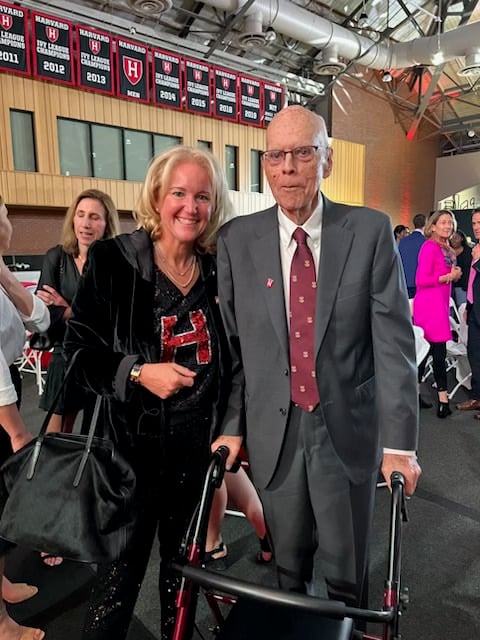
He continued to sit in on every Board of Overseers meeting, flying up from Florida to Cambridge until last year, and remained a touchpoint for Harvard’s most generous and involved alumni.
When the College made the controversial decision to sanction its single-gender final clubs in 2016, it was Reardon who was on the phone, talking alumni off the ledge. Ballmer recalled dialing Reardon to gripe about the policy, and Reardon saying simply: “calm down, Harvard’s a great institution, calm down.”
“There were people who would not talk to Harvard, who wouldn’t talk to me, who would talk to Jack,” Bacow said.
“They had some beef about something that had happened years ago at Harvard, and they might have cut off the institution,” he added. “Nobody ever, ever cut off Jack.”
That touch also made Reardon one of Harvard’s most effective fundraisers. Terrence “Terry” Murray ’62 remembered sitting in traffic with Reardon one day as he made a phone call to an alum.
“I sat silently as he obtained like a $25 million commitment from this person on the phone, and in the middle of Los Angeles traffic — and it was with no heavy pressure, just discussion and a little bit of history,” Murray said.
Finnegan, Harvard Treasurer Tim Barakett ’87, and Tom McKinley ’74 recently started a fundraising campaign in Reardon’s name to set up a scholarship, athletics fund, and professorship. They have already raised $25 million, Finnegan said.
“I can’t tell you enough times we would call and speak to somebody and recommend a contribution level, and they would increase it,” Finnegan said. “That just doesn’t happen.”
‘Mr. Harvard’
Though Reardon’s health declined in recent years, especially after a recent cancer diagnosis, friends said he remained much the same person. Many were on the phone with him just weeks before he died. Lee and Goodheart had a lunch planned with Reardon for the next Friday.
A small group even gathered, impromptu, for his 88th birthday in February. Planned originally by Haughey as a gathering of his closest family members, the celebration swelled to include members of the Varsity Club, who were stranded in Florida by a blizzard in Boston.
“We quizzed Jack on a few stories, because the stories he could tell — about how buildings got built and how presidents came and went,” Glatz recalled.
Reardon loved Harvard most, his friends said. But he did not mind ice cream or the Boston Red Sox either.
Helena B. Foulkes ’86, a former Overseers president, said it was difficult for Reardon to eat after his cancer diagnosis — but that only meant he ate more ice cream.
“I always got a chuckle when I would talk to him about his love for ice cream,” Foulkes said.
For decades, he and a group of Harvard faculty shared season tickets to the Red Sox just behind home plate on the first-base side, recalled Benjamin M. Friedman ’66, the former chair of Harvard’s economics department.
“Jack’s not here,” Friedman said. “I still have the tickets, still go to the Red Sox games, and I still sit in what I think of as Jack’s seats.”
Reardon was married to Jane for 37 years. The two married late in life and did not have children, but they doted on their nieces and nephews, those close to Reardon said.
Though Jane did not attend Harvard, she was by Reardon’s side at nearly every event and a fixture at Harvard football games.
“It’s impossible to really describe Jack without mentioning the love of his life, Jane, who probably knows more Harvard history than many Harvard presidents,” Haughey said.
It was also Jane who made sure Reardon could continue travelling from Florida to Cambridge as his health declined.
“I said to her the day that he died, I think she single-handedly probably willed him to live an extra five years,” Haughey said.
—Staff writer Hugo C. Chiasson can be reached at [email protected] or on Signal at hcc.35. Follow him on X @HugoChiassonn.
—Staff writer Elise A. Spenner can be reached at [email protected] or on Signal at elisespenner.82. Follow her on X @EliseSpenner.
Want to keep up with breaking news? Subscribe to our email newsletter
Have a tip for The Crimson? Share it confidentially