Cambridge Schools Need a New AI Policy. It Should Look Like This.
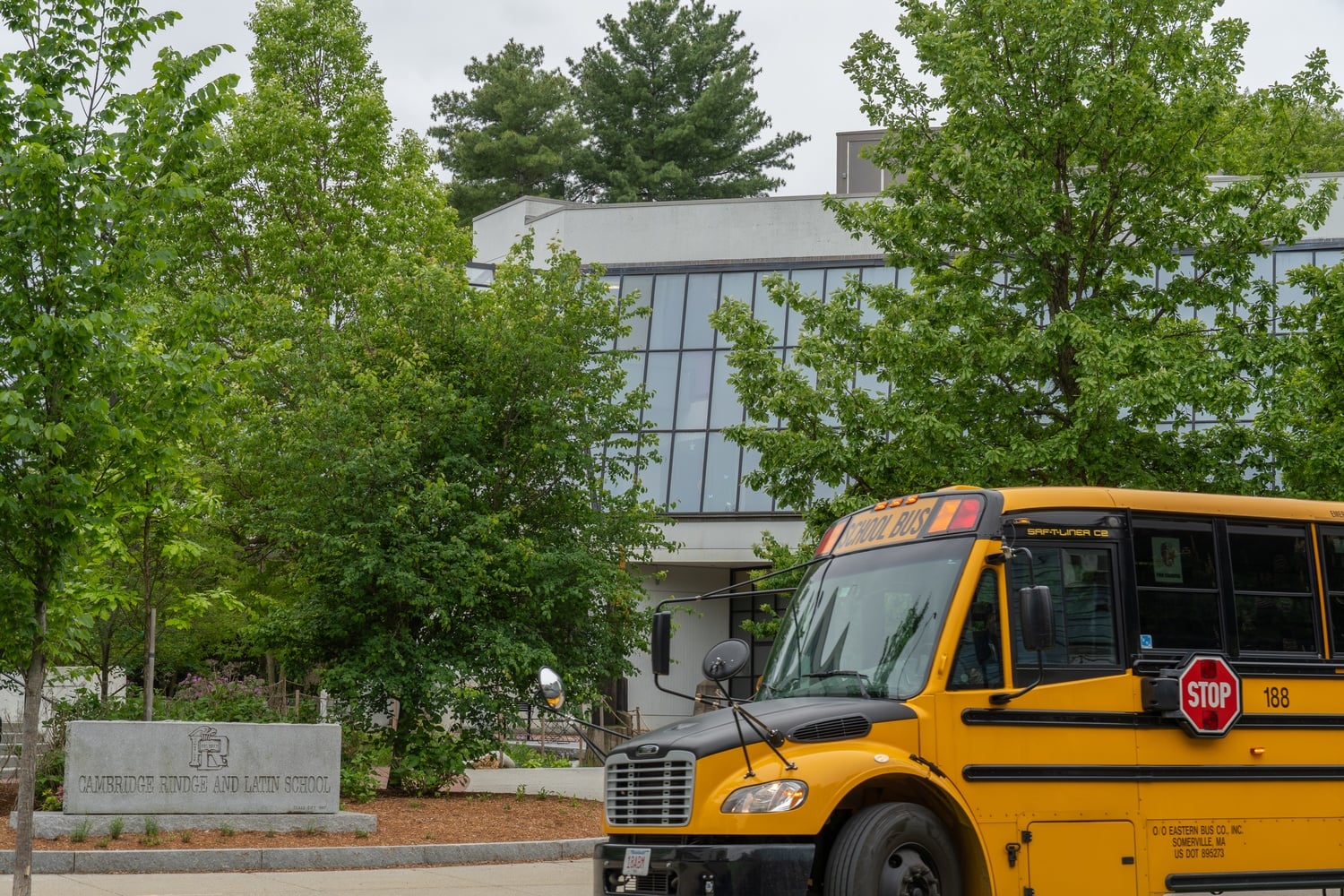
Massachusetts provides the best public school education in the country. If Cambridge wants to contribute, it must cultivate intelligence that isn’t purely artificial.
Since the public release of ChatGPT in 2022, school districts have struggled to respond to rapidly developing generative AI systems that can do everything from solve math problems to write entire research papers in a matter of seconds. Cambridge Public Schools are no outlier — the district lacks a standardized artificial intelligence policy, and use of the technology remains divisive.
To protect students’ literacy and critical thinking skills, Cambridge must develop a robust, district-wide artificial intelligence policy, now.
Cambridge’s first — and admittedly laudable — steps toward such a policy came in January 2025, when the public school district’s EdTech department published its “Generative AI Guidance.” The two-page document successfully identifies a need for student instruction in AI literacy, ethics, and critical thinking. However, it makes only scattered and nonspecific recommendations about appropriate classroom use.
Last August, the Cambridge School Committee asked Superintendent David G. Murphy to propose a district-wide policy on artificial intelligence usage, to be unveiled at a School Committee meeting in May. During the meeting, Murphy did not put forward a policy, instead saying he hoped to publicize updated guidance by the end of the school year.
Cambridge Public Schools’ last day was June 26th. An updated policy has yet to be shared publicly.
This inaction is disappointing. Just because a technology is advancing quickly does not mean we should wait to regulate — in fact, we cannot afford to. A rapidly changing world requires decisive action to keep pace. Thoughtfulness need not come at the expense of proactivity.
Let’s assume, however, that the district’s sluggishness on standardization is the result of a productive effort to craft a policy both sturdy enough to meet the present moment and supple enough to govern a swiftly evolving technology. Here’s what it should address.
Artificial intelligence literacy remains vital. Before students ever open ChatGPT or Claude, they should be able to detect AI-generated content, understand how generative AI works, and identify when artificial intelligence models are prone to bias or hallucinations.
Literacy must also include educating students about how artificial intelligence damages our ecosystems through the construction of disruptive data centers and excess use of water and electricity.
However, while students should be given the tools to make informed decisions about their artificial intelligence use, that use should remain mostly personal. A district-wide policy must outline specific cases of acceptable classroom applications, among which student utilization of generative AI for academic work should be rare.
Systematic artificial intelligence usage has been linked to “cognitive stunting” — an emerging trend where young people offload their intellectual labor to artificial intelligence and subsequently underdevelop their critical thinking skills.
At the risk of sounding alarmist, any use of generative AI by students is a step towards cognitive offloading and diminished educational returns. Cambridge Public Schools must make every effort to minimize this threat.
Cambridge’s restriction of almost all generative AI tools on school-issued devices is a good start. But while the reasoning behind the district’s decision to enable Gemini for high school students is noble — a recognition of the inequity created by limiting artificial intelligence access to students who can afford personal devices — in practice, it’s ill-advised.
Allowing any generative AI use is, to some degree, implicit endorsement. The more opportunities students have to use artificial intelligence to bypass learning, the more their education stands to suffer.
Of course, I’d wager students can and do find creative ways to use artificial intelligence outside of class time regardless of personal device access. Cambridge Public Library allows free access to public computers with wifi — and thus artificial intelligence.
So when students can access this technology outside of the classroom regardless, how are schools to enforce any policy that prohibits completing assignments with generative AI?
The answer is innovation. As I’ve argued previously, in-class assessments or take-home written assignments with complementary oral examinations are promising options for ensuring intellectual integrity. Educators can think creatively to redesign curriculum that evaluates students on their personal contributions and authentic learning.
Critics of artificial intelligence bans often argue that, facing a future where capable use of artificial intelligence will be a necessary component of professional life, students need in-class experience using the tools. I’d argue that exemplary literacy and critical thinking skills far outweigh generative AI fluency, which students are sure to pick up outside of the classroom regardless.
I am a proud product of Massachusetts public schools. I can attest that our schools provide a uniquely robust education — but only if it is the students, and not their chatbots, on the receiving end.
Cambridge Public Schools has the opportunity to safeguard its students’ futures by establishing a clear, aggressive AI policy. It’s high time the district takes it.
Victoria L. Dolan ’28, an Associate Editorial Editor, is an English concentrator in Kirkland House.
Want to keep up with breaking news? Subscribe to our email newsletter
Have a tip for The Crimson? Share it confidentially