Harvard To Add Cameras in Security Push Tied to Brown Shooting, Protest Enforcement
A College administrator privately told students the cameras were intended to address security concerns like those raised by the fatal shooting at Brown University and could possibly be used to enforce Harvard’s rules on campus protests.
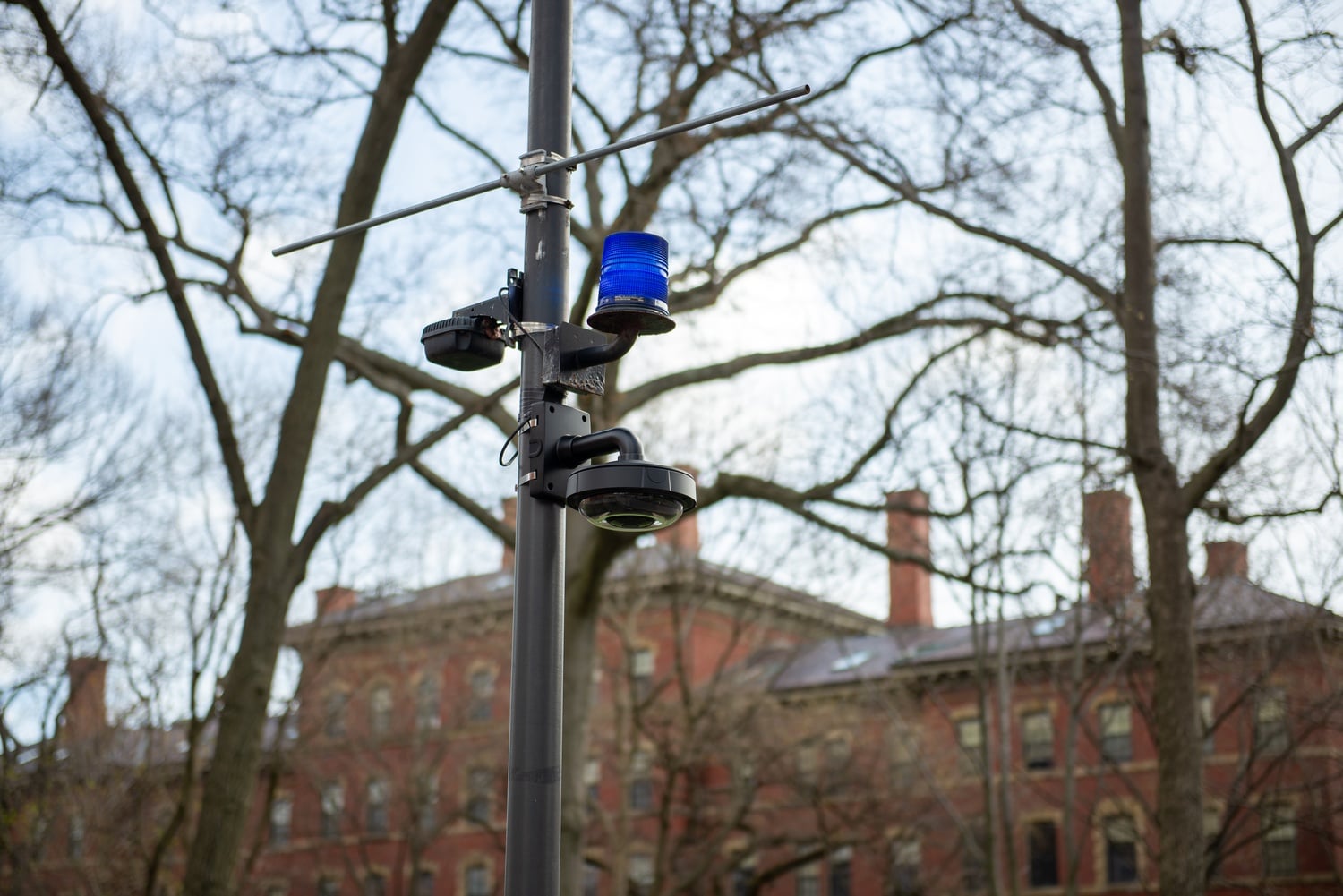
Harvard plans to install additional security cameras around academic buildings and undergraduate residential areas, expanding a campus security push that administrators privately linked to the fatal shooting at Brown University and to possibly enforcing Harvard’s rules on campus protests.
Faculty of Arts and Sciences spokesperson James M. Chisholm confirmed Thursday that Harvard plans to add cameras around academic buildings and in the River and Quad residential areas. In a statement, Chisholm wrote that planned installations are part of Harvard’s “regular process” of assessing and updating its security infrastructure.
“We continually assess our security infrastructure and make updates, as necessary, to enhance safety and improve emergency response,” Chisholm wrote. “As part of that regular process, we modernize older cameras across campus and selectively add new cameras around academic buildings and in the River and Quad residential areas.”
But in an April 30 email to members of the Student Services Undergraduate Advisory Board — a group of students who provide feedback to College administrators on the undergraduate experience — Dean of Student Services Michael P. Burke directly tied the planned camera installations to security concerns raised by the Brown shooting.
“We think the cameras are intended as a response to security concerns such as we saw at Brown University,” Burke wrote to students in the email obtained by The Crimson.
In the same email, Burke wrote that the new cameras may also be a response to “crime investigation and possibly even campus use rules enforcement.”
Harvard enacted University-wide campus use rules in summer 2024 after months of pro-Palestine student protests across the College and graduate schools, including a 20-day encampment in Harvard Yard. The rules regulate protests and other campus demonstrations, restricting unauthorized signage, chalking, camping, amplified sound, and actions that block access to campus spaces.
Faculty Deans also discussed the camera proposal at a May 13 meeting, according to a person familiar with the matter, suggesting the plans had reached House leadership by the end of the spring semester.
Chisholm declined to comment on whether the cameras would be used to enforce campus use rules, but wrote that use of the cameras will be limited by existing University policy.
“They are intended to strengthen existing safety infrastructure while remaining consistent with FAS and University policies,” Chisholm wrote.
Get The Crimson in your inbox.
Under Harvard’s video camera policy, footage may be reviewed for limited purposes, including investigations of crime, safety threats, or misconduct; responses to threatened or pending litigation; legal or law enforcement requests; facilities operations; and construction monitoring. The policy prohibits access for “ordinary personnel matters.”
The policy also restricts where cameras can be installed, barring cameras from dormitory rooms, restrooms, locker rooms, classrooms, and individual offices.
Chisholm confirmed that only exterior or outdoor cameras are planned for residential areas. He declined to comment on when the cameras would be installed.
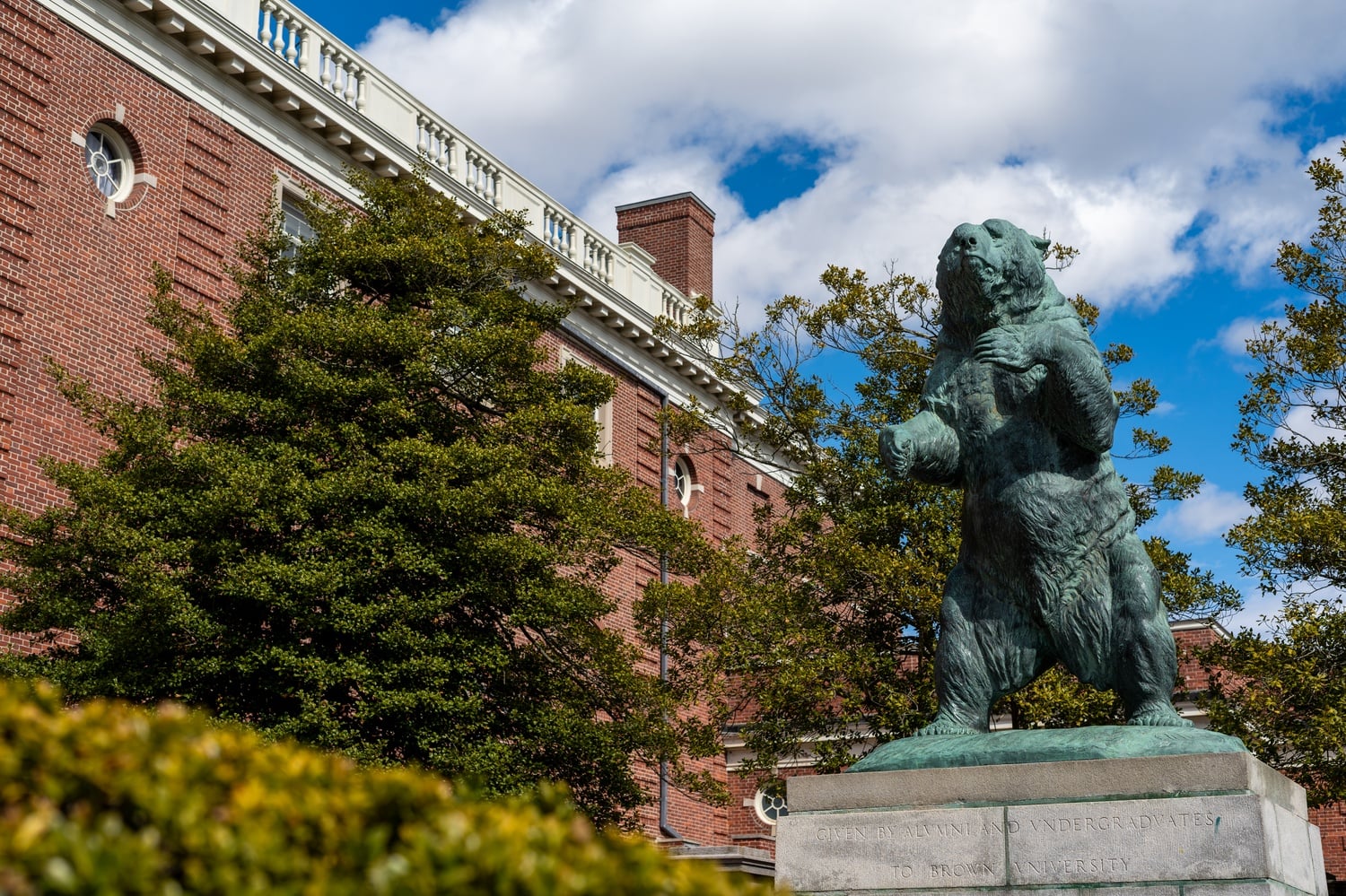
The planned installations come months after Brown moved to expand its own camera coverage following a Dec. 13 shooting, when a gunman opened fire during a final exam review session in an academic building, killing two students and injuring nine others.
Days after the shooting, Brown announced that it would install additional security cameras across campus, including in the building where the shooting occurred, and assess camera coverage around building entrances, common areas, circulation spaces, and surrounding areas.
Three students injured in the shooting have since sued Brown, alleging that the school failed to respond to prior warnings about the shooter and did not maintain “reasonable and appropriate security measures” on its campus. The complaints also cited inadequate surveillance in the building where the shooting occurred.
Elijah C. “Eli” Bostic ’28, a member of the Undergraduate Advisory Board, said he would support adding cameras in certain areas like building lobbies or entrances.
“I think maybe one or two in, you know, lobbies or entrances may be helpful, because I was shocked when I first got to campus about how little cameras there were,” Bostic said.
“Not to say that campus itself isn’t safe,” he added. “But I was surprised.”
Victoria Paraoulaki De Miranda ’28, also a board member, said that when she first arrived at Harvard, she was surprised by the relatively small number of cameras she saw compared to her high school, where they were common.
“It didn’t make me feel unsafe,” Paraoulaki said. “It’s just something that I thought about. I was like, ‘Oh, that’s neat, there aren’t that many cameras here.’”
Paraoulaki said she was unsure whether additional cameras were necessary, but said she did not share concerns that the cameras would pose serious privacy risks.
“I don’t think having cameras is the worst thing ever. I mean, we have them all over the country, everywhere in the world there’s cameras,” she said. “I know there’s privacy concerns, but I don’t think that’s the reason for the campus here.”
The push for more security cameras is the latest in a series of new security measures implemented by Harvard over the past year.
In December, following the shooting at Brown, Harvard moved to restrict access to all academic buildings to Harvard University ID holders, citing “an abundance of caution.” Harvard announced in January that the restrictions would continue through the end of the spring semester, though students said many buildings remained open to the public during normal work hours.
And in April, the Harvard University Police Department began offering active shooter trainings to undergraduates — a decision prompted by the shooting at Brown and a previous nonfatal shooting near Harvard’s campus in October, according to College spokesperson Jonathan Palumbo.
In his statement, Chisholm wrote that the University has made a number of updates to campus security recently, including the rollout of a digital system to “manage and track” external vendors’ access to Harvard’s campus and enhanced training for security guards.
Chisholm also pointed to new Blue Light emergency phones, enhanced lighting in Harvard Yard, cut-resistant screens in first-year residences, and changes to building access as additional security measures the University has implemented in recent years.
—Staff writer Sebastian B. Connolly can be reached at [email protected] or on Signal at sbc.23. Follow him on X @SebastianC4784.
Want to keep up with breaking news? Subscribe to our email newsletter
Have a tip for The Crimson? Share it confidentially