Oil, Lawsuits, AI: Inside Harvard’s Increasingly Opaque $57 Billion Endowment
Just over five years after Harvard pledged to stop directly investing in companies that explore or develop new fossil fuel reserves, a fund majority-owned by Harvard is channeling money into an energy-focused investment pool that holds a stake in an offshore oil producer.
Harvard reported owning roughly 60 percent of Aventail Energy Fund LP in fiscal year 2025, representing $493 million in end-of-year assets. Federal adviser filings reviewed by The Crimson show that the fund feeds into Aventail Energy Master Fund LP — a larger pool combining money from multiple Aventail funds.
That master fund, securities filings show, owns shares in Sable Offshore, an Exxon spinout which has resumed oil production off the California coast.
The records do not show that Harvard directed the purchase of Sable shares, or how much of the master fund’s Sable position can be traced to Harvard. But they establish a direct financial chain between a fund majority-owned by Harvard and an investment pool holding shares in an oil and gas producer.
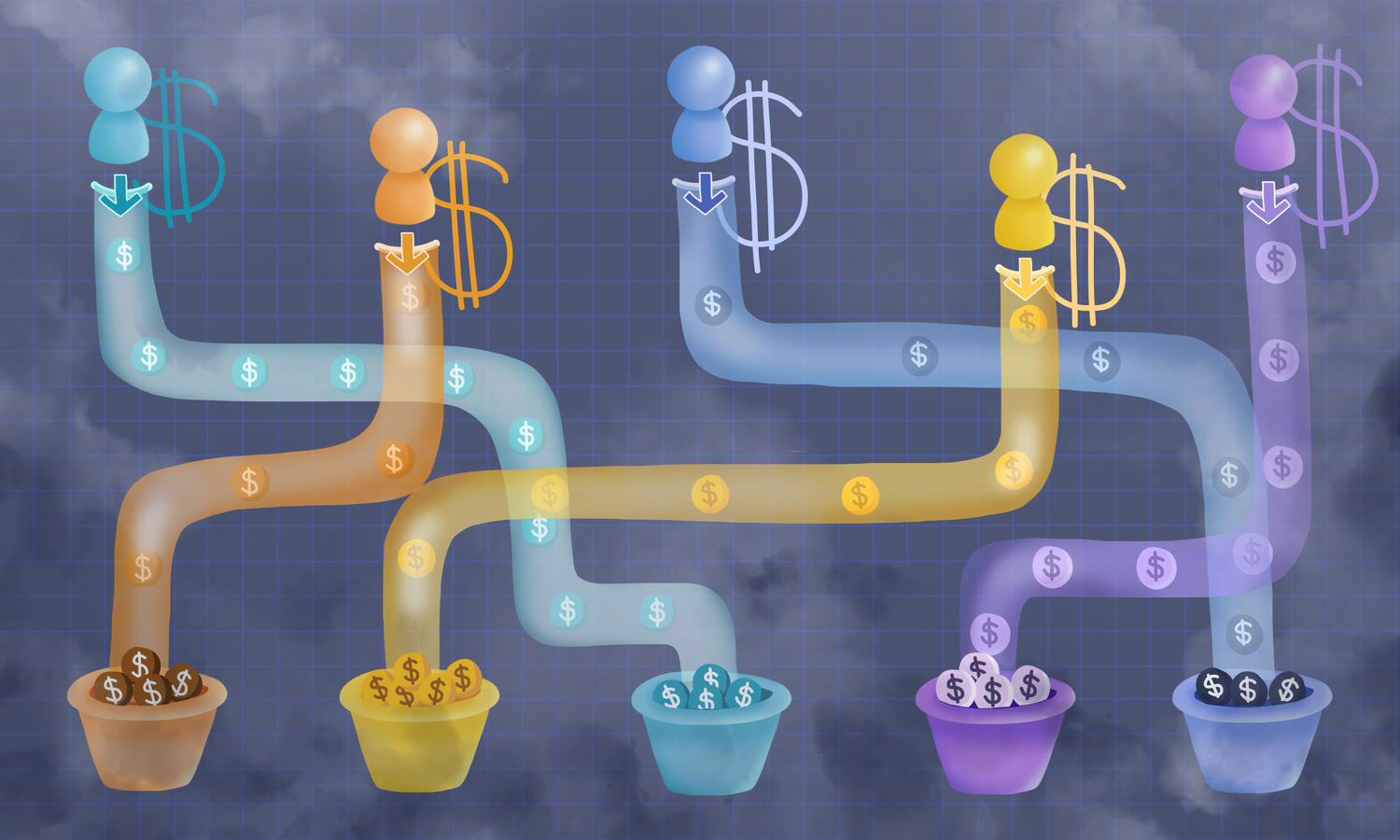
It is one of dozens of connections uncovered through a Crimson analysis of Harvard’s tax filings, which offer a rare window into where portions of the University’s $57 billion endowment wind up.
The Crimson analyzed nearly 3,400 entity-year records from fiscal years 2016 through 2025, identifying about 670 distinct entities disclosed on Schedule R, the section of Harvard’s tax returns listing organizations related to the University. Reporters matched vehicles against securities filings, corporate records, court documents, investment-manager disclosures, and foreign regulatory filings.
The trail leads well beyond the broad categories — private equity, hedge funds, or real estate — that appear in Harvard’s annual financial report.
One of the largest vehicles in Harvard’s latest filings is managed by Bain Capital. Harvard reported an 84 percent interest in Atlantic US Real Estate LLC, representing roughly $1.6 billion in its share of end-of-year assets.
Other vehicles can be traced all the way to individual companies. One Harvard-owned investment account received millions of shares in the parent company of American Express Global Business Travel, while another Harvard-majority-owned fund helped finance the take-private acquisition of the global exclusive social club Soho House.
Some Harvard funds make money from lawsuits. Others provide capital to insurance markets or bet on catastrophe risk. And one newly disclosed venture capital vehicle appears to be linked to generative artificial intelligence search company Perplexity AI.
The filings do not capture every investment in Harvard’s portfolio, but they provide unusually granular clues about an endowment that has grown more difficult to follow as HMC has outsourced nearly all of its investing.
Get The Crimson in your inbox.
Roughly 90 percent of Harvard’s endowment is managed externally, up from about 65 percent when HMC Chief Executive Officer N.P. “Narv” Narvekar arrived in 2016. HMC says it works with more than 100 investment partners but publicly identifies few of them.
Presented with a detailed list of The Crimson’s findings, HMC spokesperson Pat S. McKiernan declined to comment.
“HMC does not comment on individual investments,” he wrote in a statement.
Each dot represents one organization in one year of Harvard’s tax filings. The same fund appears again for every year it stayed on the list.
394 in fiscal 2016. 258 in fiscal 2025. Over the same decade the endowment grew to $57 billion and moved roughly 90 percent of its money to outside managers.
737 in the Cayman Islands. 304 in Brazil. Delaware, in black, is the largest single home — but only 1,347 of the 3,383 sit in any U.S. state.
Harvard’s own shells account for 1,122 of the lines. Bain Capital entities, 494. Gordian Bioenergy, 333. The rest are spread across 148 other firms.
In the fiscal 2025 filing, three vehicles are run by firms that invest in oil and gas. Harvard’s reported share of their assets came to $897.7 million.
Harvard’s tax return names the first three links. The last two come from securities and investment-adviser filings.
Some of these funds can be traced directly to companies you would know, using securities filings, corporate registries and foreign regulators.
Energy Investments
Harvard’s 2021 fossil fuel pledge left one category largely unaddressed: investments made through outside funds that can hold oil and gas companies.
Then-Harvard President Lawrence S. Bacow wrote that Harvard had no direct investments in companies that explore for or develop new fossil fuel reserves and did not intend to make such investments in the future.
Bacow acknowledged that Harvard still had indirect fossil fuel exposure through legacy private equity partnerships, but said HMC had made no new commitments to those funds since 2019 and that the remaining investments were in “runoff mode.”
Harvard’s Aventail investment does not fit either category.
Federal adviser filings, reviewed by The Crimson, identify Aventail Energy Master Fund LP as a hedge fund and Aventail Energy Fund LP as one of two feeder funds that supply it with capital.
The structure exposes a gap in the way Harvard framed its 2021 commitment.
Bacow ruled out direct investments in his statement, but did not address investments made through hedge funds, separately managed accounts, or other outside vehicles.
Helen H. Mancini ’29, a co-lead for Sunrise Harvard, said she was “not surprised” that HMC continued to be indirectly involved in the sector.
“If they refuse to invest directly in a fossil fuel company, they have to apply that same standard to an indirect investment,” Mancini said.

Harvard’s latest tax filings point to two other sizable energy-focused investments that raise a similar question.
Harvard reported owning all of MAP Institutional SPC - MAP 854 SP, with a roughly $225.4 million share of its year-end assets in fiscal year 2025. Its full legal name in Harvard’s filing includes a revealing parenthetical: SourceRock Offshore SMA.
SourceRock Group is an investment firm focused on energy. The firm says it invests across the “energy ecosystem,” including oil and gas companies, pipelines, and other energy infrastructure.
The SMA refers to a separately managed account, a portfolio run by an outside investment firm for a particular client, rather than a fund that pools money from multiple investors.
SourceRock’s broader securities filings disclose investments in oil and gas producers, drilling companies, pipeline operators, and oilfield services firms.
But those filings cover multiple SourceRock-managed accounts. The Crimson found no public record showing which individual companies were held specifically in Harvard’s MAP 854 account. (McKiernan declined to comment.)
Harvard also reported a roughly 74 percent interest in Mountain Capital Partners NPI LP, with a $179 million share of end-of-year assets.
Mountain Capital Partners describes itself as an investment firm focused on the energy sector. Federal adviser filings identify the exact partnership listed on Harvard’s tax return as one of the firm’s private funds.
None of the records establish that Harvard violated Bacow’s 2021 commitment. But they show that Harvard has held sizable investments through fund structures tied to managers whose mandates include oil and gas — structures that Bacow’s announcement did not address.
The question comes as HMC’s annual report on its progress toward climate goals is missing for the second year in a row. The report, released each year from 2021 through 2024, details its fossil fuel exposure, but the document was never published in 2025 and has not been released in 2026.
Tracing Harvard’s Money
Some of the investment vehicles listed in Harvard’s tax filings can be traced all the way to individual companies.
For instance, Harvard reported owning all of HMC Juweel Holdings LP in fiscal year 2025.
Securities filings for Global Business Travel Group — the parent company of American Express Global Business Travel — show that more than 3.5 million shares were transferred directly to the Harvard-owned vehicle.
Another Harvard-owned account, MAP Institutional LLC — 804 Series, held a stake in several major Indian companies.
A January filing with Indian regulators identifies MAP 804 as an account managed by Singapore-based Arohi Asset Management. At the time of the filing, the account held more than 4.5 million shares of Honasa Consumer, the company behind Indian beauty brand Mamaearth.
The same Harvard-owned vehicle has also appeared in corporate filings as a shareholder of pharmaceutical company Laurus Labs.
And when home-services company Urban Company went public in 2025, MAP 804 received more than 1.1 million shares as an anchor investor in the offering.
Other vehicles point to smaller private companies.
Harvard reported owning all of Left Lane Capital Partners Co-Invest LP (Series G) in fiscal year 2025. Austrian corporate records identify the exact entity as a shareholder of GoStudent GmbH, a Vienna-based education technology company.
Harvard also reported nearly $12.1 million in assets in Kindred PAI LP, an investment vehicle overseen by Kindred Ventures. Kindred was an early investor in generative AI search startup Perplexity AI, and securities filings show Kindred PAI began raising money in November 2024, just as Perplexity was closing a $500 million financing round.
Kindred subsequently formed two additional numbered PAI vehicles around later Perplexity fundraising rounds, suggesting that Harvard may have a stake in Perplexity.
Jesse Dwyer, chief communications officer for Perplexity, declined to say whether the vehicle was created to invest in the company when reached for comment.
“We’re fortunate to have strong investors who share our long-term vision, and we’re selective about who we partner with,” he wrote. “But as a matter of policy, Perplexity doesn’t comment on its financing.”
The same paper trail also helps reveal investments that have disappeared from Harvard’s latest filings.
3D Investment Value Master Fund, in which Harvard reported a roughly 95 percent interest in fiscal year 2023, appeared in Toshiba’s annual report as a significant shareholder while the fund was pushing the Japanese conglomerate to change its governance and business strategy.
Betting on Lawsuits
Not all of Harvard’s investment vehicles ultimately hold companies or stocks, and some make money by financing lawsuits.
Harvard reported an almost 100 percent interest in Omni Bridgeway (Fund 4) HPCR LP in fiscal year 2025, with a roughly $61.5 million share of the fund’s end-of-year assets.
Omni Bridgeway is a litigation finance firm. Rather than investing in a company, litigation financiers provide money to plaintiffs or law firms to help pay for lawsuits. In return, they can receive a portion of a settlement or court award if the case succeeds.
Omni Bridgeway’s financial statements describe Fund 4 as a group of parallel investment accounts that finance litigation in the United States.
Harvard has also used more than one firm to make those investments.
Its tax filings also include majority interests in Harbour Offshore Fund IV LP and Harbour Offshore Fund V LP, two funds tied to Harbour Litigation Funding.
Harbour has said it has raised nearly $2 billion to finance legal disputes. Court records show Fund IV backing lawsuits where its return depended on whether plaintiffs ultimately recovered money.
One Harbour Fund IV investment recently produced a multimillion-dollar return. The fund helped finance a class action accusing Australian financial services giant AMP of overcharging retirement-account holders.
After more than six years of litigation and a seven-week trial, AMP agreed to pay 120 million Australian dollars to settle the case. An Australian federal court approved the settlement in July and authorized a funding commission of more than 7 million Australian dollars for Harbour Fund IV.
One of the more unusual trails runs through Brazil.
A chain of Brazilian investment firms appearing in Harvard’s historical tax filings leads to JC Silos Fundo de Investimento em Direitos Creditórios Não-Padronizado, a fund built around legal claims against Banco do Brasil.
The fund has already received a sizable payment. In January 2020, a Brazilian court released 75.7 million reais in one of the related enforcement proceedings, according to a ratings report. About 59.4 million reais — roughly $11 million — was transferred directly to JC Silos.
Other Harvard-linked funds are built around a different kind of uncertain payout: insurance losses.
Harvard disclosed a longstanding investment in Hampden Insurance Partners I LP, a fund tied to the Lloyd’s of London insurance market.
Hampden manages money from investors that is used to support insurance underwriting at Lloyd’s. In practice, investors put up capital that helps insurers take on risk and can earn returns from the premiums collected — while also facing losses when claims come due.
Harvard reported a 99 percent interest in the Hampden fund as early as fiscal year 2016, with a roughly $14.8 million share of end-of-year assets. The partnership began voluntarily winding up in October 2024, according to a Cayman Islands notice.
Harvard has also invested in funds tied to Nephila Capital, a $7.9 billion investment firm specializing in catastrophe risk.
In fiscal year 2025, Harvard reported owning all of Emerald Catastrophe Fund Ltd., which Nephila identifies in regulatory filings as one of its advised funds. Harvard historically also held a majority interest in Nimbus Weather Master Fund Ltd., another Nephila-linked vehicle.
Those investments can rise and fall with events far removed from the stock market, including lawsuits, insurance claims, hurricanes, and other natural disasters.
The Managers Behind the Endowment
Harvard’s filings also illuminate relationships with some of the financiers behind the outside firms managing its money.
Harvard reported a roughly 98 percent interest in Apollo Thunder Partners LP in fiscal year 2025, representing about $51 million in end-of-year assets. The investment, tied to private equity giant Apollo Global Management, has appeared in Harvard’s tax filings since fiscal year 2017.
Apollo was co-founded by Leon Black, who stepped down as chief executive in 2021 after an outside review found that he had paid convicted sex offender Jeffrey E. Epstein $158 million for tax and estate-planning services. Their relationship continued after Epstein pleaded guilty in 2008 to state charges involving prostitution involving a minor.
Apollo’s current chief executive, Marc Rowan, also exchanged communications with Epstein, though Rowan has said the interactions stemmed from Epstein’s work as an adviser to Black.
Another longstanding Harvard investment is tied to Andrew L. Farkas ’82, the founder and owner of real estate investment firm Island Capital Group.
Harvard reported owning all of Island C-III Atlantic Holdings LLC in fiscal year 2025, with roughly $1.4 million in end-of-year assets. The vehicle has appeared in Harvard’s filings since at least fiscal year 2016, and a 2014 securities filing identifies Farkas as an executive officer and promoter of the investment.
Farkas has also surfaced extensively in files concerning Epstein. Records released by the Department of Justice document repeated in-person meetings between the two men and thousands of emails exchanged over a period of years. Farkas has not been accused of participating in Epstein’s crimes.
Other outside managers oversee hundreds of millions of dollars for Harvard through vehicles that reveal little about their underlying holdings.
One of the largest is Systematica Multi Fund II Ltd., which Harvard reported owning in full in fiscal year 2025, with a roughly $573 million share of the fund’s end-of-year assets.
In an April 2025 securities filing, Systematica Investments, a quantitative investment firm, reported that Multi Fund II had sold roughly $526 million in interests to just one investor, consistent with the vehicle functioning as a dedicated account for a single investor.
Harvard’s filings point to an even larger relationship with Lighthouse Investment Partners, a Florida-based investment firm.
Harvard reported owning eight investment vehicles tied to Lighthouse in fiscal year 2025, with more than $1 billion in combined shares of end-of-year assets.
Some of the vehicles add yet another layer between Harvard and the underlying investments. MAP Institutional SPC — MAP 852 SP, for example, carries the name Spruce Street SMA, tying a Harvard-owned Lighthouse vehicle to an account run by another outside investment manager.
Harvard’s historical filings also show how some of those outside relationships grew directly out of HMC.
Harvard reported a majority interest in TPRV Capital Master Fund LP, with its share of the fund’s end-of-year assets reaching more than $7 billion in fiscal year 2019 before falling to roughly $780 million by 2021. TPRV Capital was founded by Michele Toscani and Graig Fantuzzi, two former HMC investors who had managed a relative-value strategy at Harvard before leaving in 2017 to launch the firm.
The arrangements illustrate how difficult it has become to identify what Harvard ultimately owns.
When HMC managed more of the endowment internally, a larger share of investment decisions were made by Harvard employees. Today, roughly 90 percent of the endowment is managed externally, meaning that investments can now happen through feeder funds, master funds, separately managed accounts, special-purpose vehicles, and other entities.
That structure can reduce risk and provide steadier returns, said MIT senior lecturer Egor Matveyev, but it also makes the endowment harder to scrutinize.
“The nature of those investments are opaque by design in a way,” Matveyev said.
He said that opacity makes public disclosure all the more important.
“All of the stakeholders in the university should be able to look at this data, and then push back against Harvard Management Company doing business with entities that are deemed not to be ethical enough,” Matveyev said.
—Staff writer Megan L. Blonigen can be reached at [email protected] and on Signal at mblon.50. Follow her on X at @MeganBlonigen.
Want to keep up with breaking news? Subscribe to our email newsletter
Have a tip for The Crimson? Share it confidentially