Harvard Has Disclosed $163 Million in Foreign Funding So Far in 2026. Here’s Where It Went.
Harvard has taken in more than $163 million from foreign sources so far in 2026 — with Switzerland, China, and the U.K. leading the way. The Crimson analyzed the filings to trace where the money went, from financial aid and professorships to contracts with state-owned oil companies.
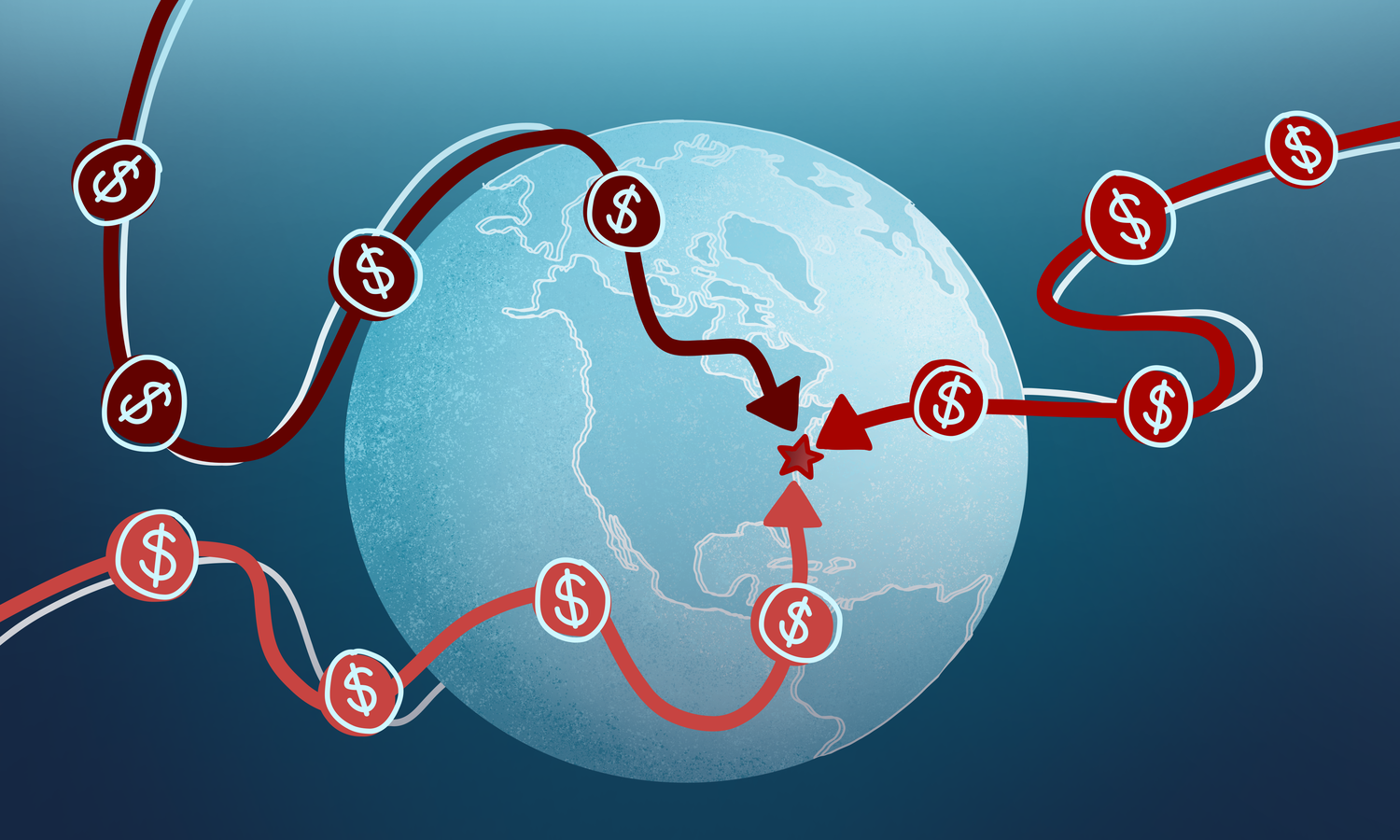
Harvard has reported more than $163 million in foreign gifts and contracts so far in 2026, according to Department of Education filings analyzed by The Crimson.
Foreign sources have contributed or entered into 376 transactions so far in 2026, including more than $119 million in gifts and nearly $44 million in contracts across 40 countries, according to federal data released on Aug. 31.
Of the gifts and contracts received in 2026, Swiss sources were by far the largest contributors to Harvard, giving nearly $42.7 million across 16 transactions. The second largest was sources attributed to China with nearly $27.9 million across 53 transactions, followed closely by the United Kingdom with more than $26.6 million.
The filings offer a detailed look at where some of Harvard’s foreign funding went, including nearly $8.8 million related to financial aid, nearly $26 million tied to faculty assignments and professorships, and more than $49.7 million for research institutes and academic programs.
A broader Crimson review of the historical database also found 27 transactions across multiple years totaling more than $9.8 million tied to six foreign oil and gas companies. Though some transactions date back to 2014, one contract ended in June and another will not end until 2027.
The names of three foreign sources also disappeared between the July 31 and Aug. 31 releases, even as their contracts remained in the database with amounts and dates unchanged. Two of the three had been added to the Pentagon blacklists.
The federal database now lists more than $4.7 billion in foreign funding for Harvard across all reporting years, ahead of any other institution. Of Harvard’s all-time total foreign funding, about $690 million came from countries classified by the federal government as “countries of concern” — more than $150 million above any other university in the database.
Harvard’s foreign funding has faced growing federal scrutiny in recent months. The Department of Justice opened a compliance review in July into whether Harvard violated federal civil rights law through financial aid programs funded by China-based entities.
The department said Harvard had received more than $630 million from Chinese sources, saying it found evidence that some gifts require the University to establish financial aid programs “with preference given to students from particular countries.” But only about $4 million in disclosed gifts explicitly name Chinese or Hong Kong students, according to a Crimson review of the data.
The DOJ has not reached a conclusion about whether Harvard violated federal law.
The Education Department first launched a now-closed investigation into Harvard’s foreign funding in 2020, but the department sent Harvard a new records request in 2025, alleging that the University’s disclosures were “incomplete and inaccurate.”
Get The Crimson in your inbox.
Harvard spokesperson Jason A. Newton declined to comment on the latest data.
Section 117 of the Higher Education Act requires universities to report certain gifts and contracts from foreign sources. Gifts and contracts that reach $250,000 from the same foreign source, either individually or in aggregate within a calendar year, are generally reported by the next Jan. 31 or July 31 deadline. The Education Department also allows institutions to amend historical disclosures.
So far this year, here’s where Harvard’s foreign funding is coming from.
Each dot is one foreign gift or contract Harvard reported in 2026. $163 million in all, from 40 countries.
217 gifts, $119.4 million. 159 contracts, in black, $43.7 million. Contracts carry terms; gifts generally do not.
53 transactions from China. 50 from the United Kingdom. 42 from Singapore. Switzerland sent 16.
Switzerland’s 16 transactions are worth $42.7 million — more than China’s 53 and the U.K.’s 50 together. Singapore’s 42 come to $2.9 million.
$49.7 million for research institutes and academic programs. $25.9 million for faculty posts and professorships. $8.8 million for financial aid. The rest carries no stated restriction.
64 of the 78 aid records pay tuition for one named student, $1.8 million in all. The 14 that state a country or regional preference come to $6.9 million. China accounts for one $45,667 contract.
Financial Aid
Harvard’s 2026 filings include nearly $8.8 million related to financial aid across 78 transactions. The largest 2026 contributor was Norway with one $1.8 million gift received in June, allocated for “Support for degree program students and/or executive education program participants from South Africa, Liberia, and Ethiopia.”
Switzerland also gave one gift totaling nearly $1.1 million for “Support for residents or citizens of Brazil who are degree candidates at the University’s graduate schools.” The gift was received in March.
Most of the financial aid transactions do not establish a broad preference for students from a particular country. Of the 78 records, 64 are labeled for tuition and fees for a specific student, not a broad preference for a country’s students. Others carry preferences for broader regions, including Southeast Asia or Europe.
And one gift, totaling $250,000 from Japan, is broadly labeled in favor of “students from outside of the United States,” with no preference for Japan or any specific country.
Indonesia gave the highest number of individual contracts, with 22 transactions totaling nearly $677,000. All the contracts are from the Indonesia Endowment Fund for Education, a public service agency under Indonesia’s Ministry of Finance that manages a state-funded national endowment to finance graduate scholarships and scientific research. All are labeled to offset tuition and fees for specific students.
Peru gave a similar number of individual contracts, with 21 transactions totaling nearly $300,000.
Despite scrutiny of China-linked financial aid, Harvard reported only one transaction from a China-attributed source: a nearly $46,000 contract labeled for “Tuition and Fees for a Specific Student.” Harvard entered into the contract on Jan. 1, and it ended on June 30.
From 2014 to 2025, Harvard reported roughly $210 million in preference-related gifts across 34 countries and territories, The Crimson previously reported. China and Hong Kong accounted for $36.8 million of that total.
Professorships and Academic Programs
Harvard’s 2026 filings also include nearly $26 million in contributions related to faculty assignments and professorships, according to The Crimson’s analysis.
Of the 36 transactions in 2026, 28 of them — totaling nearly $20.9 million — designate principal investigators, the lead researchers responsible for carrying out research projects.
Sources attributed to the United Kingdom account for nearly $7.5 million of the entire professorship total across nine transactions, all allocated for designating a principal investigator.
Canadian sources contributed nearly $4.5 million across five transactions, and Belgium contributed just over $4 million across two contracts — both attributed to the European Commission, the executive cabinet of the European Union.
In transactions for other faculty positions, Canada sources contributed nearly $2.2 million across two gifts to establish assistant professorships at Harvard Business School. Canada also contributed more than $408,000 in March for a professorship at the School of Engineering and Applied Sciences.
Three gifts from India and one from Germany were allocated for “Assistant Professorship of Business Administration.” Germany contributed an $800,000 gift, and India gave $1.4 million.
Switzerland allocated $260,000 for a “Senior lectureship awarded to eminent scholar whose work substantially focuses on Brazil,” received in April.
Foreign funding also went toward other academic programming, with more than $49.7 million allocated for specific research institutes and educational projects.
The 2026 transactions include a $34.5 million gift from Switzerland for the Wyss Institute for Biologically Inspired Engineering, a research hub established in 2009 with a gift from Swiss billionaire Hansjörg Wyss.
Switzerland’s support is far larger than all other countries’ contributions for academic programming combined. The United Kingdom gave $14.2 million across two gifts, including one to “establish an institute for Climate and sustainability.”
China contributed $666,666 across two gifts, both for the D.H. Chen Development Project, a studio initiative with the Harvard Graduate School of Design’s Master in Real Estate program. The project was launched with support from the D. H. Chen Foundation, a Hong Kong-based nonprofit for education and well-being, and Nan Fung Development Limited, a Hong Kong-based real estate company. Both gifts were received in February.
Oil Companies
A broader review of the Department of Education’s database found 27 entries totaling more than $9.8 million tied to six foreign oil and gas companies.
Most of those records were submitted before 2026. Twenty-four of the 27 entries were submitted between 2021 and 2024, while three entries for Saudi Aramco, a state-owned petroleum and natural gas company in Saudi Arabia, totaling $699,500 were submitted this year.
One $300,000 Saudi Aramco contract submitted this year began in October 2025 and is set to end in March 2027. Another $300,000 contract, which ran from November 2023 through May 2025, was also submitted this year. Both designate a principal investigator, according to the data.
A third $99,500 Saudi Aramco entry covering 2023 was submitted in April.
Equinor ASA, a Norwegian state-controlled multinational energy company focused on oil and gas, accounted for the largest single-company total. The database includes five Equinor contracts totaling about $2.3 million. The largest, worth more than $1.5 million, began in June 2023 and ended in June of this year.
Harvard announced in 2021 that it would allow its remaining legacy investments in fossil fuel companies to expire, effectively moving toward divestment following years of public backlash. Harvard Management Company, which manages the University’s $56.9 billion endowment, also said it had no direct investments in companies exploring for or developing additional fossil fuel reserves and did not intend to make such investments in the future.
Harvard is also indirectly invested in fossil fuels through an outside fund that holds a stake in an offshore oil producer, according to a Crimson analysis. Former Harvard President Lawrence S. Bacow announced in 2021 that Harvard would no longer invest in companies that explore for or develop new fossil fuel reserves.
Newton declined to comment on the funding from the companies.
Saudi Aramco and Aramco Services Company, its U.S.-based subsidiary, account for nine entries totaling nearly $2.8 million in funding to the University.
The University has also accepted four gifts and one contract from PTT Public Company Limited, Thailand’s state-owned energy conglomerate in oil, gas, and petrochemicals. The transactions all occurred in 2014 and totaled more than $2 million in funding. The contract, which totaled $1.1 million, “Designates a program director” according to the data. The federal records do not identify the program.
Separately, Harvard was establishing its Thai Studies Program around the same time. Thailand’s Ministry of Foreign Affairs signed an agreement with the Harvard University Asia Center in 2013 supporting the establishment of a permanent Thai Studies Program, and anthropology professor Michael Herzfeld served as its inaugural director.
Harvard has also accepted five contracts from Abu Dhabi National Oil Company totaling nearly $1.5 million. The contracts began between 2020 and 2021, with the latest ending in 2023.
Petronas, Malaysia’s state-owned oil and gas company, accounted for more than $1.1 million across three contracts from 2017 to 2021.
Name Changes
The names of three foreign sources disappeared from Harvard’s foreign funding data between July and August, including two entities that had recently been added to government blacklists.
A dataset released by the Department of Education on July 31 included the source names for five contracts — three from Fudan University in China, one contract from BOE Technology Group Co. Ltd. in China, and one from Phoenix Group in Scotland.
When the Department of Education released an updated dataset on Aug. 31, the amounts and dates associated with all five contracts remained unchanged. But the names of the three entities had been removed.
Though the contracts remained in the dataset — with matching amounts, start and end dates, and reporting dates — their source names were missing from the August data.
Fudan University and BOE Technology Group had both been added to Defense Department blacklists before their names disappeared from the dataset. The reason Phoenix Group’s name was removed is unclear.
The three contracts from Fudan University totaled $269,777. The contracts spanned from 2018 to 2021 but were not reported until January 2025. One contract stretched over three years, one lasted a year, and one lasted about nine months. The data does not disclose what the contracts were designed for.
The Pentagon added Fudan University to the Defense Department research blacklist on July 23, along with Shanghai Jiao Tong University and Shandong University. The three institutions were added to a list of 88 Chinese institutions barred from receiving Pentagon funding for collaborative research.
Harvard’s contract with BOE Technology Group, a Chinese electronic components producer, totaled $738,724 and spanned from September 2016 to June 2017. The Department of Defense added BOE Technology Group to its Chinese military company blacklist on June 8, excluding the department from directly procuring services from the company. The company released a statement days later denying wrongdoing and emphasizing that its products are used in consumer electronics, not for military use.
Harvard’s contract from Phoenix Group, attributed to Scotland, totaled $381,866 and spanned from March 2020 to February 2023.
Newton, the Harvard spokesperson, declined to comment on the name removals. A spokesperson for the Department of Education did not respond to a request for comment.
The Department of Education planned to publish the names of all foreign funding sources from prior reporting periods, but the release of the data has been delayed five times in the last two months. The department is now planning to release the data on Sept. 25.
—Staff writer Megan L. Blonigen can be reached at [email protected] and on Signal at mblon.50. Follow her on X at @MeganBlonigen.
—Staff writer Graham W. Lee can be reached at [email protected]. Follow him on X at @grahamwonlee.
Want to keep up with breaking news? Subscribe to our email newsletter
Have a tip for The Crimson? Share it confidentially