An Ode to My Assigned Roommates
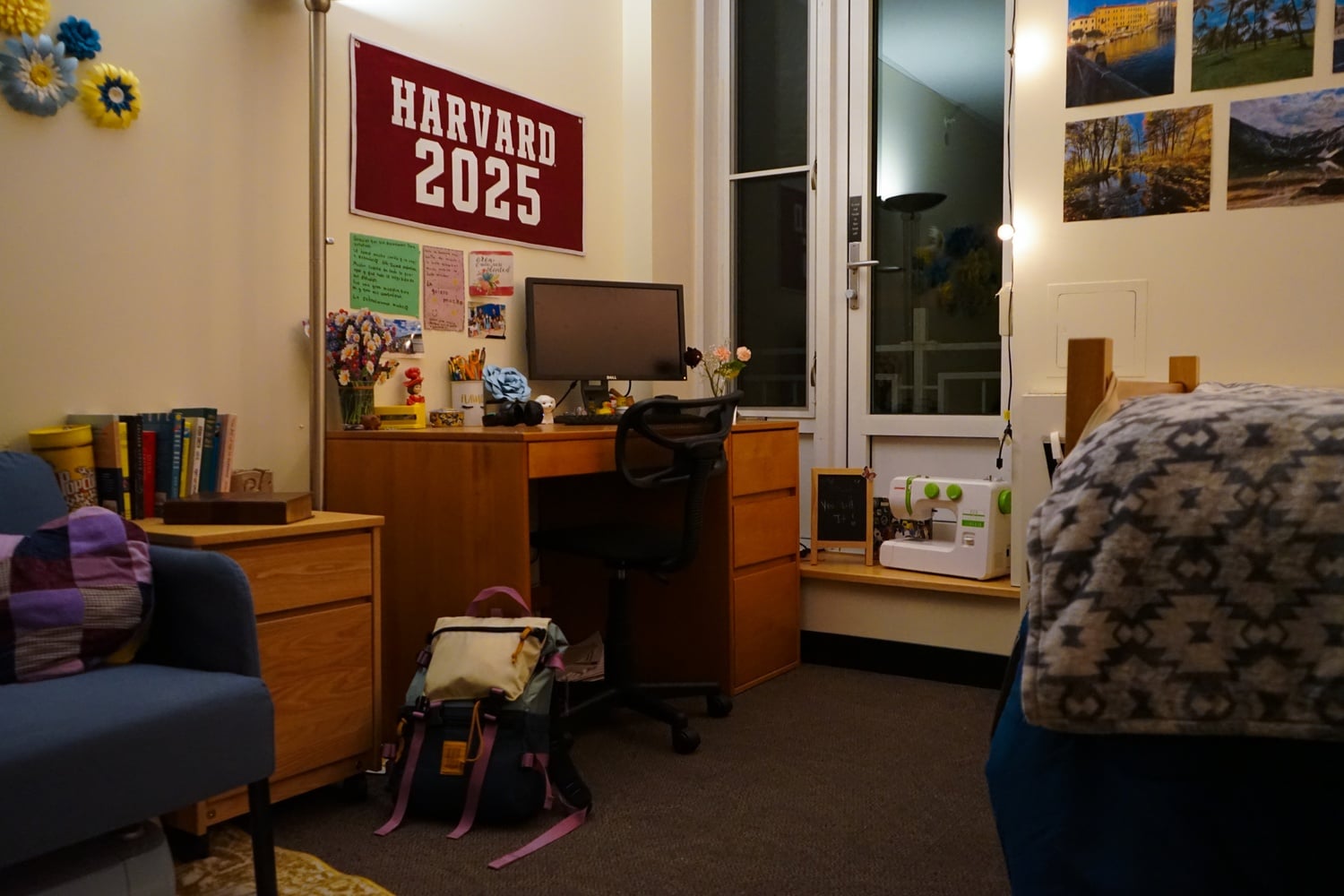
The scariest email I’ve ever received wasn’t from a professor — it was my freshman year roommate assignments.
I opened it to find two names I hadn’t chosen and didn’t recognize, with no guarantee we’d get along. The accompanying message from my dean implied a simple truth — these people were about to become some of the most constant presences in my life.
I had to wonder: Why would Harvard keep something so personal out of our hands, instead of following the student choice model used by schools like the University of California, Berkeley or Georgetown University?
Now, I can’t imagine it any other way.
At schools where students have the option to choose who they live with, freshmen are often compelled to judge potential roommates from an Instagram profile or from brief small talk at admitted students day. At Harvard, on the other hand, we send off a form describing our general roommate preferences over the summer and let higher powers (resident deans) decide our fate.
Though it seems like another instance of Harvard choosing for students — like through our housing lottery or course requirements — roommate matching is actually a highly effective technique for broadening the social horizons of freshmen, before they even step foot on campus.
Choosing who to live with has practical components and social components. There’s a lot of pressure to get these aspects right when selecting a roommate—to find someone who matches your sleep schedule, habits, and so-called “vibe.”
The College’s matched roommate system for freshmen allows students to input practical preferences while intentionally rejecting the idea that freshmen should be allowed to optimize their environments for maximum pre-determined social comfort and provides the chance to live closely with people you might not have otherwise met.
Roommate assignments don’t guarantee friendship, and they certainly don’t eliminate conflict. But they do create the conditions for learning to adapt. Freshmen must communicate across differences and build relationships that are not self-selected for compatibility. Those skills are central to the kinds of graduates higher education should cultivate.
Harvard’s own Houses provide an easy test case of this. The College used to use a ranked choice method to place students into the houses. In 1995, much to the dismay of our Editorial Board at the time, they switched to the current random lottery system due to concerns over the system’s failure to “reflect the richness and complexity of the student body” and the development of “negative stereotyping of Houses.”
Had I not been matched with my roommates, I’m not sure we would have ever met. We all come from vastly different spheres on campus and different backgrounds. The two names that once felt like a gamble have become some of the most meaningful relationships of my first year. My experience at Harvard has been shaped by those in my classes and clubs, but it was first changed by Naveena and Helen, the two people I woke up with every day (contingent upon our vastly different sleeping schedules).
As many colleges move toward systems that maximize student choice over roommate selection, Harvard’s model stands out for doing the opposite. And it isn’t the only one — peer schools like Yale, Princeton, Brown, and Stanford all have a matched or random roommate system for freshmen. These systems recognize that education is about social and interpersonal exposure to those who are different from you, not only in intellectual views, but in sleep schedule and habits. The most effective way to create that exposure is to relinquish control.
To any newly arrived freshman reading this article, thank the Harvard Housing gods that you didn’t have to aimlessly search Instagram pages and send ghosted messages to people that “look” like they fit your “vibe,” as many of your friends at other universities might have to.
The email you dreaded all summer might be the beginning of the most important part of your college experience.
Taylor P. Beljon-Regen ’29, a Crimson Editorial editor, is a Government concentrator in Leverett House.
Want to keep up with breaking news? Subscribe to our email newsletter
Have a tip for The Crimson? Share it confidentially