Harvard Kennedy School Hired EY-Parthenon to Study Demand for Tech Policy Degree
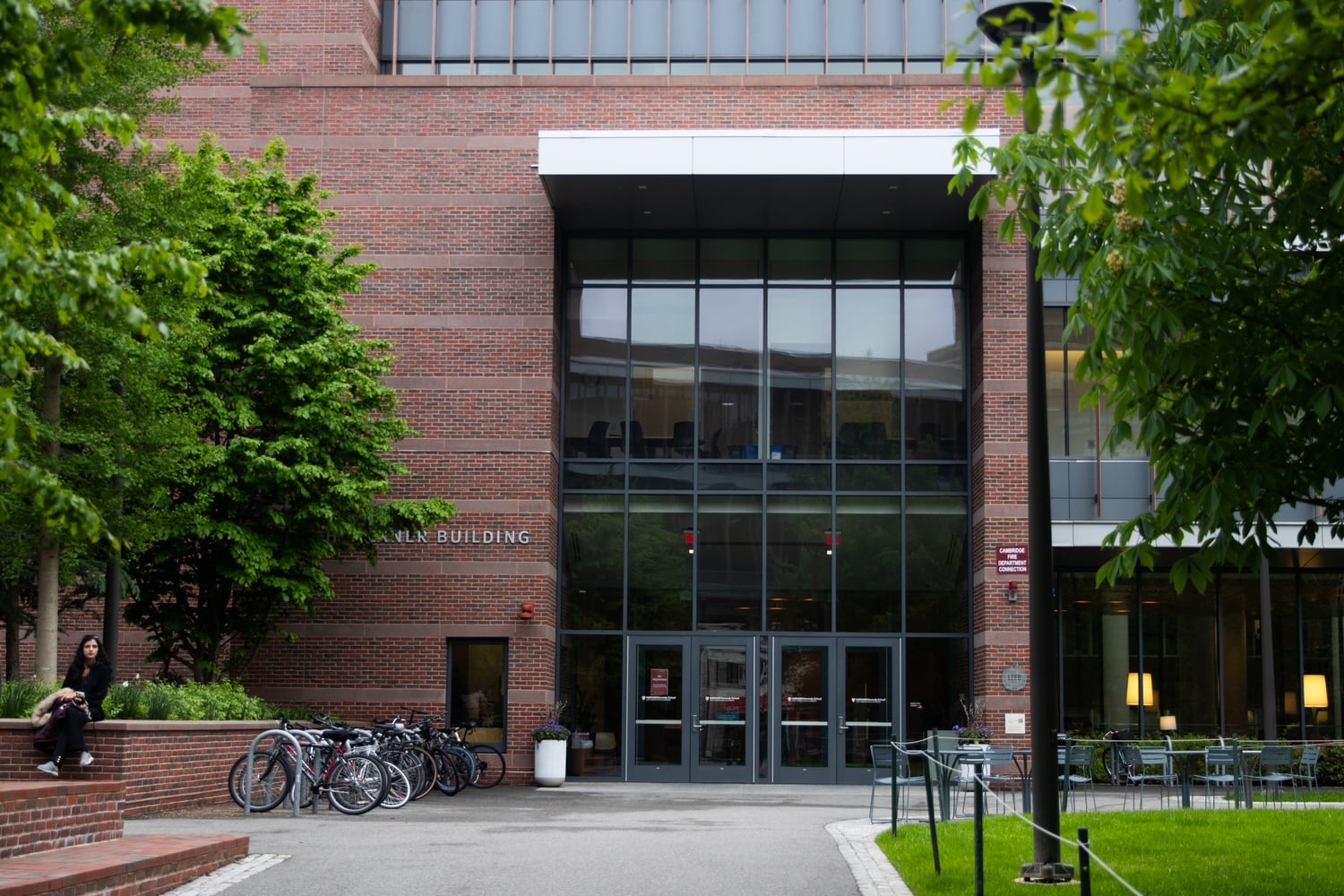
Harvard Kennedy School hired the consulting firm EY-Parthenon to gauge demand for a possible new degree in technology and public policy, a school spokesperson confirmed, as Dean Jeremy M. Weinstein works to make technology a centerpiece of the school’s plans for the next decade.
The consultation examined the supply and demand for technology policy programs and included interviews with Kennedy School faculty and students, as well as with employers outside the school, according to three people familiar with the process.
“As one element of the work that went into the development of HKS 2036, HKS engaged EY-Parthenon to conduct a market analysis of potential new educational offerings that were recommended by faculty- and staff-led task forces, including a possible new degree program in technology and public policy,” Kennedy School spokesperson Daniel B. Harsha wrote in a statement.
Harsha declined to say how much the school paid the firm. An EY spokesperson did not respond to a request for comment.
HKS 2036, the strategic plan Weinstein released earlier this year, names “harnessing technology for the public good” as one of four imperatives for the school. The plan sets a goal of training 600 public-sector technologists and 6,000 technologically minded public leaders over the next decade, and calls for launching a technology concentration while exploring a specialized degree in technology and policy.
HKS has already taken the first step, adding a technology policy concentration to its Master in Public Policy program.
“HKS is openly and publicly known to be inquiring about a tech-focused concentration, but the details of that are not decided, and nothing about that is certain,” said Stephen “Cas” M. Casper ’21, a new assistant professor of public policy.
Not every professor involved in the school’s technology planning saw the consultants’ findings.
Deborah Hughes Hallett, an adjunct professor who attended faculty discussions about the school’s technology offerings, said she had heard discussion of the supply and demand for technology-focused degrees but did not recall receiving or reading it.
Sharad C. Goel, a professor of public policy who teaches courses on generative AI and governance, said the research shaped which parts of the curriculum the school chose to build first.
Get The Crimson in your inbox.
“We talked to people to understand both what the demand will look like, but then also what people are interested in learning, and based on that we put together a curriculum that helps meet those demands,” Goel said. “So I think this was a thoughtful process to help us know what to actually build on and what to experiment with first.”
Ann-Katrin Reuel, an incoming assistant professor who will teach in the concentration, said Weinstein tested the school’s assumption against evidence.
“I loved that he was so methodological about it, and was like, ‘Hey, what do we actually need?’ And not from a place of, ‘Oh, I think this is what we need, and I think this is right,’ but actually fact checking that,” Reuel said.
Reuel, who has pushed for more technically grounded AI governance courses at the school, said the concentration should give students enough technical understanding to engage with technologists and with the realities underlying the policy questions they will face, rather than approaching AI governance only through traditional policy frameworks.
Hughes Hallet said current Kennedy School students will need that grounding.
“Many of them are thinking about going into policy careers, and they’re going to need to think about either how they can use technology, large language models, and agents of AI to be more efficient, or how are they going to regulate or not regulate generative AI, and whether or not it’s dangerous,” she said.
Casper said he is encouraged by Weinstein’s push to bring technology into the school’s teaching, but is waiting to see how quickly the school adapts as the field changes.
“One thing that I’m hoping in this process going forward is that it’s going to be a process that doesn’t prove the haters right, doesn’t prove people working in AI or computer science that, ‘Academia is so slow, and by the time it does anything, it’s a decade behind,’” Casper said, “I don’t think this process is destined to be this way. I think there are a lot of really encouraging signs.”
Goel said the concentration’s first year will help determine whether the school moves toward a full degree.
“I think everything is open right now, but that’s certainly something that is being discussed as a possibility,” Goel said, referring to the potential tech degree program. “So depending on how this pilot year goes, I think we’re going to explore all these different paths, including thinking through a new degree program.”
—Staff writer Jen L. Phan can be reached at [email protected] and Signal at jenphan.74. Follow her on X at @jenllphan.
—Staff writer Mirei S. Saneyoshi can be reached at [email protected] and Signal at mireisaneyoshi.09. Follow her on X at @mireisaneyoshi.
Want to keep up with breaking news? Subscribe to our email newsletter
Have a tip for The Crimson? Share it confidentially