Gas Station Opioids
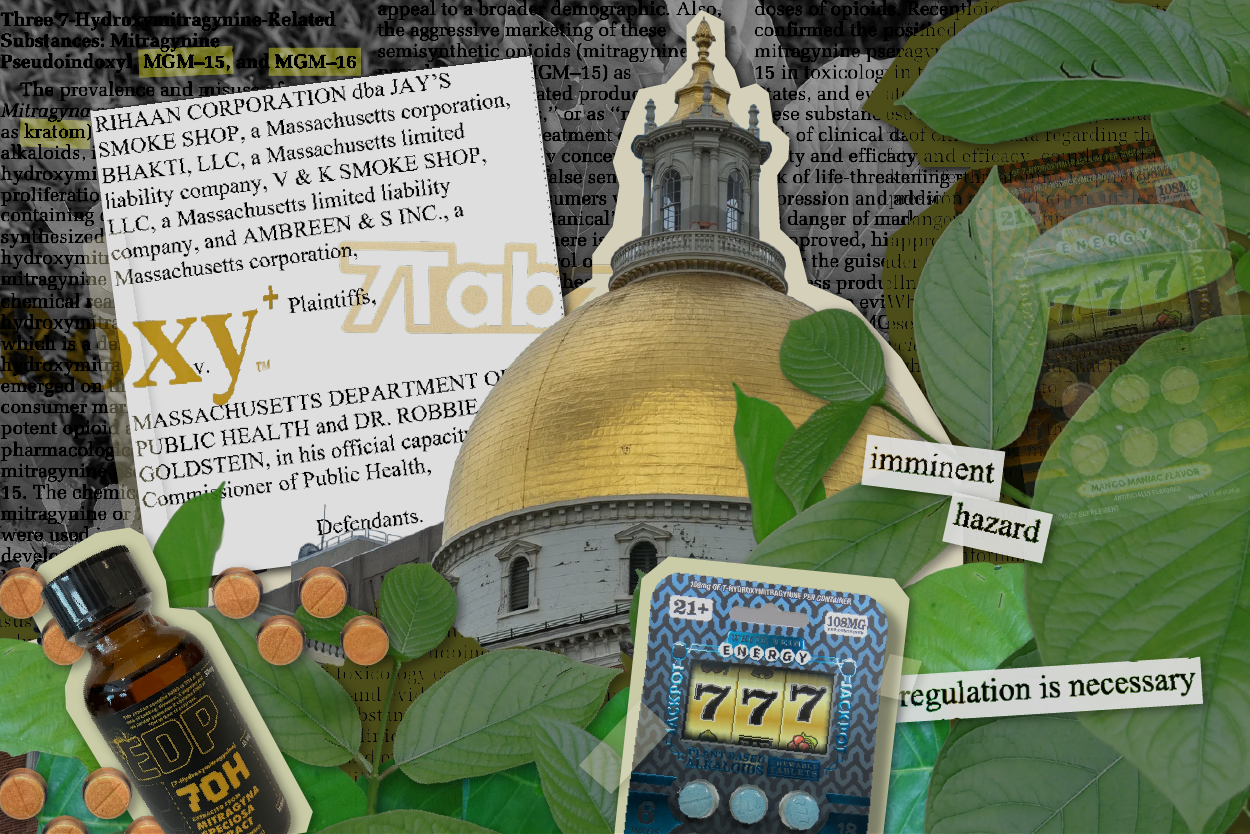
After 107 deaths, Massachusetts banned the supplement kratom and its synthetic derivatives for one year. Now, lawmakers, advocates, and physicians must weigh the future of a ubiquitous compound often called gas station heroin.
The night before Cody C. Mandeville died at just 30 years old, he was calling rehabs.
It was March, and Cody was searching for ways to treat his addiction to an entirely unregulated substance called 7-hydroxymitragynine, a highly concentrated synthetic derived from the kratom plant.
Kratom is an herbal supplement, but 7-OH and other synthetics derived from the plant’s compounds have flooded gas stations and smoke shops. 7-OH is an opioid 13 times more potent than morphine, and up until a few weeks ago, people like Cody Mandeville could buy it as a gummy, tablet, or drink just about anywhere in his hometown of Brockton.
Cody was struggling after a close friend died by suicide, and he found that 7-OH relieved some of his anxiety.
When Cody began using in early 2025, Massachusetts had no regulations for kratom products — no need for a prescription, no age restriction, no potency limits, and no mandatory warnings to consumers.
“He’s aware of the dangerous nature of taking something like that,” says his mother, Shannan Mandeville, who was concerned about the products’ lack of regulation, “but I think he was using it because he was just trying to hold on to something to get him through this awful time.”
Cody eventually became dependent on 7-OH and tried repeatedly to wean himself off it. Every attempt left him with withdrawal symptoms so severe he soon relapsed. In the year before his death, Shannan watched the ebbs and flows of his addiction. When he was using, she could tell his personality had changed. When he was quitting, he couldn’t bring himself to get out of bed.
“It just changed him into a whole different person he was not,” she says. And then, he was gone altogether.
As of the beginning of this year, 30 states and the District of Columbia already had some form of kratom regulation. On July 1, four months after Cody’s death, the federal Drug Enforcement Administration announced it intended to temporarily ban concentrated 7-OH and three additional synthetic compounds nationwide.
About six weeks later, on Aug. 13, Massachusetts Public Health Commissioner Robert “Robbie” H. Goldstein classified all kratom products as Schedule I, the state’s most restrictive drug category, joining drugs such as heroin and LSD. Possessing, manufacturing, or distributing kratom is now illegal in the state. But the order only lasts a year; to keep restrictions in place after that, the legislature must pass, and the governor must sign, a permanent law.
Both bans went into effect at the end of August.
The ban has been controversial amongst doctors, public health advocates, and kratom advocates. About a week after the state announced its temporary ban, four kratom retailers sued, alleging that the Massachusetts Department of Public Health unfairly lumped all kratom products into Schedule I without distinguishing kratom leaf products from synthetic derivatives. Supporters point to the leaf’s long history of pain relief and what they describe as its lower potential for addiction.
While the lawsuit could derail the state-wide ban, kratom will be legal under state law again in less than a year unless the legislature acts.
When Massachusetts announced the ban, it cited 107 deaths since 2020 where kratom or its derivatives were listed as a cause of death. Cody was one of them; his death certificate confirmed he died from the combined effects of 7-OH and ethanol.
But to Shannan, Cody is more than one of 107. She says the two of them were like “two peas in a pod.”
“He was my only baby,” she says.
‘Caught Flat Footed’
Kratom use traces back hundreds of years to Southeast Asia, where rural laborers, surrounded by evergreen kratom trees, would chew fresh leaves or grind dried ones into a powder for tea during long, humid workdays.
The plant, native to Thailand, Cambodia, the Philippines, Papua New Guinea, Malaysia, and Indonesia, was used as an herbal remedy and to maintain stamina. A 1975 study of kratom users in Thailand, mostly men working in agriculture, found that they used the plant to manage pain, treat diarrhea, and as a substitute for opium.
Kratom entered the United States without passing through a traditional drug-approval process because it was sold as a dietary supplement. Under a 1994 law, supplement manufacturers, unlike drugmakers, do not have to prove their products work or obtain permission from the Food & Drug Administration to sell them. They are, however, responsible for their products’ safety and must notify the FDA before marketing any new ingredient.
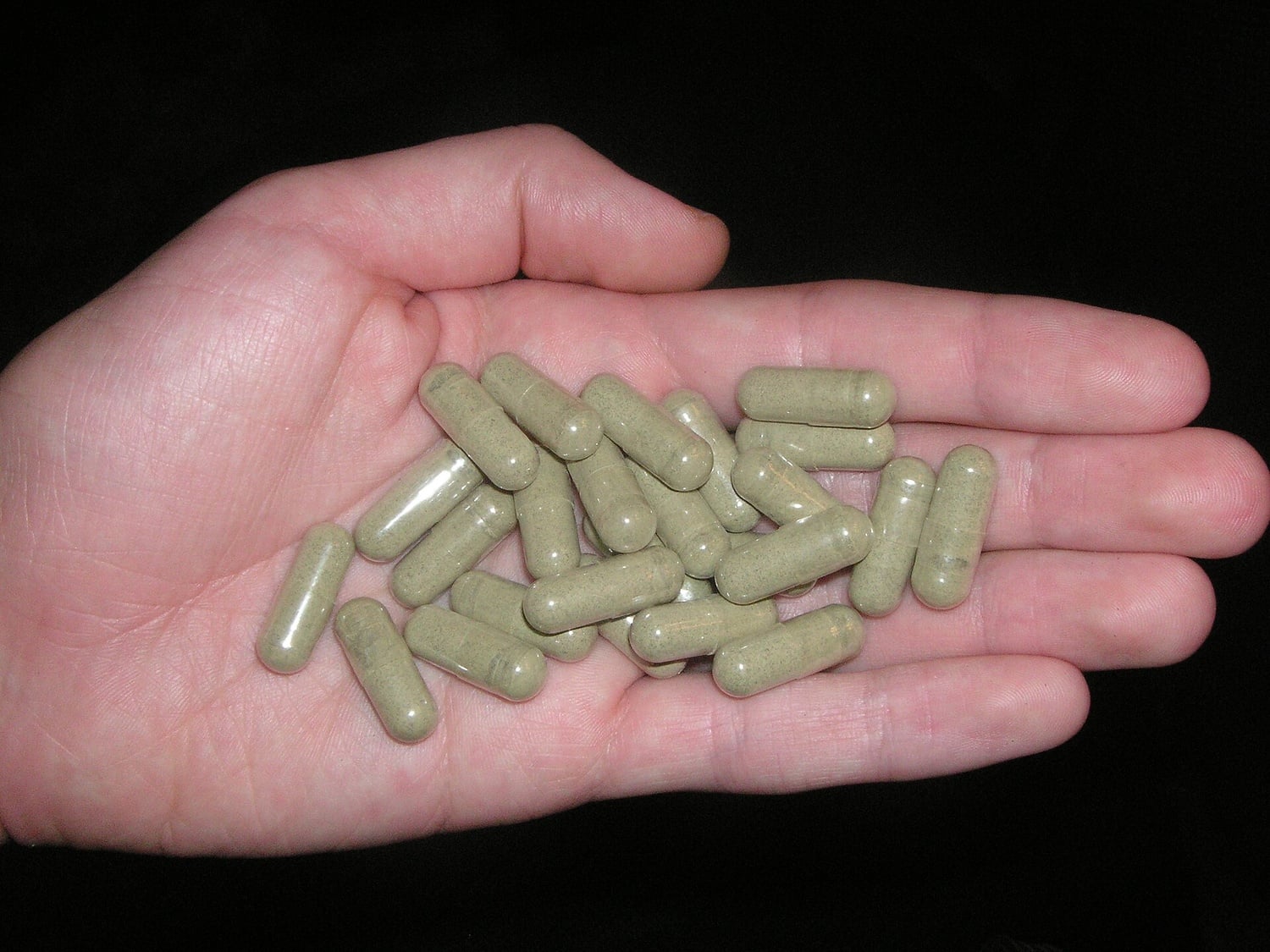
The FDA later determined that kratom manufacturers had not met those requirements and deemed many kratom products unlawful. In 2014, it placed kratom under an import alert, allowing the agency to detain kratom shipments at the border.
But the alert did not make possessing kratom a crime. Only the Drug Enforcement Administration or Congress can designate something a controlled substance. So kratom continued to be sold in grocery stores and smoke shops around the country.
Ian G. Johnson, an addiction psychiatrist at Brigham and Women’s Faulkner Hospital, was an intern at the U.S. Substance Abuse and Mental Health Services Administration when kratom began appearing more widely in the United States. He remembers the substance dividing people into two camps.
“On the one side, you had people that were saying, ‘Look, we’re already in an opioid epidemic. Here’s a new opioid. This could only make things worse, right?’” Johnson says. “Then there was a counter group that formed that, and their argument essentially was that the opioids in kratom are different than other opioids.”
Kratom binds to the brain’s opioid receptors, slowing the central nervous system and blocking pain signals. It is one of many plants that can act on the brain: Morphine, for example, comes from the opium poppy plant, and cocaine from the coca plant.
When farmworkers in Southeast Asia chewed kratom leaves, they were feeling the effects of mitragynine, the plant’s most abundant compound. Mytragynine is only a partial opioid agonist, though, meaning there is a ceiling on how much it can affect the nervous system.
The more potent compound in kratom is 7-OH. In raw kratom leaf, it is present only in trace amounts, typically less than one percent of the dry leaf’s weight.
In recent years, however, manufacturers have isolated and concentrated the compound, making it the primary ingredient in products, many of which are marketed simply as kratom. Manufacturers have also made related, semi-synthetic compounds from kratom, including mitragynine pseudoindoxyl, MGM-15, and MGM-16.
The FDA cautions on its website that the country “must prevent the next wave of the opioid epidemic.”
In a July 2025 letter, FDA Commissioner Martin A. Makary warned physicians about the rising popularity of 7-OH.
“Like many physicians, I find it painful to recall the many opioid prescriptions I wrote in the early 2000s for routine procedures, unaware of the high potential for abuse,” Makaray wrote. “Let’s not get caught flat footed again.”
‘Alarms Were Going Off’
A national study published in May found that more than 5 million people in the United States have used kratom, including more than 100,000 between the ages of 12 and 17. Lifetime use was highest among adults aged 21 to 34, 3.4 percent of whom have tried it.
When the DEA tried to ban kratom in 2016, the agency received 2,000 phone calls, mostly opposing the plan, according to DEA spokesperson Russ Baer. About six weeks later, the DEA withdrew its proposal.
Charlie Summers, a 28-year-old who lives in Milford, used 7-OH recreationally before the state ban. Summers says the drug offered a calm, euphoric feeling and eased their anxiety. At their peak, Summers says, they were taking 40 to 50 milligrams of 7-OH a day.
Although Summers says that amount was lower than what many users take, they began to feel they were becoming dependent. They started bringing kratom with them whenever they planned to be away from home for an extended period.
To wean themselves off of 7-OH, Summers took lower and lower doses, eventually tapering off with weaker kratom leaf products. Like Cody Mandeville, Summers went through withdrawals. “My body would ache if I didn’t take it,” they say, adding that they experienced chills, anxiety, and shaking.
Summers says some of their friends have also used natural leaf kratom to curb dependence on stronger kratom products. “It hits some of your opioid receptors, and so even if it doesn’t totally take away withdrawals, it can make those withdrawals more manageable,” Summers says.
Summers started using 7-OH again after four months, once they felt their dependence had subsided. Though, they say their “relationship with the drug can fluctuate.” They acknowledge that their experience differs from that of many people who start using 7-OH or other synthetics without knowing their effects.
“If you go to buy a pack of cigarettes and you don’t know the dangers associated with smoking cigarettes — the fact that you can become dependent on smoking cigarettes, the fact that cigarettes can produce very specific health outcomes — then you have been willfully ignoring information that is being presented in your face,” Summers says.
Without FDA oversight, 7-OH manufacturers have not been required to disclose their products’ health risks. Labels are often wrong, too. A 2025 study found that more than 93 percent of products mislabeled synthetic 7-OH as the natural kratom plant, with some packaging making further claims about relief from pain, anxiety, fatigue, and insomnia.
Summers says some brands appeared to target existing drug users with names that alluded to well-known opioids. Before the bans, consumers could buy 7-OH products under the names Perks, Roxy, and Opia, which echo opioids Percocet, Roxicodone, and opium.
When 7-OH products began filling convenience store shelves in the 2020s, Johnson says that “alarms were going off” among his colleagues at the Massachusetts General Brigham’s addiction clinic.

Around 2022, Johnson and his colleagues saw a “sharp increase” in patients dependent on 7-OH and other kratom-derived products. Clinicians now treat many of those patients with Suboxone, the same medication doctors prescribe for addiction to heroin and fentanyl.
In March, a study at MGB found that mentions of kratom in patient hospitalization records more than tripled between 2017 and 2024.
About four years before Johnson saw a spike in 7-OH addiction at MGB, the Massachusetts Probation Service began testing some people on probation for kratom in 2018 as part of court-ordered drug monitoring.
In a statement, MPS spokesperson Coria A. Holland pointed to the department’s annual report, which stated that 21 probationers tested positive for kratom in fiscal year 2025. Holland declined to say how often or how the department tests for kratom, saying that disclosing that information would compromise the process.
‘And Then I Met Kratom’
As hospitals and government agencies saw the numbers of 7-OH abuse cases rise, families were encountering the drug’s consequences firsthand.
In 2024, Holly A. Trouville’s son, Tyrell N. Trouville, died in Florida at 25. His death certificate lists mitragynine, the active component of natural kratom leaf, as his sole cause of death. After becoming involved in grief support groups in Reading, Holly Trouville began advocating for a kratom ban in Massachusetts.
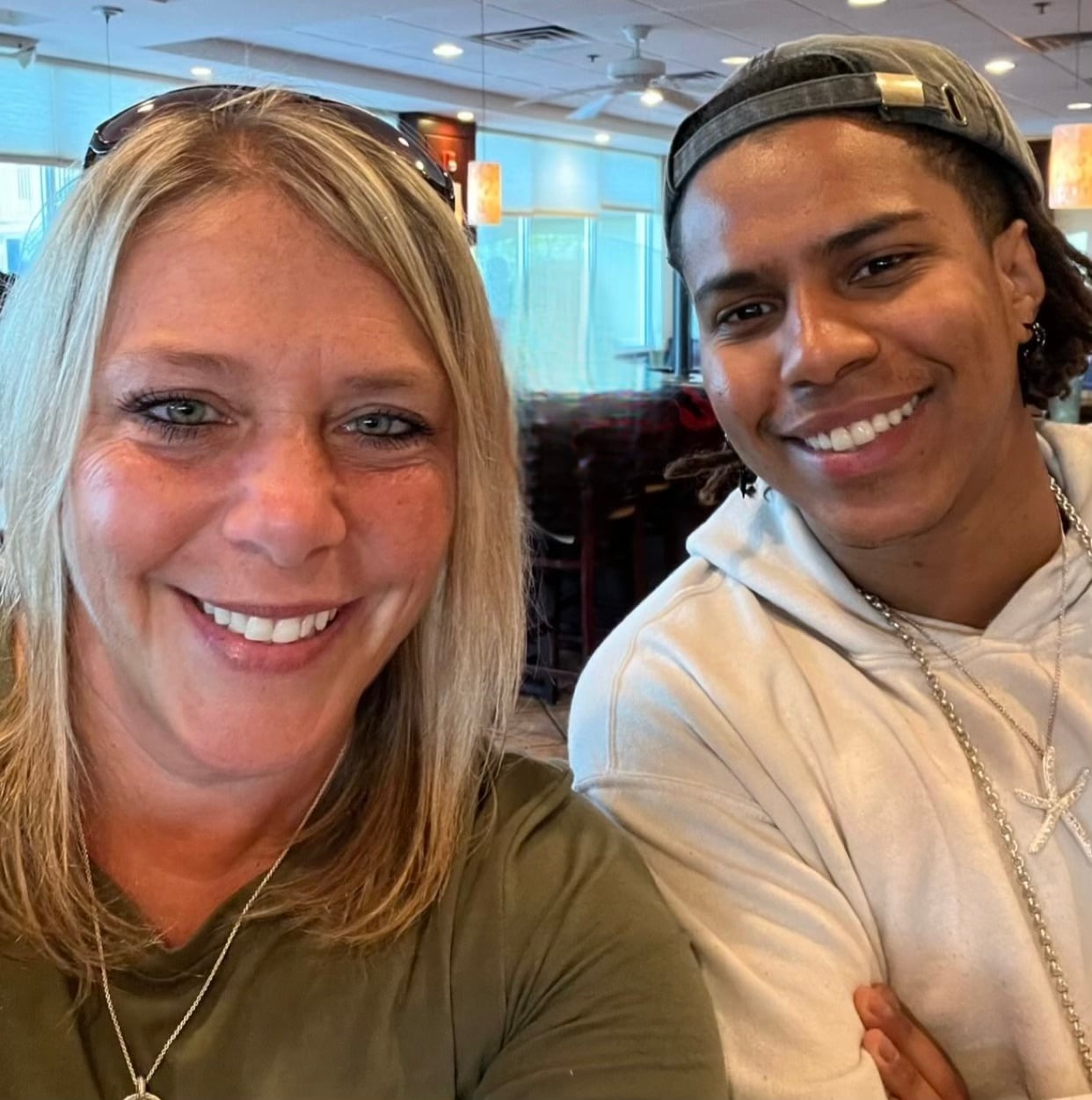
She worked with state Representative Colleen M. Garry on Ty’s Bill, named for her son, which would make kratom a Class A controlled substance. While she tracked the bill at the State House, she was going town by town, pushing for local bans.
When she began, Belchertown was the only town in Massachusetts that had banned kratom. Trouville started in Lowell and slowly expanded to neighboring towns, telling local officials Tyrell’s story and recruiting allies: the police chief in Littleton, a city councilor in Marlborough, and a state legislator from Plymouth.
Other mothers joined her, too. Shortly after Cody’s death, Shannan Mandeville connected with Trouville. So did Angela Truelson, a Rockland native whose husband, Casey Truelson, relapsed into opioid addiction after he began using kratom.
In October 2024, Angela petitioned a judge to involuntarily commit her husband to substance use treatment. “The judge referred to kratom as ‘gas station heroin,’ and that phrase just stayed with me ever since, because it just really captures the reality of what it is,” Angela says.
Casey completed 28 days of treatment and has since joined the push for a ban. “Kratom has controlled the past seven years of my life,” he wrote in an email to Boston City counselors, which he later shared with The Crimson. “I was once in the best shape of my life… active, present, productive. And then I met kratom. It stripped me of my physical strength, my mental clarity, and my ability to be the father, husband, and man I strive to be.”
Casey says he has used a range of substances in his life, including cannabis, heroin, OxyContin, Percocet, and cocaine. “Each time, I’d claw my way to a little bit of clean time, but kratom always found a way back in. Of every substance I’ve ever used, kratom… especially the liquid concentrates… was the hardest to kick,” he wrote.
Angela doesn’t want her family’s fight against kratom to be seen as an indictment of people struggling with addiction. She says she believes an honest conversation about kratom is what those people, and their families, need most.
The Truelsons have three children, ages 10, 12, and 16. After Casey’s relapse, Angela took them to his sobriety group, where members answered her son’s questions about addiction as best they could.
“It’s never been about judging people that use kratom. Some people started to use it because they’re in pain or struggling with opioid dependency, or they genuinely believed they were choosing a safer alternative than something else,” Angela says. “But those are exactly the people that we should be protecting.”
Shannan Mandeville, Angela Truelson, and Holly Trouville are not lobbyists or lawyers. Trouville is a high school teacher in Lowell, Mandeville works as a medical administrator, and Truelson works in human resources in Braintree. But all three are mothers.
“I would never want another mother to feel the way I feel, and I would never want to see another person go through what my son went through,” Mandeville says.

The Crimson first spoke with these three mothers before the state issued its emergency order. At the time, 35 municipalities in Massachusetts had regulated or banned kratom or its synthetic derivatives. Since then, 14 additional towns have passed legislation.
Despite the advocates’ push, a bill to regulate kratom failed to reach a floor vote in either chamber during the 2023-24 legislative session.
Trouville says that the temporary order has not changed her town-by-town strategy. She hopes to use the year to persuade more towns and cities to ban kratom, both natural and synthetic, so that local bans are in place when the state order expires.
Although Trouville hopes the government will ban all kratom products, others worry about a prohibitionist approach.
Summers, who has previously used kratom, says they believe that prohibition often encourages “potent and cheaper and easier to obtain substances to flood the market.”
“I think that prohibition kind of functions as a game of whack-a-mole, where you isolate a substance that is causing harm and you prohibit it, and then somebody synthesizes another substance that is going to cause harm,” they say. “And that substance may or may not be more or less destructive than the substance beforehand.”
‘Right Into the Trap’
In 2023, Erin E. Walsh, staff director for state representative Daniel J. Hunt, wrote the first House bill in more than a decade to regulate kratom.
Walsh first heard about kratom that year from her siblings, then 28 and 13. Her brother mentioned that some of his middle school baseball teammates had tried it.
Her sister described a roommate in her sober home who repeatedly appeared high, yet kept miraculously passing drug screenings. The roommate was using kratom.
“They just didn’t obviously consider that, because it wasn’t heroin or whatever,” Walsh says.
After that conversation, Walsh began noticing kratom products more and more: at her local 7-Eleven, smoke shops, and gas stations. She brought the issue to Hunt, who agreed to file a bill.
“We had done a bunch of research, and then we talked about it. Should we recommend banning it? Should we recommend just regulating it?” she recalls. After some debate, she says that they decided regulation was a better decision than a full ban.
“We don’t want to create a black market, but we do want people who want to use this to be able to use it and make sure it’s safe for consumers,” she adds.
The bill Walsh wrote proposed a ban on synthetic 7-OH products, and created labeling regulations and an age limit to natural kratom leaf products.
The bill died before reaching a floor vote.

“A lot of times, a bill has to be filed a few times before it becomes law,” Walsh says. The office refiled the bill for the next legislative session, and it joined a number of newly filed proposals for regulating or banning kratom in the state, including Ty’s Bill.
“Obviously other people are learning about it, and the public awareness has spread,” Walsh says.
Walsh says her office got a heads-up from the state before the DPH commissioner announced the one-year ban, but she hopes the state will ultimately adopt her office’s regulatory approach.
Rep. Daniel Cahill added an amendment to an economic development bill that includes language about kratom regulation. The current version would ban synthetic 7-OH and enforce fines for retailers who sell 7-OH products. It would not ban pure leaf kratom for those over the age of 21.
The one-year ban gives the legislature time to consider this and other options.
But even before the ban took effect, four kratom retailers sued the DPH in Suffolk County Superior Court. Their lawsuit alleges that the commissioner overstepped his authority by banning all kratom products, forcing retailers to stop selling natural kratom leaf products they say have not been proven harmful.
A judge has not ruled on the retailers’ request for a preliminary injunction leaving the ban in effect. DPH Commissioner Goldstein defended the department’s broad approach in a statement.
“I understand the concerns that some Massachusetts residents have raised about restricting the sale of kratom. There are many who have developed physical dependence from frequent and consistent use,” Goldstein wrote. “At the same time, many people are unaware of the potential harms associated with kratom, in both its synthetic and natural forms. As the state’s health commissioner, I have a responsibility to protect the health and safety of all Massachusetts residents, and to make them aware of the risks that may exist.”
Jignesh Patel, who owns Jay’s Smoke Shop in Salem, which is one of the plaintiffs, wrote in an affidavit that the order would cost the business about 25 percent of its gross revenue, or about $7,000 a month. Patel wrote that he supports the state’s ban on 7-OH and other synthetics but that the state should not bar him from selling pure kratom leaf products.
“Jay’s Smoke Shop is not asking for permission to sell dangerous products. We do not sell concentrated 7-OH or synthetic derivatives, we support prohibiting them, and we would not oppose an order directed at them,” Patel wrote.
Although the four retailers are the named plaintiffs, the lawsuit was organized by the American Kratom Association, a consumer advocacy group that supports “appropriate regulation of kratom products.”

The AKA has filed similar lawsuits in Florida, Minnesota, and Ohio. In Ohio, an agreement between the Department of Agriculture and the AKA-backed plaintiffs led the state to reverse its ban of natural kratom.
“As a technicality, you have to have standing in order to file a lawsuit, and you have to show the harms that are associated with the action taken by the government,” says Mac Haddow, the AKA’s senior fellow on public policy. “So we recruited some — among many who were willing — of the retail outlets to challenge what was done with the state of Massachusetts.”
Haddow and the AKA oppose the highly potent synthetics, including 7-OH, that have flooded the market. They support “kratom consumer protection acts” that would regulate labeling and concentrations, while also establishing age limits for purchase.
As Holly Trouville went town by town, she became familiar with the AKA. She says the group oversells the safety of pure kratom products, which lack FDA safety approval.
“There hasn’t been enough research to truly say when you hear people say that it saved their life or whatnot. That is anecdotal,” Trouville says. “I’m not saying without more research, without more scientific stuff, that there couldn’t be some benefits somehow. If that is true, then let the FDA approve it. Let the doctors prescribe it.”
Haddow says he uses kratom every day to treat a back injury from motorcycling in his youth. He cites a Johns Hopkins University survey of 2,798 kratom users, 41 percent of whom said they used kratom to treat opioid withdrawal. Of those, 35 percent reported going more than a year without prescription opioids or heroin.
Haddow also notes that mitragynine did not raise safety concerns in animal testing. An ongoing clinical trial is examining mitragynine as a possible treatment for opioid use disorder.
“The real problem is not natural kratom leaf products that are properly manufactured and labeled and regulated by the FDA,” Haddow says. “The problem are these opioids — chemically manipulated products that masquerade as kratom — and the Department of Health falls right into the trap because they do the same thing.”
Weeks before the ban took effect, DPH emailed health care providers to alert them to kratom’s presence in the state and its upcoming regulation, according to an email obtained by The Crimson.
“Providers should anticipate a potential increase in the number of patients presenting with kratom-related withdrawal and requests for kratom-related use disorder treatment in the coming weeks,” the email stated.
About a month after the ban took effect, its consequences remain unclear. The Crimson contacted MGB, Beth Israel Lahey Health, and Boston Medical Center, three of the largest hospital systems in the state. None responded to requests for comment.
At MGB, Johnson worries that cutting off access could push people toward new, more potent substances.
“I think one potential unintended risk is if people have developed a dependence on 7-OH and then they can’t get it or their access is cut off,” he says, “will they seek help or will they turn to potentially more dangerous alternatives?”
—Magazine editor-at-large Caroline G. Hennigan can be reached at [email protected]. Follow her on X @cghennigan.
— Associate magazine editor Jack B. Reardon can be reached at [email protected]. Follow him on X @JackBReardon.
Want to keep up with breaking news? Subscribe to our email newsletter
Have a tip for The Crimson? Share it confidentially