Harvard International Office Halts CPT Authorizations for Several Schools After New Federal Guidance
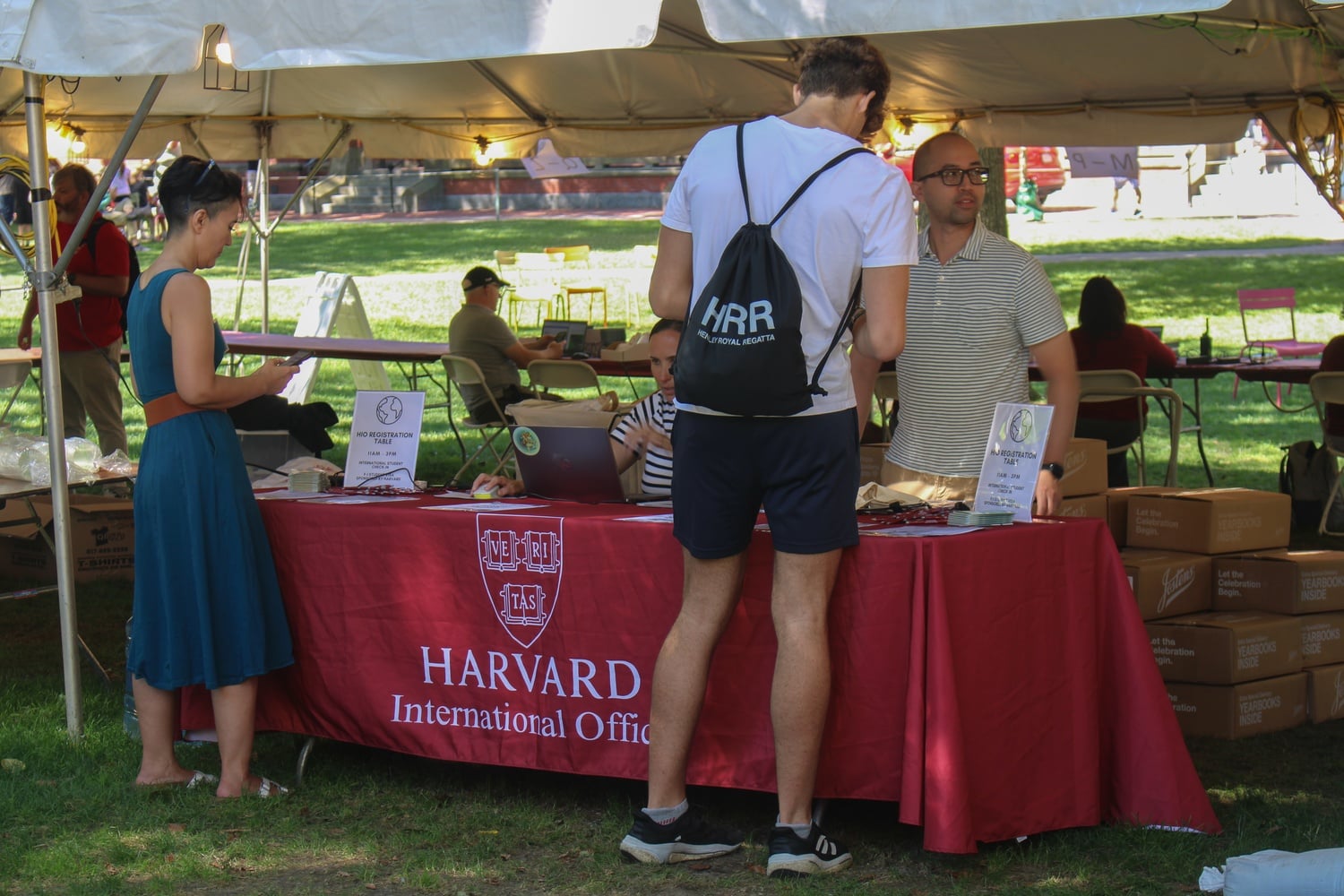
The Harvard International Office will no longer authorize Curricular Practical Training — the program that allows students on F-1 visas to work off-campus internships and jobs — except where the work is a formal requirement for graduation.
The change follows two broadcast messages issued last month by the Student and Exchange Visitor Program, which told universities that CPT may be authorized only when a degree cannot be completed without it and warned that schools could face administrative or legal consequences for improper authorization.
The messages are the latest in a series of Trump administration actions narrowing the terms on which international students can study and work in the United States.
Harvard will continue to authorize CPT for degree programs that require a curricular internship, including some offered by the Harvard Business School, Harvard Kennedy School, Harvard Graduate School of Education, Harvard Divinity School, and the Harvard School of Public Health.
But CPT is not currently available to students at Harvard College, Harvard Law School, Harvard Medical School, the Graduate School of Design, and the Graduate School of Arts and Sciences — closing one of the two primary avenues through which international students can gain work experience while on a student visa.
The HIO updated its website to reflect the new policy, writing in guidance posted online that “Harvard will authorize CPT for F-1 students only where the opportunity is a formal requirement of the student’s degree program, successful completion of the degree is contingent on CPT, and the required internship or practicum is offered by sponsoring employers through cooperative agreements with the school.”
The HIO did not issue a formal announcement to affected students, according to three students who had planned to participate in CPT. Instead, the HIO informed them individually, in one-on-one meetings, that it would no longer authorize their placements.
“I’m not sure what to expect, but everyone knows it’s going to be really hard to find an internship in U.S.,” said Aleksia Chekunova ’28, an international student from Belarus.
“I don’t understand why this is being done to us, when all we want is to respect the law and pay taxes,” wrote Lennard R.A. “Lenny” Pische ’27, an international student from Italy.
A Department of Homeland Security spokesperson wrote in a statement that “nothing about these regulations has changed.”
Get The Crimson in your inbox.
“However, schools and employers should consider themselves on notice: under President Trump, abuse of this generous system will no longer be tolerated,” the spokesperson wrote.
Previously, students qualified for CPT if they received course credit for their work experience — a model that often underpinned undergraduate authorizations. But because no Harvard College degree requires an internship, the shift leaves undergraduates without a path to CPT.
The first SEVP message, dated Aug. 12, told designated school officials that the program had observed a rise in authorizations that did not meet regulatory requirements and was increasing scrutiny of approvals. A second message, issued Aug. 24, went further, telling schools that CPT must be required of all students in a program — domestic and international — rather than tied to elective internship credit.
Neither message changed the underlying regulation, which still defines CPT as a required internship or practicum that is an integral part of an established curriculum. The Aug. 12 message states that it “is not itself a rule or a final action by SEVP.” Harvard’s decision, like those at other universities, reflects an institutional judgment about compliance risk rather than a change in law.
“CPT eligibility and program requirements vary among Schools. The HIO continues to support international students interested in exploring options for training opportunities,” Harvard spokesperson Jason A. Newton wrote in a statement.
Universities across the country have responded similarly. The University of California, Berkeley suspended its Course Credit CPT category outright, and the University of Washington, Boston University, the University of Michigan, and the University of Southern California have all paused or narrowed authorizations while reviewing the guidance.
Students seeking off-campus employment while attending school in the U.S. still have another option: Optional Practical Training, which permits up to 12 months of full-time employment for students on F-1 visas and up to 36 months for those in STEM fields.
But students must apply for OPT directly through the federal government instead of their universities. The federal government is reportedly considering a proposal to tie a $100,000 fee to OPT.
The updated guidance on practical training arrives alongside a separate DHS rule taking effect Sept. 15 that replaces the longstanding “duration of status” system with a fixed four-year cap on F and J visas, and requires students needing more time to finish their degrees to petition USCIS directly.
Correction: September 3, 2026
A previous version of this article’s photo caption incorrectly stated that the Harvard International Office would no longer support the Curricular Practical Training program. In fact, CPT remains available to eligible students at some Harvard schools, while students at several others are not currently eligible.
—Staff writer Sebastian B. Connolly can be reached at [email protected] or on Signal at sbc.23. Follow him on X @SebastianC4784.
—Staff writer Summer E. Rose can be reached at [email protected] or on Signal at ser.85. Follow her on X @summerellenrose.
Want to keep up with breaking news? Subscribe to our email newsletter
Have a tip for The Crimson? Share it confidentially