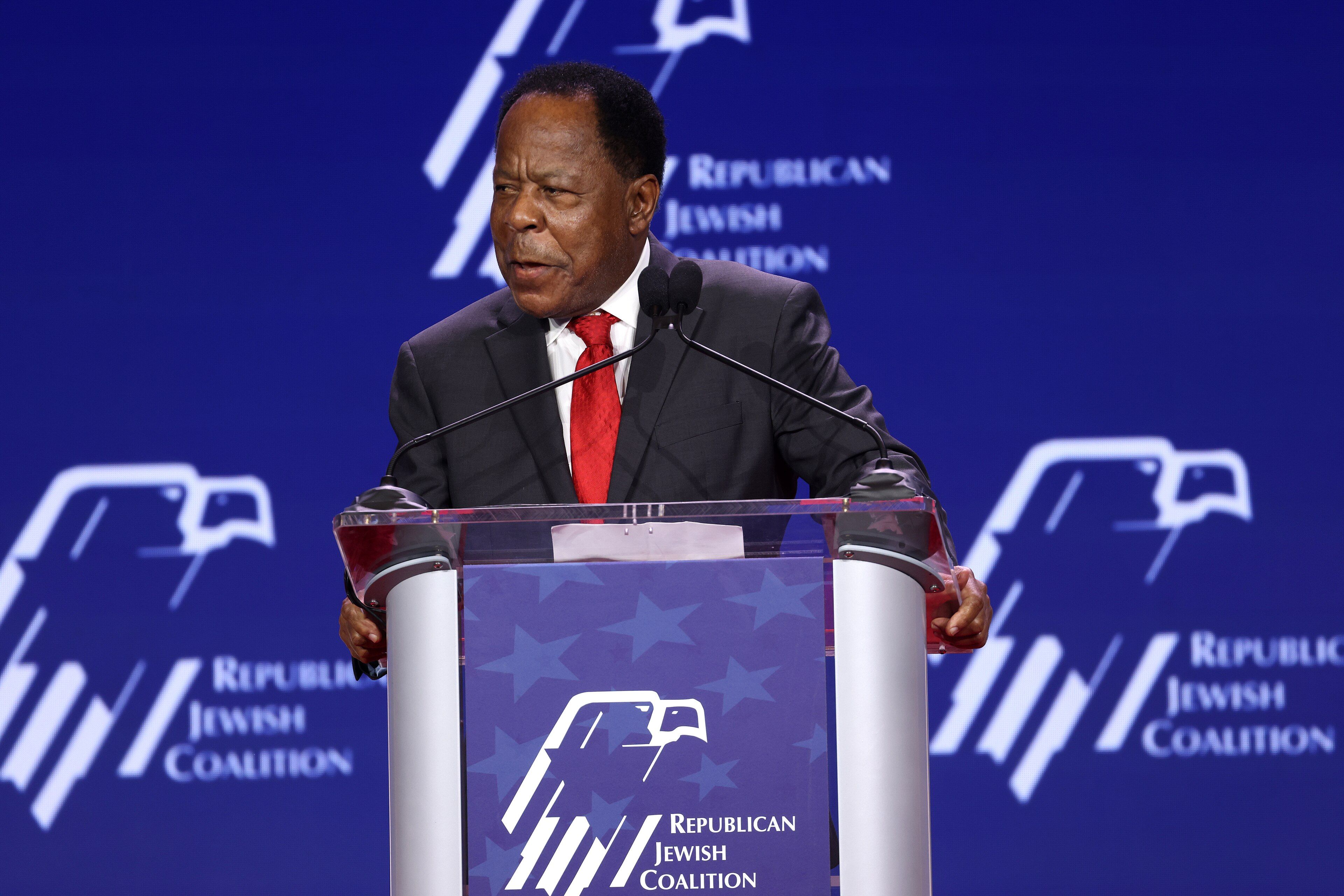

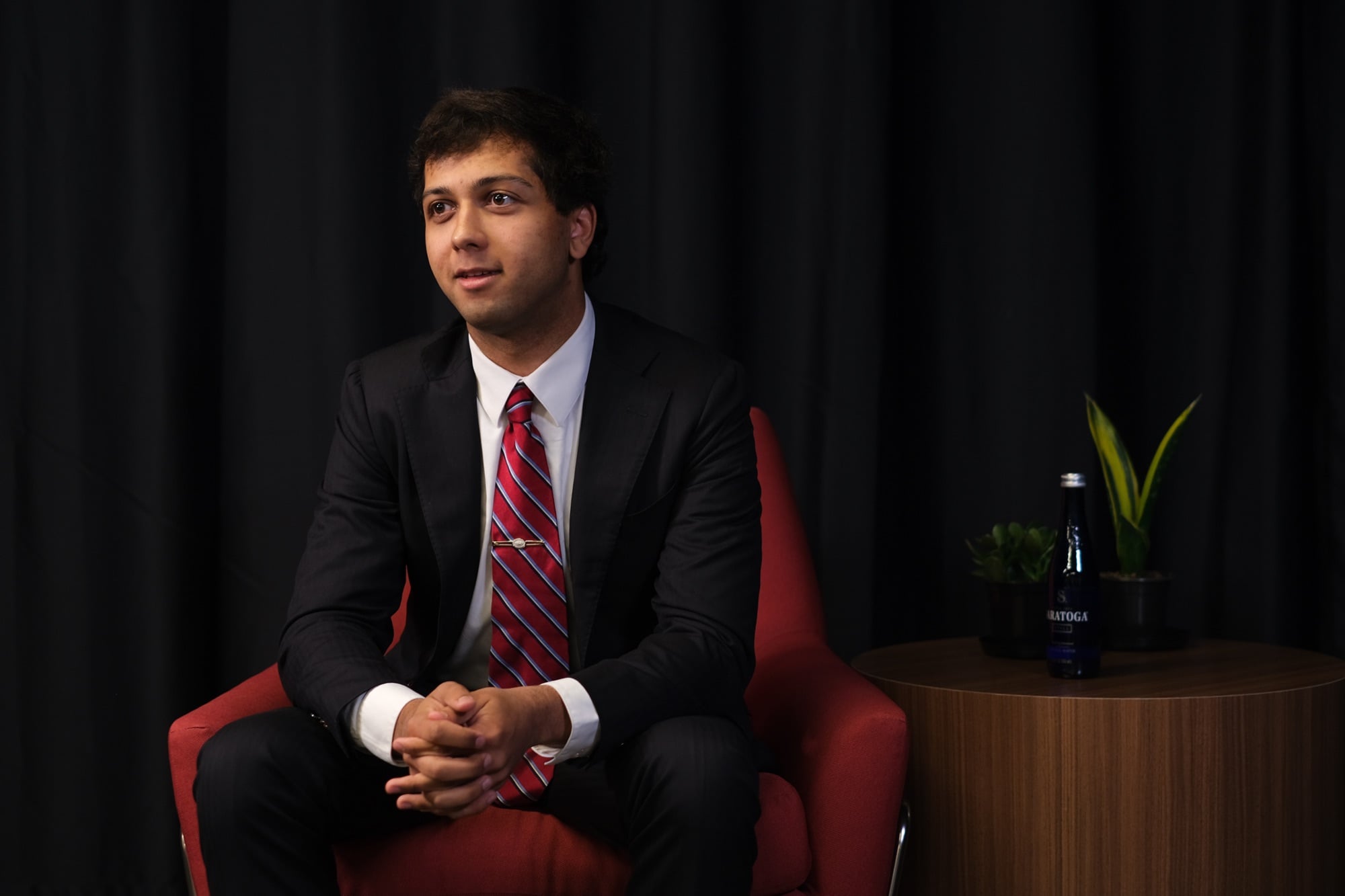
On Sept. 16, Leo J. Terrell threatened to choke a Justice Department intern with a computer charger.
For nearly an hour, Terrell, a senior Justice Department official who chairs the Task Force to Combat Antisemitism, demanded to know why Tejas S. Billa ’28 had left his charger at home. He accused Billa of lying about where it was and threatened to fire him, according to Billa and another intern who witnessed the exchange.
Then, they said, Terrell told Billa that if he brought the charger to work the next day, he would choke him with it. Billa described the confrontation to other interns in messages that day and to someone outside the department the following day, according to texts reviewed by The Crimson.
That afternoon, Billa called Stacy L. Harwood, an office manager in the Office of the Associate Attorney General, to report what had happened.
“It’s not going incredibly well,” Billa began, according to a recording he shared with The Crimson. “I’m reaching out privately, on my own.”
Before he could explain, Harwood interrupted.
“He’s been terrible, hasn’t he?” she asked.
Billa described Terrell as “terrifying” and told her about the charger dispute.
“He’s threatened me, career-wise, physically, whatnot,” Billa said. “I don't really take it as a joke given the sort of power.”
Harwood did not seem surprised.
“That’s what I was afraid of,” she replied. “This unfortunately has been a pattern.”
Nine days later, Billa, a former Crimson Editorial editor, resigned.
The three other interns Terrell had offered jobs beyond the summer also stopped working with him or moved to end their involvement, Billa and two other interns said. The four had been promised pay beginning Sept. 1. None received it, they said.
Terrell denied threatening to fire or choke Billa, writing in a statement that he had simply told him the charger was government property and had to be brought to work. Harwood declined to comment.
The confrontation was one of a series of episodes described by Billa and three other interns, all Jewish. Terrell isolated them from the rest of the Justice Department, berated them over minor mistakes, and repeatedly threatened their jobs or careers. The three other interns were granted anonymity because they feared professional reprisal.
Their accounts, supported in part by contemporaneous messages reviewed by The Crimson, offer a rare look inside the office of an official who became the public face of President Donald Trump’s pressure campaign against elite universities.
Interviews with five former Justice Department attorneys also point to a broader breakdown in coordination: Terrell clashed with the DOJ’s Civil Rights Division early in his tenure, and his Task Force had little involvement in the high-profile antisemitism investigations into individual universities.
Terrell barred the interns from venturing beyond his office area and the cafe, told them not to speak with Justice Department employees outside their team, and warned that he would fire them if they did, Billa and two interns said. Billa said Terrell specifically threatened to fire them if they spoke to Harwood.
After one intern spoke briefly with a gardener, Terrell questioned her about the encounter, the intern said.
“‘I'll destroy your career’ was another one of the lines he used if we were caught talking to anyone outside of the office or going anywhere that he did not specify,” Billa said.
Terrell also threatened to have Billa arrested by the Federal Bureau of Investigation for stealing government property after Billa took home notes that Terrell himself had told him to take home, Billa said. Terrell disputed Billa’s account, writing in a statement that he instructed the interns to leave documents, work, and government property in government buildings. But in text messages with Terrell reviewed by The Crimson, interns referenced accessing their notes and work computers outside the office.
Terrell also made clear that he preferred working with women, the interns said.
When Billa challenged a decision, Terrell would accuse him of having an ego, Billa recalled.
“This is why I prefer to hire women,” Terrell would declare, according to Billa. Terrell disputed the characterization in a statement, writing that he said he wanted to “work with the best, most qualified individuals.”
When a female intern came to work visibly upset about a romantic relationship, Terrell asked the other interns to leave his office so he could counsel her, according to Billa and two interns who heard about the incident shortly afterward. She later told colleagues that Terrell had said she was “worth more” than the man she had been seeing, Billa and another intern recalled.
On the day of the charger threat, he looked another female intern up and down and called her “Miss Cheerleader,” according to Billa and the intern. Another intern said they heard about the “cheerleader” comment shortly after. He invited Billa and the female intern to dinner that night, they said. Neither went.
Terrell wrote in a statement that the intern had been wearing a sweater “that looked like a cheerleading uniform.” But Billa and the intern Terrell had addressed said she was wearing a dress, not a sweater.
The interns also described an office consumed by an increasingly ambitious project that had little to show for months of work.
A national tour was supposed to be the centerpiece of Terrell’s work: a 15-city swing through battleground districts ahead of the midterm elections, initially billed as the National Awareness & Action Tour.
Terrell envisioned filling arenas and booking celebrities on the order of Justin Bieber and Nicki Minaj at every stop. He floated bringing out comedian Jerry Seinfeld, actor Adam Sandler, and New York Knicks guard Jalen Brunson. Terrell wrote in a statement that hundreds of names were mentioned.
The tour has held just one event thus far: an Oct. 14 gathering at a synagogue in Southfield, Mich. with Terrell as the keynote speaker. No other events have been publicized.
The faltering tour was only one sign of the dysfunction the interns described. Another was Terrell’s unresolved feud with his former boss, Assistant Attorney General Harmeet K. Dhillon — a dispute he took to The New York Times.
In August, Terrell unloaded on Dhillon to Glenn Thrush, a reporter for the New York Times, which granted him the attribution of “former official” — despite him still working at the Justice Department — according to Billa and two interns. Three interns sat in on the call with the reporter. Terrell told the interns he expected the story would end Dhillon’s career at the Justice Department. Dhillon remains in her post.
Terrell denied the account. Thrush, reached by phone Wednesday, referred The Crimson to a Times spokesperson, who declined to comment.
It is a steep fall from grace for a task force that was launched to great fanfare a year and a half ago, and pitched as an interagency team uniquely suited to execute the White House’s pressure campaign against elite universities.
The task force called Harvard a “breeding ground for virtue signaling and discrimination” and declared that the University’s leaders “forfeited the school’s claim to taxpayer support.” It claimed a role in settlements with Columbia University, Brown University, and Cornell University.
Now, the summer interns are gone, the national tour has barely gotten off the ground, and Terrell’s own staff has dwindled to one person — a special assistant reassigned from elsewhere in the Justice Department, according to Terrell himself.
An Uneasy Start
Something seemed off about the task force from the start, Billa and two interns recalled.
There was no formal application process. Instead, the Israel on Campus Coalition, a pro-Israel campus organization founded in 2002, sent a list of resumes to Terrell and Sarah Golabek-Goldman, a career Justice Department attorney who served as his chief of staff. The ICC did not respond to a request for comment.
In mid-June, about two weeks before the internships were scheduled to begin, Terrell interviewed the applicants over Zoom. The calls lasted 15 to 20 minutes, and Terrell offered the interns jobs on the spot, they said. Terrell did most of the talking, Billa recalled.
At least nine students accepted offers, but two did not join the team, two interns said. One stayed home for personal reasons, while Terrell withdrew the other’s offer at the last minute after she said she would have to join two weeks late, one intern recalled. The remaining seven signed volunteer agreements, co-signed by representatives of their universities, committing them to a summer at the Justice Department without pay.
Meanwhile, the leader of the task force had himself taken an unusual route to Washington.
Trump plucked Terrell, a 71-year-old civil rights lawyer and talk radio host, from a Fox News contributor role in January 2025 and named him senior counsel in the Justice Department’s Civil Rights Division.
Until then, Terrell was best known for a friendship with O.J. Simpson that helped make him a fixture on television, a public spat with the NAACP, and his unexpected decision to back Trump in 2020 after decades as a Democrat.
Over the next five years, Terrell remade himself as a Trump loyalist. He sold red “Leo 2.0” hats, visited Trump’s Mar-a-Lago resort, and appeared regularly on Fox News as an outspoken defender of Trump and his policies. Trump praised him as a “highly respected civil rights attorney and political analyst” when he announced the Justice Department appointment.
A month later, Terrell was elevated again, this time to lead a sprawling, multiagency task force charged with rooting out “antisemitic harassment in schools and on college campuses.”
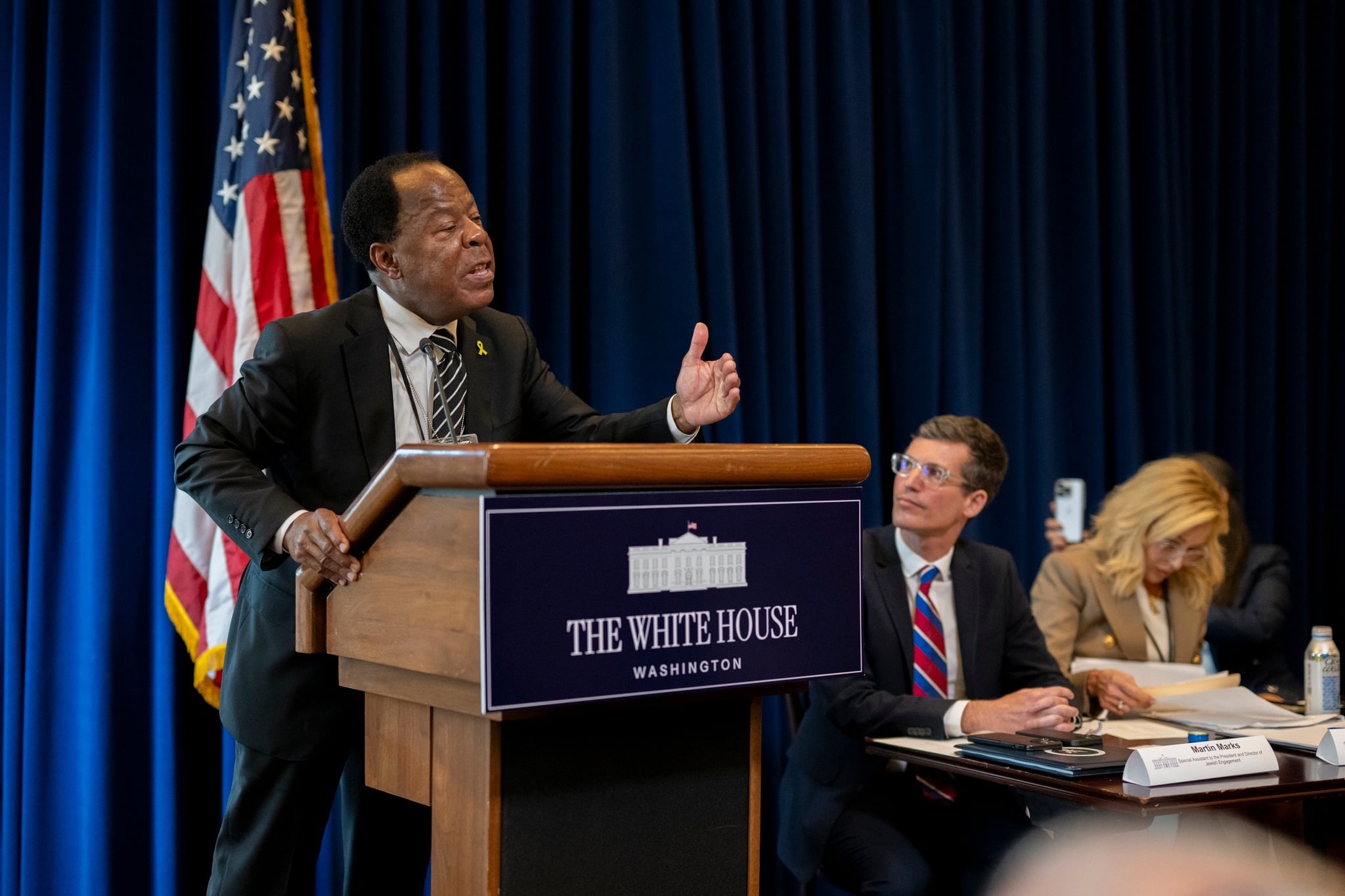
The task force announced an ambitious 10-campus tour and began scrutinizing allegations of antisemitism at universities across the country. Harvard quickly became a central target of its campaign.
But the office the seven interns joined this summer bore little resemblance to that public image. By late June, Terrell’s immediate staff consisted of just two people: Terrell and Golabek-Goldman.
Within a week of the interns’ arrival, Golabek-Goldman left for a job at the Brandeis Center for Human Rights Under Law. That left Terrell and seven student interns, with no career attorneys supervising their work in his office.
Billa and two interns said they worked from about 10 a.m. to 3 p.m. most days. For the first several weeks, Terrell would hand out assignments, then summon the interns back into his office to dissect what they had produced, often for several hours. Terrell disputed this characterization.
He liked to lecture, they said, and could dwell on a social media post for hours on end. Terrell told the interns that he and Golabek-Goldman had once gone 10 days without speaking — an illustration, he suggested, of how he operated. (Golabek-Goldman did not respond to repeated requests for comment by email and phone.)
Terrell also pitted the interns against one another, Billa and two other interns said. He had them grade one another’s work in front of the group, then favored one intern or another in what Billa saw as an effort to stoke jealousy.
He singled out and ridiculed Billa for attending Harvard, Billa and two interns said.
“How did this guy get into Harvard?” Billa recalled Terrell asking another intern.
Over time, the interns said, they learned to work around Terrell’s temper and settled into something resembling a routine. In mid-August, he offered four of the seven interns positions beyond the summer, promising that they would begin receiving pay as employees on Sept. 1.
A Downward Spiral
By late summer, however, the arrangement was beginning to unravel.
Terrell and his interns could see that his vision for the tour was increasingly unrealistic. The first stops had been tentatively scheduled for mid-August, but they had neither sponsors nor venues.
Then, on Aug. 13, a federal judge threw out the Justice Department’s lawsuit accusing Harvard of showing “deliberate indifference” to antisemitism on its campus.
When an intern told Terrell about the ruling, he erupted, Billa and two interns recalled. One said they had never seen him angrier.
“I am so fucking pissed,” one intern recalled Terrell saying. (Terrell did not deny being frustrated by the lawsuit’s dismissal.)
Terrell told the interns that the Justice Department had committed malpractice, suggested Harvard could bring a countersuit, and accused Dhillon and her team of undermining the lawsuit by waiting too long to file it, according to Billa and two interns.
He kept returning to the ruling for the rest of the summer, the three said.
A DOJ spokesperson wrote that Terrell “never worked on the Harvard investigation or lawsuit and thus would have no informed position on the merits of the case.”
“AAG Harmeet Dhillon has made fighting antisemitism a top priority of the Civil Rights Division. Under her leadership, the Division has held universities accountable for abandoning their Jewish students,” the spokesperson added.
By then, Terrell had found another outlet for his anger at Dhillon: The New York Times. He had been in touch with Thrush since at least Aug. 7, Billa said.
During the week of Aug. 17, he spoke with Thrush on background, with three interns listening in.
While Terrell was waiting for the story to run, another grievance involving Dhillon caught his attention, Billa and the two interns said. On Aug. 19, Trump nominated Dhillon’s deputy, Jesus A. Osete, to a federal judgeship — a nomination Terrell opposed, according to the interns.
He dictated a text to Trump urging him to withdraw Osete’s name because he was “not MAGA,” Billa and another intern recalled. Osete’s nomination remains pending before the Senate Judiciary Committee.
The Times article, which described a bitter feud between Dhillon and Terrell over settlement negotiations with elite universities and their respective Fox News appearances, ran on Aug. 31.
Terrell was eager to see it. On Aug. 29, he texted Billa that the article was expected that night and asked for a gift link because he did not have a Times subscription.
He texted Billa again early the next morning to say he still had not seen it. When Billa eventually sent a gift link to the group chat, Terrell was disappointed.
He wrote back that he had “expected more,” according to a text message reviewed by The Crimson. Terrell denied sending the message.
Dhillon wrote in response to a request for comment that she has not communicated with Terrell since July 2025 and was unaware that he was a source for the Times article.
Terrell’s mood deteriorated from that point, the interns said.
At the end of August, the female intern whom Terrell had counseled about her romantic relationship offered to accompany him to a Republican Jewish Coalition summit in Las Vegas because her sister would be in the area, according to a text message shared with The Crimson by Terrell.
But the intern became reluctant to go after her sister canceled her travel plans and flight costs rose, Billa and another intern said. Terrell ultimately persuaded her to spend $1,200 to join him, they said.
Meanwhile, Sept. 1 came and went without the four interns receiving the pay Terrell had promised them.
By mid-September, Terrell was repeatedly telling the interns their work was terrible and that he wanted to fire them, Billa said. His treatment of Billa grew harsher, Billa and another intern said, because of Billa’s connection to Harvard.
Around that time, the interns called Golabek-Goldman, the former chief of staff, to describe Terrell’s conduct. She offered a bleak assessment.
“Don’t expect to get paid and don’t expect there to be a tour,” Golabek-Goldman told them, according to three interns.
By the end of September, the interns said they could no longer continue working under Terrell. One by one, they stopped working for him or made plans to leave.
Before the last intern departed the week of Oct. 4, Terrell offered to pay him a $250-per-week stipend “under the table” if he would continue working, according to Billa and another intern who learned about the proposal afterward. He did not accept.
Terrell did not deny extending the offer. He wrote in a statement that he “was looking for official ways to compensate interns like a stipend or grant” given the DOJ’s “very slow hiring process.”
Around the same time, four DOJ employees were temporarily detailed from the Office of Community Oriented Policing Services to Terrell’s team, according to Billa and an intern who learned of the assignments afterward. Terrell was also assigned a special assistant from the Office of the Attorney General, the two said.
Terrell wrote in a statement that only the special assistant was still working for him. The other four, Terrell confirmed, were brought on for a temporary project and then left.
Exiled on the Inside
For all its early swagger, the task force never had a clear division of responsibilities, according to five former Justice Department attorneys.
It was nominally based at the Justice Department. Behind the scenes, though, much of its investigative work was conducted elsewhere in the government.
Terrell led the task force on paper, but civil rights attorneys assigned to its antisemitism investigations operated under the supervision of the Department of Health and Human Services, according to two former Justice Department attorneys.
Sean Keveney, a former acting general counsel of HHS and a former Justice Department official, directed that work, one former attorney said. The attorneys worked out of HHS offices, the other said, and task force meetings took place there rather than at the Justice Department.
Terrell disputed the account, writing in a statement that he “personally attended task force meetings at other agencies such as Education, HHS, and DOJ.” He also denied that Keveney had overseen his work.
Terrell had earned a reputation among some career attorneys for being difficult to work with. When the department sought volunteers for the task force in spring 2025, only three people signed up, Dhillon said in a May 2025 address to the Federalist Society.
One former DOJ attorney described several contentious meetings in February and March 2025 between Terrell and the Division’s Educational Opportunities Section. Terrell repeatedly summoned attorneys to question them about their work, the attorney said.
He yelled, talked over them, and reprimanded them for interrupting him, according to the attorney and another who heard about the confrontations afterward. He was particularly harsh to women, whom he spoke to “like they were stupid,” one attorney said.
When the attorneys tried to explain legal procedure to him, Terrell said he did not want to hear “lawyer talk,” the two attorneys said.
Terrell did meet once in April 2025 with a team of roughly 10 task force volunteers — including seven attorneys from across the Civil Rights Division and three staff members — for an introductory conversation, according to a person familiar with the meeting.
But Terrell never met with the team again. The volunteers continued to meet informally for several months before disbanding after receiving no further direction from Terrell or the DOJ.
Terrell declined to comment on his early interactions with DOJ staff and attorneys.
By the time the interns arrived, the task force’s cross-agency operations were largely separate from Terrell’s own office. Terrell worked on the ground floor of the Justice Department’s headquarters, while others in his reporting chain worked on the fifth floor.
The interns said they did not witness him meeting with officials from other agencies all summer and rarely witnessed him communicating with other Justice Department officials.
That included his boss.
Terrell was supposed to check in with Associate Attorney General Stanley E. Woodward, Jr. every two weeks, but he repeatedly postponed the meetings, Billa and the two interns recalled. One intern recalled watching the missed meetings with Woodward pile up in his calendar.
Billa said the delays were deliberate. Terrell told him the 15-city tour deserved more of his attention than meetings with Woodward did.
“He’s like ‘this is gonna be big. This is gonna be historic. This has never been done before,’” Billa recalled. “The specific words he would use to talk about his work is he would say that he's ‘keeping it — keeping Stanley — in the dark.’”
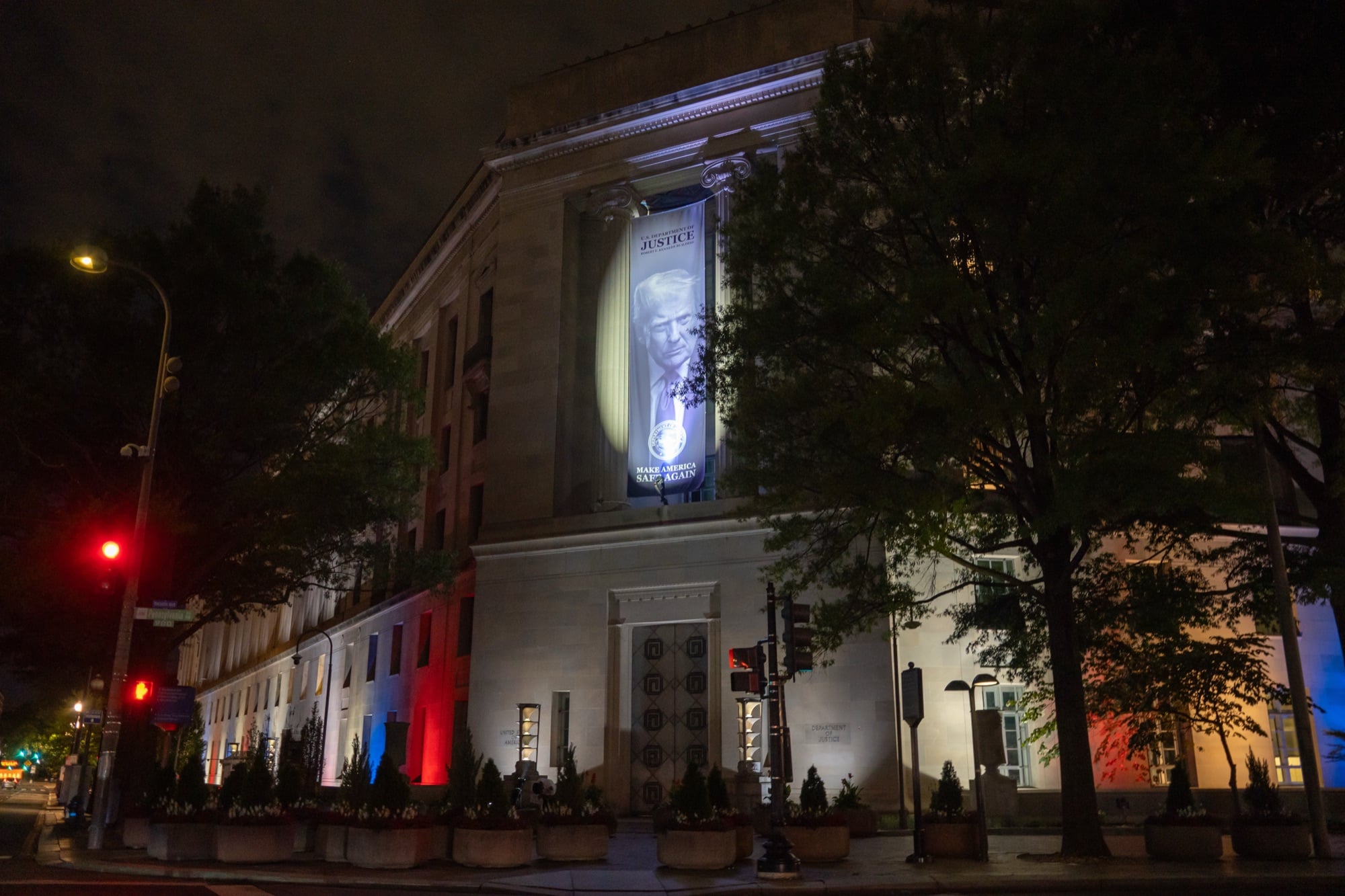
Terrell boasted about his connections elsewhere in the administration. He told the interns he could call in favors with Cabinet officials, claiming to be close with FBI Director Kash P. Patel, Attorney General Todd Blanche, and Secretary of State Marco A. Rubio, among others.
He touted his ties to Rubio in particular and said he would support Rubio in the 2028 Republican presidential primary, the interns said. But if Vice President JD Vance secured the nomination instead, two interns recalled Terrell saying, he would leave the Republican Party.
But Terrell was also openly contemptuous of several senior Trump administration officials, the interns said. His favorite insult, they said, was “Jew-hater” — a label he applied to administration officials, Jewish Democrats, and others who questioned his approach.
He called Education Secretary Linda E. McMahon a “Jew-hater,” said Vance surrounded himself with “Jew-haters,” and called his former boss, Dhillon, “the world’s largest Jew-hater,” according to the interns. At one point, Billa said, Terrell even called Miriam Adelson, a pro-Israel philanthropist and one of the largest donors to Trump’s 2024 reelection campaign, a “Jew-hater.”
Terrell denied making those comments, writing in a statement that he had only used the term “Jew-hater” to refer to conservative commentator Tucker Carlson. He said he discussed with his staff his “disagreement with anyone who associates themselves with Tucker Carlson.”
Carlson called Terrell’s assessment of him “pretty funny,” writing in a text message to The Crimson that “criticizing genocide is not ‘Jew hate.’”
A spokesperson for Adelson did not respond to a request for comment.
In a follow-up statement, Terrell called Vance “a staunch ally of the Jewish community” who had been “nothing but supportive of our efforts to combat antisemitism.” He added that “anyone claiming I’ve said anything to the contrary is spreading lies.”
The interns said they saw little evidence that Terrell’s professed connections translated into help with the tour. Early in the summer, they reached out to agencies across the government looking for partners. Almost no one replied.
One official did: Keith E. Sonderling, then the acting secretary of labor, expressed enthusiasm for the tour. But Terrell did not reply to his message for several weeks, according to Billa and two others.
“He doesn't have the connections he claims to, or the influence he claims to,” Billa added, referring to Terrell. “It's really fraud.”
The interns said Terrell’s preoccupation with the tour came at the expense of other work, including coordinating interagency activity, responding to reports of antisemitic hate crimes, and building partnerships with outside Jewish organizations.
He told the interns to ignore the steady stream of emails from Jewish people who reported being victims of antisemitic hate crimes. They were too busy with the tour to respond to individual cases, he said, according to Billa and the two interns. Billa said Terrell also accused the people writing of seeking his “political clout.”
Terrell wrote in a statement that the interns were only hired to work on the tour and did not have “the responsibility or experience to talk to victims of hate crimes.” He said such matters fell under the purview of the Civil Rights Division.
Terrell was also openly hostile toward prominent Jewish organizations, including the Anti-Defamation League, the Jewish Federation, and the Zionist Organization of America, Billa and two interns said.
Terrell was especially proud of having ignored phone calls and emails from ADL CEO Jonathan Greenblatt, they added. He accused the organizations of “profiting off antisemitism” and argued that they had an incentive to keep it alive, the three recalled.
Terrell denied the comments, saying instead that “there was a conversation about the need for organizations to give resources to local communities.”
ZOA National President Morton A. Klein, whose organization sponsored the tour’s Oct. 14 stop, said in an interview that he knows Terrell “very well.” He called the interns’ description of Terrell “completely out of character.”
“Jews should be enormously grateful to this man to be spending his time fighting Jew hatred with a passion,” Klein added.
The ADL did not respond to a request for comment.
Billa offered a different assessment.
“It isn’t about helping Jewish people to him,” Billa said. “It’s about helping him get the most media attention for Leo Terrell.”
A Tour in Turmoil
That hostility complicated his efforts to enlist partners for the tour.
Terrell and the interns had courted two Jewish organizations, the Jewish Federation and the World Jewish Congress, to sponsor the tour. Both backed away after initial meetings, according to the interns.
The meeting with representatives from the Jewish Federation was tense from the start, recalled the interns who attended. Federation officials expressed concerns about Terrell’s eagerness to call out local officials, many of whom worked closely with local Federation affiliates, Billa and the two interns said.
When the group’s chief executive, Eric D. Fingerhut, raised those concerns, Terrell “started shouting,” said Billa, who attended the meeting.
“He couldn't comprehend that someone was just disagreeing with him,” Billa said. “That was just a no from the start.”
A spokesperson for the Jewish Federation called this account “wholly inaccurate” in a statement.
A potential partnership with the World Jewish Congress initially appeared more promising. An introductory meeting in mid-August with J. Philip Rosen, a WJC vice president, at the Waldorf Astoria went well, the interns recalled, and left Terrell in an unusually good mood.
Late that Friday night, he sent the interns a barrage of more than 20 texts, all reviewed by The Crimson, outlining his vision for a tour with the organization.
He proposed four tour stops in September, eight in October, and three in November, he wrote, beginning with a joint press conference with the WJC on Sept. 8.
Every stop would have merchandise samples, “band music throughout the program,” a green room with refreshments, and a dedicated content creator. Terrell also wanted congressional candidates and Cabinet-level officials to attend.
“If Cabinet secretaries cannot appear, must have a high-level sub cabinet member to appear in lieu of to appear with documentation to provide,” Terrell wrote in one message to the intern group chat.
But that vision didn’t last long. During a second meeting involving Terrell, Billa, and the WJC in early September, WJC representatives said they didn’t think the tour was feasible in 2026, Billa recalled. They were being asked to bankroll the entire tour, Billa said, and were more interested in panel conversations with Rosen than in political rallies.
“We kept sending them more and more documents outlining stuff that they would need to do and pay for, and Leo was impatient, and the timeline was unrealistic,” Billa said.
Terrell wrote in a statement that both organizations “have now made requests to participate in future tour stops.”
The WJC did not respond to a request for comment on its communication with Terrell. A spokesperson for the Jewish Federation disputed both Terrell’s claim and the interns’ account of its involvement.
The saga reflected a pattern the interns watched play out over and over again that summer: Terrell set unreasonable expectations, grew progressively more frustrated as those ambitions failed to materialize, and, the interns said, directed his frustration at them.
“He couldn't achieve much given his limited power within DOJ, and he took that out by abusing and threatening and harassing a group of college-age staff,” Billa said.
“He would routinely prioritize having control over his team — his team of 20-year-olds — and being able to treat them however he liked,” he added. “That would routinely get in the way of actually achieving anything.”
—Staff writer Hugo C. Chiasson can be reached at [email protected] or on Signal at hcc.35. Follow him on X @HugoChiassonn.
—Staff writer Evan H.C. Epstein can be reached at [email protected] or on Signal at ehce.13. Follow him on X at @Evan_HC_Epstein.
—Staff writer Elise A. Spenner can be reached at [email protected] or on Signal at elisespenner.82. Follow her on X @EliseSpenner.
Want to keep up with breaking news? Subscribe to our email newsletter
Have a tip for The Crimson? Share it confidentially