Yuja Wang and Boston Symphony Orchestra: Fluidity in Sound
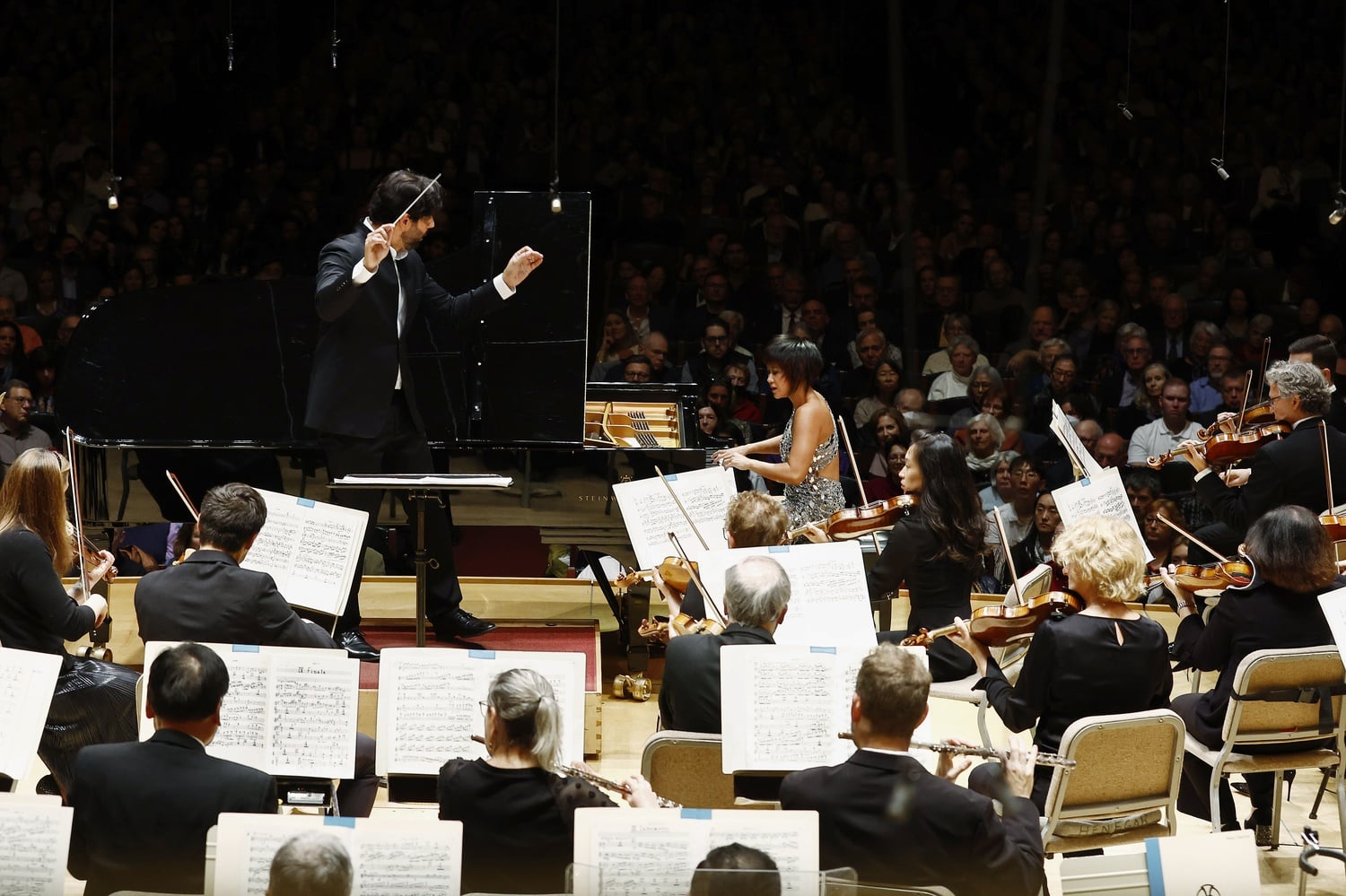
From Oct. 23 to 25 at Symphony Hall, Yuja Wang and the Boston Symphony Orchestra presented a concert highlighting various classical pieces of the 20th century, including Leonard Bernstein’s “Three Dance Episodes” from “On the Town,” Sergei Prokofiev’s “Piano Concerto No. 2 in G minor, Op. 16,” and Aaron Copland’s “Symphony No. 3.” The powerful conducting of Domingo Hindoyan, the fluidity of sound created by the BSO, and Wang’s commanding performance produced an incredibly immersive experience, offering a unique combination of various styles of classical music.
Once the lights dimmed and instruments were tuned, the orchestra began its performance with the whimsical episodes of Bernstein’s 1944 musical “On the Town,” which are characterized by a strong, fast rhythm. This piece’s playful nature allowed for expressive movement from both the orchestra and the conductor. Bobbing up and down on his toes throughout the performance, Hindoyan’s dynamic energy and attunement were consistently clear. The cascading sound of the orchestra remained distinct even with the piece’s fierce switches from brass and violins to woodwinds and percussion. Despite the overall sharpness of their endings, each movement flowed effortlessly into the next, just as if the orchestra had never stopped playing in the first place. True to its title, the music roaring through the hall evoked an extraordinarily lively feeling of going out on the town.
Following Bernstein’s piece, Wang walked confidently out onto the stage with spellbinding presence and sat down at the glistening piano. The pianist immediately threw herself into the piece. Despite the technically challenging aspects of Prokofiev’s “Piano Concerto No. 2 in G. minor, Op. 16,” the piece was perfectly matched by Wang’s engagement with the instrument. Her hands mirrored the piano’s mechanics as she flowed through the concerto, fingers acting almost as hammers that brought the instrument to life.
Noticeably, Hindoyan’s conducting became less expressive in balance with Wang’s confident performance. Every movement was tied together through a repeated melody between the orchestra and Wang, with the second and third movements especially distinguished by the strings of the orchestra and soft interludes from Wang. As the piece progressed, the sound in the hall increased in vibrance, with Wang almost lifting from her seat at certain intervals. Following the mesmerizing performance, Wang returned for two confidently played encores of more traditional classical music, demonstrating the iconic bow she has displayed at Symphony Hall several times before.
Once Wang’s head hung down after her last bow, intermission followed. To close off the concert, the orchestra played another American piece, Copland’s Third Symphony. The first movement of this piece sounded cinematic and eerie through the layering of the unique sounds of every section of the orchestra, while the second movement was more vivacious — similar to Bernstein’s piece at the beginning. In the conclusion of the concert, Hindoyan came back to life. No longer needing to counteract Wang’s energy, he initiated a shift in the rhythm of the piece. Every section of the orchestra readily demonstrated its strong repertoire through expressive internal shifts, providing a strong ending to a wonderful concert.
Ultimately, Wang brought a confident, relentless presence to the stage alongside the BSO. Her poise throughout the concerto and the sheer strength of abilities as a pianist brought a captivating energy to the hall. Together, Wang and the BSO set up an incredibly engaging performance, with sounds that lingered as echoes in the hall even as the lights brightened and the applause began.
Want to keep up with breaking news? Subscribe to our email newsletter
Have a tip for The Crimson? Share it confidentially