Doechii Concert Review: Class is in Session
On this night, Boston witnessed a force that was here to say. Doechii did much more than entertain, she instructed and the city left certified.
Few artists in the contemporary music landscape rise with the velocity and clarity that define Doechii’s current moment. The Top Dawg Entertainment artist has spent the past three years gradually building one of the most inventive catalogs in hip-hop. She has stacked viral hits like “What It Is (Blocky Boy)” and “Yucky Blucky Fruitcake,” won a Grammy this year for her mixtape “Alligator Bites Never Heal,” and a reputation for live performances that grow more inventive with every showcase — a particularly innovative standout being her NPR Tiny Desk Concert. Her experimental vocal textures and genre-fracturing style have pushed her from internet discovery to major-force status. At MGM Music Hall on Oct. 19, she showed exactly why that ascent feels unstoppable. Doechii became both performer and teacher.
For 75 electrifying minutes, the Tampa-born rapper and singer turned the venue into what she called the “School of Hip Hop.” Even before she arrived to take attendance, the room was already humming with anticipation. Her frequent production collaborator Kal Banx opened the night aiming to get the audience to a level of looseness at a house party waiting for Gatsby to appear. His bass-heavy rap style lifted the energy until the crowd moved together in a single pulse. Once the lights cut, the audience was fully charged.
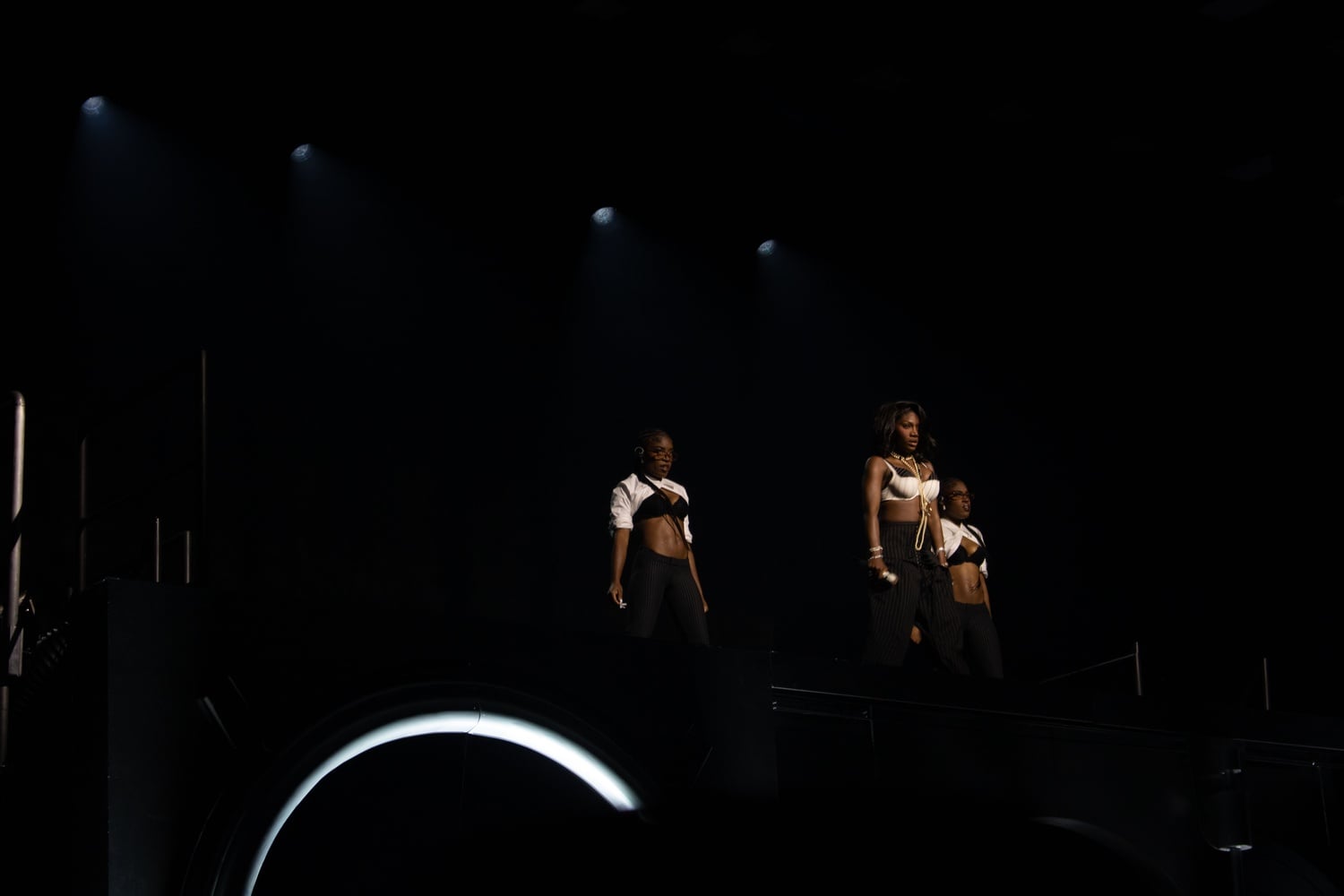
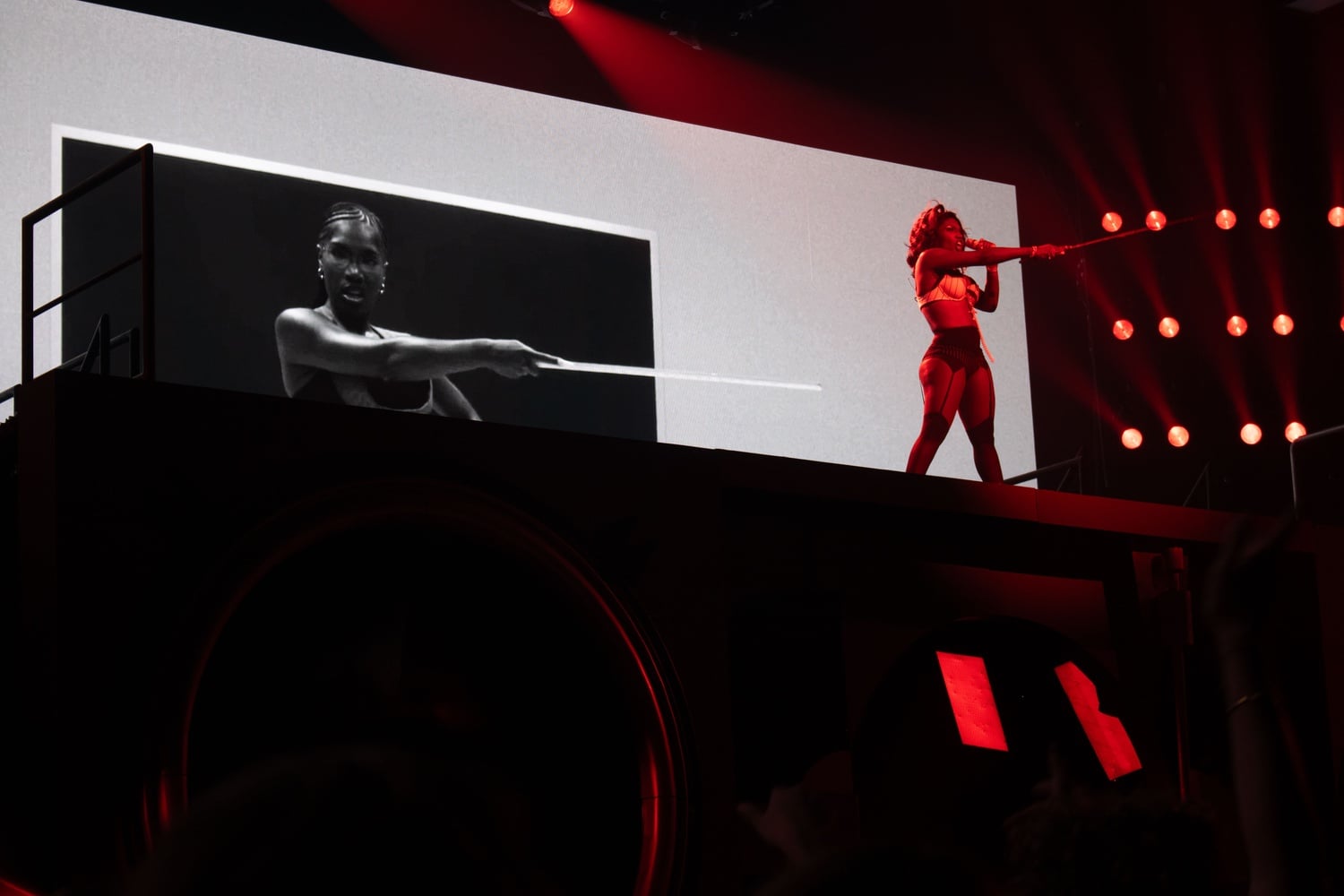
The stage design perfectly reflected the overall ethos of Doechii’s concert. As the curtains rose the audience bore witness to a giant boom box flanked by literal slides — a playful way for the artist to bring some stage dynamism — that anchored the center of the stage as both prop and structure. On the screens to the side, a monochrome film began to play that dazzled the fashion of vintage academia with illustrious choreography, framing Doechii as the teacher for the night.
The artist organised the show into six “lessons,” each dedicated to a core element of hip-hop craft such as developing “Bars” and “Flow.” These lessons cemented how seriously Doechii treats her artistry as she was placing herself in conversation with the genre’s lineage, asking the audience to engage with hip-hop as something to feel and honor rather than passively consume.
She opened with the track “STANKA POOH,” causing the audience to ascend into a frenetic energy. Her stage presence emanated an explosive precision as she sprinted across the stage, slid down the boom box, and snapped into choreography that matched the humor and bite of her musical oeuvre.
Across the night, she mapped her own creative evolution. Her earlier miniature works — like her freestyle over Beyoncé’s “AMERICA HAS A PROBLEM” that she posted on TikTok — became a full-bodied live arrangement. What once circulated online as fleeting became muscular and intentional on stage. She also marked her evolution by remixing her work with other songs like “360” by Charli xcx and “Gypsy Woman (She’s Homeless)” by Crystal Waters, creating a concert set of sonic constellations.
Doechii performed “SLIDE,” also remixed with Beyonce’s “Blow” while she sat atop a mechanised school desk that rolled around the stage, staring directly at the camera which shifted the concert into an intimate tone without ever sacrificing spectacle.
Doechii’s physicality told its own narrative alongside her vocals. At one point, she slammed her metal pointer stick against the boom box as she revelled in “Nosebleeds,” a song that was created in the event that she won a Grammy. During “ExtraL,” she initiated a stomp-and-clap sequence that rolled through the hall in total Freddie Mercury-styled unison. In her performance of “DEATH ROLL,” she casually smoked a cigarette and delivered her bars with a punk steadiness and polish.
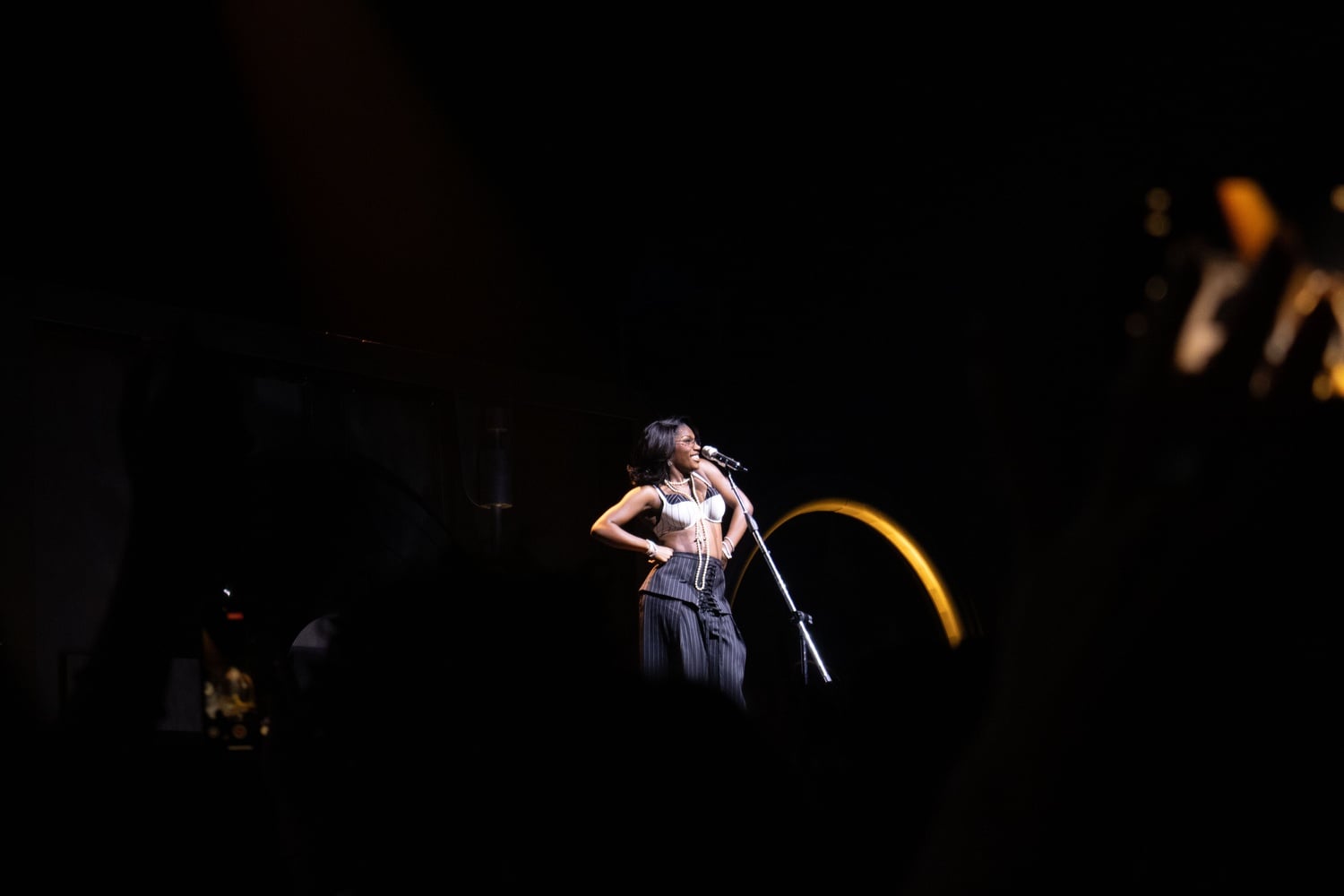
The night’s most unforgettable moment arrived during “Crazy.” Before the track, the screens that narrativized her “School of Hip Hop” staged a tongue-in-cheek demonstration of how to put on a condom, shifting quickly from humor to provocation. As the track started, audience members that were selected to partake in the song’s theatrics were shown in their classroom seats as Doechii folded them into her choreography.
Though the show featured a grand technical design, Doechii spoke candidly about the challenge of maintaining connection at scale. Near the end of her set, she paused, noted the limits of audience connection in shows with high production, and lifted the house lights. The audience went into a delirium expressing their love for her. She signed a vinyl record for a fan in the front section, grounding the evening’s theatricality in a humble gesture of direct human exchange.
What distinguishes Doechii is not only her skill but the tangible love she feels for performing in the moment. She refuses autopilot and continuously pushes her body and voice into a joyful process of discovery. Every single song felt like it was her first and last chance to show herself to the world.
On this night, Boston witnessed a force that was here to say. Doechii did much more than entertain, she instructed and the city left certified.
—Staff writer Kai C. W. Lewis can be reached at [email protected].
Want to keep up with breaking news? Subscribe to our email newsletter
Have a tip for The Crimson? Share it confidentially