HSPH Talk Discusses Bullying and Musical Adaptation of ‘Wonder’
Updated December 11 2025, at 4:26 a.m.
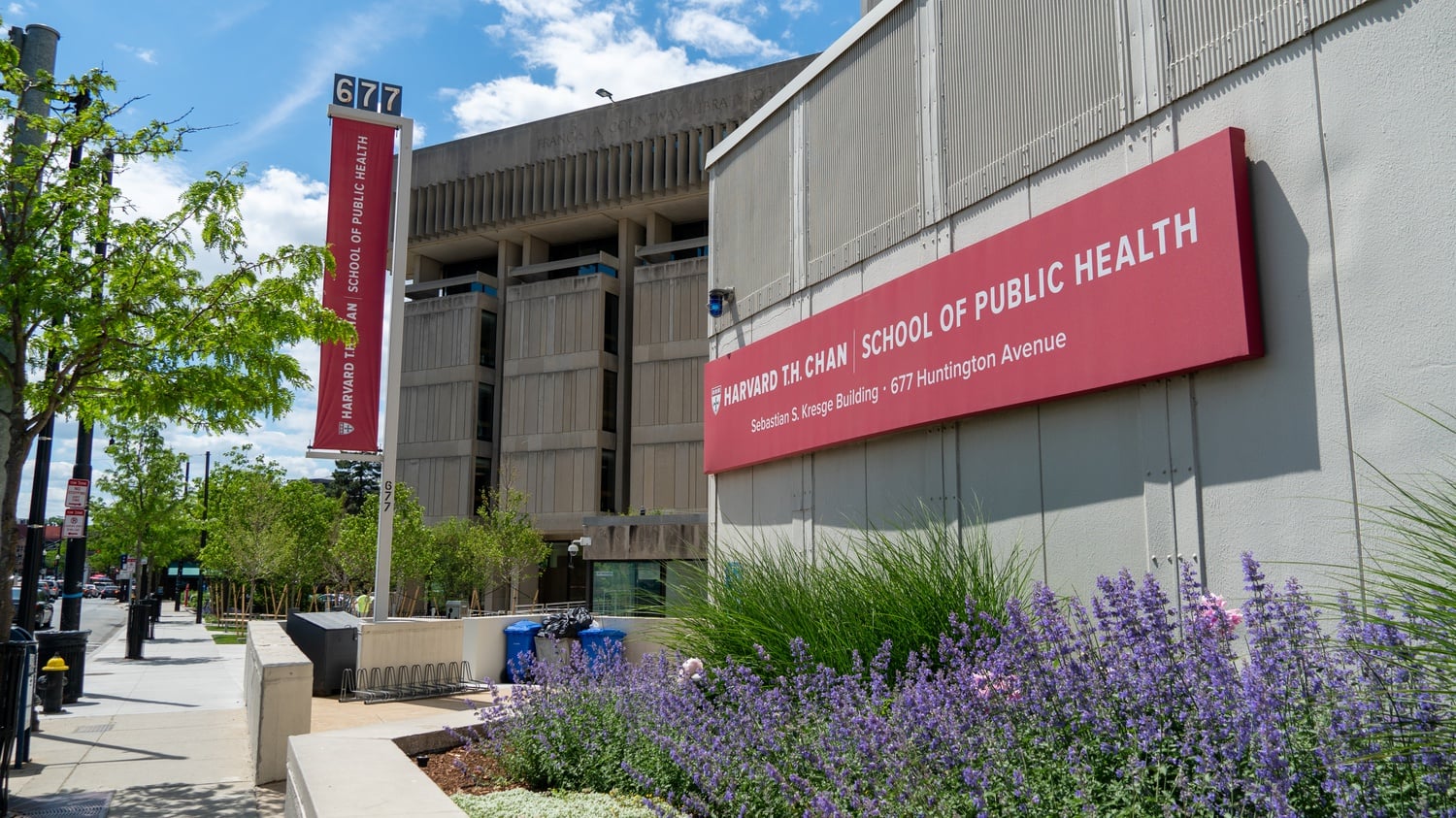
Professor Ari D. Ne’eman, psychologist Jason M. Fogler, and playwright Sarah Ruhl discussed the impacts of bullying on children with disabilities at a Wednesday talk at the Harvard School of Public Health, where Ruhl promoted her forthcoming musical adaptation of the 2012 book “Wonder.”
Roughly a dozen people attended the talk, which was moderated by Howard Koh, a HSPH professor. The musical adaptation will begin with a preview at Harvard’s American Repertory Theatre on Dec. 12 and officially open Dec. 17.
Written by R.J. Palacio in 2012, the novel “Wonder” follows a 10-year-old boy bullied for his facial differences. It sold over 15 million copies and was adapted into a movie in 2017 that grossed more than $300 million worldwide.
Ruhl, an award winning playwright, author, essayist and professor at Yale’s School of Drama, said that she was inspired to write the musical after experiencing Bell’s Palsy, a neurological disorder that caused one side of her face to be paralyzed.
“I couldn’t smile at my babies,” she said, adding that the expereince “made me know what it is to try expressing something on your face and not have it be perceived.”
“I had never seen someone with facial difference at the center of the story with the way R.J. has Auggie there,” she added.
According to Ruhl, the musical adaptation will be the first time that Auggie, the protagonist, is played by an actor with facial differences.
Ne’eman, an expert on disability discrimination and advocate for children with autism, critiqued “Wonder,” likening it to frequent representations of disabled people in the media as “objects of inspiration or charity.”
Instead, he said he would have liked to see a story in which Auggie had more “agency or interiority or narrative arc,” instead of primarily "experiencing cruelty.”
Get The Crimson in your inbox.
“TV shows contract a disabled character, they teach everyone a valuable lesson, and then they disappear. So we need people to just be present, and their disability is a part of who they are, but it’s not the totality of who they are,” Ne’eman said.
“I don’t think we have enough narratives that are fundamentally about capturing that more nuanced and complex aspect of the disabled experience in our culture,” he added.
The panelists also discussed the long-term health effects caused by bullying — specifically, the harms that follow those who were bullied as children.
“Bullying is as every bit as serious a public health issue as anything else out there,” Fogler, who practices at Boston Children’s Hospital, said. “It has deleterious effects on neurodevelopment, on health. It can lead to metabolic disorders, cardiovascular disorders, learning problems, executive function problems.”
Koh discussed the importance of changing societal expectations.
“In public health, we change what is normal,” Koh said. “If we can change the norm of just watching while bullying goes on without saying anything or doing anything — more toward the upstander situation — that creates a new norm for everybody, right?”
Ruhl said that musicals are specially positioned to enact this change.
“Theatre is an empathy machine. You literally put on someone else’s costume,” she said in an interview with The Crimson.
She said “Wonder” has already pushed society forward and recalled how a nurse who treated children with facial disfigurement described an era pre “Wonder” and post “Wonder.”
“Before ‘Wonder,’ kids who were in her unit didn’t want to go to school because they were bullied. After ‘Wonder,’ there was much less bullying,” Ruhl said.
“Wonder” the musical will run at the A.R.T. until Feb. 8.
Correction: December 10, 2025
A previous version of this article quoted playwright Sarah Ruhl saying she had “never seen someone with facial deformity” at the center of a story like R.J. Palacio’s protagonist in “Wonder,” August. In fact, Ruhl used the term “difference” and opposes the use of the term “deformity.”
Clarification: December 11, 2025
A previous version of this article stated that “Wonder” would open at the American Repertory Theatre on Dec. 12. In fact, preview performances will begin Dec. 12 and continue through Dec. 16 before the show’s official opening night on Dec. 17.
Want to keep up with breaking news? Subscribe to our email newsletter
Have a tip for The Crimson? Share it confidentially