Anthony Campbell Built a Career in New Haven Policing. Then Harvard Called.
Campbell arrives at Harvard with a reputation for faith-driven, community-oriented policing — one forged over decades and tested during his recent tenure at Yale.
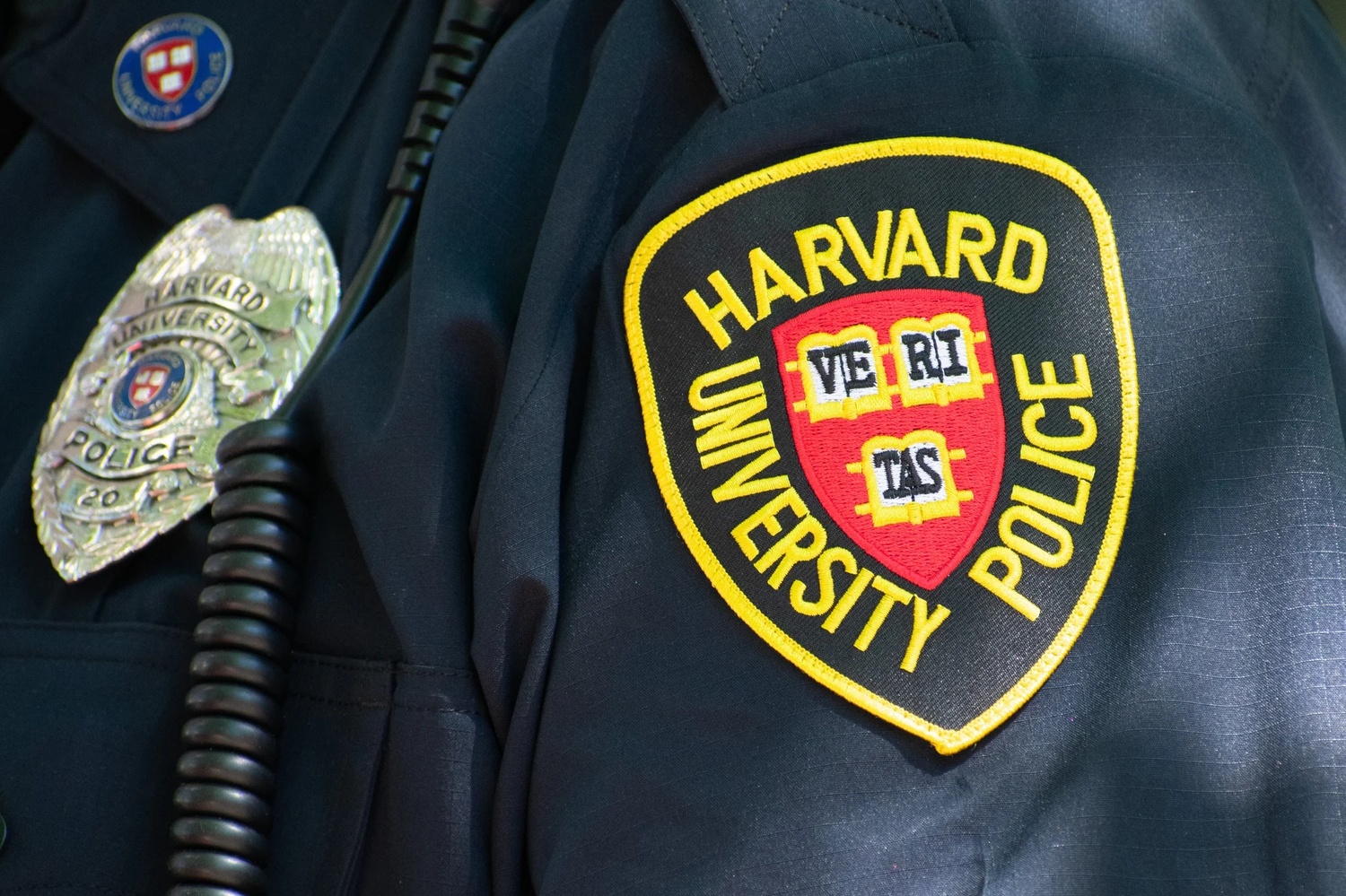
Anthony Campbell did not plan to become a police officer.
In 1995, Campbell, newly graduated from Yale College, noticed an advertisement on the side of a New Haven city bus. “Police others as you would have others police you,” it read — a line that lingered with him long enough to change his path.
Nearly three decades later, that decision has carried Campbell from New Haven to Cambridge. He assumed command of the Harvard University Police Department on Jan. 5, taking the helm of a force emerging from a period of internal turmoil and years of scandal.
Campbell’s appointment follows the abrupt resignation of former chief Victor A. Clay last spring and marks his third chiefship after decades in New Haven and at Yale. To many of his colleagues, he is a steady, faith-driven leader known for community policing and youth intervention. But to critics, particularly student activists, his recent record raises questions about how those ideals hold under pressure.
To better understand Campbell’s leadership and legacy, The Crimson spoke with 16 people who worked alongside him or organized in New Haven during his tenure there, including city officials, activists, Yale affiliates, and his law enforcement colleagues.
Thirty Years in New Haven
Campbell joined the New Haven Police Department as a patrol officer in 1998. Almost two decades later, he was selected for his first leadership position — serving as the department’s chief from 2017 to 2019.
Toni N. Harp — the former mayor of New Haven who appointed Campbell — said his leadership was critical to making the city safer.
“Through his leadership and working with the officers – those in the mid-ranks and those on the street — they all bought in, and we were able to to create what I consider to be almost a miracle,” she said.
Under Campbell, the department partnered closely with the mayor’s office to expand youth-focused programs aimed at reducing violent crime. During the first two years of his tenure, New Haven recorded no homicide victims under the age of 18.
Get The Crimson in your inbox.
“Through his leadership and through everyone coming together, we decided we’re going to do everything we could to make sure that kids were safe in New Haven,” Harp said. “During his tenure, we didn’t lose any kids once we implemented that program.”
Campbell also oversaw several longer-term initiatives, including the introduction of officer body-worn cameras and the opening of a center dedicated to assisting victims of domestic violence.
In 2019, Campbell stepped down as chief to become an inspector with the New Haven State’s Attorney’s Office. The move lasted less than two months.
When Ronnell A. Higgins, then chief of the Yale Police Department, called to ask Campbell to return to his alma mater, he accepted quickly.
Higgins said Yale police were facing a crisis of public trust after two officers — including one from Yale — shot an unarmed woman in New Haven.
“I felt we needed to repair our relationship with the city of New Haven,” he said in an interview with The Crimson. “I felt I needed some help.”
Higgins offered Campbell a position as assistant chief. And though Campbell was simultaneously being considered to lead another department in the state, according to Higgins, he chose to return to Yale — a move that surprised some administrators.
“The University was kind of shocked that Anthony was willing to come over and work for me as an assistant chief, when he served as a chief of police for the city of New Haven,” Higgins said.
‘Practiced What He Preached’
Even while rising through the ranks of the New Haven Police Department, Campbell was preparing for a different kind of career.
As an officer, he attended Yale Divinity School, earning a Master of Divinity degree in 2009. As an undergraduate, Campbell had envisioned a career in prison ministry, not law enforcement.
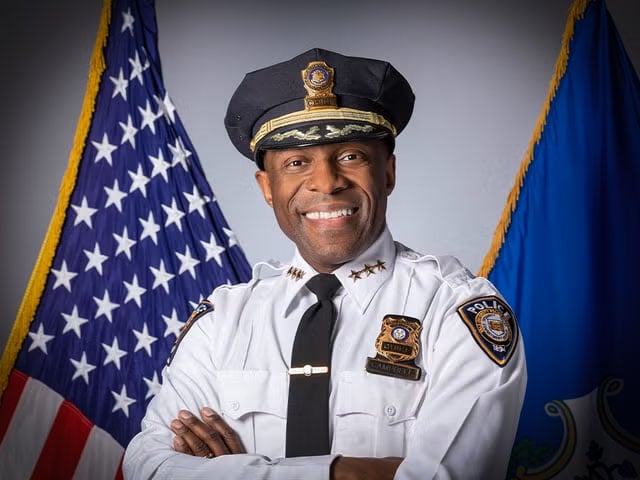
After completing his degree, Campbell returned to Yale to teach a class titled “The Changing Face of Community-Police-Ministry Relations in the Twenty-First Century.”
Torianto S. Johnson, who took Campbell’s course in 2019, said it was a highlight of his time at the Divinity School.
“It was one of the greatest experiences I’ve had during my tenure there at Yale,” Johnson said. “Fantastic human being.”
Johnson said Campbell — often referred to as a “Christian on patrol” — regularly pulled from personal experiences when discussing faith and policing, drawing on his spirituality for helping him endure hardship.
Early in his career, Campbell was severely injured in the line of duty when a fleeing suspect struck him with a car. He was thrown roughly 15 feet into the air, suffering a concussion and paralysis that left him unable to walk for nearly two years.
According to David Zannelli, the current acting New Haven Police Chief, Campbell later forgave the man responsible for the injury.
“He actually forgave the suspect who struck him and injured him quite badly at some point during the adjudication of the case,” he said. “That is something completely out of left field that most police officers would not do.”
“It wasn’t a facade — his adherence to God and being a Christian,” Zannelli added. “He really practiced what he preached, in the truest sense of the phrase.”
‘Front Lines’ of Protest Arrests
Three years after joining YPD, Campbell was promoted to chief in 2022.
The role soon presented one of the most visible challenges of his career: an intense wave of pro-Palestine demonstrations in the spring of 2024, including a three-day encampment, that rocked Yale’s campus.
On April 22, 2024, Yale police arrested 47 demonstrators for trespassing — a sharp escalation after days in which no arrests had been made.
Then, after a separate wave of arrests on May 1, videos began circulating widely on social media in which Campbell was seen taking a protester to the ground during the police response.
Craig L. Birckhead-Morton, one of four individuals arrested that day, described the police response at Yale as “very much like a militarized approach to policing.”
“Not once did we escalate against the police,” said Birckhead-Morton, who also served on Yale’s police advisory board while Campbell was chief.
“There was no violent environment on campus or any hostility to students. We definitely tried to make it a welcoming space,” he added.
Yale later commissioned an external review of the officers’ conduct, which found that police did not follow “best practices,” but did have probable cause for the arrests, according to the Yale Daily News.

At roughly the same time, Harvard affiliates staged a pro-Palestine encampment in Harvard Yard — but HUPD’s reaction was drastically different. Under then-chief Clay, Harvard police affirmed students’ right to protest, and the encampment ended after nearly three weeks without arrests.
While student activists at Yale called for accountability in the wake of the Yale arrests, Campbell’s colleagues and union leaders stood by his handling of the demonstrations.
Andrew N. Matthews, general counsel for the union representing Yale officers, said Campbell’s choice to be present during the operation drew unfair criticism.
“As a commander of a police department, he didn’t have to be out there on the front lines with his officers,” Matthews said. “He didn’t hide in the PD, he wasn’t at home having dinner with his feet up watching TV.”
“He was actually out on the front lines with his troops, and because he was, he got criticized for it,” he added.
‘Yale’s Loss, Harvard’s Gain’
Harvard announced in November that Campbell would leave his 27-year New Haven career to lead Harvard’s police force, marking his third chiefship.
Campbell took the helm on Jan. 5, tasked with establishing trust in a historically fractured department.
Campbell declined repeated requests for an interview with The Crimson through a HUPD spokesperson.
Under Clay, who resigned last May, HUPD faced high turnover, poor morale, and allegations of workplace toxicity and ineffective management.
Weeks before Clay’s resignation, the union representing HUPD officers nearly unanimously voted no confidence in Clay’s leadership. A Crimson investigation later found that Clay left behind legal disputes and workplace complaints that contributed to the departure of more than a dozen officers since his arrival in 2021.
Matthews said he believes Campbell is well positioned to lead the department through its transitions.
“He is a true leader,” Matthews said. “He understands. He’s very compassionate towards his troops. He’s really what a leader should be. He always looked at both sides of every issue and did his best to support his troops.”
As Campbell settles into his new role in Cambridge, former colleagues at Yale described his departure as bittersweet.
Michael P. Hall, the current president of the union representing Yale police officers, said Campbell leaves behind a more cohesive department.
“Chief Campbell is such a great guy,” he said. “He’s leaving us more unified, and better prepared now going forward due to his phenomenal leadership over the last few years.”
“This 100 percent is Yale’s loss and Harvard’s gain,” Hall said.
—Staff writer Shawn A. Boehmer can be reached at [email protected] and on Signal at shawnb.18. Follow him on X @ShawnBoehmer.
—Staff writer Claire A. Michal can be reached at [email protected].
Want to keep up with breaking news? Subscribe to our email newsletter
Have a tip for The Crimson? Share it confidentially