Harvard Kennedy School Requires Video Essays for Non-Native English Speakers
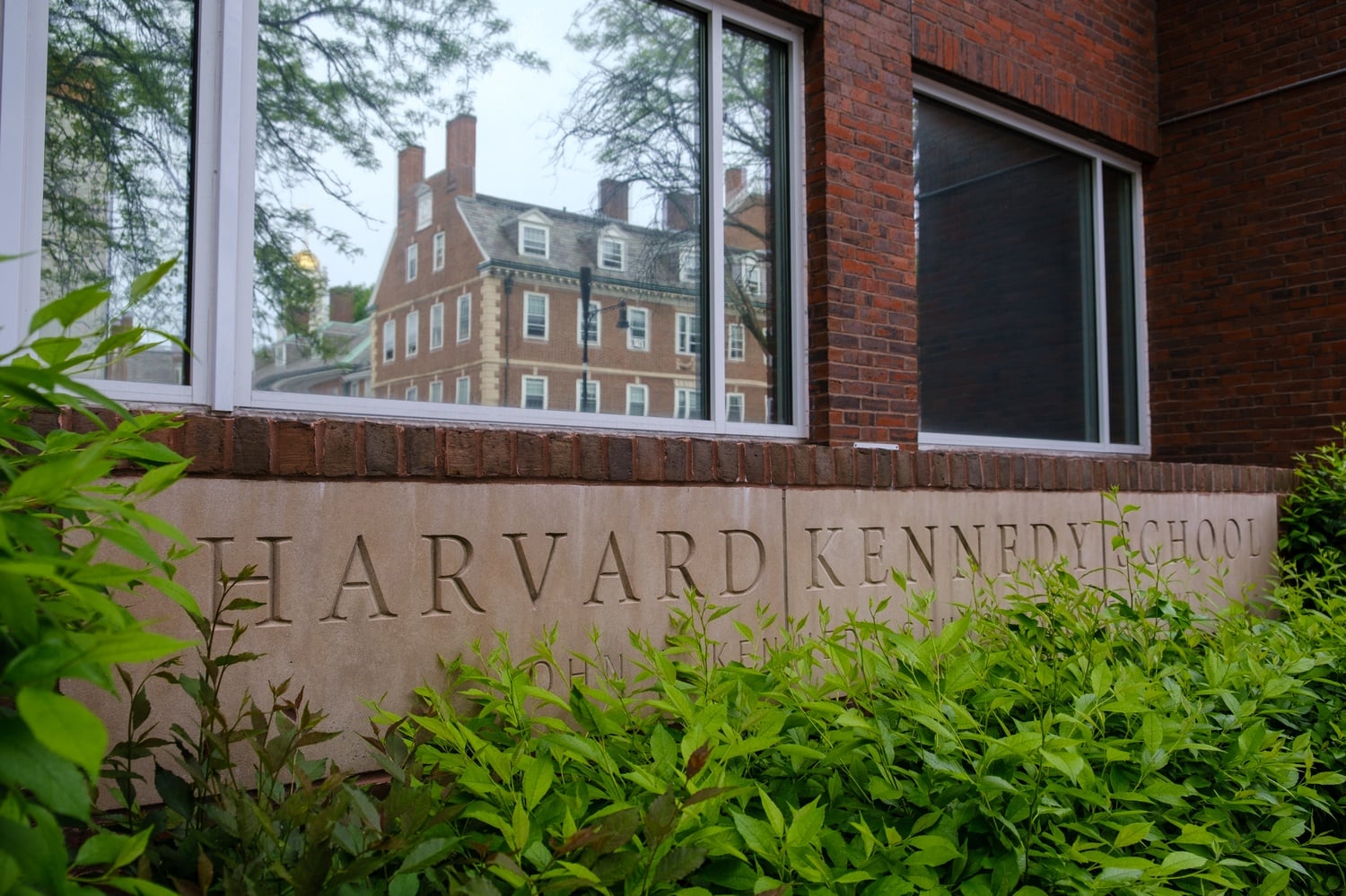
Harvard Kennedy School will require applicants who submit English proficiency test scores to complete a short video essay beginning with the 2027-2028 admissions cycle.
The essay, which had previously been optional for non-native English speakers, now applies to every master’s applicant required to submit TOEFL, IELTS, or Cambridge English scores. Under HKS policy, that includes non-native English speakers who did not earn an undergraduate degree conducted entirely in English.
The new requirement comes amid increasing federal scrutiny on international students and scholars at Harvard. Last month, a federal judge temporarily blocked a rule that would have imposed a four-year cap on their admissions periods. The Harvard International Office also tightened off-campus work restrictions for students on F-1 visas following federal guidelines released this summer.
“The video essay gives our admissions committee a fuller picture of an applicant’s English ability than test scores alone can provide,” HKS spokesperson Daniel B. Harsha wrote in a statement to the Crimson.
“We’ve long found optional video essays valuable, but we’ve also found that a declining number of applicants were submitting them,” he added. “ That meant we sometimes lacked the information we needed to fully consider promising candidates whose test scores didn’t accurately reflect their English language proficiency.”
The new essay requirement affects Harvard’s most international school. International students made up a record 59 percent of HKS’s student body in 2024 and the school has spent the past year preparing contingency plans for international students amid the Trump administration’s efforts to restrict their enrollment at Harvard.
In the blog post announcing the change, published last Wednesday, Senior Director of Admissions and Financial Aid Rosemary Hilliard wrote that the admissions committee has found the essay useful for evaluating speaking and reading ability, skills a written application cannot capture.
Get The Crimson in your inbox.
Hilliard wrote that the essay is especially helpful for applicants with low subsection scores on standardized English exams. She described past applicants whom the committee considered potentially strong fits but who had weaker speaking and reading scores on the TOEFL or IELTS and did not submit the optional essay — cases in which the essay “would have been so helpful,” she wrote.
HKS asks applicants to meet minimum scores in a single sitting, including an overall band score of 7 on the IELTS, and notes that the most competitive applicants also meet those minimums on each subsection.
Applicants completing the essay will be shown a question, given a few seconds to consider it, and then asked to record a response of up to 90 seconds. The recording cannot be stopped or retaken once it begins.
Hilliard wrote that the questions are meant to be conversational rather than academic, offering examples such as asking an applicant’s favorite food or favorite vacation.
“Making video essays a requirement gives us more information with which to conduct a holistic review of each application,” Harsha wrote.
Hilliard similarly emphasized that the essay is one part of a holistic process in which no single component outweighs another, describing it as a complement to test scores rather than a replacement.
—Staff writer Jen L. Phan can be reached at [email protected] and Signal at jenphan.74. Follow her on X at @jenllphan.
—Staff writer Mirei S. Saneyoshi can be reached at [email protected] and Signal at mireisaneyoshi.09. Follow her on X at @mireisaneyoshi.
Want to keep up with breaking news? Subscribe to our email newsletter
Have a tip for The Crimson? Share it confidentially