‘Angel’ Album Review: Lizzy McAlpine Weaves Turmoil and Tenderness
4 Stars
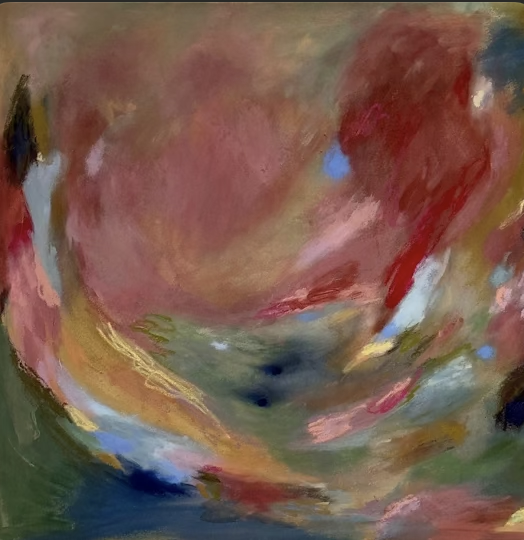
Like many of her singer-songwriter contemporaries, Lizzy McAlpine has always approached her full-length projects as snapshots of her life at a particular moment. This method has been evident throughout her brief yet accomplished career, with each of her albums forming just a single chapter in an ever-evolving self-portrait. On her 2020 debut album “Give Me A Minute,” McAlpine explores early adulthood and romance through a playful, wistful lens, while on the album “five seconds flat,” she dives deeper into the raw heartache and vulnerability of a relationship on the verge of collapse. In her third album, “Older,” McAlpine reflects on her growing maturity as both an artist and as a person.
Released on Sept. 18, her newest album “Angel,” marks the latest chapter of this evolution. Although McAlpine’s writing is still occasionally humorous and wry, this record is almost entirely devoid of the sense of naivety that once pervaded her songwriting. Instead, she approaches love and personal attachment from a similarly introspective standpoint, but with a newfound sense of emotional complexity and ambiguity.
The album’s opening track, “The light in the painting,” is hauntingly beautiful in both its writing and production. One of the first lines of the album, “You are the light in the painting / That my eye is drawn to first,” is striking in its simplicity, immediately establishing the direct and confessional tone of the album. Like the rest of “Angel,” the mixing on this track is incredibly tasteful, capturing a perfect blend between its various acoustic and electronic elements.
Another unique element of “The light in the painting” is its sustained drone, which grounds the harmony and infuses each song with an almost meditative quality. As the track progresses, however, the drone played by warm analog synths slowly peels away, revealing an intricate layering of acoustic guitars and folk-style drums.
The very next track, “Anybody’s fool,” evokes a persistent sense of unease through its soft four on the floor pattern and hypnotic piano loop. Here, McAlpine displays her biggest songwriting strength: her ability to write about specific, vivid scenes in a way that resonates almost universally. She opens the song with a striking image of searching for somebody who is no longer there: “Driving your street, looking for life.” Each line sounds hollow and detached, yet painfully intimate, instilling within the listener a profound sense of dread and emotional isolation.
“A car wash and a new pair of pants” offers yet another shift in tone and character. McAlpine mocks her former partner for the obvious superficiality of his love over a lilting groove, asserting that “You wanted my name to be yours.” The folk elements of the album are especially apparent on this track, with an understated drum groove and a conversational vocal melody recalling the warmth and looseness of ’90s singer-songwriter records.
The seventh track of the album, “Soldier of the road,” is one of the album’s highlights. Its melody is reminiscent of traditional folk songs such as “Scarborough Fair,” revolving around a handful of recurring motifs. McAlpine’s vocal performance is enhanced by the backing vocals, provided by the folk band Fleet Foxes, whose harmonies reinforce the track’s folk influence.
However, the lyrical themes of the track diverge somewhat from the rest of the “Angel.” McAlpine describes the emotional toll of being caught under the “big wheel” of the musical industry, and by extension, the commodification of her own music. These themes are accentuated by lines in the song such as “They wring you ‘til you’re dry” and “We keep the numbers moving,” capturing both her own personal exhaustion as well as the commercialization of her music.
The album’s second to last track, “The crowd,” marks a distinct shift in both tone and subject matter. McAlpine reflects on the passing of her father and addresses him directly, expressing that everything she has achieved is still accompanied by his lingering absence. With each of the 13th tracks on her albums being dedicated to her father — who passed away in 2020 — “The crowd” continues what has become one of the most intimate recurring threads in McAlpine’s discography.
Ultimately, the most striking feature of “Angel” is its constant oscillation between idealistic and disillusioned portrayals of love. Almost all of the tracks alternate between these two distinct modes of writing, shifting between moments of tenderness and exhaustion. It’s a messy, contradictory portrait of love, but one that feels all the more truthful for it.
However, the album’s consistency is both its biggest weakness and strength. On one hand, Mcalpine’s deeply confessional writing grows slightly overbearing as the album progresses, with songs such as “Over country” and “Two elevens” beginning to feel familiar and repetitive. On the other hand, the lack of sonic diversity is not necessarily a weakness, because it exposes just how strong her underlying songwriting is. In fact, a dramatic sonic evolution may have shrouded the true core of McAlpine’s music: her writing.
In a time where music is largely consumed passively or reduced to brief moments of attention, lyric-oriented music such as McAlpine’s asks the listener to engage more closely, and more intentionally. It is from this tension that the album derives much of its emotional power.
—Staff writer Alexander J. S. Chieng can be reached at [email protected].
Want to keep up with breaking news? Subscribe to our email newsletter
Have a tip for The Crimson? Share it confidentially