Suki Waterhouse Concert Review: A One-Way Ticket to Loveland
All in all, the concert, like “Loveland” itself, was a triumph.
Welcome to Loveland, where broken hearts are stitched up, old flames can spark back to life, and romance reigns supreme.
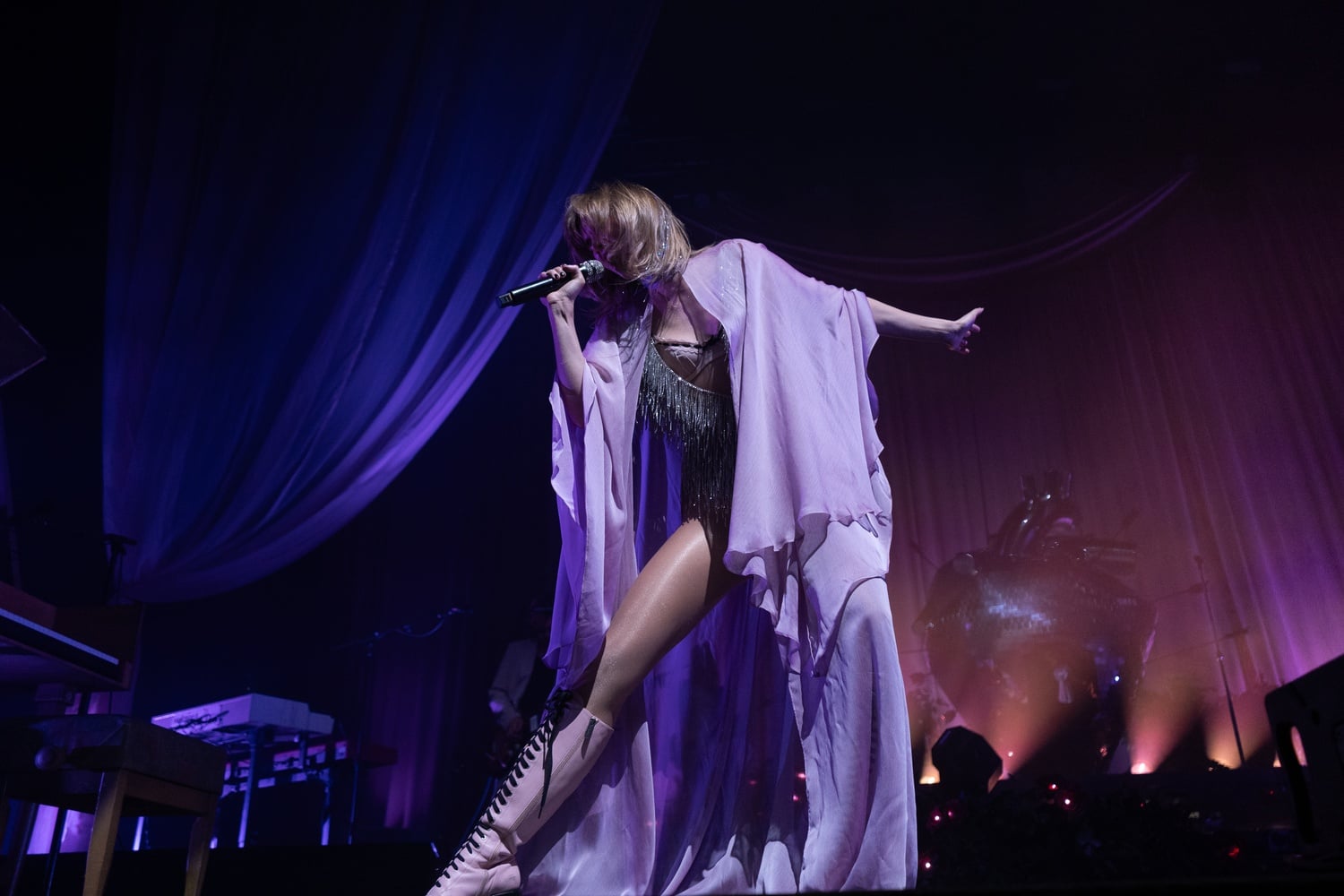
On Sept. 22, Suki Waterhouse welcomed the audience at MGM Music Hall into the storied terrain of Loveland to perform her new July album of the same name. Judy Garland’s “Over the Rainbow” drifted hauntingly through the venue as the show began, whisking listeners away from the drudgery of everyday life to a place where “the dreams that you dare to dream really do come true.”
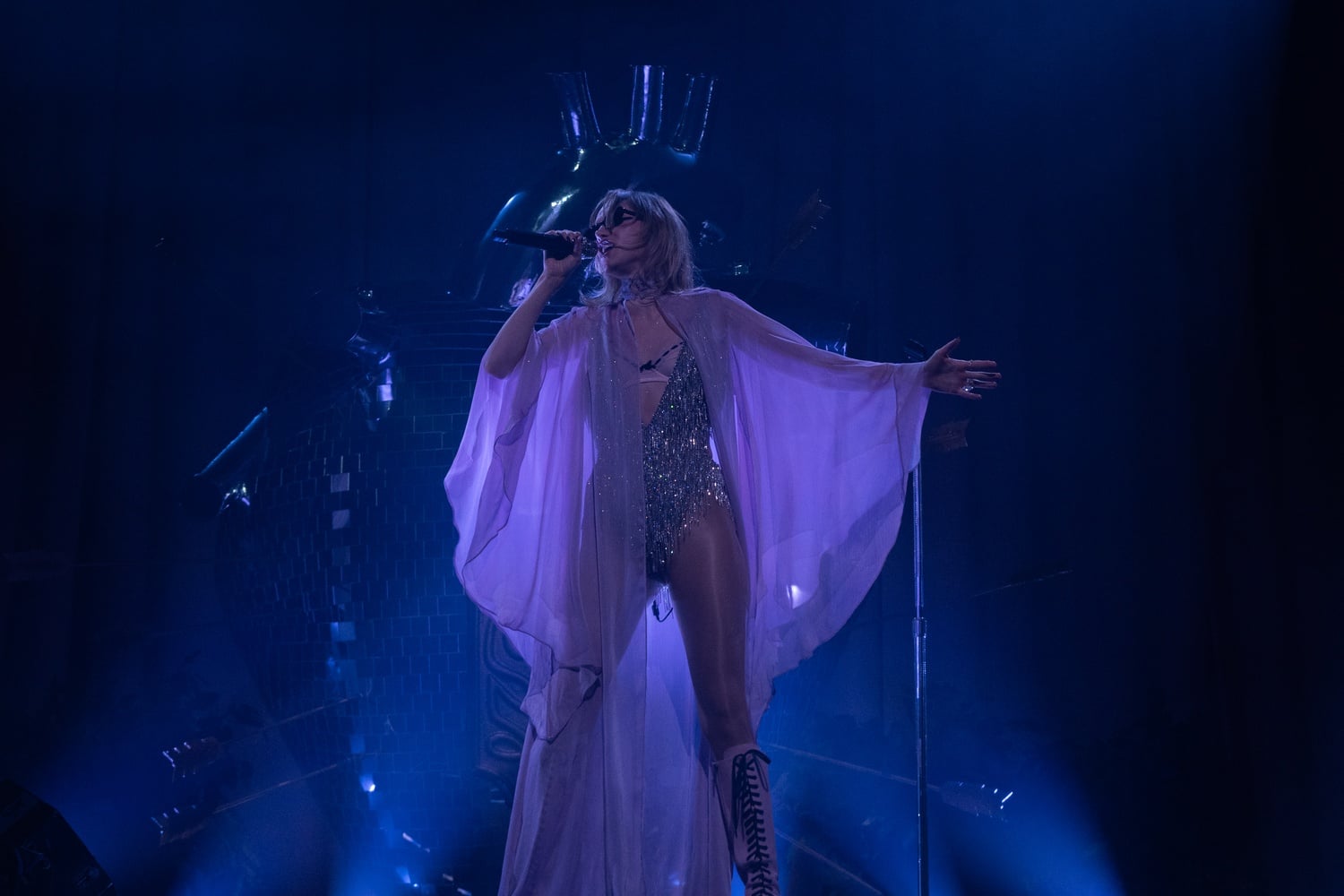
Cupid had clearly left his mark: The piano was punctured with arrows, as was the massive glittering heart that took center stage. Lights bathed the set in a dreamy, rose-colored haze, and draped curtains captured the charming old-school romance of a retro theater. It was a set rich in melodrama, one that luxuriated in whimsy and pulled the audience into Waterhouse’s lush, sumptuous world.
True to form, the lights flared up to reveal Waterhouse bedecked in vintage glamour: Her statement silver dress and tinseled hair paid homage to her sophomore album, “Memoir of a Sparklemuffin,” while her flowing pink duster evoked Stevie Nicks.
Following opener Charlotte Lawrence’s cover of the Cranberries’ “Zombie” and capitalizing on its electric energy still humming through the room, Waterhouse immediately launched into “Supersad.” It was an unexpected choice, given that “Supersad” appears on “Sparklemuffin” rather than “Loveland” and isn’t among her most well-known hits. And yet it proved to be the perfect segue into a propulsive concert that both showcased the best of Waterhouse’s past catalogue and introduced audience members to her new music.
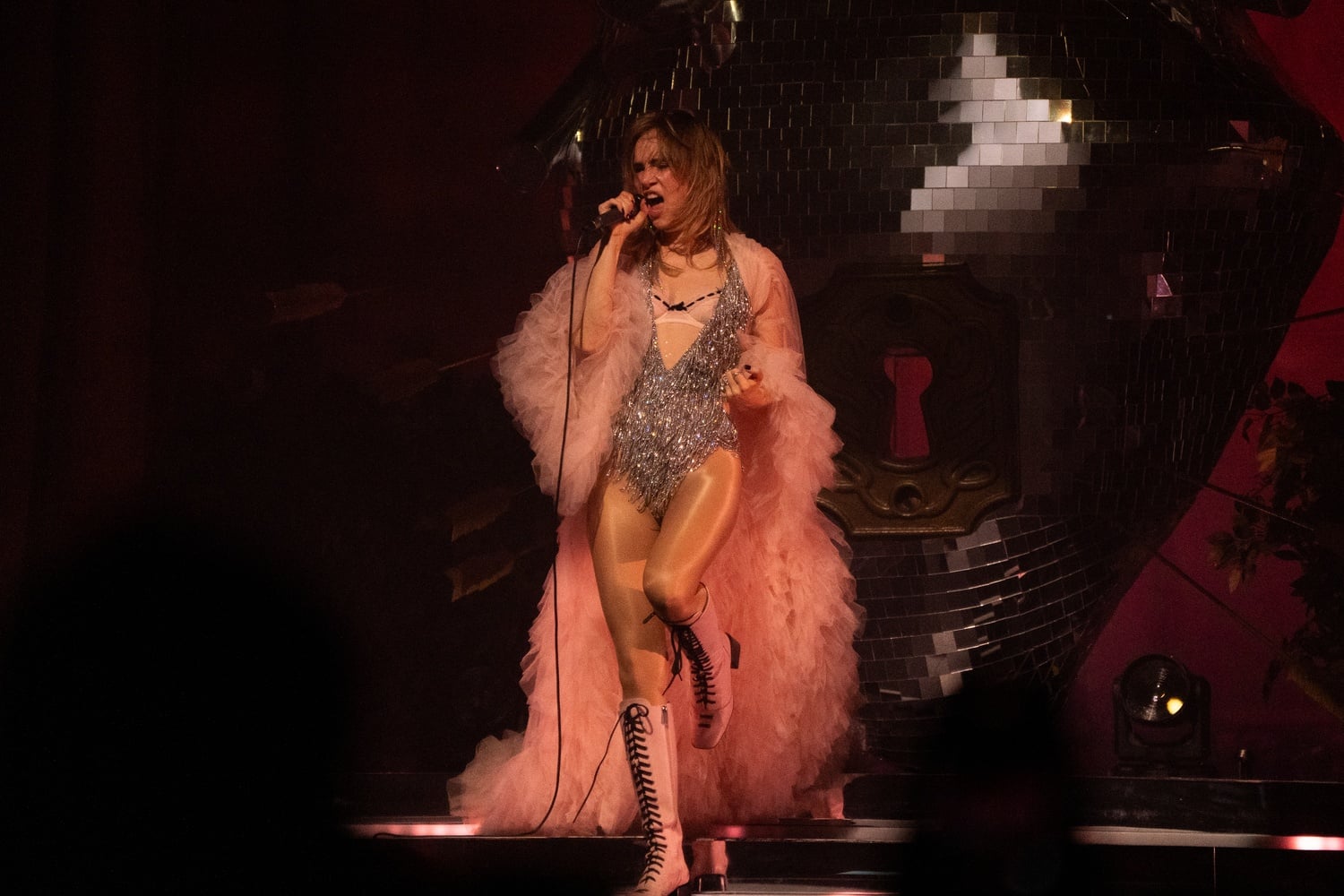
“Sparklemuffin” was an album defined by chic, “it girl” energy, and her 2024 performance at Roadrunner reflected that. But the Waterhouse that appeared now, two years later, was more mature, self-assured, and confident in the thematic vision of her work. She has experienced motherhood, a long-term relationship, and skyrocketing fame. These trials of the heart have made Waterhouse a powerhouse performer — one able to balance vulnerability with vivacity, heartbreak with humor, seductiveness with sincerity.
Highlights of the first set were an energetic rendition of “Tiny Raisin” that had fans’ hands in the air, a tender cover of “Notting Hill” on the piano, a performance of her breezy, sun-soaked song “My Fun,” and a throwback to her 2022 smoky hit “Moves.”
“Let’s make some moves,” Waterhouse aptly said, grinning as the first notes played.
The second set opened with a voicemail evoking a drunken call to an ex.
“Hey, I know it’s late. And I hate that I still know you’re not in my heart. I thought I wanted to hear your voice. Actually, that’s not true. I wanted you to hear mine. And there’s this tiny little voice in my head going, ‘F— it.’”
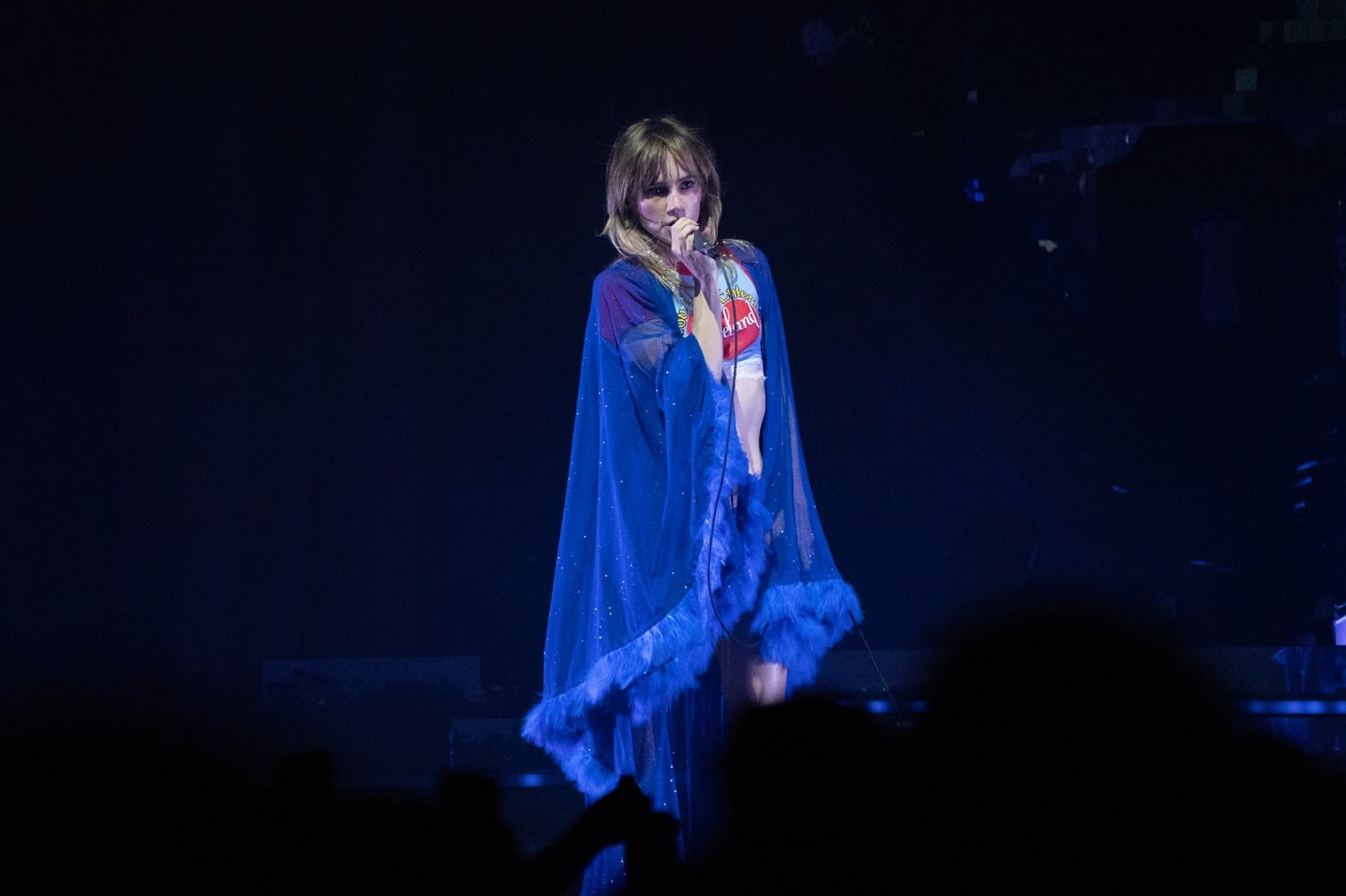
“When I Get Drunk (I Want You Boy)” followed: A sultry confessional that has become one of the most popular songs off Waterhouse’s new album. She debuted a new costume for this set, pairing athletic shorts with a cropped “Loveland” graphic tee and a sheer, feather-lined blue robe. The effect was flirty and playful, leaning into the theatricality that was a throughline of the show.
Beyond that, the second set was surprisingly light on music from her new album, featuring only “Weirdo” and “Loveland.” The audience was otherwise treated to a wealth of gems from her older discography, including “Good Looking,” “Model, Actress, Whatever,” “Johanna,” and more.
Waterhouse was an expert at charming the crowd, repeatedly professing her love for Boston and joking with fans about why she goes by her nickname, ‘Suki,’ instead of her birth name, Alice. She also played into the audience’s hometown pride, polling them about remarkable information from the city’s history.
“I want to know, what’s a weird piece of Boston lore that I can remember?” she asked.
What followed was a spontaneous history lesson on The Great Molasses Flood of 1919, which unleashed over two million gallons of syrup on the streets of Boston and resulted in 21 casualties.
“Now I have to go Google that when I get back to my bus,” Waterhouse said. “I’m gonna remember that forever — The Great Molasses Flood.”
The performance ended with “To Love,” a fitting conclusion to a concert centered on the heart in all its phases. She dedicated this final song to the city of Boston, reaffirming her gratitude to her fans and her adoration of the city.
All in all, the concert, like “Loveland” itself, was a triumph. In “Back in Love,” the English singer proudly declares, “I’m back,” and it’s undeniably true. With “The Loveland Tour,” Waterhouse stakes a claim — she’s back, and she’s here to stay.
—Staff writer Makenna J. Walko can be reached at [email protected].
Want to keep up with breaking news? Subscribe to our email newsletter
Have a tip for The Crimson? Share it confidentially