Experts Call for Greater Attention to Rural Issues at Harvard Intercollege Rural Symposium
Researchers and administrators from across the Ivy Plus — a group of elite universities that includes the Ivy League, MIT, and the University of Chicago — said Saturday at a Harvard symposium that addressing disparities in rural health, education, and economics starts with building trust with, and listening to, rural communities.
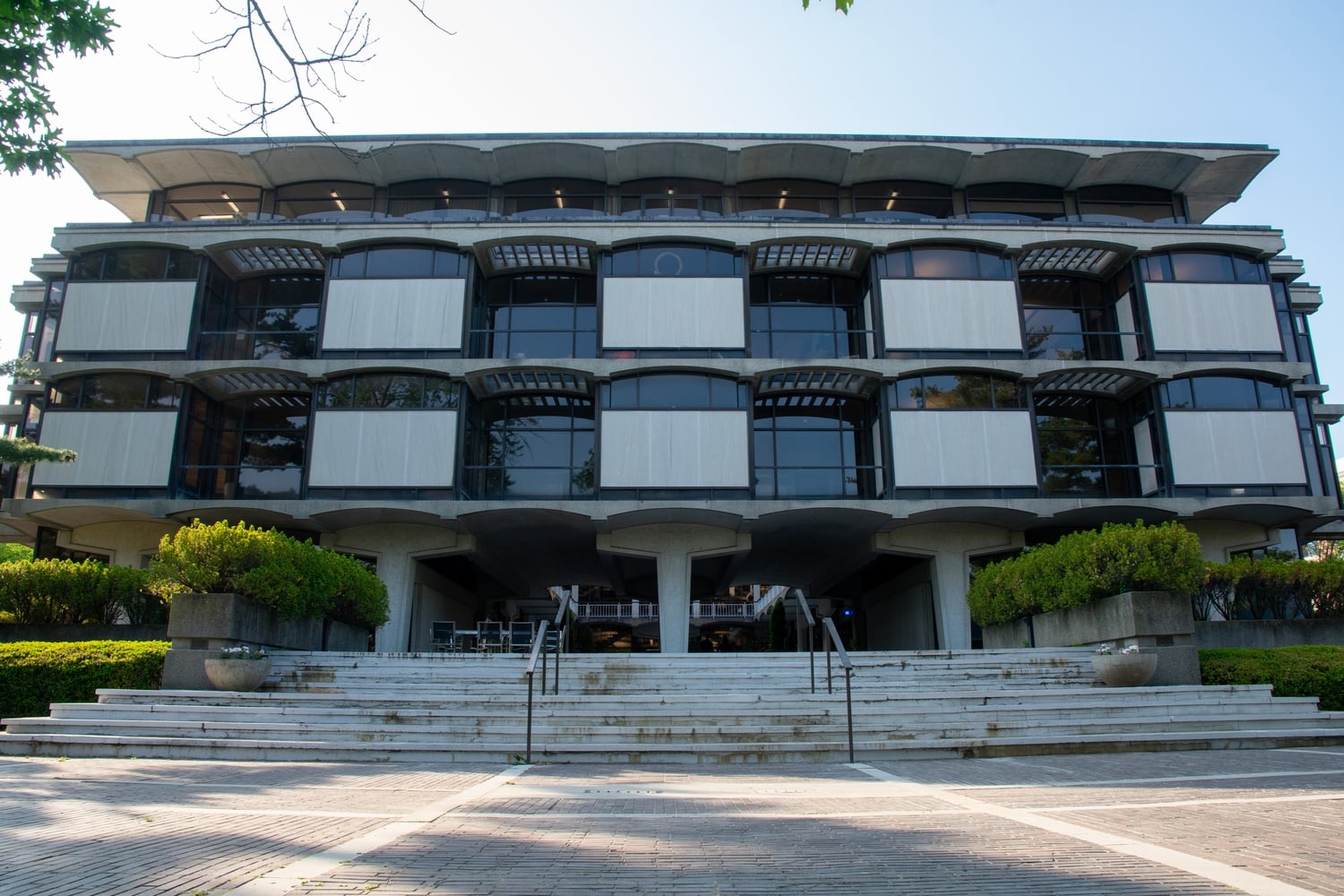
The symposium, held at the Student Organization Center at Hilles, was organized by the Office of Culture and Community in consultation with the Harvard Undergraduate Rural League. It drew attendees from Yale, Columbia, MIT, University of Pennsylvania, University of Delaware, Princeton University, Brown University, Dartmouth College, and Cornell University.
Associate Dean of Culture and Community Alta Mauro, who chaired the conference, said in a Thursday interview that the symposium was in part an effort to give Ivy Plus schools a space to think about rural issues — and that even students who aren’t from rural areas should care about them.
“If you’re not from a rural community and you don’t have any family in rural communities, but you’re majoring in government and econ, you should understand rural economies,” she said.
The Saturday morning panels focused on three pillars of rural identity: health, education, and economy.
Mauro kicked off the day alongside symposium faculty chair Andrea “Andi” Wright, an Anthropology lecturer and Eliot House resident dean.
Wright, who is from rural Missouri, spoke about studying rural places as intellectual and cultural sites rather than “flyover country.”
“I want to name clearly what I hope comes out of today: that our rural students leave this symposium feeling like they don’t have to apologize for where they come from, that they feel emboldened not to miss by the rural identity, and that everyone in this room, regardless of your own background, leaves with a renewed sense that rural America isn’t a place to be open,” she said.
Ty C. McNamee, assistant professor of educational policy at the University of Kentucky, framed the day’s discussion by drawing on his own experience growing up as a gay, working-class student in rural Wyoming to speak to the importance of higher education access for rural students.
Though rural residents make up 20 percent of the U.S. population, McNamee said, “rural America is persistently excluded in such a way, flattened or simply forgotten about in our national conversations about education, health, and the economy.”
Get The Crimson in your inbox.
He said rural schools and hospitals are closing even though people in rural areas tend to be older and sicker, with higher rates of smoking and high blood pressure and are more likely to lack health insurance.
Access to health care was a common thread in the rural health panel, where St. Louis University professor Keon L. Gilbert and director of the Rural Medicine Program at Massachusetts General Hospital and Harvard Medical School assistant professor Matthew L. Tobey discussed building trust with rural communities to address health disparities.
Tobey spoke about his experience establishing teaching hospital programs that support American Indian and Alaska Native health systems, particularly through his work with the Rosebud Sioux Tribe in South Dakota. He said training people in rural areas can build up stable health care systems that don’t rely on doctors who may not want to work there.
“There’s just no way you can find in your heart a way to get to a new place,” he said of doctors based in urban areas. “But if you are living in a rural place, you see all those assets.”
Gilbert, who focuses more on health policy as Director of the Race, Prosperity, and Inclusion Initiative at the Brookings Institution, spoke about the societal factors behind stark differences between rural and urban health.
The two spoke about the challenges of studying rural health, from a lack of interest among health care workers to longstanding mistrust of “urban” researchers.
Gilbert said that when he sought partners for a Brookings project called “Wellness in Black Life,” which asked Black men and boys in several cities to define well-being for their communities, some questioned, and turned him down, over his affiliation with the institution.
“Being at the Brookings Institution and even St. Louis University, often institutional reputations carry with them a lot of baggage and a lot of trauma for a lot of communities,” he said.
Tobey said Rosebud residents — who live hours away from labor and delivery and prenatal care — similarly distrusted regional health care, citing “so many anecdotes of things going wrong, of racism, of problems that are broadly shared.”
Being an outsider worked in his favor, Tobey said.
“In that community, having a bearded guy from Boston come out was actually a breath of fresh air,” he said.
Trust was also a theme of the education panel, where University of Delaware visiting assistant professor Kristie LeBeau and University of Mississippi assistant professor Jenay Willis spoke about how solutions to issues in rural education can come from rural students themselves.
Willis said she builds trust in her research on college support for rural Black students by collaborating with the students she studies.
“I’m not telling them what their narratives are, but I’m allowing them to actively exist as co-researchers in studying the research with me because the research phenomenon itself shapes their own lived experiences.”
She said the students she worked with decided to present their findings to their high school’s administrators, something they hadn’t thought possible beforehand.
LeBeau, who does research on school-community relationships, said school boards draw a lot of attention in rural areas, which often lack other gathering spaces.
“I think there’s something special about rural communities where we can see these really valuable relationships, especially in a time where we were talking earlier at the table — the antisocial century that we’re experiencing after Covid,” she said. “But in these rural communities, they provide these spaces for people of all generations to come and engage and really get to know each other on another level.”
After lunch, Harvard Graduate School of Education alumna Sky Marietta, Harvard Law School Mississippi Delta Project director Noah Harris ’22, and Associate Dean of Civic Engagement and Service Travis Lovett discussed how educational opportunities for rural students are crucial to solving rural economic issues.
Marietta, an assistant professor at the University of the Cumberlands, said she dislikes the term “brain drain” — the idea that educated people leave rural areas — because that framing gets in the way of projects that employ rural people and build local wealth.
“We really need to be thinking about how do we take these investments, how do we make sure that they’re happening on the ground, how do we make sure that we’re building up the capacity and the leadership of the people on the ground,” she said.
Harris said that universities could help connect rural organizations to federal grants, since many funds intended for rural communities end up going to urban areas.
“I think from these large research private universities in the Ivy League and at peer institutions, who have some of the best compliance departments and the best lawyers in the world — we have the Innovation Labs — how can we figure out how to get some of the federal government’s money to rural areas?” he said.
In his closing remarks, Dean of Students Thomas G. Dunne said Harvard was “grappling” with a broader distrust in higher education, particularly in rural areas, citing a 2025 Pew Research study that said 70 percent of Americans think higher education is headed in the wrong direction.
“The things that we’ve been grappling with at Harvard, as we faced pretty significant pressure from the federal government, is how are we perceived across our communities, and do people see themselves represented in the work that we do?” he said.
—Staff writer Celine Muir can be reached at [email protected] or Signal at celinem.33. Follow her on X @celinemuir1.
—Staff writer Alexa M. Schmitt can be reached at [email protected] or Signal at alexaschmitt.15. Follow her on X @alexa_m15_s.
Want to keep up with breaking news? Subscribe to our email newsletter
Have a tip for The Crimson? Share it confidentially