Harvard Artist Profile: Alison H. Brown ’84 Brings Genre-Defying Bluegrass Back to Cambridge
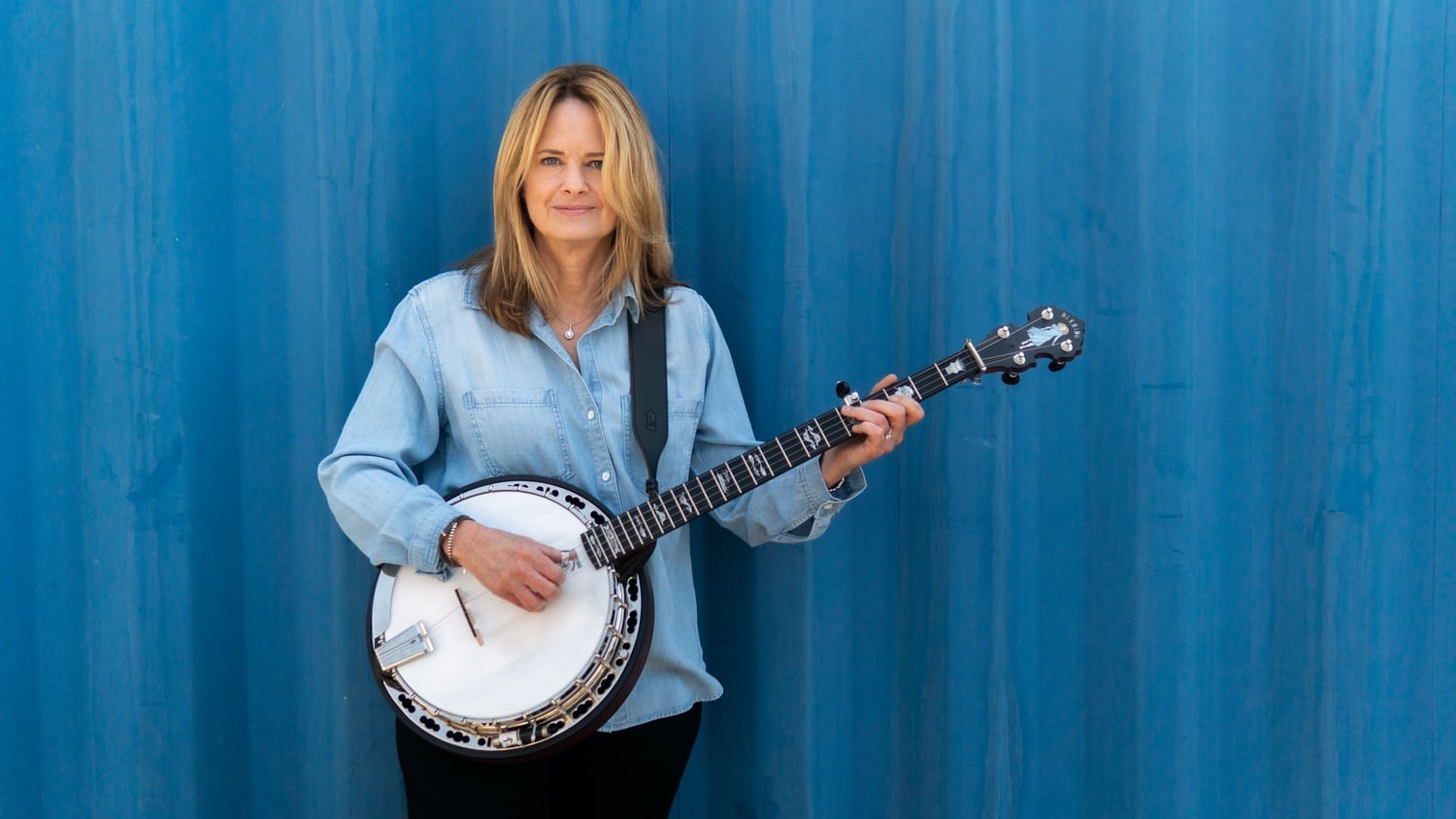
When Alison H. Brown ’84 first arrived at Harvard, she envisioned becoming a doctor who played banjo on the side. More than four decades later, she returned to Cambridge as a Grammy-winning artist and one of bluegrass music’s most accomplished banjoists, performing at the Regattabar in the Charles Hotel on Oct. 9.
For Brown, the homecoming marked a return to the city where her musical ambitions first took shape. Since her undergraduate years, she has helped expand the banjo’s place beyond its traditional bluegrass roots, incorporating elements of jazz and Latin music into her distinctive, genre-defying sound. Her first album, “Pre Sequel” — a collaboration with fiddler Stuart Duncan, was released in 1981 when she was a freshman at the College.
“We were pushing the envelope in our way, but compositionally, it was still pretty close to bluegrass form,” Brown said in an interview with The Crimson. “And I think over time, I’ve tried to reach out into different areas with the banjo, and I feel like I’ve just gotten more adept at knowing what really works for the instrument and what doesn’t work.”
For Brown, that experimentation has involved not only exploring new musical styles but also navigating the challenges of preserving the banjo’s distinctive sound outside its traditional setting.
“How do you take the instrument out of a purely acoustic setting, and still have it blend, and still be heard in the right way, and still have the beautiful tone that I think the banjo can have?,” Brown said.
Despite these early releases, Brown never expected to become a professional musician. At Harvard, she initially pursued the pre-med track, taking chemistry courses before ultimately concentrating in History and Literature.
“It was a process that I had to go through, and it’s just part of growing up and finding your true self. For me there was no way that I could have been confident enough in who I was going to become when I was 18. That was part of the process,” Brown said.
Still, Brown desires she had explored her musical interests more deeply during her time at Harvard.
“But when I look back on it, I wish that I could have taken the music classes that would have informed what I do. I took one music class — the core class that you have to take — which I still learned so much from, but [it] just makes me wish that I could have dug into that stuff a little bit more,” Brown said.
Now, Brown has released 12 solo albums, many featuring collaborations with some of the heaviest hitters in bluegrass. Her most recent 2025 album, “Safe, Sensible, and Sane,” was a partnership with actor and comedian Steve Martin, and featured artists like Jason Mraz, Jackson Browne, and the Indigo Girls. Brown’s collaboration with Martin has spanned many years. Following the release of their first collaboration in 2023, the single “Foggy Morning Breaking,” the pair decided to produce an album together. The single’s rise to no. 1 on the Bluegrass Today chart in June 2023 proved particularly exciting for Martin, whose enthusiasm exceeded even Brown’s expectations.
“We put [‘Foggy Morning Breaking’] out as a single, and it went to number one on the bluegrass radio charts. Steve was so over the moon, and he called me up and he said — it’s like three weeks later — he’s like, ‘Alison, we have a hit.’ He’s like, ‘I’d rather have a hit on bluegrass radio than have a hit movie’ — he was thrilled,” Brown said.
With newfound success, the duo continued working on projects to keep the spark going.
“And so then a few weeks later, he sent me lyrics to a song about having a number one song on bluegrass radio, and so it’s called ‘Bluegrass Radio,’ and it’s on ‘Safe, Sensible, and Sane,’” Brown said. We just kept writing music, and we just kept finding things — I would write a melody and send it to him, and he’d send words back, or he’d send me part of a tune idea, and I’d write the rest of the tune, or vice versa.”
The extensive list of featured artists on the 2025 album allowed for an intertwining of various styles. For Brown, working with the different collaborators allowed the album to become a fully fleshed-out idea.
“In roots music, and bluegrass music, the music isn’t written out in notation — it’s improvised. Anytime you get together in the studio with other musicians, it’s a collaborative process because everybody’s bringing their personality and their personal interpretation to the song,” Brown said.
In addition to her recording success, Brown’s current mission is representing and encouraging women in the bluegrass industry. As a member of the First Ladies of Bluegrass — a band made up of each of the first women to win the International Bluegrass Music Association’s Instrumentalist of the Year for instruments including the banjo in 1991, eight times for bass beginning in 1998, and both guitar and mandolin in 2017 — Brown works to gain more traction for women’s work in bluegrass, and the music industry as a whole.
“I also launched a radio show on SiriusXM last year called ‘Pick Like a Girl’ that highlights women in bluegrass. That’s the thing that excites me the most, because we used to be just so few of us, and now women are making the most exciting music that’s being made in bluegrass, in my opinion,” Brown said.
The band recently released “Bound to Ride,” a rendition of a traditional song recorded by the Stanley Brothers as part of “Where the Soul Never Dies: Celebrating 80 Years of the Stanley Brothers,” — an upcoming tribute album to the duo — featuring Dolly Parton, which became her first posthumous release.
Beyond her efforts to promote women in bluegrass, Brown serves as the President of the Nashville Chapter of The Recording Academy. In this role, she has gained insight into the changes shaping the broader music industry and their implications for bluegrass. With advances in generative artificial intelligence songwriting models, Brown worries about the potential consequences of artists using AI to create and produce music.
Despite these concerns, her optimism prevails when she returns to the roots of bluegrass.
“Your generation really saw it because you grew up with social media, but the way [technology has] made people more siloed, and people are recognizing how that’s really a negative. To have a strong society we can’t be siloed. We have to be joined together,” Brown said. “Grassroots music, and roots music — music where you can strum three chords and sing a song, and it’s not about reading dots on a page or where you need to study it, you can just learn three chords and sing a song — that’s maybe where our greatest strength is.”
Now, in her return to Cambridge, Brown hoped to pay tribute to the vital folk scene in the area and showcase the wide expanse of range that the banjo holds. Yet, the trip back to the place that started it all left Brown with a recognition of how far she has come.
“When I come back to Cambridge, I always think about my 18-year-old self, and I think about the journey that I’ve been on, and the path my career has taken me,” Brown said.
For Brown, returning to Cambridge offered a chance to reflect on how an interest she once considered secondary to her professional ambitions had developed into a career.
“It’s just incredibly validating to get to come back to Cambridge to play a show with my banjo, thinking that I came to Cambridge thinking that I was gonna be a doctor who played banjo on the side and just talked about it at cocktail parties, and to have found a way to take the thing that was really my true love and make a career out of it, and connect with other people through the music,” Brown said.
Over the course of her career, Brown has expanded the boundaries of bluegrass through musical experimentation, collaboration, and advocacy for women in the industry. Her work reflects a broader commitment to preserving the genre’s traditions while creating new opportunities for artistic expression and connection within the music industry.
— Staff writer Sophie M. Houck can be reached at [email protected].
Want to keep up with breaking news? Subscribe to our email newsletter
Have a tip for The Crimson? Share it confidentially