Graduate Student Union Sets Second Strike for October 27 If Negotiations Fail
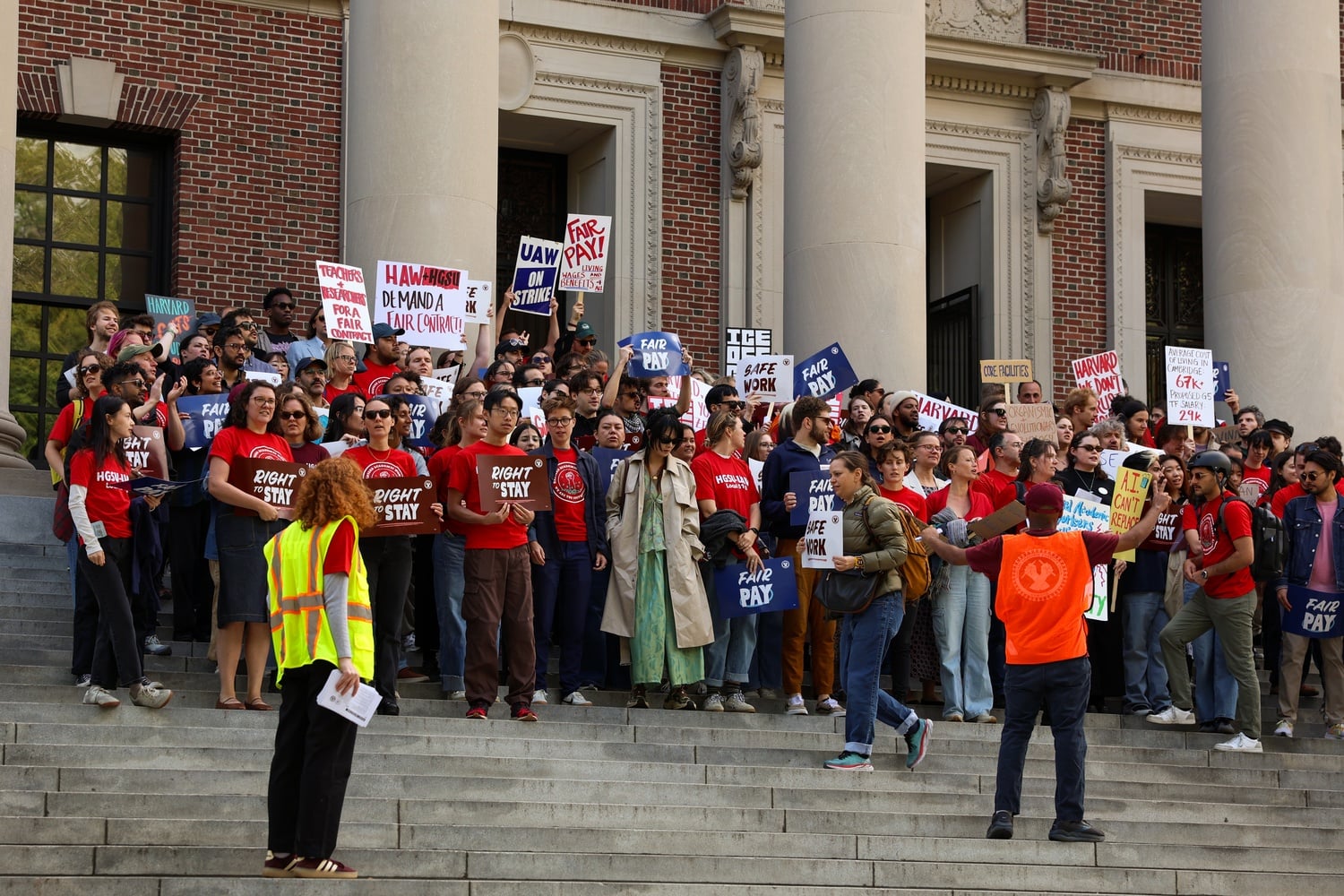
Harvard’s graduate student union said Friday that it would begin a strike on Oct. 27 if it does not reach a contract agreement with the University by then, threatening another large-scale walkout after a previous strike halted work for 40 days in the spring.
The strike comes on the heels of an authorization vote, where 88 percent of voting members of the Harvard Graduate Students Union-United Auto Workers, which represents more than 4,000 student workers, voted in support of the strike earlier this month.
The union announced the strike’s start date on Friday, accusing the University of refusing to meet several of its key proposals after a bargaining session on Oct. 8 — including wage increases, protections for noncitizen workers, and establishing an independent grievances process for harassment and discrimination cases.
In the Oct. 8 session, Harvard raised its proposed annual wage increases from 2.5 and 2.75 percent to 3 percent and introduced timelines for disability accommodation requests, according to the union. HGSU Vice President Evan R. Lemire said it was the first time in three sessions that Harvard had introduced new counterproposals.
“We’re very grateful that there was movement, and we’re appreciative of the movement,” Lemire said. “But this movement wasn’t sufficient for our workers, and it wasn’t sufficient to reach a fair contract.”
But Harvard refused to budge on a proposal that would eliminate nearly $3 million in funds that help workers pay for healthcare, dental, child care, and immigration expenses, the union wrote. The Friday announcement argued that Harvard “has the resources to agree to a fair contract,” noting that the University’s endowment grew to nearly $68 billion in fiscal year 2026.
“This is one of the wealthiest institutions on the planet, and safe work, fair pay, and the right to stay for the workers who do the teaching and the research, and so much of the core functions of this university, is really not too much to ask,” Lemire said in an interview.
Get The Crimson in your inbox.
Harvard spokesperson Jason A. Newton wrote in a statement that the University has proposed “an immediate, 6.1 percent pay raise once a contract is signed, and a total pay increase of nearly 16 percent over the life of the contract for all HGSU members.” The University had “made significant progress in other key areas,” including expanded benefits coverage for Ph.D. students and emergency hardships funds available for all students, Newton wrote.
“These are just a few reasons why the University feels a strike is not warranted. However, we continue to meet in good faith with the HGSU bargaining leadership and remain committed to reaching an agreement,” Newton wrote.
Harvard has warned that a second strike may not be legally protected. In an Oct. 2 letter to faculty, Deputy Provost Jessica Soban and Paul R. Curran, managing director of Harvard’s Office of Labor and Employee Relations, wrote that because the union has said a second strike would support the same goals as the spring walkout, it may be considered intermittent and not protected under the law.
“Accordingly, student workers would be subject to the full range of employment consequences for not performing their work duties,” they wrote.
Lemire rejected the University’s characterization of the strike as intermittent, writing in a statement that “deciding later that circumstances warrant going on another strike is fundamentally different than planning a strategy to strike, return to work, and strike again for a more damaging effect with less risk.”
Lemire said that, on the advice of the union’s lawyers, HGSU considers Harvard’s warning “unlawful” and its claims “spurious”.
The union is set to come to the bargaining table once more before the strike deadline, and Lemire said the union will ask Harvard for additional bargaining dates in order to “do everything in our power to reach a fair agreement.”
“The union is about collective power, collective strength in numbers, and it’s that that protects us,” Lemire said. “So the university can make its threats. We are not going to be intimidated by unlawful attempts to stop workers from engaging in collective action.”
—Staff writer José Luis Ortega Castro can be reached at [email protected]
Want to keep up with breaking news? Subscribe to our email newsletter
Have a tip for The Crimson? Share it confidentially