A Retreat, Hazing Allegations, and Four Resignations: Inside Turmoil at Harvard’s Institute of Politics
Interviews with nearly 20 current and former student leaders reveal months of conflict at Harvard’s Institute of Politics over a February retreat, the executive team’s authority, and complaints about the treatment of younger members and women.
At a February retreat in a rented beach house in Old Orchard Beach, Maine, members of Harvard’s Institute of Politics’ Student Advisory Committee gathered in a room and took turns reading lines from John F. Kennedy’s inaugural address.
New members, 10 attendees said, were each given a task to perform along with their line. One student delivered a line in a military cadence, another was asked to perform stand-up comedy, and others were told to do impressions. Shots of alcohol and water sat nearby.
Connor S. Chaffin ’29, then a new SAC member, said he was asked to deliver his lines in an Ed Sheeran voice and felt uncomfortable. Chaffin and five other attendees said another new member repeatedly refused an assignment to impersonate Barack Obama before ultimately doing so. A third student, asked to perform stand-up comedy, said she felt embarrassed and put on the spot when she had to come up with material in front of the group.
After the activity, Chaffin told a peer he believed what had happened constituted hazing under the Dean of Students Office’s definition. Minutes later, IOP Vice President William M. Smialek ’27 pulled him aside for a private conversation in the home’s basement.
Their accounts of that conversation sharply diverge. Chaffin wrote Smialek “emphatically asserted” that the activity was not hazing and told him to bring future concerns to the executive team “rather than others or people outside of SAC.”
Smialek wrote that he instead explained the relevant hazing definitions, provided information about DSO reporting resources, and “directly encouraged” Chaffin to use them.
The episode came months into a campuswide crackdown on hazing that had already led Harvard to suspend the Harvard-Radcliffe Orchestra after its own retreat before reversing course and removing the finding of hazing.
Seven months later, that weekend has become one focus of a broader dispute that has roiled the IOP’s student leadership. Four student leaders have resigned since the retreat for different reasons, and an internal letter obtained by The Crimson accuses members of the executive team of bullying freshmen, demanding conformity, and “blurring the line between licit requests and unethical expectations.”
Its author, Harvard Political Review President Donald O. Cruse ’27, called for three of the executive team’s four members to resign: IOP President Lorenzo Z. Ruiz ’27, Treasurer Jack W. H. Tueting ’27, and Smialek.
Communications Director Dhara N. Patel ’27, the fourth member of the executive team, has distanced herself from the other three over the past few months, saying she was not included in many of their decisions.
The dispute has also put the relationship between IOP staff and SAC members under scrutiny. Former Director of Internal Affairs Cole W. Hahn ’27 said he spoke “extensively” with Director of Student Programs Cathey Park about concerns surrounding Chaffin before Hahn resigned.
Get The Crimson in your inbox.
Patel separately said she raised concerns with IOP staff. But in response to questions The Crimson sent to Park, IOP spokesperson Brigid O’Rourke wrote that “no hazing allegations were raised with IOP staff” after the February retreat.
Interviews with nearly 20 current and former SAC members, along with emails, text messages, and internal documents reviewed by The Crimson, reveal disputes over the retreat, a confrontation about an anonymous Sidechat post, an email about “the power structure” in the organization, and complaints about how women were treated.
Other members described the retreat as lighthearted and said they did not personally feel coerced, while several said SAC’s cultural problems predate its current leaders. Some students were granted anonymity to candidly discuss internal IOP matters.
Ruiz, Tueting, and Smialek denied bullying or unethical conduct, writing that SAC cultivates “an environment of care, understanding, and accountability to one another.”
“There is no room for misconduct in the IOP, and certainly not for misconduct directed toward peers,” the three wrote.
Ruiz wrote separately that it was “deeply disappointing and saddening that any students felt unwelcome in our space,” adding that no reports of misconduct had been filed or “directly brought” to him in the seven months since the retreat.
The turmoil comes during Betsy Fischer Martin’s first weeks as IOP director and just over a month before the IOP elects its new student leaders.
On Monday, citing “the ongoing Crimson reporting surrounding SAC and the IOP,” Ruiz replaced the committee’s mandatory weekly meeting with “fully optional office hours” hosted by him and Park, according to an email obtained by The Crimson.
‘Pressure to Do It Anyway’
Twice a year, the IOP holds an optional retreat for SAC’s roughly 40 members, including program chairs, coalition chairs, directors, and the four-person executive team. The spring retreat, intended for sightseeing, party games, and team bonding, took place from Feb. 6 to 8, weeks after the new SAC leadership took office.
The 10 attendees said the JFK reading took place one evening with nearly every SAC member at the retreat in the room. The freshman asked to perform stand-up said she initially told the group she had nothing funny to say, then sat through roughly two minutes of silence while she tried to come up with material.
Chaffin wrote that he was uncomfortable with his own assignment and later learned that several other new members had felt similarly.
“I was uncomfortable with the task that I was given, and afterwards I talked to several other members of SAC who were similarly uncomfortable with theirs,” Chaffin wrote.
Chaffin and five other attendees said another new member repeatedly declined an assigned task before ultimately performing it.
“During this initiation, one member tried to refuse the task that he was given, but even after he explicitly said ‘no,’ he was pressured to do it anyway,” Chaffin wrote. “After the initiation, he looked visibly uneasy.”
Other attendees described the exercise differently. Smialek called it an “optional, popcorn-style reading.” Three members said they did not personally feel pressured, and one said the JFK reading had been a retreat tradition for years.
Chaffin wrote that when Smialek took him to the basement, Smialek insisted that “what we had experienced did not constitute hazing” and told him “the initiation was entirely optional.”
Smialek wrote that he spoke with Chaffin “privately to understand his concern and take it seriously.” Having attended hazing training the week before, he wrote, he explained the relevant definitions and provided information about the DSO’s reporting resources.
“I did not tell Connor to keep his concerns within SAC or discourage him from speaking with anyone outside the organization; in fact, I directly encouraged him to use those reporting resources,” Smialek wrote.
Chaffin disputed that account.
“I am certain that he did not provide me with DSO reporting resources,” he wrote. “If he paid attention at that hazing training we attended together, then he would know that the condition of something being nominally optional does not preclude it from being hazing.”
“To me, it felt like Exec was more concerned with saving face and preventing any hazing allegations than with addressing my concerns or understanding why I felt that the initiation was inappropriate,” he wrote.
Patel said Smialek spoke to her about the conversation the next day.
“I remember the next day he had said that he’d taken care of the Connor situation,” Patel said.
According to Patel, Smialek said he had explained to Chaffin “what hazing actually was,” that the game was “not definitionally hazing,” and that Chaffin should “just come back to him or exec” with any concerns.
“I don’t remember him saying anything about hazing resources,” she said.
Smialek wrote in a statement to The Crimson that by “taken care of,” he meant he had spoken to Chaffin and told him what steps he could take if he believed the conduct was hazing.
Two attendees said Chaffin appeared shaken after his conversation with Smialek.
The dispute unfolded amid heightened scrutiny of hazing at Harvard. Five months earlier, the College suspended the Harvard-Radcliffe Orchestra after an investigation into its own retreat, where upperclassmen blindfolded new members, shouted instructions, and offered them water or vodka while leading them through an initiation activity.
Harvard initially found the orchestra responsible for hazing, but reversed that finding on appeal two months later.
Another retreat activity also drew complaints. Before the trip, new members were not told which games would be played, but were asked to submit their Rice Purity Test scores, a self-reported tally of sexual, drug, and other experiences.
A Kahoot game later displayed the scores and asked attendees to guess which member each belonged to. Five members described discomfort with the game, saying that although submitting a score was described as optional, opting out did not feel easy.
‘IOP Staff Was Aware’
Chaffin never filed a formal report. He said he considered doing so but was reluctant to approach IOP staff because he believed they were too close to the executive team, and he worried he lacked evidence beyond competing accounts of the retreat.
“I had a perception that the IOP staff was pretty close with exec, and or at least was interested in protecting exec, and I didn’t think that they would actually take those concerns seriously or do anything about it,” Chaffin said.
Other SAC members said they did take concerns to staff. Hahn, who served as the liaison between program chairs and the executive team, wrote that he spoke “extensively” with Park about what happened to Chaffin before Hahn resigned in April.
“IOP staff was aware of hazing concerns, and I spoke extensively with Cathey about what happened to Connor before I resigned,” Hahn wrote in a text. “Dhara has likewise spoken about these concerns many times.”
Text messages reviewed by The Crimson show Hahn repeatedly seeking Park’s guidance in March about his interactions with Ruiz, Smialek, and Tueting. On March 10, he wrote that he was “not sure they understand boundaries.”
The next day, Hahn forwarded Park a message from Smialek saying Hahn’s earlier text had “read as disrespectful” and “started the argument yesterday.”
“I think I need a sanity check,” Hahn wrote.
On March 23, Hahn told Park that he was “trying to avoid this being a big thing if I can just share this with you,” adding that he felt “unsafe having contact with Jack or Will.”
Patel said she also raised concerns with IOP staff.
“When these concerns were brought to my attention, I condemned the conduct and raised these concerns to those with positions of authority,” Patel wrote, referring to IOP staff.
Brigid O’Rourke, the IOP spokesperson, offered a different account, writing that “no hazing allegations were raised with IOP staff.”
“We are aware that students have raised broader concerns about student leadership and student culture within the IOP. We take those concerns seriously and are working to address them,” she wrote.
O’Rourke declined to say whether Park had discussed Chaffin with Hahn.
Ruiz wrote that no report of misconduct had been brought to his attention. He said the IOP has “numerous mandatory reporters on staff,” that SAC members complete anti-hazing training, and that every member meets privately with the student programs coordinator each week, “where concerns can be relayed immediately and confidentially.”
Cruse wrote that he hesitated to speak publicly because reporting the executive team “seemed to come at great personal risk of ostracization and punishment, particularly when faced with the closeness between Exec and an interim IOP Director.”
“After our first SAC retreat in February, I was disheartened to learn that concerns expressed about the behaviors exhibited by Exec fell on deaf ears — both within Exec and the larger IOP infrastructure,” he wrote.
At the time, the IOP was formally led by interim co-directors Beth E. Myers and Ned C. Price, who stepped in after Director Setti D. Warren died in November 2025. Myers served part time, while Price worked full time and led much of the institute’s day-to-day operations. Price declined to comment.
When Chaffin resigned on Sept. 16, he copied Park on an email to Ruiz, Smialek, and Tueting. He first wrote that he no longer believed he could devote enough time to the Gender and Sexuality Coalition and that stepping down was best for him and the program.
He then separately criticized the IOP’s culture, writing that the institute “has not been a space that I have found to be positive, welcoming, or sincere.”
“I no longer wish to participate in that culture, and cannot, in good conscience, continue to endorse it through my position as chair of a coalition and member of SAC,” he wrote.
‘The Power Structure’
The four-person executive team took office in January after all four top posts went uncontested in November. Ruiz and Smialek had planned to amend the IOP’s constitution so they could serve as co-presidents but dropped the proposal in April after opposition within SAC.
Cruse described the uncontested transition as a “coronation” and wrote that Ruiz, Smialek, and Tueting had been blinded by their “perceived power.”
“The absence of a competitive exec election last fall is emblematic of the kind of monarchical succession I was hoping to put an end to with the penning of my letter,” Cruse wrote.
Hahn said concern over the treatment of younger SAC members was “a major factor” in his decision to resign in April.
“After retreat last spring, I raised concerns directly with Exec and others in positions of authority about the way members had been treated and spoken to,” he added. “When I raised concerns, I did not feel supported for speaking up. Instead, I increasingly felt that challenging the existing hierarchy came at a cost.”
Hahn wrote that he was also asked to be “particularly pointed with a freshman SAC member whom I believed was already being bullied, even after I made clear that I was uncomfortable doing so.”
In a group chat between Hahn and the executive team, reviewed by The Crimson, Smialek wrote that there “needs to be a more pointed outreach” to Chaffin, who had not been responding, and called it “a relatively urgent problem.” Hahn replied that if Chaffin was “feeling weary about SAC then the first step should be to repair.”
Smialek wrote that Hahn, as director of internal affairs, was responsible for communicating with Chaffin and that the message simply asked Hahn to get a status update on Chaffin’s coalition.
Hahn said his concerns about the hierarchy deepened after he received an email from Tueting titled “Constitutional Explanation of IOP Exec Power.”
The email told Hahn it was “incredibly important” that, when communicating with SAC members about “how power structure works,” he understand what authority the IOP constitution did and did not give the executive team. Tueting also wrote that Hahn should hear out program chairs’ frustrations but should not “wrongly tell them that we are acting extra-constitutionally.”
Tueting wrote that the email was “an administrative response” to Hahn’s questions about the executive team’s authority and “pertains exclusively to the issue of governance structure.” Tueting wrote that, in a meeting the day before, Hahn told the team it had “no authority” to ask programs to coordinate rejection emails and “lost their composure.”
Hahn said he became frustrated because he believed the executive team was unwilling to take what happened to Chaffin seriously or fully hear other program chairs’ concerns. He said he later apologized for how heated the conversation became, “not for raising those concerns.”
The retreat also produced a separate dispute over how the executive team responded to internal criticism.
During a game in which students sat in a circle and shared their “most woke” and “least woke” political takes, members discussed affirmative action. Soon after, members found an anonymous Sidechat post that referenced the conversation and criticized white members of the executive team for their privilege.
Smialek then addressed the group. Six attendees claimed he asked the post’s author to come forward.
Smialek offered a different account. He wrote that multiple SAC members had told the executive team they felt “unsafe” after “someone leaked part of a private discussion,” and said he asked whoever posted it to take it down and explained that “sharing vulnerable conversations in that way could create a culture of fear and conformity on our leadership board.”
“No one was asked to show their phone or identify the poster; that claim is completely false,” he wrote.
Allison R. McGourty ’29, a co-director of diversity and engagement, said the discussion nevertheless turned into a search for the poster.
“It was not respectful. It turned into a witch hunt in a way, whether he liked it or not, and he didn’t do anything to shut it down,” she said. “So people were talking, and the culture was kind of like, who did it? Who’s the mole here?”
Smialek wrote there he had “no way, shape, or form” endorsed a hunt for the poster and that the concern was preserving the confidentiality of internal conversations.
The internal tensions continued after the retreat. Hahn resigned in April. Sunny Vo ’28, left over the summer for personal reasons. Former Harvard Votes Challenge Co-Chair Amir Smith ’29 and Chaffin both stepped down on Sept. 16.
Hahn and Smith both signed Cruse’s letter. Cruse said he intended the letter for IOP staff, not The Crimson, but stands “wholeheartedly behind its sentiments.”
Patel signed a later version and then removed her name. She wrote that the draft “focused more on personal grievances and had certain misrepresentations, rather than constructive solutions.” Still, she wrote, “there are concerns worth raising, and they should be shared.”
Patel also wrote that her work on the executive team has been “limited primarily to minor event-planning logistics and technical responsibilities,” and that she has “not been read into, included in, or participated in the decisions or actions taken by other members of the executive team.”
Ruiz wrote that “friendship disagreements” among members of the executive team “created distance” but wrote he and Patel remain “good friends” and that he continues to “make every effort to include all members in decision-making.”
McGourty said she participated in early discussion about Cruse’s letter but chose not to sign it.
“I was a little worried that if I signed it, how would I be treated on SAC going forward?” she said.
‘A Salvageable Community’
Several members said the conflict reflects longstanding tensions at the IOP, including over program exclusivity and whether its networking-heavy programs receive more attention than its public service ones.
“The already-small spaces carved out for those students seeking a life of genuine service, not one of careerist hedging, have been underfunded, undersupported, and undermined,” Cruse wrote. “The sectors of the organization which reward soulless networking, backroom dealing, and two-faced politicking have proliferated.”
CIVICS Co-Chair Rhea P. Maniar ’28 said SAC has a “clear divide” between smaller, more exclusive programs with close ties to the executive team and other programs. She said chairs were told this year that they would no longer ensure every applicant got into at least one program because doing so was “too much.”
The executive team wrote that admissions decisions “are entirely up to our student program chairs.” Tueting wrote the team secured “the largest raise in student budget history” this year and that the IOP spends more than $40,000 a year on Citizenship Tutoring and CIVICS.
Other complaints focused on how members were treated inside SAC. Three SAC members said women were sometimes spoken to differently and given less room to speak. McGourty said Smialek, whom she had worked with for months, repeatedly confused her with another woman on SAC.
“You don’t care enough about the people on SAC to even know their names to tell them apart,” McGourty said. “I’m sure it was an honest mistake, but just when those kinds of events repeat over and over again, you realize it’s not an honest mistake.”
McGourty said she also felt that, as a woman, she was “taken less seriously.”
Smialek acknowledged one instance in which he mixed up McGourty’s name with another member’s during their first semester working together and said he immediately apologized.
“SAC is a 35-person leadership board with many new faces, and remembering names has always been something I struggle with. It was a genuine mistake, and certainly was not a reflection of how much I value either of them,” he wrote.
Cruse accused the executive team of “perceived racism and misogyny,” including “interchanging the names of the very few people of color on SAC” and isolating Patel, the only woman on the executive team.
Ruiz responded that “the names and identities of people and programs are meaningful and should be treated with care” and that every part of the IOP “deserves dignity, fairness, and respect.”
Several members, including Chaffin, said SAC’s problems predated the current executive team and reflected deeper cultural issues within the organization.
“While the current exec is not doing a good job at team leadership, I think it’s probably a more systemic issue,” Chaffin said.
IOP staff “have some understanding of these culture issues,” he said, and “could play a more active role in addressing those issues.”
Conservative Coalition Chair Justin D. Dunning ’28, a non-voting SAC member, called it “1,000 percent a systematic issue” and said he did not blame the current team.
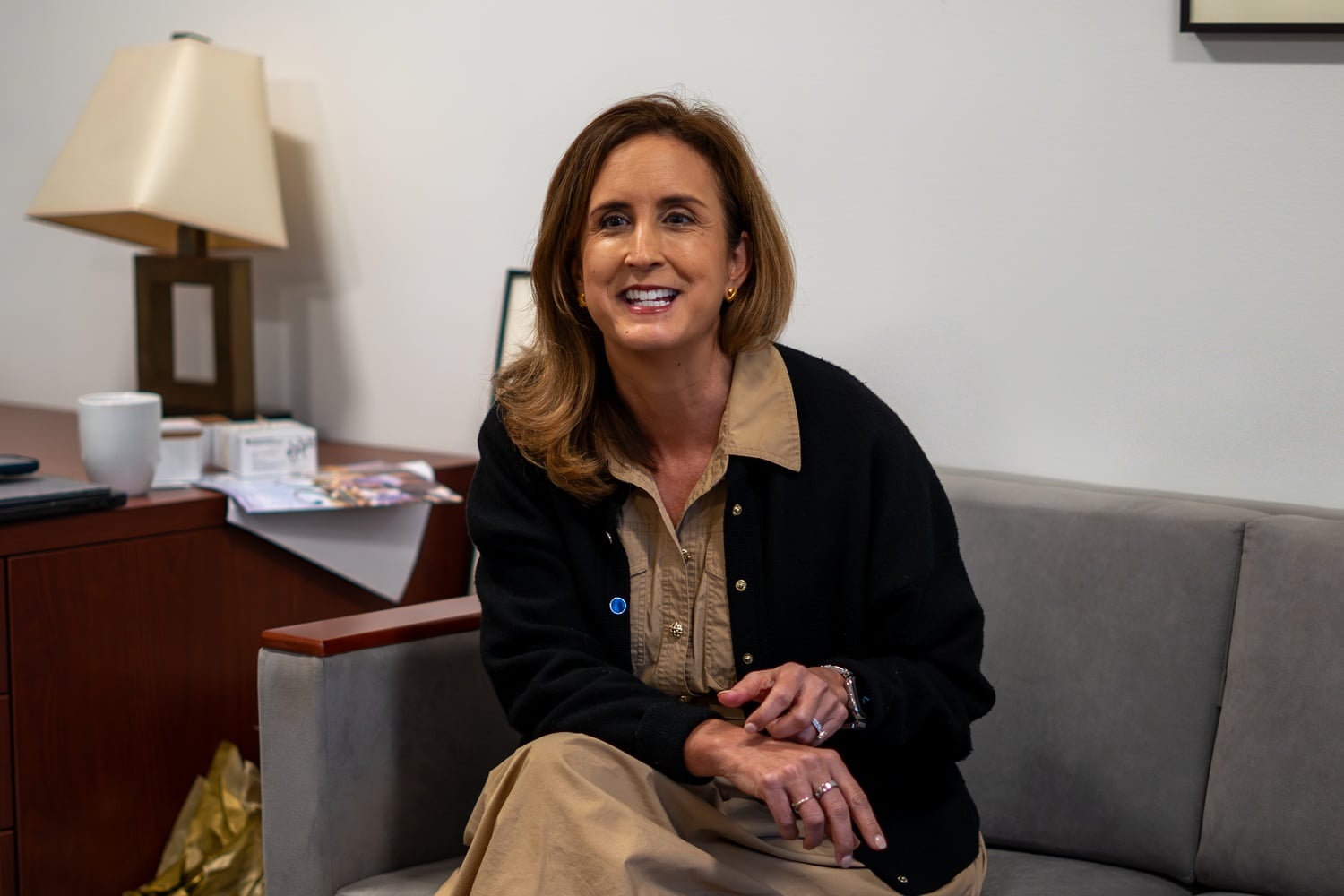
Asked about the resignations, Fischer Martin said in an interview last week that staff should support, rather than direct, student self-governance.
“They’re learning how to elect each other, to figure out staffing issues amongst themselves,” she said. “Our best approach to this is really to be there as a supportive point of it, not to have put our fingers into what the students are trying to do.”
SAC last faced a wave of resignations in October 2023, when three members stepped down after the committee voted not to issue a statement on the war in Israel and Gaza. Cruse wrote that under the current leadership, “more members of SAC have resigned in the past year than in recent memory,” and that he spoke out because “all the wrong people were leaving SAC.”
“In my heart, I believe that the IOP is a salvageable community, as is SAC. I cannot say the same for Exec,” Cruse wrote. “Exec has fundamentally shattered the trust which must exist between it and SAC.”
—Staff writer Jen L. Phan can be reached at [email protected] and Signal at jenphan.74. Follow her on X at @jenllphan.
—Staff writer Mirei S. Saneyoshi can be reached at [email protected] and Signal at mireisaneyoshi.09. Follow her on X at @mireisaneyoshi.
Want to keep up with breaking news? Subscribe to our email newsletter
Have a tip for The Crimson? Share it confidentially