A Beautiful Commentary on the Shame of Learning
5 Stars
How can we translate the unspeakable?
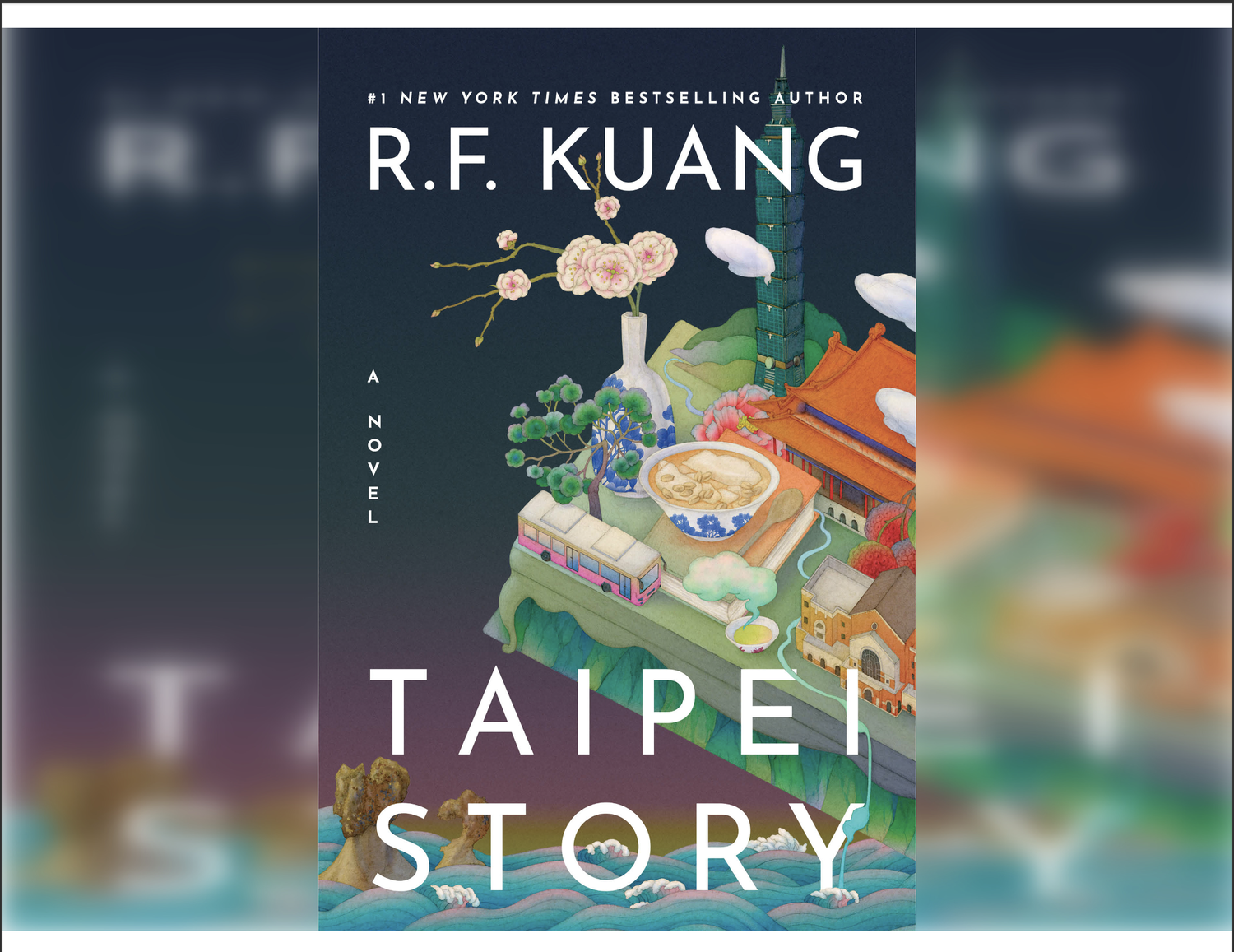
In her latest release, “Taipei Story,” R.F. Kuang seeks to explore that very question. Well known for her novels “The Poppy War,” “Babel,” and “Katabasis.” Kuang continues to explore themes of belonging, tradition, and identity as she follows the journey of Lily Chen. In “Taipei Story” Lily Chen, a young Chinese-American girl, goes on a study-abroad, language immersion program in Taipei, China. Eager to reconnect with her heritage, she is intent on learning the language and integrating herself into Chinese culture. However, Chen finds herself a perpetual outsider among her cohort of peers and in her ethnic identity as she pits two different versions of herself against each other: a Chinese Lily and an American one. This division ceases following a tragic incident which forces Lily to reconsider who she is beyond a linguistic identity.
As this novel is a story of multiple languages, Kuang uses a combination of Chinese and American phrases to evoke an emotional response. When Lily struggles with her overbearing roommate Anna, she likens the experience to a Chinese phrase: “个程咬金 — halfway along the road, emerge a Cheng Yaojin”. This phrase is used to describe unwelcome appearances or changes. The reader is immersed in the linguistic environment of the narrator and can resonate with the translational nativity Lily faces — the struggle of relying on others to understand.
This issue parallels Lily’s equally pressing worry about being understood, particularly when She tries to tell her grandmother, or Popo, that she misses her, using the phrase “我想你” – “I’m thinking of you.” To this, her grandmother says nothing, causing Lily and the reader to ponder if her newfound fluency can repair the emotional chasm caused by their cultural barriers and what it takes to repair their relationship.
Throughout this summer, Lily grapples with a pervasive shame regarding her language abilities and, more so, her inability to express her desires. The idea of cultural purity is omnipresent as Lily struggles with the embarrassment of having to learn cultural practices she feels she should already know. “Taipei Story” is told primarily through Lily’s perspective during this summer, with small breaks in the timeline to share memories that explain her cultural upbringing. This temporal movement provides the reader with a comprehensive view of Lily’s identity. At the same time it asks the audience to consider how connected Lily is to her culture, and who gets to police these boundaries.
As Lily begins to explore the culture of Taipei, her unfamiliarity is replaced with a limited understanding. While she doesn’t have a comprehensive understanding of the sociocultural background of many patterns she witnesses and experiences she partakes in, she builds a detailed personal routine, described with intense personal detail. This both alienates the reader and reminds them of their place as an outsider to this cultural exchange and understanding, a phenomenon that can only occur once one becomes a regular member of a new environment. The more comfortable Lily is with Taipei, the more complex her cultural experience is, transitioning from touristy hot spring getaways to independent cinema halls.
Although Lily is studying in Taipei, her family hails from mainland China, a political dynamic that is regularly addressed. Kuang naturally provides readers with the information needed for a cursory understanding of the geopolitical dynamic between Taipei and mainland China. However, Kuang only provides information in chunks, mimicking the pattern in which Lily begins to understand the political atmosphere in which she is studying. Kuang immerses the reader both in Lily’s experience and her understanding of Taipei: the good, the bad, and the uncertain.
A distinguishing feature of this novel is how emotion is described. There is a physical quality to the grief depicted. Kuang writes, “The seconds slowed to a trickle, and I had resigned myself to this liminal space, this follow-out feeling of having nothing to look forward to, but nothing to move on from.”. This sentence describes Lily’s experience at the airport while waiting for her mom following a tragic event. The tangibility of this sensation helps the readers feel Lily’s pain as opposed to witnessing it as a bystander. This grief also applies to Lily’s confusion, which is represented by windy, jumbled sentences that drag the reader into an inescapable cloud of despair and struggle.
In an emotionally charged and syntactically complex novel, Kuang considers the unknown. Any readers unsure about their future, past, or even their present will find a peer in Lily Chen as she discovers herself in her adventures through Taipei. The unknowns of a new language, a new city, and a rather new culture are all confronted and subdued by the protagonist, and to an extent, the reader, as Lily Chen explores how to translate the stories and feelings of one language into another.
— Staff writer Aarushi A. Vyas can be reached at [email protected].
Want to keep up with breaking news? Subscribe to our email newsletter
Have a tip for The Crimson? Share it confidentially