‘East of Eden’ Review: An Emotional Adaptation of an Enduring Classic
4.5 Stars
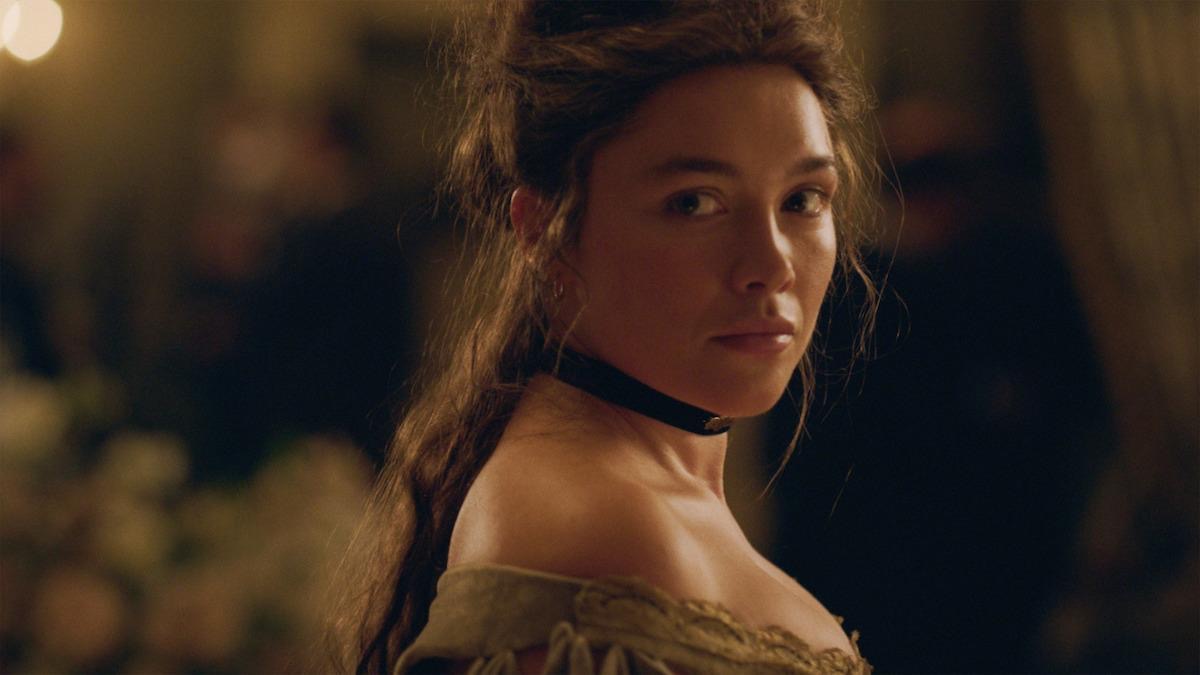
In the seven-episode Netflix series “East of Eden,” show creator Zoe Kazan reimagines John Steinbeck’s 1952 classic. An intergenerational story about family, free will, and the nature of evil, Kazan adapts the novel with a well-rounded cast, stunning visuals, and strong dialogue, bringing new interpretations to an age-old story.
Steinbeck’s novel is a reimagination of the biblical story of Cain and Abel. While past adaptations — including the 1955 film directed by Kazan’s own grandfather Elia Kazan — focus heavily on protagonist Adam’s sons Aron and Caleb, Kazan starts from the very beginning, with brothers Adam (Christopher Abbott) and Charles Trask (Mike Faist). Both actors, including their younger counterparts Asher Whitehead and Gus Turner, respectively, successfully portray the simultaneous tension and affection between the brothers through expressions both miniscule and grand. In a story that relies on following a single family throughout several decades, casting the younger counterparts of actors can be difficult. Yet “East of Eden” nails this casting, allowing audiences to easily recognize protagonists throughout different points in the story. The first episode in particular lays strong foundations for the story’s primary theme: the influence of ancestry over one’s own free will.
The other key storyline follows Cathy Ames (Florence Pugh). Described as “a total representative of Satan” by Steinbeck, Cathy divides the two brothers and their descendents. One of Steinbeck’s most notable antagonists, to play such a character is quite a feat — yet Pugh is superb in this role. The series doesn’t dial down her actions, sparing none of her victims. Still, Kazan’s writing and Pugh’s performance give Cathy nuance, providing a backstory that explains rather than excuses her actions, keeping the theme of free will ever-present.
In contrast to Cathy’s chaos, Lee (Tong Hoon “Hoon” Lee ’94) — Adam’s servant and the caretaker of his sons — is the moral and intellectual heart of the story. In episode five in particular, Lee’s monologue about his mother’s story is exceptional. Hoon Lee’s performance not only amplifies the horrors of her fate and its impact on Lee, but also the value he places on truth and the ability to understand what provokes individuals to act.
Apart from the performances, a repeating melody in the series’ soundtrack emphasizes the relationships between the brothers. From Adam and Charles’ introduction to the final scene of Aron and Caleb, the repeated score highlights the parallels between the two generations of brothers. Furthermore, following Cathy’s takeover as madame, the series juxtaposes an emotional piano track with the 1966 release, “Paint It, Black” by the Rolling Stones, demonstrating Cathy’s newfound authority.
The series similarly excels in its sets, costumes, and casting. Wide shot scenes featuring the Trask family land are stunning, and despite filming taking place in New Zealand, they’re essentially indistinguishable from California’s landscape. The costuming never pulls audiences out of the early 20th century, avoiding historical inaccuracies common in modern adaptations.
Although “East of Eden” exceeds in performances, casting, costumes, and sets, it struggles with one thing that book-to-screen adaptations often do — pacing. “East of Eden” is not a wholly robust adaptation — with a 601 page novel and limited episodes, scenes are bound to be missing. In particular, the absence of the Hamiltons — an Irish-American family who welcome the Trasks into Salinas — sacrifices much of the classic’s depth. Yet compared to past adaptations, which are void of larger portions of the novel, the series uses its slow pacing to wisely develop characters such as Cathy and Lee.
In seven episodes, “East of Eden” faithfully adapts an American classic. With stellar performances from series leads and new insights into Cathy Ames and Lee, Kazan builds upon the theme of free will and the factors that influence an individual to act. “East of Eden” ultimately welcomes audiences both familiar and new to the classic tale of family and fate.
Want to keep up with breaking news? Subscribe to our email newsletter
Have a tip for The Crimson? Share it confidentially