‘Klara and the Sun’ Review: Authenticity, Humanity, and the Limits of Film Adaptations
Dir. Taika Waititi — 2 Stars
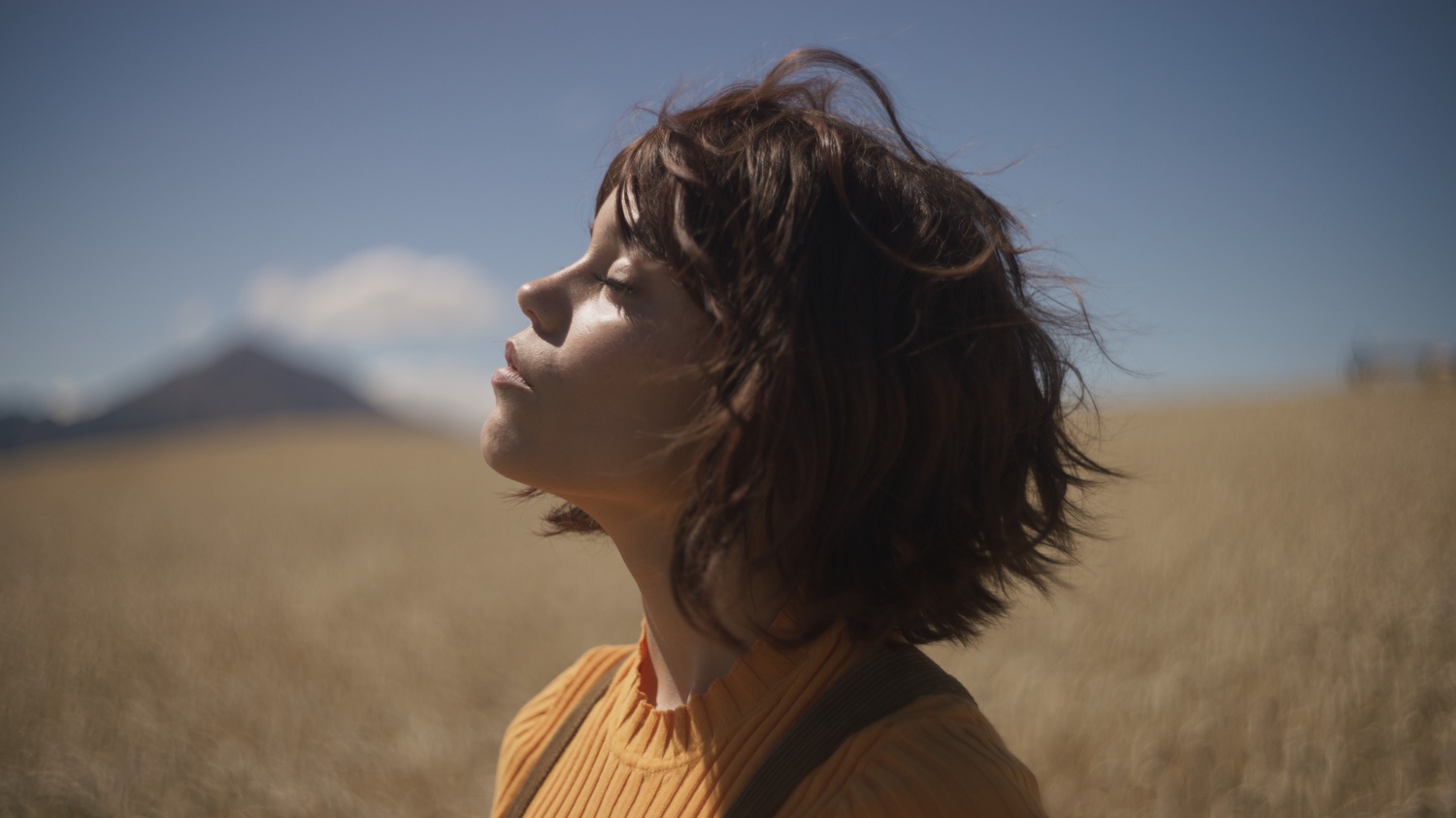
Will artificial intelligence take over the world? In “Klara and the Sun,” directed by Taika Waititi and starring Jenna Ortega, audiences may be convinced that AI is not an existential threat after all.
Jenna Ortega plays Klara, a companion robot called an “Artificial Friend,” who tries to care for the sick teenager named Josie (Mia Tharia) who purchased her. With brightly colored cinematography, quirky characters, and a free-spirited soundtrack, Waititi’s film adaptation of Nobel laureate Kazuo Ishiguro’s 2021 novel explores grief, the ethics of scientific advancement, and what it truly means to be human. While the film is an enjoyable watch, the deeper nuance of its themes gets lost, leaving audiences unsure whether to laugh or to cry.
Waititi, who directed the 2019 satirical comedy-drama “Jojo Rabbit” and the Thor movies “Ragnarok” (2017) and “Love and Thunder” (2022), is known for his blend of tragic comedy, deadpan humor, and vibrant visual aesthetics.
The film starts with the camera panning across the streets of a high-tech, cyberpunk-adjacent city with neon lights, metallic buildings, and self-driving cars. A bubbly color palette of vibrant teal, golden yellow, and warm peach sets the stage for a light-hearted, eccentric film. Music by Oscar-winning composer Michael Giacchino — who previously collaborated with Waititi on “Jojo Rabbit” — adds to the happy, animated feel of the opening scenes, while humorous quips, fast camera shots, and quirky characters all contribute to the peculiar vibe.
As Klara goes home with Josie and her mother Chrissie (Amy Adams), lightning is used effectively to signal tonal changes of the plot. When more serious themes emerge, the bright colors disappear. Chrissie is initially hostile to Klara, adding a deeper, darker nuance to her character. Adams expresses the cold, protective, and distant mother powerfully, sparking surprising sympathy from the audience. Likewise, Jenna Ortega’s animated performance as Klara is commendable: Each twitch, step, expression is done tastefully. Ortega succeeds at capturing the dual nature of rigid robotic behavior and the humanity of emotional intelligence.
Yet for a film that deals with such serious themes, its messages unfortunately do not land. The genetic engineering technologies that drive the central plot evoke themes surrounding the ethics behind scientific innovation in biotechnology. The emotional intelligence of an Artificial Friend like Klara sparks discussions over what makes intelligence real or artificial. And pressingly, when scientific innovation can create lifelike beings, what truly defines humanity? These complex subjects are not ones that can be conveyed through color palette or soundtrack changes alone, and thus may not resonate with audiences.
While the film beautifully brings to life the dystopian world of Ishiguro’s novel, nuance gets lost — as is the case for many literary adaptations. For example, the purpose of the character Rick — played by Cillian Murphy’s son Aran — as Josie’s friend is never fully fleshed out. In the novel, Rick is a central character, while in the movie, audiences only see the playful banter between Josie and Rick happen once. Murphy brings a coy charm to the role, yet his limited screentime leaves the character feeling one-dimensional. Similarly, a scene in which Chrissie lashes out at Klara by a waterfall emphasizes her hostility without giving audiences enough insight into her motives, making her seem more like a villain than a conflicted mother.
As a film, “Klara and the Sun” lacks the time and ability to detail the intricacies of the novel’s plot. Despite the sun’s prominence in the film’s title, audiences gain little insight into its significance beyond Klara’s worship of it and belief in its healing powers. The film barely explores the deeper symbolic meaning Ishiguro develops in the novel. Perhaps the most cringe-worthy line in the film comes from an emotional confrontation scene between Josie and Chrissie, where Josie says “I wish you’d choose me,” and the camera stays dramatically still.
“Klara and the Sun” is entertaining to watch, with beautiful cinematography, music, and touching characters played by skilled actors. As a film adaptation, liberties are expected and even welcomed. However, unlike the feeling a reader may have after finishing an entire novel, viewers may not really understand what the intended outcome of “Klara and the Sun” ought to be. It is not an authentic replica of the novel, but is not an artificial version of it either. Like its protagonist Klara, who is not truly human but too emotionally intelligent to be fully a robot, the film sits in the same position: somewhere in between both worlds.
Want to keep up with breaking news? Subscribe to our email newsletter
Have a tip for The Crimson? Share it confidentially